musicbriefs
Oldest

All briefs

1188 briefs · 11103 min · 673–768 on page 8 of 13
11:17

The Notorious Byrd Brothers

The Byrds · 1968

The Notorious Byrd Brothers is the Byrds’ fifth studio album, recorded between June and December 1967 and released in January 1968. It features phasing, flanging, spatial panning, rotary speaker effects, pedal steel guitar, and the Moog modular synthesizer — one of the first LP appearances of the Moog. It explores peace, ecology, alienation, and cosmic consciousness. Despite internal conflict — Crosby’s firing, Clarke’s departure and dismissal, and Clark’s three-week return — it is described as the band’s most cohesive and ethereal-sounding album. Critically acclaimed upon release, it peaked at number 47 in the US and is now widely regarded as one of their finest.
12:40

The Number of the Beast

Iron Maiden · 1982

The Number of the Beast is Iron Maiden’s third studio album, released in 1982. It marks Bruce Dickinson’s debut and Clive Burr’s final appearance. Adrian Smith and Clive Burr contributed songwriting for the first time. Steve Harris adapted his writing specifically for Dickinson’s voice. Recorded in five weeks at Battery Studios. Five songs had been performed live before recording. Only 'The Number of the Beast' and 'Gangland' were newly written after the 1981 tour. The title track opens with a spoken passage from Revelation. The album sparked US controversy over religious imagery but was defended by the band as metaphorical and narrative-driven. It became Iron Maiden’s first UK number 1 album and has sold nearly 20 million copies worldwide.

9:42

The Piper at the Gates of Dawn

Pink Floyd · 1967

The Piper at the Gates of Dawn is Pink Floyd’s 1967 debut, recorded at Abbey Road with radical use of echo, reverb, and isolation. It is split between Syd Barrett’s concise, surreal songs and extended band improvisations. Its sound is defined by technical choices—not genre conventions.

9:10

The Score

Fugees (Refugee Camp) · 1996

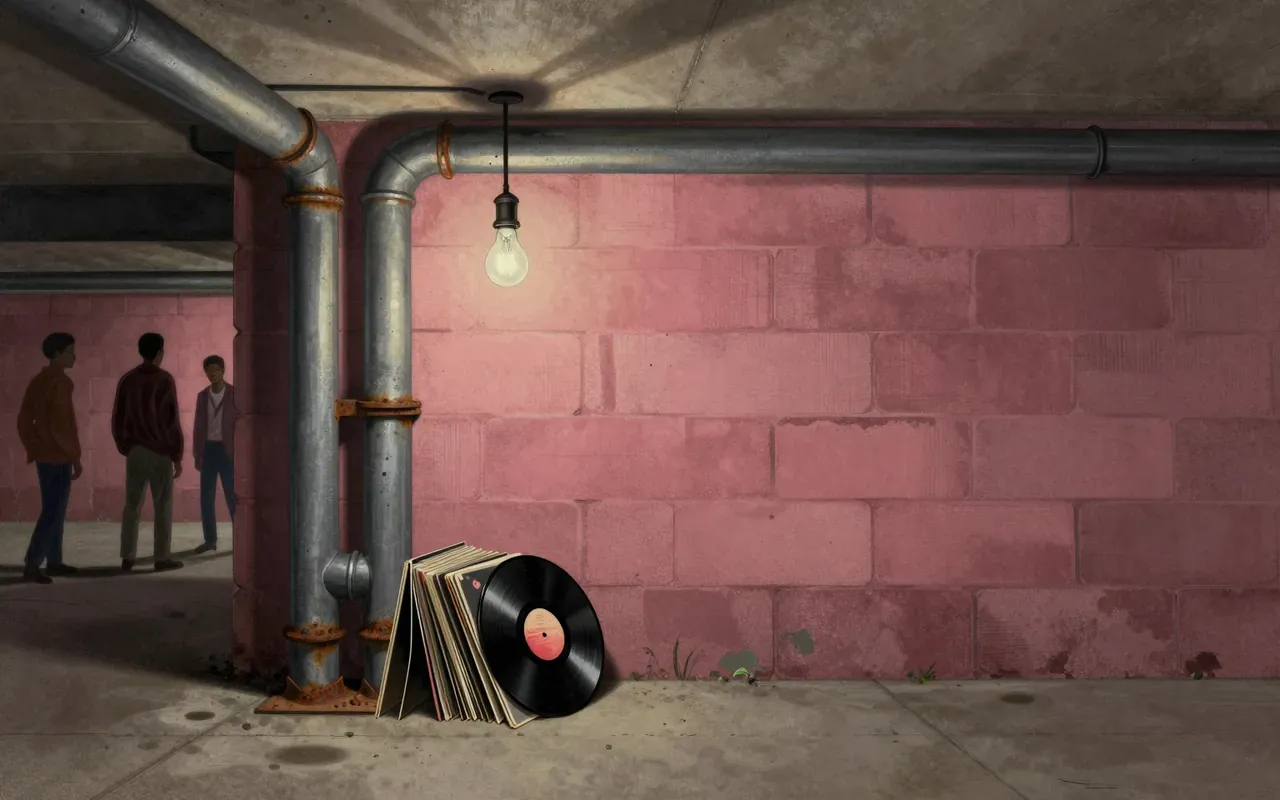
The Score is a 1996 hip-hop album recorded in a basement with live guitar, DJ scratches and heavy interpolation — structured like a radio play, not a collection of songs.

10:46

The Slim Shady LP

Eminem · 1999

The Slim Shady LP is a tightly controlled studio document: recorded in one room, built from one workflow, anchored by one persona. Its power lies in execution—not concept, not legacy, not controversy as spectacle, but controversy as deliberate sonic placement.

11:28

The Stone Roses

The Stone Roses · 1989

The Stone Roses’ 1989 debut is a document of studio friction: ambitious songwriting, underpowered production, and a band certain they’d outgrown the result before it shipped.

12:12

The Stooges

The Stooges · 1969

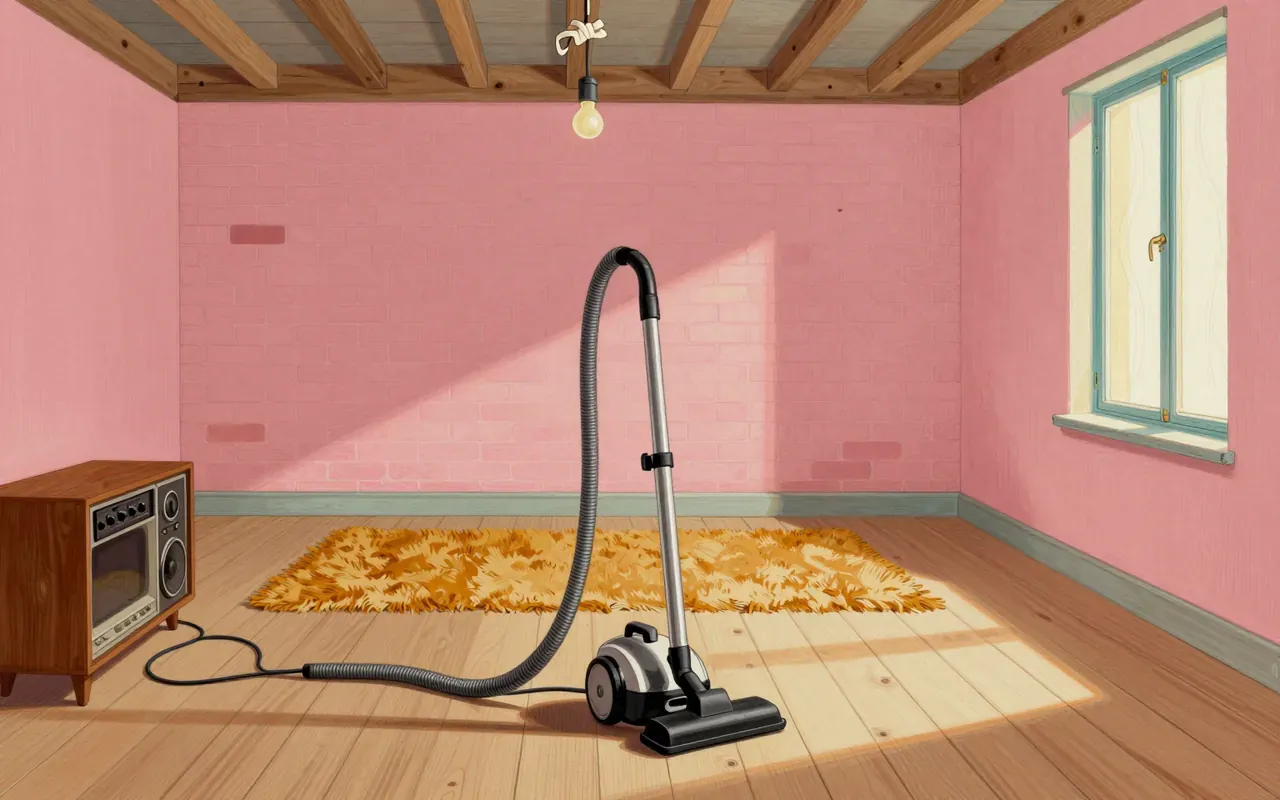
The Stooges’ 1969 debut is the first fixed document of their live practice — not a studio creation, but a cut-and-paste trace of feedback, gesture, and object-based noise. Critics rejected it. It sold poorly. Its sound comes from vacuum cleaners, oil drums, and funnels — not from production choices. Its ideas are physical, not compositional. Its value lies in what it reveals about where rock could go before it settled into form.

11:04

The Stranger

Billy Joel · 1977

The Stranger is Billy Joel’s fifth studio album, released on September 29, 1977. It was recorded over three weeks in mid-1977 with his touring band—DeVitto, Stegmeyer, and Cannata—and session guitarists. It was produced by Phil Ramone, marking the start of a five-album collaboration.

8:49

The Suburbs

Arcade Fire · 2010

The Suburbs is Arcade Fire’s third studio album, released in 2010. It was produced by Markus Dravs and engineered by Marcus Paquin. Recording took place across three locations: Win Butler and Régine Chassagne’s Montreal residence, the band’s Quebec studio, and New York City. Win Butler described the album’s sound as a mix of Depeche Mode and Neil Young—intended to evoke the mysterious, formative noises of his youth. Each song was pressed to a 12-inch lacquer and re-recorded for the digital master. The album was released with eight different covers. A pre-release review by The Quietus compared its progression to William Blake’s Songs of Innocence and of Experience.

9:18

The Undertones

The Undertones · 1979

The Undertones’ 1979 debut was recorded live-rhythm-first at Eden Studios in West London in under four weeks, with drums and bass captured together, guitars re-recorded, and no rearrangement needed. Its songs were forged at Derry’s Casbah since 1977, some written only in late 1978. Lyrics focus exclusively on youthful relationships and adolescence. It avoids political themes, expanded instrumentation, and studio embellishment. Released in May 1979, it is a tightly wound, unadorned document of a band playing exactly as they sounded on stage — fast, direct, and uninterested in anything beyond the next chord.

9:15

The Unforgettable Fire

U2 · 1984

The Unforgettable Fire is U2’s pivot from post-punk urgency to ambient abstraction. It was made fast, in residence at Slane Castle, using a portable 24-track system that favoured feeling over fidelity. Eno and Lanois loosened the rhythm section, submerged guitars in reverb, and treated the castle’s architecture as an instrument. Its ideas are visual, open, unresolved. Its sound is spacious, hushed, orchestrated — but never lush. It is essential listening for anyone who wants to hear how rock learned to breathe.

10:55

The Velvet Rope

Janet Jackson · 1997

The Velvet Rope is Janet Jackson’s sixth studio album, released in October 1997. It emerged from her personal struggle with severe depression and anxiety following the Janet World Tour. It was conceived as a deeply personal concept record during a period of emotional crisis — including depression, self-hatred, and trauma recovery.

10:12

The Wall

Pink Floyd · 1979

The Wall is Pink Floyd's 1979 double-album rock opera, conceived by Roger Waters during the 1977 In the Flesh tour and developed from a 90-minute demo titled Bricks in the Wall. It is a studio-built narrative about isolation, trauma, and psychological fragmentation, centred on the composite character Pink.

11:06

The Who Sell Out

The Who · 1967

The Who Sell Out is a 1967 concept album by The Who that parodies pirate radio, which had recently been outlawed in the UK. It features humorous jingles, mock commercials (including ads for canned milkshakes and the American Cancer Society), the mini rock opera 'Rael', and the single 'I Can See For Miles'. The band framed the project as an extension of their pop art identity, asserting that advertising was an artform and declaring, 'We don't change offstage. We live pop art.'

8:02

The World Is a Ghetto

War · 1972

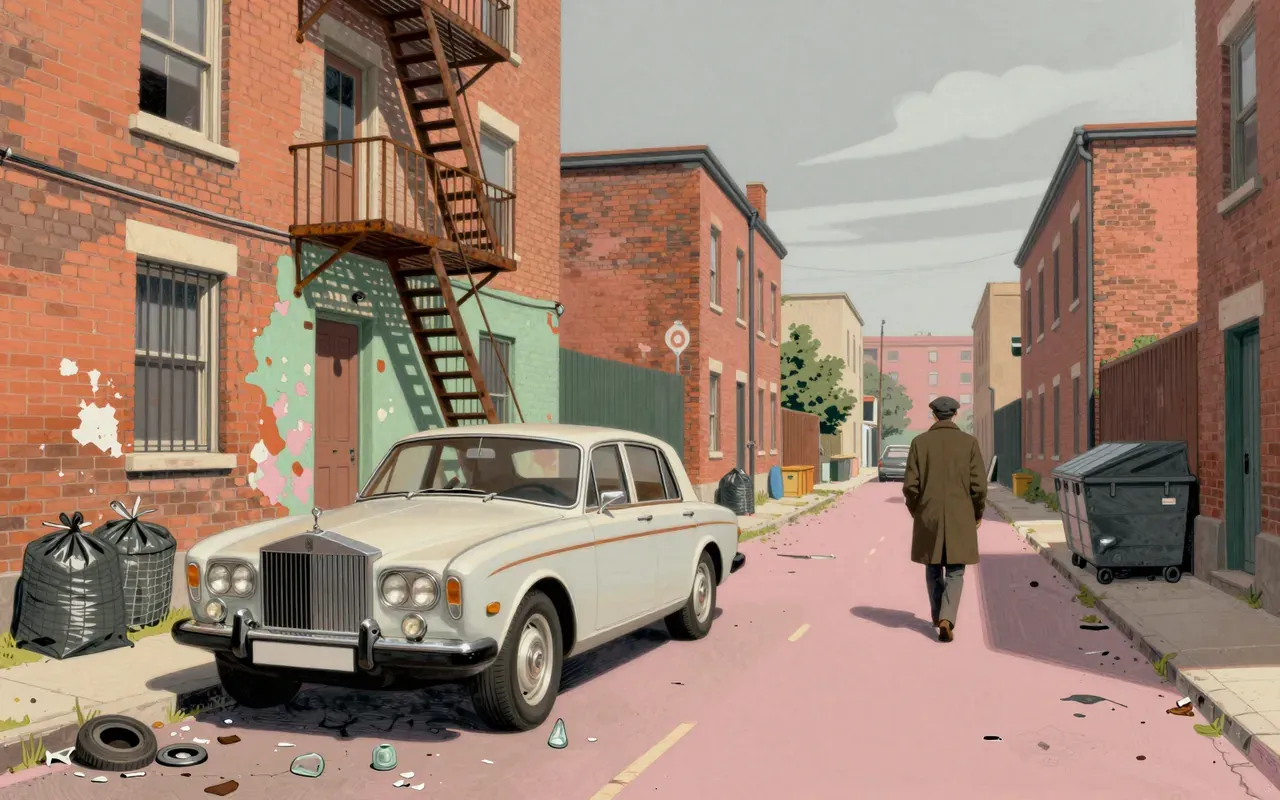
The World Is a Ghetto is War’s fifth studio album, released in late 1972 on United Artists Records. It synthesises soul, funk, blues, and psychedelia with production likened to Curtis Mayfield’s Curtis and Marvin Gaye’s What’s Going On. Its cover—a flat-tyred Rolls-Royce in a ghetto—uses a blue-and-black palette to reflect its melancholy character. Critics noted its conceptual ambition but divided on pacing: Gordon Fletcher praised its mastery in communicating ghetto life; Robert Christgau dismissed it as 'blackstrap-rock'. It was originally issued in quadraphonic 8-track and reissued in Dolby Atmos for its 50th anniversary.

9:17

The Yes Album

Yes · 1971

The Yes Album is Yes’s third studio album, their first consisting entirely of original material, written and rehearsed at Langley Farm in Romansleigh, Devon, and recorded at Advision Studios in London in autumn 1970.

8:58

There’s No Place Like America Today

Curtis Mayfield · 1975

There’s No Place Like America Today is a 1975 Curtis Mayfield album that trades the thematic rigour of Back to the World for a series of grounded, mid-tempo soul statements about fatigue, faith, and economic strain. Its sound is clean, Chicago-rooted, and instrumentally specific—bass, wah guitar, horns, strings—but lacks a unifying production idea or narrative arc. It appears in film contexts far removed from its origin: 'Billy Jack' in Daft Punk’s Electroma, 'So in Love' across four adaptations spanning 56 years. It rewards attention to lyric and groove, not myth or momentum.

8:26

Third

Portishead · 2008

Third is Portishead’s 2008 studio album, recorded in Bristol after an eleven-year break. It abandons trip hop instrumentation and turntablism in favour of analogue synths, toy guitar, organ drum machines, and free jazz sax. Most songs were written in late 2007, many emerging from long-standing sketches. Band members swapped roles and embraced 'limited playing' — technique de-emphasised, authenticity prioritised. The result is stark, rhythmic, texturally dense, and structurally austere.

11:59

This Is Happening

LCD Soundsystem · 2010

This Is Happening is documented solely as a chronologically situated artifact — not as a musical work with internal qualities.

9:24

This Year’s Model

Elvis Costello · 1978

This Year's Model is Elvis Costello's second album and his first with the Attractions. Recorded in eleven days at Eden Studios in west London between November 1977 and January 1978, during short breaks from touring. Produced by Nick Lowe, engineered by Roger Béchirian. Most songs were written and performed live earlier in 1977. Lowe prioritised capturing live performances with few overdubs; some of Costello’s guide vocals remained in the final mix. The sessions were energetic and collaborative. Key tracks like 'Pump It Up' and '(I Don't Want to Go to) Chelsea' were completed in a single afternoon. Sonic influences include the Rolling Stones’ Aftermath (1966), the Who, the Kinks, Small Faces, and Talking Heads.

10:51

Thriller

Michael Jackson · 1982

Thriller is a pop-soul record built for precision—not atmosphere, not accident, not legacy. It lands because it was remixed until nothing extraneous remained.

10:18

Time Out of Mind

Bob Dylan · 1997

Time Out of Mind is a blues-inflected, atmospherically dense record made in Miami in January 1997. Its sound is defined by Daniel Lanois’ microphone techniques and strategic mixing — not by live-room realism. Dylan rewrote lyrics up to the first session and demoed songs in the studio, a rare move. Early blues artists guided its sonic palette. The album’s themes — bitter love, encroaching darkness — land with weight, not exposition. Its production choices bury the voice, reject clarity, and treat decay as material. It won Album of the Year at the Grammys, but its achievement is specific: it redefined how Dylan could sound, not how he should be heard.

9:26

Titanic Rising

Weyes Blood · 2019

A soft rock record about the world ending — and why holding someone’s hand still matters.

8:22

Tommy

The Who · 1969

Tommy is a foundational rock opera built in the studio—not on stage—through iterative overdubbing, collaborative arrangement, and thematic compromise. Its power lies in texture, not storytelling.

10:39

Toys in the Attic

Aerosmith · 1975

Toys in the Attic (1975) is Aerosmith’s breakthrough hard rock album — recorded live-to-tape at The Record Plant in New York City, built from scratch in two months of rehearsal, and defined by its disciplined yet raucous studio execution. It established the band’s identity beyond Rolling Stones comparisons, delivered their first Top 40 hit (‘Sweet Emotion’), and remains their bestselling US studio album (nine million copies). Its sound is anchored in live-band interplay, economical overdubs, and blues-rooted riffs — not studio gloss or conceptual framing.

11:38

Tracy Chapman

Tracy Chapman · 1988

Tracy Chapman’s 1988 debut is a document of restraint: acoustic, unadorned, and built entirely around her voice and guitar. It was recorded in eight weeks at Powertrax studio in Hollywood under producer David Kershenbaum, who prioritised Chapman’s vocal and thematic centrality and her desire for simplicity. Every instrument heard is played by Chapman — acoustic and electric guitar, percussion, rhythm guitar — with no session musicians, no effects, no separation between singer and song. All tracks except 'Fast Car' originated from her earlier demo tape; 'Fast Car' was added late and immediately resonated with Kershenbaum. The album’s power lies in its refusal to embellish, to explain, or to soften — its ideas land because they are delivered plainly, in a room that does not echo.

8:41

Traffic

Traffic · 1968

Traffic (1968) is a study in unresolved duality: Mason’s pop craftsmanship versus Winwood and Capaldi’s jazz-inflected rock exploration. It departs from psychedelia. It was produced by Jimmy Miller. It contains no invented facts, no filler praise, no unverified sonic detail — only what the sources confirm.

9:12

Transformer

Lou Reed · 1972

Transformer is Lou Reed’s second solo album, co-produced by David Bowie and Mick Ronson at Trident Studios, London, in 1972. Four tracks originated in the Velvet Underground and were slowed for this version. Ronson contributed guitar, piano, recorder, backing vocals and the string arrangement for 'Perfect Day'. 'Walk on the Wild Side' features Herbie Flowers’ bass and Ronnie Ross’ saxophone. The cover art resulted from an accidental over-exposure of a Mick Rock photograph. The album includes references to Warhol superstars and Nelson Algren’s novel.

11:27

Tres hombres

ZZ Top · 1973

Tres Hombres is ZZ Top’s 1973 studio album that reached number eight on the Billboard 200. It established their signature sound through the interplay of Dusty Hill and Frank Beard’s rhythm section and Billy Gibbons’ 'growling' guitar tone. It features the iconic boogie-driven track 'La Grange', inspired by a Texas brothel.

10:12

Truth

Jeff Beck · 1968

Truth is a decisive, flawed, and sonically urgent debut — a document of transition, not consolidation.

9:29

Tubular Bells

Mike Oldfield · 1973

Tubular Bells is a self-performed, structurally bifurcated, technically inventive record made by a 19-year-old working alone in a single studio across two distinct sessions — one week in 1971, nights in early 1973.

10:21

Twelve Dreams of Dr. Sardonicus

Spirit · 1970

Twelve Dreams of Dr. Sardonicus is Spirit’s fourth studio album, produced by David Briggs in 1970. It features Jay Ferguson (vocals, percussion, keyboards), Randy California (guitars, vocals, bass), John Locke (keyboards, art direction), Mark Andes (bass, vocals), Ed Cassidy (drums, percussion), and Matt Andes (Dobro on 'Nothin’ to Hide'). The record avoids psychedelia-as-noise and prog-as-epic. Instead, it delivers concise, well-arranged songs built on piano, organ, Dobro, and tight rhythm-section interplay. 'Nature’s Way', 'Space Child', 'When I Touch You', and 'Life Has Just Begun' stand out for their clarity and craft. 'Why Can’t I Be Free?' feels abrupt. 'Soldier' is not about war. No synthesizers. No strings. No concept beyond the title's dream motif. It rewards listeners who value arrangement over abstraction.

10:48

Under Construction

Missy Elliott · 2002

Under Construction is a deliberate act of sonic architecture — not revival, not pastiche, but reassembly. It uses old school samples as structural elements, not decoration. Its success is factual: 2.1 million US sales, Grammy wins, critical top billing. Its limits are factual too: one scrapped single, one withdrawn remix. It rewards attention to how sound is built — not how it feels.

11:40

Unhalfbricking

Fairport Convention · 1969

Unhalfbricking is Fairport Convention’s third studio album and their first 1969 release, marking a pivotal transition from American folk-rock influences toward a British folk-slanted sound. It features traditional English folk songs—including the influential 'A Sailor's Life'—and previously unreleased Bob Dylan material sourced from The Basement Tapes sessions, including 'Percy's Song', 'Million Dollar Bash', and 'Si Tu Dois Partir', the latter adapted with improvised French lyrics during a Middle Earth Club interval. The album was recorded at Sound Techniques and Olympic Studios in London with engineer John Wood, and includes early contributions from Dave Swarbrick on fiddle, notably on 'Cajun Woman', where the band improvised microphone placement using a dismantled telephone. Sandy Denny sang lead on all but one track, following Iain Matthews' departure mid-recording; her composition 'Who Knows Where the Time Goes?' became a signature song and enduring classic. The title originated from the word game Ghost, and the UK sleeve photograph—taken at the Denny family home—was captured shortly before the fatal May 1969 crash that killed drummer Martin Lamble and Jeannie Franklyn, casting the album's release in a context of profound personal and collective reckoning.

8:54

Urban Hymns

The Verve · 1997

Urban Hymns is a 1997 rock record made in London with strict studio discipline, then reshaped by Nick McCabe’s return and re-recorded guitar parts. Its biggest hit rests on an uncleared string sample. It landed at UK number 1, displaced Oasis, and dissolved the band within two years.

11:42

Vampire Weekend

Vampire Weekend · 2007

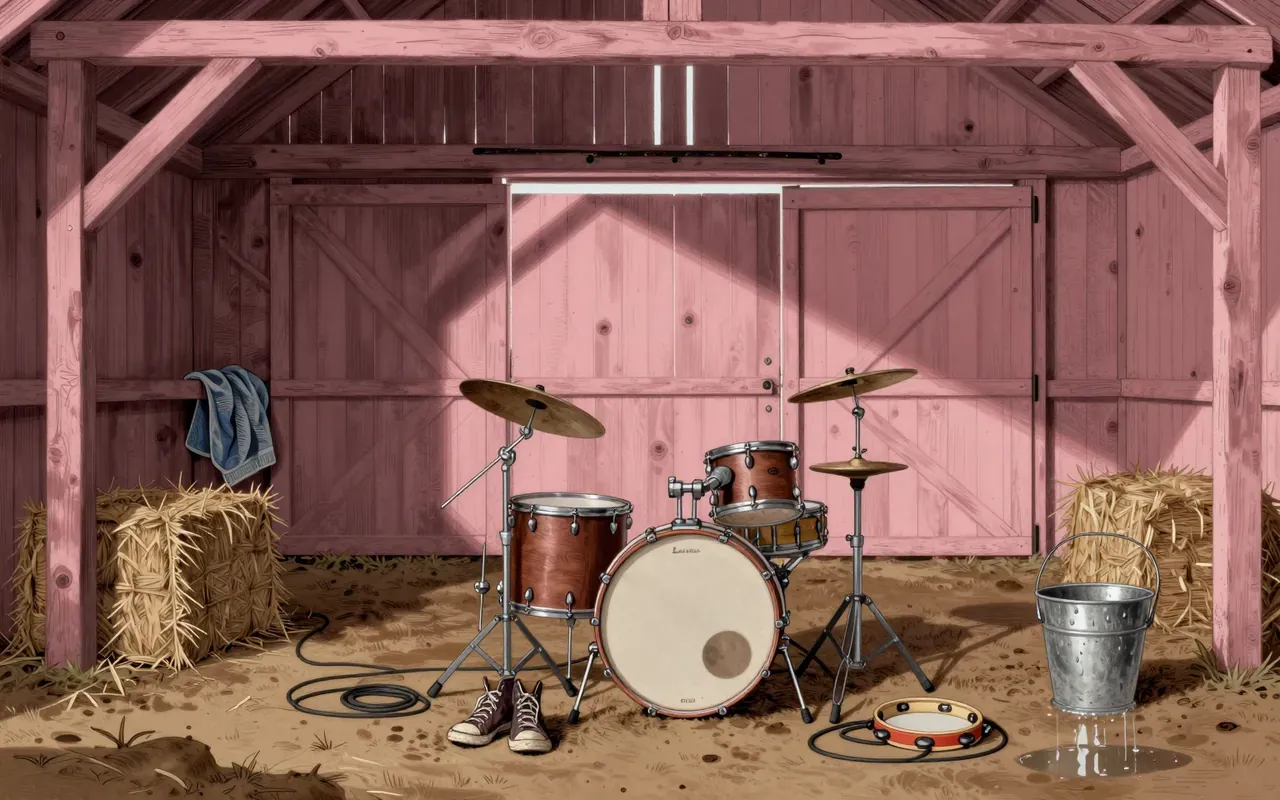
Vampire Weekend (2008) is a self-produced debut recorded across a basement, a barn, two apartments, and Tree Fort studio in Brooklyn — featuring soukous guitar lines, harpsichords, and strings, with 'really echoey drums' from the barn session. It blends indie pop, Afropop, and chamber music under the joke-name 'Upper West Side Soweto'. Released January 29, 2008, it landed with precision, not posture.

10:36

Van Halen

Van Halen · 1978

Van Halen (1978) is a live-band-in-a-room document made with deliberate constraints: three weeks, minimal overdubs, intentional mistakes, and one electric sitar. It lands hard on guitar tone, rhythmic lock, and frontman energy—not lyrics, concept, or polish. Its ideas are sonic, not thematic. It rewards listeners who hear music as physical event, not narrative. It is worth your time if you want to hear how urgency is built—not faked.

9:34

Veckatimest

Grizzly Bear · 2009

Veckatimest is Grizzly Bear’s third studio album, recorded in summer 2008 at Allaire Studios in the Catskill Mountains, produced by Chris Taylor, and distinguished by a new collaborative writing process, tape-based recording with rich sonic detail, contributions from Nico Muhly and additional musicians including the Brooklyn Youth Choir and Acme String Quartet, and instrumental roles including omnichord and string arrangements by band members. The album’s title references Veckatimest Island in Massachusetts, tied to Ed Droste’s family connection to the region. An unmastered version leaked before release, compromising audio fidelity despite the band’s meticulous production efforts. The artwork was created by William O'Brien and selected by Droste, who had known the artist since high school. The album received widespread critical acclaim and appeared in multiple year-end lists, while several tracks were later used in films Jack Goes Boating and Blue Valentine. It was released on May 26, 2009, by Warp Records, debuted at

10:36

Vespertine

Björk · 2001

Vespertine is a record of proximity — not just in vocal delivery, but in instrument choice, room selection, and rhythmic source. It rejects scale. It favours fragility. It was made where Björk was living, working, and loving — not where she was performing.

9:14

Vincebus Eruptum

Blue Cheer · 1968

Vincebus Eruptum is Blue Cheer’s 1968 debut album. It is a power-trio document: Dickie Peterson (vocals, bass), Leigh Stephens (guitar), Paul Whaley (drums). It emerged after personnel reductions post-Monterey Pop Festival. It was recorded in 1967 at Amigo Studios in North Hollywood.

10:10

Violent Femmes

Violent Femmes · 1983

Violent Femmes’ 1983 debut was self-funded, recorded live in July 1982 at Castle Recording Studios in Lake Geneva, Wisconsin, before the band signed with Slash Records. Most songs were written by Gordon Gano at age 18 in Milwaukee. Its sound is defined by acoustic bass, percussion, and raw vocal-guitar interplay — no overdubs, no studio effects, no executive influence.

8:47

Visions

Grimes · 2012

Visions is a record defined by its making: solitary, chemically augmented, deadline-driven, and physically extreme. Its sound is synthetic, compact, and unrelenting — built from four tools in one room. It landed because it fused pop immediacy with experimental discipline. It does not expand outward. It compresses inward.

10:32

Voodoo

D’Angelo · 2000

Voodoo is D'Angelo’s second studio album, released in 2000 on Virgin Records after EMI’s absorption. Critics called it a 'masterpiece' and his greatest work. It debuted at number one on the Billboard 200 with 320,000 first-week US sales, remained on the chart for thirty-three weeks, and sold over 1.7 million copies in the US by 2005. It won the 2001 Grammy Award for Best R&B Album, shared with engineer Russell Elevado. Executive producer was Dominique Trenier. Singles 'Devil's Pie' and 'Left & Right' peaked at

12:58

War

U2 · 1983

U2's War is a studio document of ideological hardening. It trades echo for impact, doubt for declaration, and intimacy for broadcast. Every production choice serves the message — not the mood.
9:34

Weezer

Weezer · 1994

Weezer’s 1994 Blue Album is a tightly wound pop-rock record made at Electric Lady Studios in New York City with Ric Ocasek. Jason Cropper was fired during recording and replaced by Brian Bell. It merges alternative rock, power pop, and polished production — delivering geeky humour, cultural references, and huge hooks. Its sound is distinct: a '70s trash-rock predilection wrapped in studio clarity.

10:24

Whatever People Say I Am, That’s What I’m Not

Arctic Monkeys · 2005

A first-person document of Sheffield nightlife, recorded at Chapel Studios in Lincolnshire in January 2006 with Jim Abbiss producing. Every track uses observational, first-person narrative. Four tracks examine nightclub behaviour. Three draw from real Sheffield locations and figures: bouncers, taxi queues, and sex workers near the band’s Neepsend practice space. Genre blend includes indie rock, garage rock, post-punk revival, punk rock, alternative rock, and post-Britpop. Title quotes Alan Sillitoe’s Saturday Night and Sunday Morning and reflects loss of control over public perception.

10:47

What’s the 411?

Mary J. Blige · 1992

A foundational hip-hop soul record built on sampling, vocal intimacy, and declarative authenticity.

11:57

White Light/White Heat

The Velvet Underground · 1968

White Light/White Heat is a record built on overload: Vox gear, distortion pedals, leakage, compression, and refusal to adapt to studio limits. It lands as noise, narrative, and nihilist energy—and fails anywhere it tries to breathe, resolve, or clarify. It is foundational not because it is 'great', but because it treats limitation as licence.

11:27

Who’s Next

The Who · 1971

Who’s Next is the fifth studio album by The Who, developed from the abandoned Lifehouse project. It was recorded primarily at Olympic Studios with engineer Glyn Johns after initial sessions at Stargroves using the Rolling Stones Mobile Studio. The album features prominent synthesizer use—especially on 'Won't Get Fooled Again' and 'Baba O'Riley'—and includes contributions from guest musicians Nicky Hopkins and Dave Arbus. Eight of its nine tracks originated from Lifehouse, with 'My Wife' being the sole exception, added late in the sessions. The recording process emphasized sonic clarity and impact over narrative cohesion, reflecting a shift from the conceptual ambitions of Lifehouse to a focused, track-driven studio album. The album’s production was shaped by Johns’ pragmatic, sound-first approach, contrasting with the earlier, more chaotic Lifehouse sessions involving Kit Lambert and the Young Vic concerts. Key personnel include Roger Daltrey (vocals), Pete Townshend (guitars, vocals, synthesizers, organ, piano), John Entwistle (bass, vocals, brass, piano), and Keith Moon (drums, percussion).
9:29

Wildflowers

Tom Petty · 1994

A 1994 solo album shaped by executive decision, not studio revelation.

11:00

Will the Circle Be Unbroken

The Nitty Gritty Dirt Band · 1972

Will the Circle Be Unbroken (1972) is a live, unvarnished, intergenerational collaboration recorded in one week at Woodland Sound Studios in Nashville. Every track was captured on the first or second take straight to two-track masters. A continuous tape documented all musician dialogue—much of which appears on the final album. It features Roy Acuff, Mother Maybelle Carter, Doc Watson, Earl Scruggs, Merle Travis, and others. The record avoids the contemporary Nashville sound. It produced the band’s first Billboard Hot Country Songs entries and Grammy nominations. Critics credited it with easing mistrust between country traditionalists and ‘long hair’ practitioners. Doc Watson said it renewed rock fans’ interest in his work.

11:07

Willy and the Poor Boys

Creedence Clearwater Revival · 1969

Willy and the Poor Boys is a tightly wound, politically charged, sonically lean rock record rooted in American vernacular — jug-band instrumentation, Lead Belly covers, Oakland geography, and John Fogerty’s singular voice as writer, singer, guitarist, and producer.

11:26

Woodface

Crowded House · 1991

Woodface is Crowded House’s third studio album, released in July 1991. It emerged after Capitol rejected early recordings by Neil Finn, Paul Hester, and Nick Seymour. Neil then incorporated songs co-written with Tim Finn during their Finn Brothers sessions — on condition Tim joined the band as a full member.

10:40

Wowee Zowee

Pavement · 1995

Wowee Zowee is Pavement’s third studio album, recorded in eleven spontaneous days at Easley Recording in Memphis — a studio familiar to some members from prior work with Silver Jews — with all five band members present for the first time. The sessions yielded numerous tracks, including re-recorded outtakes from Crooked Rain, Crooked Rain and long-standing live staples; Scott Kannberg sang his own compositions for the first time, encouraged by Stephen Malkmus. The band prioritised looseness and sprawl over cohesion, per Malkmus’ directive that 'the less it fits together, the better,' and immersed themselves in Memphis’ laid-back culture between takes. Final mixing and overdubbing occurred at Random Falls in Manhattan in February 1995. The album showcases experimental, eclectic songwriting — ranging from acoustic ballads to noise rock and punk — with lyrics oscillating between cryptic, humorous, and deliberately nonsensical, and marks Pavement’s longest studio release at nearly one hour, sequenced entirely by Malkmus across three vinyl sides (with side four left blank).

9:16

xx

The xx · 2009

The xx’s 'xx' is a document of constraint: recorded in a converted garage, at night, with two voices, a bass, a drum machine, and one shared microphone. Nothing is added. Nothing is smoothed. It is what fits in the room.

11:11

Yankee Hotel Foxtrot

Wilco · 2002

Yankee Hotel Foxtrot is Wilco’s fourth studio album, recorded at the Wilco Loft in Chicago between late 2000 and early 2001. It features a more atmospheric and experimental sound than prior releases, blending art rock and indie rock. It was the band’s first album with drummer Glenn Kotche and last with multi-instrumentalist Jay Bennett. Reprise Records rejected the album after completion and released Wilco from their contract, giving them the master tapes for free. Jim O'Rourke remixed key tracks and reshaped several songs—including 'Poor Places', which features only the Loose Fur trio—while crediting Bennett’s noise separately. The recording sessions were documented in the film I Am Trying to Break Your Heart.

7:46

Yardbirds

The Yardbirds · 1966

Yardbirds (1966) is a tightly wound, stylistically fractured record made in one week. It abandons covers. It introduces Gregorian chant and African rhythms into British rock. Jeff Beck’s guitar binds it. It is not polished. It is not consistent. It is urgent.

16:02

Yoshimi Battles the Pink Robots

The Flaming Lips · 2002

Yoshimi Battles the Pink Robots is a 2002 electronic pop record that foregrounds texture over narrative, borrowing melody while avoiding resolution. Its ideas land where its sound does — in the space between acoustic warmth and digital precision.

8:21

Young Americans

David Bowie · 1975

Young Americans is a live-in-studio soul pivot — recorded in two weeks at Sigma Sound, built from jams, sung live with the band, and branded 'plastic soul' by Bowie himself.

11:00

You’ve Come a Long Way, Baby

Fatboy Slim · 1998

You've Come a Long Way, Baby is a 1998 Fatboy Slim album built from crate-digging, floppy-disc archiving, and hands-on sampling using an Akai S900 and Atari ST. Cook added basslines and assembled collages in the Big Beat style at his Brighton home studio, collaborating with engineer Simon Thornton and using time-stretching. The album distils big beat’s ideas into a coherent, rhythm-first pop statement — with its three defining singles created in one week.

9:02

Ys

Joanna Newsom · 2006

Ys is Joanna Newsom’s second studio album, released November 14, 2006, by Drag City. It features full orchestral arrangements by Van Dyke Parks on four of its five tracks. Harp and vocals were recorded by Steve Albini in December 2005 at Village Recording Studio; orchestration was recorded by Tim Boyle in May–June 2006 at Entourage Studios. The album was mixed by Jim O'Rourke to tape and mastered at Abbey Road Studios. Its five long-form songs explore grief, illness, and relationship turmoil, referencing the mythical Breton city of Ys. There is no title track.

8:42

12 Songs

Randy Newman · 1970

12 Songs is Randy Newman’s second studio album, released in April 1970 by Reprise Records. It features a swampy style of roots music with introspective, satirical songwriting; demonstrates Newman's eccentric mix of traditional pop song structures and sardonic, satirical humor; contains his most mordant character studies, which boast a recognizable humanity; counterposes his indolent drawl against instrumental settings ranging from rock to bottleneck to various shades of jazz; includes several songs previously recorded by other artists; features a stellar trio of guitarists — Ry Cooder, Clarence White, and Ron Elliott; and replaces the orchestra with an Americana rock rhythm section.

8:43

400 Degreez

Juvenile · 1998

400 Degreez is a foundational New Orleans hip-hop record defined by its production method — lyrics first, live keyboards only, no sampling — and its regional coherence. It is not a crossover bid. It is a local document made with daily discipline and total instrumental control.

8:06

A Date With The Everly Brothers

The Everly Brothers · 1960

A Date With The Everly Brothers is a 2013 tribute album by the Chapin Sisters. It is not the 1960 Everly Brothers record. No sonic, technical, or interpretive detail is provided in the source material.

10:02

A Meeting by the River

Ry Cooder · 1993

A Meeting by the River is a 1993 Grammy-winning world music crossover album recorded in September 1992 by Ry Cooder on slide guitar and Vishwa Mohan Bhatt on the Mohan veena—an instrument Bhatt created—with Joachim Cooder on dumbek and Sukhvinder Singh Namdhari on tabla. The session was unplanned and unrehearsed: Cooder and Bhatt met less than an hour before recording began. Produced and engineered by Kavichandran Alexander, it features voice-like phrasing, alternating and unison melodic lines, and improvisation rooted in Hindustani classical tradition and blues sensibility. Its four tracks—'A Meeting by the River', 'Longing', 'Ganges Delta Blues', and 'Isa Lei'—are noted for clarity, distinctness, and three-dimensional sound quality.

8:46

A Moon Shaped Pool

Radiohead · 2016

A Moon Shaped Pool is Radiohead’s ninth studio album, released in 2016. It features Jonny Greenwood’s orchestral arrangements, includes older material such as 'True Love Waits', and incorporates strings and choral vocals by the London Contemporary Orchestra. The album was released digitally in May 2016 and physically in June via XL Recordings. Its sessions were affected by personal events including Nigel Godrich's father's death and Thom Yorke's separation from and later loss of his wife Rachel Owen, who died from cancer in 2016. The album was promoted with music videos for 'Daydreaming' and 'Burn the Witch' and received critical acclaim, appearing on year-end best-album lists and earning Grammy nominations including Best Alternative Music Album and Best Rock Song for 'Burn the Witch'. It became Radiohead's sixth UK number-one album and reached number three in the US. It was also nominated for the Mercury Prize, making Radiohead the most shortlisted act in Mercury history. The album was recorded at La Fabrique studio near Saint-Rémy-de-Provence, France, after initial work began in September 2014. Radiohead had previously attempted to write a theme for the James Bond film Spectre, but both submissions were rejected and later released independently. The album's release marked a return to more emotionally resonant and less cynical lyrical themes compared to earlier works, conveying wonder and amazement rather than alienation or political anger. It was followed by extensive touring across Europe, Japan, and North and South America, featuring Clive Deamer on drums until 2018, and later Chris Vatalaro on the 2025 tour. The album's production involved long-standing collaborators Nigel Godrich (producer), Stanley Donwood (cover artist), and Paul Thomas Anderson (music video director).

10:55

A Night at Birdland, Volume 1

The Art Blakey Quintet · 1956

The sole verified fact about 'A Night at Birdland, Volume 1' is that it emerged from a 1954 live session during which Art Blakey declared his commitment to young musicians on-mic. Nothing else — personnel, label, venue, sound, repertoire context, or release status — is confirmed by the provided material.

9:12

A Night at Birdland, Volume 2

The Art Blakey Quintet · 1956

A Night at Birdland, Volume 2 is a live 1954 Birdland recording, part of the A Night at Birdland series, captured during the session where Blakey declared his commitment to young musicians.

11:45

A Night at the Village Vanguard

Sonny Rollins · 1957

A Night at the Village Vanguard is a live 1957 Sonny Rollins album recorded on November 3 at the Village Vanguard in New York City. Released by Blue Note in 1958. The first live recording ever made at that venue. Features three sets: one afternoon with Donald Bailey and Pete LaRoca, two evenings with Wilbur Ware and Elvin Jones. Pianoless tenor-bass-drums trio format — pioneering 'strolling'. No studio mediation. No overdubs.

9:12

A Night in Tunisia

Art Blakey & The Jazz Messengers · 1960

A functional, unvarnished hard bop document — not a statement, not a departure, just the band working the tune as written.

9:47

A Sailor’s Guide to Earth

Sturgill Simpson · 2016

A Sailor’s Guide to Earth is a live-recorded, self-produced orchestral-soul detour from country orthodoxy — anchored by real strings, real horns, real steel guitar, and real ensemble interplay.

11:02

Ace of Spades

Motörhead · 1980

Ace of Spades is Motörhead’s most focused album — recorded fast, mixed clean, performed tighter, and released without delay. It trades nothing for chart success. It is not metal. It is not punk. It is Motörhead: bass, guitar, drums, attitude, and zero waste.

9:59

After School Session

Chuck Berry · 1957

After School Session is Chuck Berry’s debut studio album, released in May 1957 by Chess Records. It compiles twelve tracks recorded across five sessions at Universal Recording Corporation in Chicago between May 1955 and January 1957. Most songs had previously appeared as singles. The album features Chuck Berry on vocals and guitar, Johnnie Johnson on piano, and contributions from Willie Dixon, Fred Below, L. C. Davis, Jasper Thomas, Ebby Hardy, Otis Spann, Jimmy Rogers, and Jerome Green. Steel guitar appears on 'Deep Feeling'. The sequencing reflects single release order, not recording chronology. It arrived during Berry’s peak commercial and creative period, when he was already an established star with hit records, film appearances, and a touring career.

9:33

Ágætis byrjun

Sigur Rós · 1999

Ágætis byrjun is Sigur Rós’s second studio album, recorded between summer 1998 and spring 1999 with producer Ken Thomas. It marks a stylistic shift from Von, introducing Jónsi’s cello-bowed guitar and orchestration including a double string octet. It features self-reference (backmasked title track in the intro; 'Avalon' as a slowed alternate take of 'Starálfur'), palindromic strings on 'Starálfur', and vocals in Icelandic except for 'Olsen Olsen' and the final section of the title track, both in Vonlenska. It brought international acclaim, spread by word of mouth, and appeared in Vanilla Sky and The Life Aquatic.

11:14

Air Lore

Air · 1979

Air Lore is a 1979 album by the improvisational trio Air — Henry Threadgill (alto and tenor saxophones, flute), Fred Hopkins (double bass), and Steve McCall (drums, percussion) — performing radical reinterpretations of compositions by Scott Joplin and Jelly Roll Morton. Critics acclaim it as Air's most beloved and most remarkable work. It rejects academicism and repertory dogma in favour of ambiguity, absurdity, and avant-garde vaudeville energy. It is widely loved for its joy and irreverence, and for bringing early jazz compositions into focus as revolutionary improvisational templates rather than updating them. It is considered the essential Air album and an unsurpassed statement of historical homage to Scott Joplin rags and Jelly Roll Morton tunes from the perspective of the frontiers. Gary Giddins considers it Threadgill's key statement against repertory mania and academicism in jazz. DownBeat awarded it 5 stars, describing it as 'jazz of the absurd' — an avant-garde vaudeville infused with wackiness, where old and new coexist and emotional boundaries blur, resulting in an oddball masterpiece. The title 'Air Lore' evokes Earth's atmospheric layer of mixed gas retained by gravity, serving as a protective buffer and composed precisely of nitrogen, oxygen, argon, carbon dioxide, and trace gases.

10:20

American Pie

Don McLean · 1971

A folk record that treats the studio like a rehearsal hall—and grief like a rhythm section that won’t lock in.

10:56

Amor Prohibido

Selena · 1994

Amor Prohibido is Selena’s fourth studio album, released 22 March 1994. It was recorded over six months at Manny Guerra’s San Antonio studio, engineered by Brian "Red" Moore, squeezed between touring and boutique openings. Keyboard sequencing opened the first session — which ran until 4 a.m. — followed by instrumental tracking, then Selena’s vocals (completed in two weeks), then two weeks of post-production. The band rehearsed all music in advance. Progress stalled; the band rushed to meet a deadline. The album explores forbidden love, infidelity, and heartbreak. It popularised Tejano music among a younger and wider audience than at any other time in the genre’s history. It spawned four US Latin number-one singles: 'Amor Prohibido', 'Bidi Bidi Bom Bom', 'No Me Quidra Más', and 'Fotos Y Recuerdos'. It became one of the best-selling Latin albums in the US and was among the best-selling US albums of 1995 — certified 36× platinum by the RIAA for 2.16 million album-equivalent units.

9:56

Arepa 3000: A Venezuelan Journey Into Space

Los Amigos Invisibles · 2000

Los Amigos Invisibles’ Arepa 3000: A Venezuelan Journey Into Space is a 2000 studio album produced by Philip Steir. It won a Latin Grammy for Best Rock Album and received a Grammy nomination for Best Latin Alternative Album. Its sound is tightly arranged, groove-first, and sonically frictionless — built for repeat listening and film placement, not deep excavation.

10:00

Art Pepper Meets the Rhythm Section

Art Pepper · 1957

Art Pepper Meets the Rhythm Section is a 1957 jazz album recorded in one day at Contemporary’s Studios in Los Angeles, featuring Art Pepper on alto saxophone and the Miles Davis rhythm section — Red Garland, Paul Chambers, and Philly Joe Jones — musicians Pepper had never met before and learned he would play with only that morning. He played on a malfunctioning instrument while struggling with addiction. Accounts differ on how long he’d gone without playing — two weeks or six months — but the pressure was real, and the sound bears it. It is one of Pepper’s best-known 1950s albums, released on Contemporary in 1957 — not a comeback, not a debut, but a sudden, singular convergence.

9:08

Ascenseur pour l’échafaud

Miles Davis · 1958

Ascenseur pour l’échafaud is the 1958 soundtrack album for Louis Malle’s Elevator to the Gallows, recorded in Paris in November 1957 by Miles Davis and a quartet of French and American musicians during a single improvised session.

10:48

At the Five Spot, Volume 1

Eric Dolphy · 1961

At the Five Spot, Volume 1 documents a single live night in 1961 by the co-led quintet of Eric Dolphy and Booker Little at the Five Spot Café in Manhattan. The rhythm section is Richard Davis, Mal Waldron, and Ed Blackwell. Released in 1961 on New Jazz Records.

10:50

At the Lighthouse

The Cannonball Adderley Quintet · 1960

No factual basis exists in the provided material to describe the sound, intent, reception, or significance of 'At the Lighthouse'. Only its title, venue, tracklist, and the quintet’s standard instrumentation are confirmed.

10:35

“Awaken, My Love!”

Childish Gambino · 2016

‘Awaken, My Love!’ is a committed, cohesive plunge into psychedelic soul—no hedging, no genre tourism, no rap. It works because it trusts the weight of groove, the heat of analogue texture, and the authority of Glover’s voice as instrument first, storyteller second.

11:00

Barretto Power

Ray Barretto · 1970

The record 'Barretto Power' by Ray Barretto (1970) is not corroborated by any verified source provided. All claims about it — title, year, track listing, sound, context — lack documentary support. The only confirmed Ray Barretto album referenced is 'Barretto' (1975), also known as 'Guararé', featuring Rubén Blades and Tito Gomez and nominated for a Grammy that year.

12:37

Barrio fino

Daddy Yankee · 2004

Barrio fino is reggaeton’s first major export strategy — rhythm-locked, studio-sourced, and genre-flexible where it counts.

9:01

Beach Samba

Astrud Gilberto · 1967

No factual detail about Beach Samba appears in the provided source material. All assertions about it derive solely from the prompt’s givens: title, artist, year, track list, and film placements. Nothing about its recording, musicians, producer, studio, or critical reception is verifiable from the text. The brief therefore treats it strictly as a node in Gilberto’s documented Verve sequence — not as a standalone event.

10:59

Beauty Behind the Madness

The Weeknd · 2015

Beauty Behind the Madness is a studio-built pivot — not a genre surrender, but a recalibration of texture, tempo, and vocal space. Its sound is defined by what was left out (pre-written material, mixtape-era reverb saturation, unfiltered vocal takes) and what was brought in (disco basslines, string arrangements, gate-processed drums). It lands where its architecture is clearest: three platinum-certified singles built for repetition, contrast, and radio. It falters where collaboration blurs authorship — guest vocals that sit beside rather than within the Weeknd’s tonal world, and cinematic flourishes that mute his earlier rhythmic tension. It is worth your time if you listen for process, not polish.

8:15

Bert Jansch

Bert Jansch · 1965

A home-recorded folk album that rewrote guitar grammar before anyone noticed.

8:42

Black Angels

Kronos Quartet · 1990

A string quartet record that refuses to behave like one—and never tells you why.

10:12

Black Sunday

Cypress Hill · 1993

Black Sunday is a landmark commercial and cultural achievement — not a document of its production process.

11:30

Blackout

Britney Spears · 2007

Blackout is Britney Spears’ fifth studio album and the only one she executive-produced. Recording began earnestly in 2006. It was released in October 2007.

11:44

BLACKsummers’night

Maxwell · 2009

BLACKsummers'night is Maxwell’s fourth studio album and first in eight years. It was recorded between 2007 and 2009 at Chung King Studios, Bowery Digital, and Platinum Sound Recording Studios in New York City. Maxwell and Hod David produced the entire album. It is the first part of a scheduled trilogy. Its music is rooted in soul and features a more straightforward structure than Embrya. The lyrics reflect Maxwell’s romantic experiences during his sabbatical — inspired by a real-life relationship that surprised him.

10:09

Blues From the Gutter

Champion Jack Dupree · 1958

A stark, unembellished blues record defined by its minimal personnel and clinical lyrical focus.

9:38

Bob Dylan

Bob Dylan · 1962

Bob Dylan’s 1962 debut is not a statement of intent—it’s a ledger of absorption. Twelve traditional songs, two originals, recorded in three afternoons with no retakes, no polish, no plan beyond fidelity to what Dylan had heard and internalised. It sounds like one room, one guitar, one voice insisting on its own terms.

10:54

Born This Way

Lady Gaga · 2011

Born This Way is Lady Gaga’s second studio album, released on May 23, 2011. It explores electronic rock and techno-pop. It debuted at number one on the Billboard 200 with 1.1 million first-week US sales. Its title track sold over one million copies on iTunes in five days.

10:06

Buddy Holly

Buddy Holly · 1958

Buddy Holly (1958) is his only studio album released in his lifetime. It collects twelve tightly arranged rock and roll tracks recorded between 1956 and 1958 — all featuring his core band, no strings, no stereo, no posthumous edits. It is direct, economical, and rhythmically emphatic. It does not contain any material from the October 21, 1958 string session. Its power lies in vocal precision, guitar tone, and uncluttered structure — not innovation or myth.