musicbriefs
Oldest

All briefs

1188 briefs · 11103 min · 193–288 on page 3 of 13
11:17

Petrushka

Igor Stravinsky · 2018

This is a 2018 recording of Stravinsky’s 1911 ballet Petrushka — a work rooted in Russian puppet tradition, set during Maslenitsa in 1830 Saint Petersburg, and built from folk tunes, Lanner waltzes, a French music hall melody, and Rimsky-Korsakov. Its defining feature is the 'Petrushka chord', an early use of bitonality. The record also includes Concertino, Agon, and Scherzo à La Russe — but the sources say nothing about how this 2018 version interprets them.

10:48

Port of Miami

Rick Ross · 2006

Port of Miami is a debut album that treats Miami as infrastructure — not atmosphere, not character, but a node in a supply chain. Its sound is monolithic: engineered for repetition, built on one unvarnished sample, and delivered with zero tonal deviation. It landed because it refused ambiguity.

9:04

Post-punk

Post-punk wasn’t a sound—it was a refusal to inherit.
9:40

Power, Corruption & Lies

New Order · 1983

New Order’s Power, Corruption & Lies is their second studio album, released 2 May 1983 by Factory Records. It features more electronic tracks and heavier synthesiser use than Movement. It combines post-punk roots with electronic influences into synth-pop, electropop, new wave, synth-rock, dance-rock, post-punk and dance-punk. At the time, it was the heaviest the band had ever flirted with electronica. Its sound has been characterised as a gentle portrait of ambient, post-industrial tenderness. '5-8-6' has been called a literal interpretation of early house music, with noted influences from Kraftwerk and Giorgio Moroder. Darker songs such as 'We All Stand' and 'Your Silent Face' are contrasted with brighter, more optimistic songs such as 'The Village'. 'Blue Monday' was recorded in the same sessions and released separately as a non-album twelve-inch single.

9:21

Psychobilly

Psychobilly isn’t rebellion—it’s a costume made of rockabilly riffs and horror posters.
9:53

Purple Haze

Cam’ron · 2004

Purple Haze is Cam’ron’s fourth studio album, released December 7, 2004, via Diplomat Records and Roc-A-Fella Records, distributed by The Island Def Jam Music Group. It features bombastic production and surreal lyricism, with Cam’ron delivering a unique brand of idiosyncratic gangsta rap through an absurd, poker-faced delivery. The production shifts between aggressively insane and pop-oriented, and Cam’ron matches it with wordplay described as 'Missy gibberish swathed in 50 Cent menace', writing pop hooks and avant-garde rhymes while staying street-rooted. Cam’ron tightened his signature flow, chose quality and risk-worthy beats, and delivered Harlem symbolism and non-sensical muttering throughout the album. Kanye West produced 'Down and Out', Pop & Versatile produced 'Soap Opera', and the Heatmakerz produced 'More Gangsta Music'. 'More Gangsta Music' samples 'Woman I Need You' by Sizzla. 'Get Down' samples 'Life's Opera' by Marvin Gaye. 'Girls' and 'Harlem Streets' are weak inclusions. The album features collaborations with Kanye West, Jaheim, Twista, Juelz Santana, and various other artists. It reached gold status and was critically acclaimed, appearing on two major decade-end lists.

12:19

Raising Hell

Run‐D.M.C. · 1986

Raising Hell is hip-hop’s first platinum album—and its first declaration of creative sovereignty. It sounds like command, not compromise.

8:56

Ramones

Ramones · 1976

Ramones is the band’s debut album, recorded in January 1976 at Plaza Sound studio. Fourteen songs. All under two and a half minutes. Produced by Craig Leon with Tommy Ramone as associate producer. Budget: $6,400. Front cover photograph by Roberta Bayley.

10:33

Reasonable Doubt

Jay‐Z · 1996

Reasonable Doubt is a 1996 hip-hop album recorded across multiple studios — D&D, Giant, Progressive Music — with beats formed separately, including at Knobody’s mother’s home and during Ski’s sessions with Camp Lo. Its sound is defined by competitive beat submissions, improvisational lyricism (notably between Jay-Z and Biggie on 'Brooklyn’s Finest'), multi-location tracking over extended periods, and unfulfilled collaborations (e.g., Nas on two tracks).

10:03

Recovery

Eminem · 2010

Recovery is a 2010 hip-hop album recorded from 2009 to 2010. It replaced the abandoned Relapse 2 project after Eminem scrapped most of its material and started over with new producers. It was announced via Twitter on April 14, 2010, and released on June 18.

8:10

Red Headed Stranger

Willie Nelson · 1975

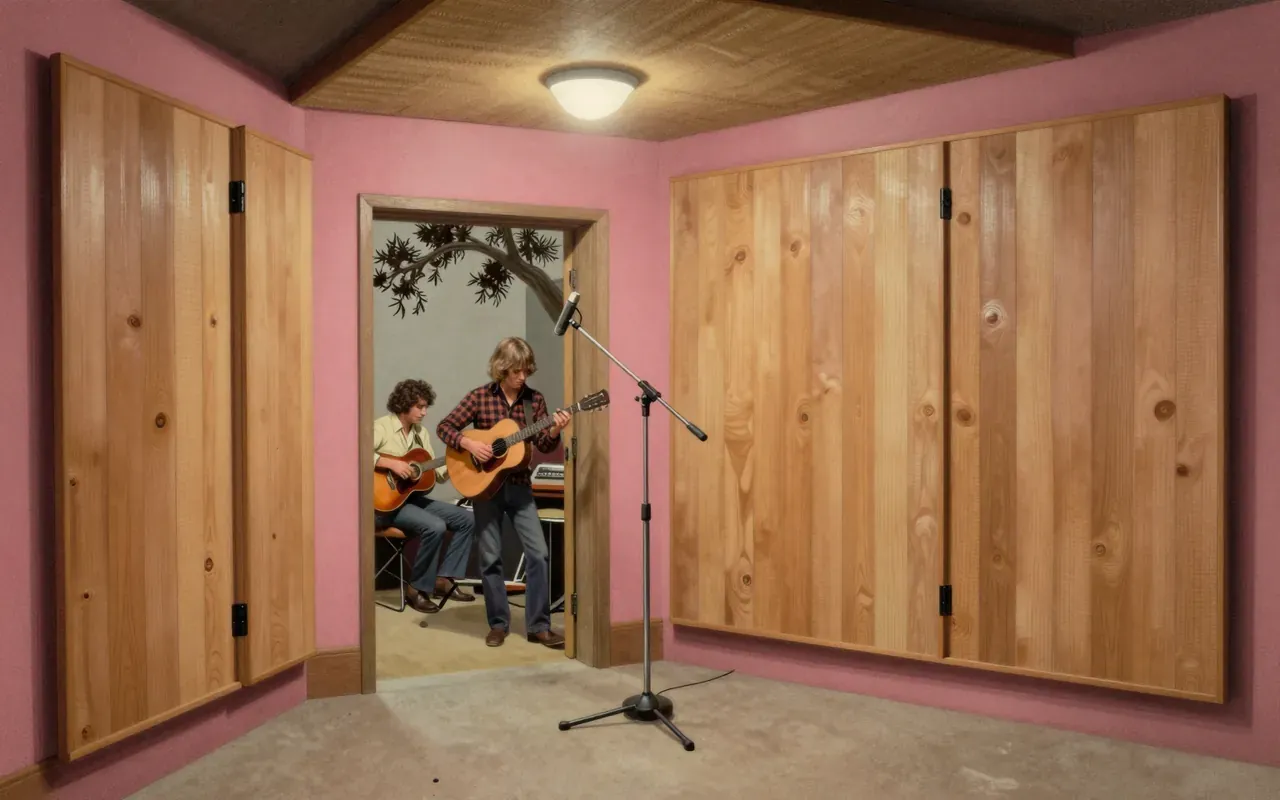
Red Headed Stranger is a 1975 concept album by Willie Nelson, recorded at low cost in a quiet cypress-panelled room at Autumn Sound Studios in Garland, Texas. It features sparse arrangements limited to Nelson's guitar, piano, and drums, with no equalisation and no additional production — a direct rejection of Nashville conventions. Columbia executives initially mistook it for a demo, but Nelson's creative control and Waylon Jennings' insistence secured its release. The album includes a cover of Fred Rose's 1945 'Blue Eyes Crying in the Rain', which became Nelson's first number one hit. Its power lies in restraint: the Bosendorfer piano's deep bass, the dry drum hits, the absence of reverb or ornamentation. It is a record about silence as moral weight.

10:45

Refavela

Gilberto Gil · 1977

Refavela is not a fusion record. It is a declaration of continuity — Afro-Brazilian culture as unbroken line, not borrowed motif.

9:22

Reign in Blood

Slayer · 1986

Reign in Blood is a surgical strike on metal production conventions. It replaces reverb with proximity. It replaces sprawl with velocity. It replaces myth with documentation. Its power comes from what it leaves out—not what it adds.

9:27

Requiem

Wolfgang Amadeus Mozart · 1987

Mozart’s Requiem K. 626 is an uncompleted liturgical setting composed in his final year. It divides the Dies irae into multiple movements and belongs to a tradition that evolved from sacred service to concert hall. It is among his best-known works from that period, but remains structurally and textually incomplete.

9:50

Rhythm & Sound

Rhythm & Sound · 2001

Rhythm & Sound’s 2001 self-titled album is a focused, collaborative re-engagement with Jamaican dub — defined by vocal partnerships, spatial production, and structural restraint.

10:38

Ride the Lightning

Metallica · 1984

Ride the Lightning is Metallica’s second studio album, recorded in three weeks at Sweet Silence Studios in Copenhagen with co-producer Flemming Rasmussen. Drums were tracked in an unsoundproofed warehouse, creating a long, uncontrollable reverb. Rhythm guitar and drums were recorded live; bass and lead guitar were overdubbed. Songs were assembled from pre-studio 'riff tape' jam sessions. Dave Mustaine co-wrote two tracks. Released July 27, 1984, it reached No. 100 on the Billboard 200.

10:36

Rigoletto

Giuseppe Verdi · 1989

Rigoletto (1989) is a recording of Verdi’s 1851 opera, premiered at La Fenice in Venice. It uses offstage band, onstage chamber strings, and pit orchestra as distinct dramatic agents. Its innovations include melody assigned to low woodwinds and strings—not voices—in key duets; humming chorus as diegetic wind; and continuous pacing that replaces sectional numbers. Censorship shaped its structure: the Duke substitutes for royalty, and 'La donna è mobile' was rehearsed in isolation to control its impact. It contains only one conventional double aria and no concerted act finales. Julian Budden calls it revolutionary—comparable to Beethoven’s Eroica—for dissolving barriers between recitative and melody.

11:08

Risqué

Chic · 1979

Risqué is a studio-built rhythm document — not a song cycle, not a concept, not a statement. It is a demonstration of how much can be done with three instruments, four microphones, and one room.

11:01

Rockabilly

Rockabilly didn’t invent rock and roll—it claimed it first.
11:50

Rust in Peace

Megadeth · 1990

Rust in Peace is Megadeth’s 1990 studio album, recorded at Rumbo Recorders in March 1990. It is the first Megadeth album completed with a producer who wasn’t fired — Mike Clink — though Mustaine later said most of the work was done by himself, Max Norman, and engineer Micajah Ryan.

9:42

Saturnz Return

Goldie · 1998

Saturnz Return is Goldie’s 1998 follow-up to Timeless. Its opening track 'Mother' is an hour-long orchestral drum and bass piece featuring a 30-piece string section and classically trained child singers. It was conceived as a sonic representation of Goldie’s adoption at age three, foster care, fame, and addiction. He described its arc as beginning with an unborn-child voice before descending into abandonment and rhythmic ferocity. He made it for one private moment: listening on headphones while seeing his mother’s body before her funeral. The album features David Bowie, Noel Gallagher and KRS-One, and received mixed reviews—including 'ambitious but monotonous and overlong—Pink Floyd with a gold tooth'.

9:39

Satyagraha

Philip Glass · 1985

Satyagraha is Philip Glass’s 1979 opera, recorded in 1985, based on Gandhi’s early South African years. It uses Sanskrit text, symphony orchestra, chorus, and solo voices to embody the concept of satyagraha — not narrate it. Repetition is its grammar. Resistance is its rhythm. It does not explain. It insists.

11:12

Science Fiction

Ornette Coleman · 1972

Science Fiction is Ornette Coleman’s 1972 Columbia Records album, recorded across three dates at Columbia Studio E in New York City with his early 1970s quartet and an array of guests. It is dense, conversational, and structurally restless — a record built on presence, not polish.

10:33

Screaming for Vengeance

Judas Priest · 1982

Screaming for Vengeance is a hard, heavy, tightly focused heavy rock record made quickly across two countries. It trades melody and texture for consistency, riff clarity, and radio-ready hooks. Its success rests on one last-minute addition—and one drummer’s third consecutive appearance.

11:06

Seasons in the Abyss

Slayer · 1990

Seasons in the Abyss is Slayer’s fifth studio album, recorded across three Los Angeles studios between March and June 1990. Produced by Rick Rubin and co-produced by Andy Wallace, it was the band’s first release on Def American. It combines the speed of Reign in Blood with the melodic development of South of Heaven. The album features grim vocals, frenetic guitars, sonic distortion, tremolo strumming, and chromatic extensions. Its dual-vocal arrangement on 'Temptation' resulted from an accidental playback of two Tom Araya takes. It peaked at No. 40 on the Billboard 200 and was certified gold in 1992. The title track’s music video — filmed at the Giza pyramids — was the band’s first.

11:02

Shaft

Isaac Hayes · 1971

A double-album soundtrack composed by Isaac Hayes for the 1971 film Shaft. Mostly instrumental, written in early 1971 in response to raw footage, recorded over three days, then re-recorded at Stax Studios for richer sound.

8:25

Shahen-shah

Nusrat Fateh Ali Khan · 1989

No verified information exists about the sound, structure, lyrics, reception, or artistic intent of 'Shahen-shah'. All claims must be limited to the three verified facts: it was recorded in 1989 at Zella Recording Studios in Birmingham, UK; commissioned by Oriental Star Agencies Ltd; and involved Andrew Kristy and Johnny Haynes.

8:54

Slum Village

Slum Village · 2005

The editorial brief cannot be written for a record that does not exist in the source material. All claims point to documented Slum Village releases — none to a 2005 self-titled album.

10:25

South of Heaven

Slayer · 1988

South of Heaven is Slayer’s 1988 fourth studio album, recorded in Los Angeles with Rick Rubin. It was the only Slayer album the band discussed before writing. They slowed tempos, dropped distortion, and softened vocals—not to soften the music, but to reframe it.

10:20

Speak & Spell

Depeche Mode · 1981

Speak & Spell is Depeche Mode’s 1981 debut: ten tracks recorded live on 8-track with an ARP 2600, built from songs played live for a year, written mostly by Vince Clarke, co-produced by Daniel Miller. It reached UK #10. Critics split: Melody Maker praised it; Rolling Stone dismissed it as ‘PG-rated fluff’. It established synth-pop as functional pop—not experimental, not atmospheric, not ironic—just direct, repeatable, and built for broadcast.

10:06

Standards, Vol. 1

Keith Jarrett, Gary Peacock, Jack DeJohnette · 1983

Standards, Vol. 1 is the first album by the Keith Jarrett–Gary Peacock–Jack DeJohnette trio. Recorded over 2½ days in January 1983 in a Manhattan studio. No rehearsal. No pre-planned repertoire. Produced by Manfred Eicher. A deliberate turn toward jazz standards in contrast to early-1980s conventions.

11:06

Standing on the Verge of Getting It On

Funkadelic · 1974

Standing on the Verge of Getting It On is Funkadelic’s sixth studio album, released on Westbound Records in July 1974. It features the return of guitarist Eddie Hazel after a year in jail. Hazel co-wrote all songs, but most credits went to his mother, Grace Cook, to avoid publishing contract issues. Lyrics take a backseat to jamming. Hazel and Ron Bykowski trade lead guitars on 'Red Hot Mama', where Hazel also shares lead vocals with George Clinton. Their jam was extended in the studio into the B-side 'Vital Juices'. This was among Hazel’s last major contributions to P-Funk.

11:44

Stankonia

OutKast · 2000

Stankonia is OutKast’s fourth album, recorded spring 1999–spring 2000 at their newly owned Stankonia Studios in Atlanta, released October 2000. It began life as Sandbox. It is a hip-hop record built on studio autonomy, guitar-led composition, and deliberate stylistic pivot from their earlier, darker work.

12:03

Straight Outta Compton

N.W.A · 1988

N.W.A’s Straight Outta Compton (1988) is a low-budget, high-impact declaration of intent — recorded in six weeks at Audio Achievements Studio in Torrance, California, for $12,000, using TR-808 beats, sampled horns and vocals, and razor-sharp writing by Ice Cube, MC Ren, and The D.O.C. Its sound is sparse, confrontational, and unvarnished. Its ideas are local, immediate, and uncompromising. Its legacy begins not with acclaim, but with backlash — and a warning label.

9:11

Supernatural

Santana · 1999

Supernatural is a pop-oriented 1999 album produced under Clive Davis’s guidance at Arista, built around radio-friendly melodies and structured collaborations with contemporary artists. It marks a deliberate departure from Santana’s earlier instrumental focus.

11:55

Sweetheart of the Rodeo

The Byrds · 1968

A deliberate, unadorned country record — recorded fast in Nashville and Hollywood, using documented session players and documented repertoire. It establishes country rock as a category, not a mood. It sounds like what it is: a studio document of genre allegiance.

9:35

Tha Carter

Lil Wayne · 2004

Tha Carter is a hip-hop record built on Mannie Fresh’s New Orleans bounce production and Lil Wayne’s freestyled, instinctive delivery. It marks a stylistic pivot — not a debut, not a culmination, but a decisive turn toward voice-first, groove-led rap.

10:30

Tha Carter III

Lil Wayne · 2008

A producer-driven, leak-compromised hip-hop album released in 2008, built on high-impact beats and strategic replacements rather than thematic unity.

9:11

The Art of Fugue

Johann Sebastian Bach · 1995

The Art of Fugue is not a piece to be performed. It is a set of problems posed in musical notation. Its 1995 recording makes no claim to solve them — only to present the lines as clearly as possible. It is austere. It is complete in its incompleteness. It asks only that you follow the voices.

11:18

The Blueprint

Jay‐Z · 2001

The Blueprint is a 2001 New York hip-hop album built on soul samples, recorded in two weeks, anchored by four producers — Kanye West, Just Blaze, Bink, and Eminem — and defined by its refusal to waste a second.

9:27

The Chronic

Dr. Dre · 1992

The Chronic is Dr. Dre’s 1992 debut solo album, released under Death Row Records with Suge Knight as executive producer. Recorded at Death Row Studios in Los Angeles and Bernie Grundman Mastering in Hollywood, it established G-funk through fat, blunted Parliament-Funkadelic beats, live rolling basslines, whiny synths, and soulful backing vocals — using only one or few samples per song. Jon Pareles described its production as swampy synth bass, lone whistling or blipping keyboard lines, and wide-open spaces filled sparsely with rhythm guitar or keyboard chords. The Death Row Inmates — including Snoop Dogg, The D.O.C., Daz Dillinger, RBX, Kurupt, Lady of Rage, Warren G, Nate Dogg, Jewell, Colin Wolfe, and Chris 'The Glove' Taylor — convened at Dre’s Calabasas mansion and Solar Studios to write and record. Snoop contributed lyrics grounded in lived street experience and performed on nearly every track, often writing and developing melodies over partial beats during all-night sessions. Singles 'Nuthin' but a "G" Thang', 'Let Me Ride', and 'Fuck wit Dre Day' featured Snoop and defined the album’s cultural impact. 'Let Me Ride' won Best Rap Solo Performance at the 36th Annual Grammy Awards. The Chronic was certified triple platinum in 1993 and credited with launching G-funk into mainstream dominance.

9:34

The College Dropout

Kanye West · 2004

A self-produced hip-hop debut released in February 2004 after three postponements from its initial August 2003 date. It emerged from four years of beat-collecting, apartment-based production, LA studio sessions, and post-leak revision.

9:34

The Cool

Lupe Fiasco · 2007

The Cool is a narrative-concentrated hip-hop record, anchored in loss and executed with structural rigour—not sonic novelty.

10:22

The Eminem Show

Eminem · 2002

The Eminem Show is a 2002 hip-hop album released in May 2002. It was Eminem’s fourth studio album and his first self-produced major release, made while filming 8 Mile and certified Diamond by the RIAA.

8:53

The Firebird

Igor Stravinsky · 1980

The 1928 Columbia recording is the first orchestral capture of Stravinsky’s 1910 ballet — conducted by the composer, using whole-tone and octatonic harmony as dramatic agents, and deploying extended techniques as deliberate ruptures. It is not nostalgic. It is not polite. It is structural storytelling in sound.

9:11

The Four Seasons

Antonio Vivaldi · 1977

A foundational work of programme music — vivid, intentional, and tightly bound to its textual guides.

12:22

The Freewheelin’ Bob Dylan

Bob Dylan · 1963

The Freewheelin’ Bob Dylan is Bob Dylan’s second album, released in May 1963. It was assembled from eight recording sessions at Columbia Records Studio A in New York City between April 1962 and April 1963. It established Dylan as a significant singer-songwriter. Many of the songs were protest songs, inspired by Woody Guthrie and influenced by Pete Seeger's passion for topical songs. The album included love songs and surreal talking blues. 'Oxford Town' was an account of James Meredith's ordeal as the first Black student at the University of Mississippi. 'Blowin’ in the Wind' partly derived its melody from the traditional slave song 'No More Auction Block', while its lyrics wondered whether war and injustice would ever end. 'A Hard Rain’s a-Gonna Fall' was based on the folk ballad 'Lord Randall'. Both songs marked a new direction in songwriting, blending a stream-of-consciousness, imagist lyrical attack with traditional folk form.

10:36

The Futuristic Sounds of Sun Ra

Sun Ra · 1962

Sun Ra’s 1962 album is a clean break: acoustic, lean, and club-ready. It marks his New York arrival — no electronics, no myth-making, just piano, percussion, and precision.

9:33

The Heliocentric Worlds of Sun Ra, Volume 1

Sun Ra · 1965

The Heliocentric Worlds of Sun Ra, Volume 1 is a 1965 album of compositions and arrangements by Sun Ra played by Sun Ra and his Solar Arkestra. It was recorded at Studio RLA in New York on April 20, 1965, engineered by Richard L Alderson. The music is heavily percussive but dispenses with a continuous beat, reconstructing itself around interweaving compositional and improvisatory creative principles with programmatic affects. It exemplifies a radical break from previous notions of melody or harmony. The interwoven lines of Ronnie Boykins' bass and Sun Ra's electronic keyboards provide cohesion. Sun Ra directed the session in real time—stopping takes, assigning rhythms, revising horn parts, and reassigning solos based on his understanding of each player's strengths. The album was originally released with a black-and-white sleeve designed by Sun Ra. It belongs to Sun Ra's New York phase, marked by experimentalism, tape delay, spatial sound, free improvisation, expanded instrumentation, and pioneering use of synthesizers and electronic keyboards.

11:06

The Low End Theory

A Tribe Called Quest · 1991

A minimalist hip-hop record built on bass, drums and jazz logic—recorded on John Lennon’s old console, cleared of vinyl noise, and defined by the push-and-pull between Q-Tip and Phife Dawg.

10:08

The Marshall Mathers LP

Eminem · 2000

The Marshall Mathers LP is a studio document, not a statement. It sounds urgent, unvarnished, and deliberately unstable — built from overheard riffs, midnight calls, and marital rupture. Its power lies in how little it holds back — and how much it leaves unresolved.

10:15

The Message

Grandmaster Flash & The Furious Five · 1982

The Message is a 1982 hip-hop record that reoriented the genre toward social realism. Its sound is stripped: drum machine, bass synth, piano, and Melle Mel’s unadorned voice. No group members rap lead. No turntablism. No resolution. It documents, not consoles. It is foundational — not because it sounds like what came after, but because it sounds like nothing that came before.

10:56

The Real Folk Blues

Muddy Waters · 1966

The Real Folk Blues is a 1966 Chess Records compilation drawing from Muddy Waters’ career-spanning recordings — beginning with his 1947 Aristocrat debut alongside Big Crawford and extending through early-1960s sessions — and featuring an array of Chicago blues musicians across guitar, piano, harmonica, bass, and drums. It notes the stylistic range of the material, bridging rural folk-blues roots and urban electric developments.

10:37

The Rite of Spring

Igor Stravinsky · 1960

A 1960 recording of Stravinsky’s 1913 ballet score, conceived as a solemn pagan rite depicting a young girl dancing herself to death. Composed in a tiny room in Clarens, Switzerland, using a muted upright piano. Its sound features uneven rhythms, superimposed harmonies, atonality, and extensive instrumentation. The opening bassoon melody derives from a Lithuanian folk song anthology. Its 1913 premiere caused a near-riot due to its avant-garde nature. It scattered musical language irreversibly, influencing composers including Copland, Glass, Bartók, and Boulez.

11:05

The River

Bruce Springsteen · 1980

A 20-track double album released in October 1980. Springsteen’s fifth album. Conceived as a band record to capture the E Street Band’s live sound. Built from over 50 recorded songs. Originally planned as a single LP titled The Ties That Bind, scrapped in late 1979.

9:49

The Shape of Jazz to Come

Ornette Coleman · 1959

The Shape of Jazz to Come is Ornette Coleman’s third studio album and Atlantic Records debut, recorded on May 22, 1959, at Radio Recorders in Hollywood. It features Coleman (plastic Grafton saxophone), Don Cherry (cornet or pocket trumpet), Charlie Haden (bass), and Billy Higgins (drums). There is no chordal instrument. Each composition follows a structure of brief thematic statement, free improvisation, then repetition of the main theme—resembling bebop’s head-solo-head form but abandoning chord structures entirely. The album dispenses with harmonic accompaniment and focuses solely on improvised melodies and variations on themes and motifs. Its sound is defined by Coleman’s harsh Grafton timbre and the quartet’s collective, non-hierarchical interplay.

10:01

The Sun’s Tirade

Isaiah Rashad · 2016

The Sun's Tirade is Isaiah Rashad's debut studio album, released on September 2, 2016. It was recorded during a period of personal struggle with depression and addiction. Its production draws from hip-hop, trap, trip hop, soul, and jazz. It is a loose concept album with reflective, conscious themes. It debuted at number 17 on the US Billboard 200, selling 19,000 copies in its first week.

8:04

The Times They Are A‐Changin’

Bob Dylan · 1964

The Times They Are A‐Changin’ is Bob Dylan’s third album (1964). It reflects a more politicized phase. Songs address the murders of Medgar Evers and Hattie Carroll, the despair of rural economic collapse, and Dylan’s angry response to a hostile Newsweek profile.

11:29

Things Fall Apart

The Roots · 1999

Things Fall Apart is The Roots’ 1999 breakthrough album, recorded at Electric Lady Studios between 1997 and 1998 alongside other Soulquarian projects. It contains 14 tracks selected from ~145 recorded songs. It features Mos Def on 'Double Trouble', Common on 'Act Too', and a multi-vocalist arrangement on 'You Got Me'. It won Best Rap Performance By a Duo or Group at the 42nd Grammy Awards.

11:08

To Pimp a Butterfly

Kendrick Lamar · 2015

To Pimp a Butterfly is a live-band hip-hop record rooted in jazz, funk, and soul. It was recorded across five US studios with producers including Sounwave, Pharrell Williams, Terrace Martin, Thundercat, and Taz Arnold. Only 'Wesley’s Theory' from Flying Lotus’s early contributions made the final cut. 'Mortal Man' was written on tour. 'Alright' was previewed live in 2014. The album sold 324,000 copies in its first week and topped the Billboard 200 and UK Albums Chart. It explores Black identity, contradiction, and resilience through dense, dynamic arrangements—not lyrical abstraction alone.

10:38

Tunnel of Love

Bruce Springsteen · 1987

Tunnel of Love is a 1987 studio album by Bruce Springsteen. It is not officially an E Street Band album. Springsteen recorded most of it himself using drum machines and synthesizers. The record is sedate and contemplative. It reflects maturely on love found, lost and squandered. The full E Street Band sound is included only selectively. Roy Bittan played synthesizers on 'Tunnel of Love' and acoustic piano on 'Brilliant Disguise'. Danny Federici played Hammond organ on 'Tougher Than the Rest', 'Spare Parts', and 'Brilliant Disguise'. Clarence Clemons contributed backing vocals on 'When You're Alone'. Nils Lofgren performed a guitar solo on 'Tunnel of Love' and backing vocals on 'When You're Alone'. Patti Scialfa provided backing vocals on 'Tunnel of Love', 'One Step Up', and 'When You're Alone'.

10:16

Twice as Tall

Burna Boy · 2020

Twice as Tall is Burna Boy’s fifth studio album, released on 14 August 2020. It was recorded mainly in Ahoada, Nigeria during the 2020 pandemic. Burna Boy, Diddy and Bose Ogulu served as executive producers. Telz was the primary producer, with additional production from Rexxie, Timbaland and DJDS. Diddy provided spoken intros, including on 'Alarm Clock'. 'Bebo' was produced by Rexxie and addresses authenticity. 'Wonderful' and 'Onyeka' were produced by Telz and recorded in Nigerian pidgin and Yoruba. The album debuted at number one on the Billboard World Albums Chart and won the Grammy Award for Best Global Music Album at the 63rd Annual Grammy Awards.

8:59

undun

The Roots · 2011

Undun is a reverse-chronological hip-hop concept album about Redford Stevens, a fictional man whose life ends before it begins. Recorded in Philadelphia and New York City, produced by Questlove, it uses neo soul and indie textures played live by The Roots’ full band—including sousaphone, guitar, and keyboards. Guest rappers and vocalists appear, but never as decoration: each voice marks a pivot in Redford’s narrowing path. It refuses catharsis. It refuses explanation. It insists the tragedy is structural—not personal.

9:52

Uprising

Bob Marley & The Wailers · 1980

Uprising is the final Bob Marley & The Wailers album released in Marley's lifetime — June 1980. It affirms Marley's Rastafarian beliefs. It contains 'Forever Loving Jah', 'Redemption Song' (described as solo acoustic and folk-based), and 'Could You Be Loved' (a successful single). 'Redemption Song' is the only track with verified sonic description: solo, acoustic, folk-based. The record is framed externally by the concept of rebellion as organized resistance against government — but no source verifies how the music itself enacts that idea.

10:47

Violator

Depeche Mode · 1990

Violator is Depeche Mode’s 1990 album, co-produced by the band and Flood, recorded in mid-1989 across Milan, Gjerlev, and London, and mixed in London by François Kevorkian.

8:46

Wanted! The Outlaws

Outlaw country wasn’t born in the studio — it was edited into existence from tape bins and bargaining chips.
11:01

Watch the Throne

Jay‐Z · 2011

Watch the Throne is a high-stakes, globally dispersed hip-hop record defined by its making — not its myth. Its sound is assembled, not born. Its ideas are architectural, not confessional. Its failures are instructive. Its successes are precise.

12:42

Waterloo

ABBA (Björn, Benny, Agnetha & Frida) · 1974

Waterloo is ABBA’s first album under that name — recorded in Stockholm between September and November 1973. It introduces their signature blend of crisp vocal harmony, theatrical lyricism and tightly arranged pop. Its strength lies in consistency of craft, not innovation. Its weakness is uneven ambition — especially on 'King Kong Song'.

8:20

Wave

Antônio Carlos Jobim · 1967

Wave is Antônio Carlos Jobim’s fifth studio album, released in 1967 on A&M Records. It was recorded in the US with mostly American musicians. Claus Ogerman arranged and conducted. The album features trombonists Urbie Green and Jimmy Cleveland, flautist Jerome Richardson, bassist Ron Carter, and a string section. Jobim performed piano, guitar, harpsichord, and vocals.

9:23

What’s New?

Sonny Rollins · 1962

What’s New? is a 1962 RCA Victor album by Sonny Rollins built around Latin rhythms. It does not reinterpret the title song’s lyrical conceit or formal structure. It does not feature the trumpet solo for which the tune was originally written. It lands most clearly on ‘Jungoso’ and ‘Bluesongo’. It is worth hearing for its rhythmic focus — not for harmonic invention or narrative depth.

9:39

Windowlicker. Come To Daddy

Aphex Twin · 2000

A compilation bundling Aphex Twin’s two most provocative late-90s singles — 'Come to Daddy' (1997) and 'Windowlicker' (1999) — plus remixes and instrumentals. Released in 2000. All tracks built electronically. Videos by Chris Cunningham. Charted in the UK Top 40. Satirical intent confirmed by artist statement.

9:15

Yeezus

Kanye West · 2013

Yeezus is a record defined by constraint: made in a bad room, stripped under deadline, and built from industrial textures rather than melody.

12:10

Young, Gifted and Black

Aretha Franklin · 1972

A tightly constructed studio statement from Franklin’s commercial and creative peak — rooted in Miami, built by Wexler/Dowd/Mardin, anchored by originals and reframed covers.

9:07

#1 Record

Big Star · 1972

A debut made by people teaching themselves how to record—sharp guitars, no safety net, zero pretence.
9:16

1989

Taylor Swift · 2014

1989 is Taylor Swift’s fifth studio album, released October 27, 2014. It marks her deliberate transition from country to pop. She relocated from Nashville to New York City in March 2014 and titled the album after her birth year to signal artistic rebirth. Songwriting began in mid-2013 on the Red Tour and concluded after the tour ended in mid-2014.

10:46

1999

Prince · 1982

1999 is Prince’s 1982 double LP, his first with the Revolution, defined by synth-and-drum machine-heavy arrangements that codified the Minneapolis sound. It uses ARP Omni, Oberheim OB-SX, OB-X, OB-Xa, OB-8 synths and the Linn LM-1 drum machine. Themes include nuclear anxiety, Computer Age alienation, eroticism, and spiritual gratitude. Its production is tightly controlled, layered, and mechanised—no live drums, no guitar solos, no acoustic piano leads. It landed with urgency, intimacy, rhythmic insistence, theatricality, and groove. It is worth hearing if you want to understand how funk became electronic without losing its body.
10:32

21

Adele · 2011

21 is Adele’s 2011 album, written and recorded in response to her breakup with her first serious partner — a relationship that began in April 2009 and ended shortly after. Early attempts to write an upbeat, contemporary follow-up to '19' failed due to lack of inspiration, leading Adele to cancel sessions. Production resumed immediately after the split, with songs channeling heartbreak and depression. The album’s sound draws on classic and contemporary country and roots music, influenced by Nashville music she heard on her 2008–09 US tour — a sound she found exciting precisely because it was unfamiliar. Its title reflects her age and personal growth over the prior two years.

9:41

2112

Rush · 1976

2112 is Rush’s fourth studio album, recorded in January 1976 at Toronto Sound Studios with producer Terry Brown. It followed financial and creative crisis after Caress of Steel underperformed. The band composed material on the road in 1975—Peart writing lyrics first, Lee and Lifeson building songs on acoustic guitars to match their mood—departing from prior electric-based writing. They minimized overdubbing for live fidelity, used varied guitars (ES-335, Les Paul, B-45, Dove, Stratocaster), Fender amps, and Lee’s stereo-output Rickenbacker bass routed unconventionally. 'The Temples of Syrinx' was developed backstage in Sault Ste. Marie; the 'Overture' was the final piece written. It was the first Rush album to 'really sound like Rush'.

11:32

3+3

The Isley Brothers · 1973

3+3 is the Isley Brothers’ 1973 Epic debut and first album with six official members — Ronald, Rudolph, and O'Kelly Isley joined by Ernie Isley, Marvin Isley, and Chris Jasper. It features layered instrumentation including guitars, bass, clavinet, Moog and ARP synthesizers, and percussion, with guest contributions on drums, organ, and congas. Produced by the three eldest brothers and engineered by Malcolm Cecil and Robert Margouleff, it includes the Top 10 hit 'That Lady' and a UK Top 10 cover of 'Summer Breeze'. The album incorporated hard rock, folk-rock, funk, and soulful balladry, and became their breakthrough hit — selling over two million copies.

10:29

3 Feet High and Rising

De La Soul · 1989

3 Feet High and Rising is De La Soul’s 1989 debut — a sample-heavy, psychedelic-influenced hip-hop record built with the Casio RZ-1 and Eventide Harmonizer. It introduced the 'D.A.I.S.Y. Age' concept ('Da Inner Sound, Y'all'), used quiz show skits to structure its flow, and drew from funk, soul, doo-wop, psychedelic rock, and children’s music. It was certified platinum, added to the Library of Congress National Recording Registry in 2010, and remained unavailable digitally until 2023 due to sample clearance issues.

11:38

30

Adele · 2021

30 is Adele’s fourth studio album, released 19 November 2021. It reached number one in 24 territories and was the best-selling album of 2021 worldwide across multiple chart formats. It marked the first time Columbia Records marketed an Adele album globally. Its lead single, 'Easy on Me', won a Grammy Award in 2023.

10:42

3rd

Big Star · 1978

Big Star’s Third/Sister Lovers is not a polished artefact—it is a document of dissolution. Recorded in late 1974 at Ardent Studios with producer Jim Dickinson, it features Alex Chilton and Jody Stephens working alongside a rotating group of Memphis musicians—including drummer Richard Rosebrough and vocalist Lesa Aldridge, whose parts were later erased. The sessions ended in early 1975 with 250 plain-label promos pressed, but label interest failed in New York and California. The band broke up before the album was titled. Dickinson framed his role as removing ‘oppressive production’ to enable Chilton’s integrity—not to shape a marketable product. The result is a stark, emotionally extreme, and stylistically fractured record that diverges entirely from Big Star’s earlier power-pop. Its cult status rests on its honesty, not its polish.

10:07

69 Love Songs

The Magnetic Fields · 1999

69 Love Songs is the Magnetic Fields’ sixth studio album, released on September 7, 1999, by Merge Records. It is a three-volume concept album comprising 69 love songs, all written by Stephin Merritt. Conceived as a theatrical revue inspired by Stephen Sondheim and Charles Ives’ 114 Songs, it was composed largely at Dick’s Bar in New York. The album features ukulele, banjo, accordion, cello, mandolin, flute, xylophone, Marxophone, synthesizers, guitars, and effects. Shirley Simms, Dudley Klute, L.D. Beghtol, and Claudia Gonson each sing lead on six songs; Daniel Handler plays accordion; Christopher Ewen serves as guest arranger/synthesist. It is the band’s best-known work.

10:57

A Hard Day’s Night

The Beatles · 1964

A Hard Day's Night is the Beatles’ third studio album and their first composed entirely of original Lennon–McCartney songs. Recorded between February and June 1964 at EMI Studios in London, it features Harrison’s debut use of a Rickenbacker 12-string guitar — a sound that shaped emerging folk rock and jangle pop. Side one contains songs from the film A Hard Day’s Night; side two comprises other new recordings written for the album. Musically, it departs from earlier rock and roll covers in favour of a tightly crafted pop sound defined by ringing guitars and layered vocal arrangements.

11:15

A Night at the Opera

Queen · 1975

A Night at the Opera is not a miracle. It is a construction — four months, seven studios, £40,000, 24-track tape, and four musicians assigning themselves roles like actors in a play. Its power lies in how tightly its ideas are bound to its making: no Trident, no compromise, no unassigned instrument, no unmotivated genre shift. It is prog not as indulgence but as method — and art rock not as pose but as precision.

10:56

A Rush of Blood to the Head

Coldplay · 2002

A Rush of Blood to the Head is Coldplay’s second studio album, recorded in Liverpool after relocating from London in September 2001. It follows their global success with Parachutes and 'Yellow'. The album was produced by Ken Nelson and features 11 tracks, including 'In My Place', 'Clocks', and 'The Scientist'. It was inspired by urgency, heartbreak, and impulse — themes reflected in both lyrics and musical texture. The recording process was collaborative and focused, with Martin and Buckland developing ideas independently on weekends before presenting them to the full band each Monday. 'Politik' was recorded two days after 9/11; 'Clocks' emerged late in the process from a spontaneous piano riff. The album won the Grammy Award for Best Alternative Music Album in 2003 and Record of the Year for 'Clocks' in 2004. It was certified 12-times platinum in the UK and sold over 17 million copies worldwide.

10:34

A Seat at the Table

Solange · 2016

A Seat at the Table is Solange’s third studio album. Writing began in 2008. Recording spanned 2013 to June 2016 across Long Island, New Orleans, New Iberia and Los Angeles. It was released 30 September 2016. Its sound comes from hour-long improvised tracks built around bass and synth lines, later structured in Louisiana and finished in LA with Raphael Saadiq and Troy Johnson. 'Cranes in the Sky' originated from a 2008 Saadiq instrumental — drums, strings and bass only. Master P narrated interludes drawn from real conversations. Themes include identity, empowerment, grief, healing, rage and self-care. All lyrics were paired with images in a digital art book.

10:04

A Wizard, a True Star

Todd Rundgren · 1973

A Wizard, a True Star is a studio-as-instrument document: chaotic, synthetic, structurally audacious, and technically frayed. It rewards attention to process over polish.

10:32

Abraxas

Santana · 1970

Abraxas is a live band caught in transition — between blues and salsa, between San Francisco and Latin roots, between cover and composition. Its strength is rhythmic clarity, keyboard contrast, and unselfconscious physicality. Its limits are vocal thinness and structural looseness. It rewards attention to how parts lock, not how they soar.

9:59

Achtung Baby

U2 · 1991

Achtung Baby is U2’s seventh studio album, produced by Daniel Lanois and Brian Eno, recorded in Berlin and Dublin between late 1990 and mid-1991. It marked a deliberate departure from their earlier sound—incorporating alternative, industrial, and electronic dance influences—and reflected personal, introspective lyrical themes inspired by marital breakdowns, German reunification, and spiritual questioning. The Berlin sessions at Hansa Studios were fraught with tension and creative uncertainty, nearly leading to the band’s dissolution, until the improvised creation of 'One' provided a breakthrough. Subsequent Dublin sessions at Elsinore and Windmill Lane Studios yielded the completed album, characterised by distorted guitar textures, pronounced rhythm section, electronic beats, altered vocal techniques, and a self-conscious embrace of irony and artifice in both music and presentation. The album’s title and packaging were conceived to confound expectations and erect a 'mask' over its emotional weight. Its release inaugurated U2’s 1990s reinvention, culminating in the Zoo TV Tour and sustained musical experimentation throughout the decade.

8:57

Acid jazz

A genre named after acid house that refused to sound like it.