musicbriefs
Highest rated

All briefs

1188 briefs · 11103 min · 865–960 on page 10 of 13
10:20

Coltrane Plays the Blues

John Coltrane · 1962

Coltrane Plays the Blues is a label-assembled 1962 compilation drawn from unissued October 1960 sessions at Atlantic Studios. Coltrane played tenor saxophone on five tracks and soprano on three. McCoy Tyner played piano on four of the six tracks — his absence from two marks the first pianoless trio since Coltrane’s Prestige years. Atlantic released it without Coltrane’s input or approval, after he had moved to Impulse Records. It is excluded from his official discography because he did not conceive or approve it as a leader during his lifetime.
8:47

Come Dance With Me!

Frank Sinatra · 1959

A 1959 Frank Sinatra album that dominated charts and awards but leaves its sound undocumented.

10:08

Continuum

John Mayer · 2006

Continuum is John Mayer’s third studio album, released 12 September 2006. It was recorded between January 2005 and July 2006 across studios in Los Angeles, New York City, and Memphis. It marks a deliberate pivot toward blues and soul, co-produced by Mayer and Steve Jordan.

10:19

Damn the Torpedoes

Tom Petty and the Heartbreakers · 1979

A 1979 rock record built by known hands in two LA studios — not a revolution, but a documented step forward in production credit.

10:08

Elephant Mountain

The Youngbloods · 1969

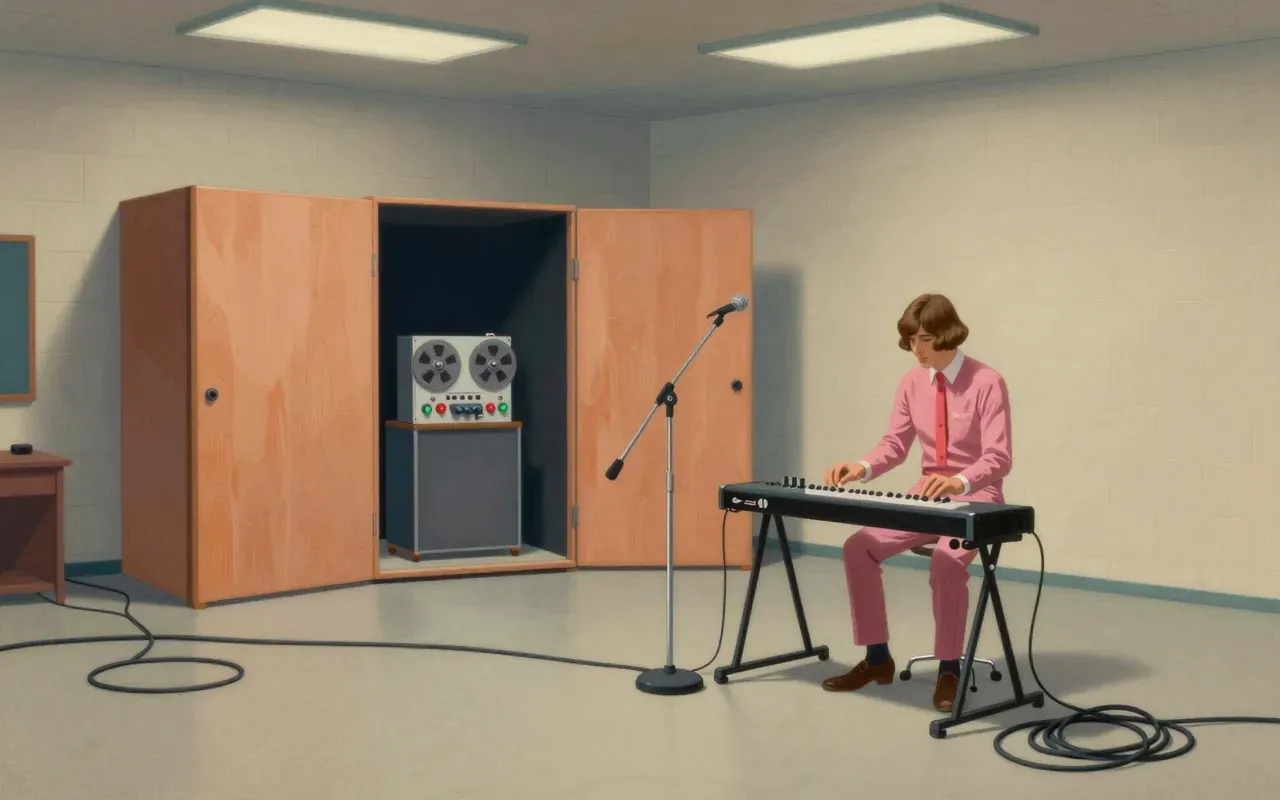
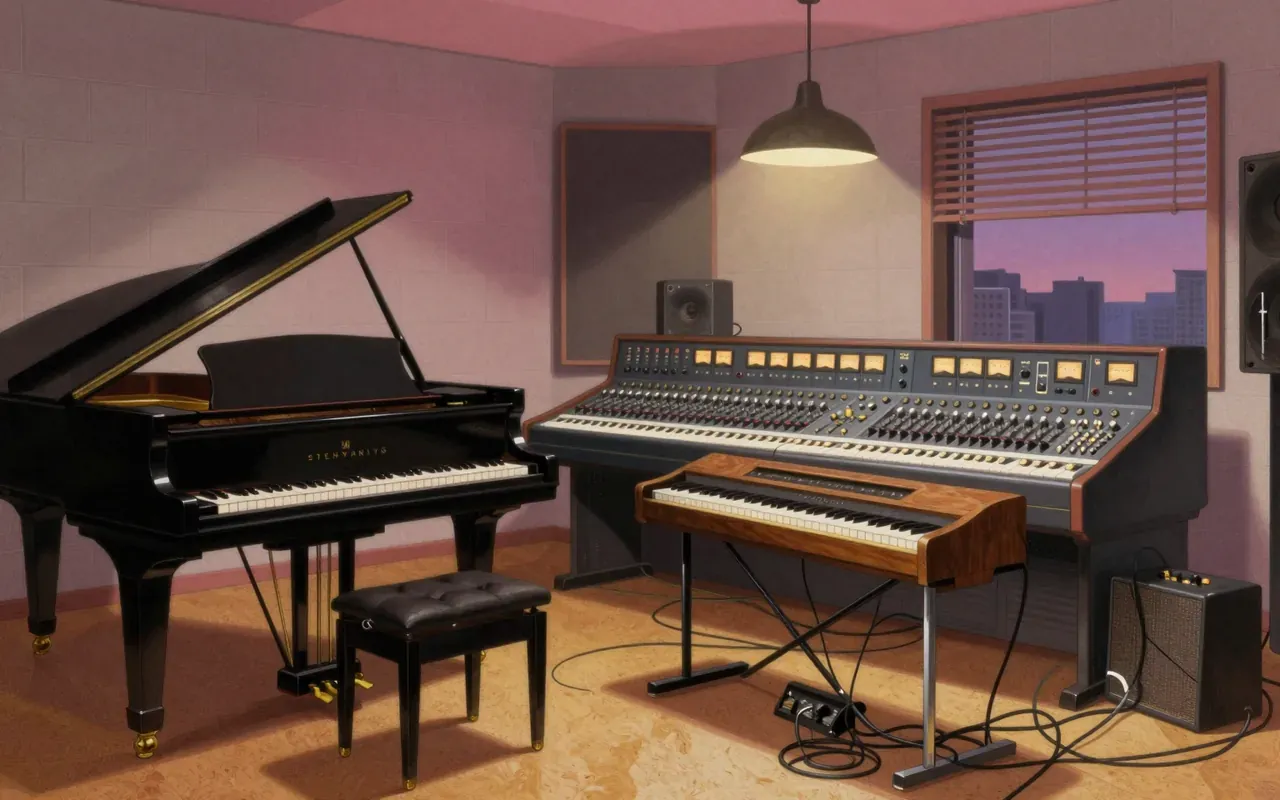
Elephant Mountain is a focused, unembellished studio document: piano-led, locally rooted, and shaped by absence. It assumes nothing. It delivers less than it promises — and that is its strength.

9:04

Fontessa

The Modern Jazz Quartet · 1956

Fontessa is the Modern Jazz Quartet’s 1956 Atlantic debut: their first formal guest collaboration (with Jimmy Giuffre), their first album after moving from Prestige, and their first recording following their 1956 European debut tour. The 11-minute title suite was composed by John Lewis and inspired by Commedia dell’arte, with its four characters illustrated on the cover. Lewis described it as a suite whose sketchy plot invites improvisation. The Prelude opens and closes the work. Harlequin is evoked by vibraphone improvisation in older jazz style. Pierrot appears in piano-led 'less older jazz'. Pantaloon emerges in drum-led 'still later jazz', developing the main motif. Colombine is represented by the recurring three-note 'Fontessa' motif. The mono version was issued in the USA on Atlantic’s black label, catalogue number 1231. The stereo release contained technical flaws: mains hum, tape hiss, and reduced bass level.

9:49

Fred Neil

Fred Neil · 1967

Fred Neil (1967) is a folk record defined by geography, not genre — recorded across Greenwich Village, Coconut Grove, and Los Angeles. Its sound is undocumented. Its legacy rests on Nilsson’s cover of ‘Everybody’s Talkin’’, not its own arrangements. It is a record of transit, not technique.

10:12

Gene Vincent and the Blue Caps

Gene Vincent and the Blue Caps · 1957

A lean, guitar-forward rock ’n’ roll record defined by who played — and who didn’t — rather than what was said.

9:12

Headquarters

The Monkees · 1967

Headquarters is The Monkees’ third album, released May 22, 1967, after firing Don Kirshner and winning full creative control. It is their first record made entirely with their own instruments and original writing — six songs by the band, two experimental interludes, and production by Chip Douglas.

9:17

Hello Nasty

Beastie Boys · 1998

Hello Nasty is a studio-dug experiment — reclusive, unplanned, genre-fluid. It uses 808s, disco breaks, analogue synths, and samples to build a freer, looser Beastie Boys record than before. Mix Master Mike reshapes the group’s sound. Guest vocals from Miho Hatori and Lee 'Scratch' Perry add distinct textures. Its sprawl works in moments — ‘Intergalactic’, ‘Body Movin’’, ‘Dr. Lee, PhD’, ‘Three MC’s and One DJ’ — but not across all 22 tracks.

9:57

Here, My Dear

Marvin Gaye · 1978

Here, My Dear is a 1978 double album recorded at Marvin Gaye Studios in Los Angeles between 1977 and 1978. It was inspired by the fallout from Gaye’s marriage to Anna Gordy. It was recorded with the intention of remitting a portion of its royalties to her as alimony payments. It performed poorly on the charts and was poorly received. Gaye played all keyboard parts himself. He composed lyrics spontaneously during sessions with only engineer Art Stewart present, developing embryonic melodies into finished lyrics over multiple takes. The album's music is largely midtempo funk, incorporating traditional soul, gospel, doo-wop, and a slight hint of disco. The title track opens the album, and Gaye's tone in the song is described as self-serving, self-justifying, and self-pitying. 'I Met a Little Girl' includes doo-wop-drenched harmonies with its lyrics and music producing a thick mixture of sincerity and sarcasm. 'When Did You Stop Loving Me, When Did I Stop Loving You' abandoned traditional song structure with a discursive mode, without a chorus, with its lyrics expressing different feelings—tenderness, fear, anger, regret.

10:28

Honky Tonk Masquerade

Joe Ely · 1978

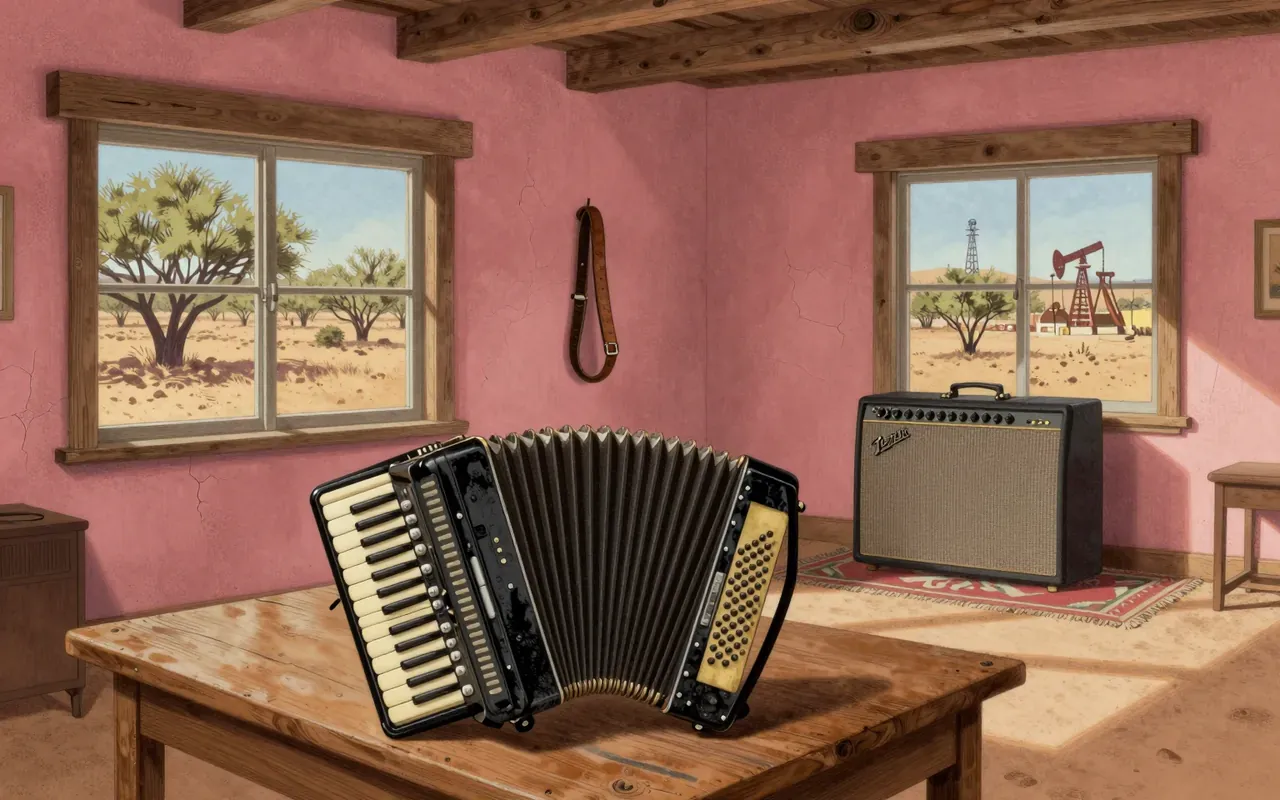
A factual anchor: 1978, Murfreesboro, steel guitar, acoustic guitar, Moog, accordion, Chip Young, Lloyd Maines, Butch Hancock, Hank Williams — nothing more, nothing less.

9:53

How to Dismantle an Atomic Bomb

U2 · 2004

U2’s How to Dismantle an Atomic Bomb is a record defined by contradiction: a self-proclaimed 'first rock album' made with too many producers, recorded twice, and built around instrumental limitation yet undermined by sonic fragmentation.

11:30

Hub-Tones

Freddie Hubbard · 1962

Hub-Tones is Freddie Hubbard’s third Blue Note album, recorded in 1962 with Wayne Shorter, Cedar Walton, Reggie Workman, and Philly Joe Jones at Van Gelder Studio. It is a tightly arranged, dry-sounding hard bop session — declarative, disciplined, and devoid of studio artifice. It lands on structure and interplay, not innovation or expansion.

9:29

Lô Borges

Lô Borges · 1972

The source provides only three verifiable facts: the Odeon contract offer tied to Clube da Esquina contributions; the album’s nickname and cover detail; and Borges’ immediate departure from Rio after completion. Nothing else about the album’s music, production, personnel, or internal content is established.

11:43

Loving You

Elvis Presley · 1957

The 'Loving You' soundtrack is Elvis Presley’s first film album, recorded in early 1957 across two studios — Paramount Pictures Scoring Stage and Radio Recorders in Hollywood — with Steve Sholes as first officially credited producer. It contains seven songs written expressly for the film under Presley’s and Parker’s publishing companies, plus five added to meet LP runtime: 'Don’t Leave Me Now' (written for but excluded from the film), '(Let Me Be Your) Teddy Bear' (insisted upon by producer Hal B. Wallis), 'Blueberry Hill' (a 1956 Fats Domino hit), 'True Love' (a Cole Porter song from High Society), and 'I Need You So'. Released in July 1957, it was Presley’s third consecutive number-one album. It inaugurated RCA’s practice of padding Presley soundtracks with non-soundtrack recordings — a pattern that defined his film-era output.

9:32

Night Life

Ray Price · 1963

Night Life is Ray Price’s sixth album, released in 1963 on Columbia Records, featuring his touring band the Cherokee Cowboys and musicians including Willie Nelson, Johnny Paycheck, and Buddy Emmons. Retrospective commentary positions it as bridging honky tonk and the Nashville sound—or as country’s first concept album—but no source confirms compositional intent, production method, or sonic character beyond personnel and release facts.

8:36

On How Life Is

Macy Gray · 1999

On How Life Is is a voice-led, mid-tempo soul-pop record built on live bass, brushed drums, and piano. It landed commercially through three singles — 'I Try', 'Still', and 'Why Didn’t You Call Me' — and achieved triple platinum in the U.S., quadruple in the UK. It does not innovate sonically or structurally. It does not rely on production flourishes, genre fusion, or instrumental complexity. Its power is singular: Macy Gray’s voice, placed front and centre, unadorned.

10:05

Only by the Night

Kings of Leon · 2008

Only by the Night is Kings of Leon’s fourth studio album, recorded in early 2008 at Nashville’s Blackbird Studio with producers Jacquire King and Angelo Petraglia; its core performances were captured on 16-track analog tape before transfer to Pro Tools for overdubbing and mixing; the opening track 'Closer' features a distinctive bass riff processed through a Boss ME50 pedal; writing began just days after the release of their prior album, Because of the Times; assistant engineer Lowell Reynolds worked on the sessions; the album was released on September 22, 2008, following a September 15 single release of 'Sex on Fire.'

11:02

Out Front

Booker Little · 1961

Out Front is a factual hinge: third leader date, 1961, Candid, post-We Insist!, concurrent with Five Spot. Nothing more is verifiable.

11:02

Out of Our Heads

The Rolling Stones · 1965

Out of Our Heads is the Rolling Stones’ third studio album, released in two distinct 1965 editions: a US version in July (No. 1 charting) containing seven originals — three by Jagger/Richards and four credited to Nanker Phelge — and a UK version in September foregrounding soul covers and four originals that foreshadow Aftermath. It bridges their R&B roots and emerging guitar-driven rock identity.

8:39

Peter Gabriel

Peter Gabriel · 1977

Peter Gabriel’s 1977 solo debut is a document of return—not reinvention. It bears the marks of a learning period: piano lessons, songwriting with Martin Hall, demos cut by end-1975. Recorded in Toronto with Bob Ezrin, it launched a series of four untitled albums, all ‘Peter Gabriel’, all Hipgnosis-designed. ‘Solsbury Hill’ anchors the record in place and autobiography—Solsbury Hill in Somerset. The rest floats, unmoored. No rhythm section dominates. No signature texture emerges. It is not cohesive. It is not polished. It is Gabriel, listening to himself again.

10:17

Pictures at an Exhibition

Emerson, Lake & Palmer · 1971

A live rock transcription that replaces the piano with ego, the orchestra with amplification, and the gallery with a packed northern English hall.

9:10

Queen II

Queen · 1974

Queen II is a decisive pivot toward studio-as-instrument. It is precise, intentional, and unromantic about process. Its sound is built on vocal layering, guitar doubling, and rigid scheduling—not mystique. It fails where it reaches too far, succeeds where it stays tight.

11:33

Sandinista!

The Clash · 1980

A 36-song triple LP released in December 1980. The Clash’s fourth studio album. Recorded over most of 1980 across London, Manchester, Jamaica, and New York. Produced by the band — primarily Mick Jones and Joe Strummer — with Mikey Dread’s participation. The only Clash album where all four members perform lead vocals.

11:09

Sigh No More

Mumford & Sons · 2009

Sigh No More is Mumford & Sons’ 2009 debut studio album, recorded with producer Markus Dravs after the band self-financed it and arrived at sessions without their own instruments. Only one track — 'Little Lion Man' — came from their prior EP Love Your Ground. The album features multi-instrumental performances by the core band (vocals, banjo, mandolin, double bass, drums, keyboards, accordion), augmented by trumpet, flugelhorn, trombone, violin, viola, and cello. Production includes unconventional elements such as 'a nail and a piano string'. Engineering was by François Chevallier, mixing by Ruadhri Cushnan, and mastering by Bob Ludwig. A live recording included in the deluxe edition was made at Shepherd's Bush Empire on 14 March 2010.

10:27

Smiley Smile

The Beach Boys · 1967

Smiley Smile is the Beach Boys’ 1967 retreat into domesticity — recorded in six weeks at Brian Wilson’s home studio using radio gear, a detuned piano, Baldwin organ, electronic bass, and found percussion. It abandons Smile’s scale for fragmentation, replaces session players with the band themselves, and credits production to the full group for the first time. Its sound is lo-fi, stoned, and intimate — vocals captured in a pool and shower, tape spliced and pitch-shifted, arrangements stripped to organ chords and bass grooves. It landed at number 41 in the US and baffled fans and critics alike. It is essential for anyone studying how pop adapts when ambition outpaces execution.
12:02

The Animals

The Animals · 1964

The Animals’ 1964 debut is a focused, unadorned R&B document — twelve covers, dominated by Alan Price’s organ, recorded before their breakout and before any major personnel or production shifts.

9:20

The Best of the Classic Years

King Sunny Adé · 2003

A functional, unadorned distillation of King Sunny Adé’s Island Records years — valuable for its fidelity to the original sequencing and instrumental palette, but silent on why these tracks, in this order, constitute ‘the best’.

10:51

The Electric Prunes

The Electric Prunes · 1967

A rushed, producer-driven debut where psychedelic texture overpowers pop-song filler — held together by accidental tape manipulation, fuzz, and tremolo.

9:47

The Grey Album

Danger Mouse · 2004

A 2004 experimental mashup by Danger Mouse, made from Jay-Z’s The Black Album a cappellas and samples solely from the Beatles’ 'White Album'. Released in a limited 3,000-copy run without Beatles permission. Framed as deconstructive labour — not remixing, but rebuilding using only those two sources.

9:34

The Hottest New Group in Jazz

Lambert, Hendricks & Ross · 1962

The Hottest New Group in Jazz is a 1959 Columbia Records album by Lambert, Hendricks & Ross. Its title quotes Downbeat magazine. It features the Ike Isaacs Trio on all tracks. Irving Townsend co-produced it. It is the fourth album by the trio and the first of three Columbia LPs they recorded beginning in 1959.

9:27

The Slider

T. Rex · 1972

The Slider is T. Rex’s 1972 album, written and demoed during their UK tour in fall and winter 1971. It was recorded across Rosenberg Studios (Copenhagen), Trident Studios (London), and Strawberry Studios in Château d'Hérouville — the latter chosen to avoid British taxing laws. Tony Visconti produced throughout. Marc Bolan’s drinking and cocaine use affected his personality during sessions, but recordings progressed quickly and efficiently. Musically, it features layered electric guitars, phasing, reverb, backwards guitars, string arrangements by Visconti, and androgynous backing vocals — though Visconti later claimed Flo & Eddie sang on only three tracks. Its lyrical themes include vulnerability, godhead imagery, and emotional states like sadness expressed in the title track’s refrain 'and when I'm sad, I slide'.

10:10

The Sounds of India

Ravi Shankar · 1958

A pedagogical artefact, not a concert document. Recorded in New York in 1957, it uses spoken introductions and concise performances to frame Hindustani classical music for Western listeners. Its sound is defined by three acoustic instruments in a dry studio space: sitar, tabla, tambura. Nothing else enters the frame.

9:36

Tijuana Moods

Charles Mingus · 1962

Tijuana Moods is a constructed object — not a captured event. Its value lies in hearing how Mingus used editing as an instrument, not in hearing what the band sounded like on a given night.

11:13

Tom Petty and the Heartbreakers

Tom Petty and the Heartbreakers · 1976

Tom Petty and the Heartbreakers’ 1976 debut is a studio document: recorded and mixed at Shelter Studio in Hollywood, with instrument assignments confirmed per track, no speculative production claims, and impact tied to external placements — not internal reinvention.

10:26

Triangle

The Beau Brummels · 1967

Triangle is the Beau Brummels’ fourth studio album, released in July 1967 and produced by Lenny Waronker. It marks their first collaboration between vocalist Sal Valentino and guitarist Ron Elliott as co-writers. Recorded by a trio—Valentino, Elliott, and Ron Meagher—after the departure of Don Irving and John Petersen, and during Meagher’s exit to Army Reserves, the album embraces psychedelic musical style, fantasy-themed lyrics, and surreal characters. Session musicians including James Burton, Jim Gordon, Carol Kaye, and Van Dyke Parks (on harpsichord for 'Magic Hollow') contributed. Arrangements feature strings, brass, woodwinds, harpsichord, and unique percussion. Ron Elliott described the album as 'ethereal, mystic, and mysterious', reflecting the drug culture of 1967. Though commercially modest, it received critical acclaim and later gained recognition as a cult classic.

9:11

We Insist! Max Roach’s Freedom Now Suite

Max Roach · 1961

We Insist! is a 1960 jazz suite commissioned for the Emancipation Proclamation centennial. Abbey Lincoln sings. Oscar Brown Jr. writes the lyrics. Nothing more is verifiable.

8:58

Wild Honey

The Beach Boys · 1967

Wild Honey is a soul record blending pop and R&B. Recorded mostly at Brian Wilson’s home studio. A deliberate departure from Pet Sounds and Smile. A self-conscious return to rock-band fundamentals.

8:50

Wish I Was in Heaven Sitting Down

R.L. Burnside · 2000

Wish I Was in Heaven Sitting Down is a blues record defined by omission. Burnside’s voice is present. His guitar is not. The album was made in 2000, after heart surgery and an ear infection in 1999, while his touring had dropped to a minimum. Guitar duties were handed to Rick Holmstrom, Smokey Hormel, and John Porter. Nothing else about the recording — room, mics, tempos, arrangements — is documented in the source material. This is not a reinvention. It is a delegation.

10:00

With His Hot And Blue Guitar

Johnny Cash · 1957

A functional, unadorned document of Cash’s early sound—recorded fast, mixed dry, released before the hits took hold.

10:42

All That You Can’t Leave Behind

U2 · 2000

All That You Can’t Leave Behind is U2’s 2000 return to live ensemble recording, made with Brian Eno and Daniel Lanois at Hanover Quay Studios. It abandons Pop’s fragmentation for clarity, cohesion, and vocal-led uplift. Its strength is commitment—not revelation.

9:04

ANTI

Rihanna · 2016

ANTI is Rihanna’s eighth studio album, released exclusively on Tidal on January 28, 2016, after her departure from Def Jam to Roc Nation. It is eclectic by design, blending pop, dancehall, psychedelic soul, lo-fi beats, soul, and trap — shaped by creative struggles and emotional turmoil — and it became her second number-one album on the Billboard 200.

9:48

Blondie

Blondie · 1976

Blondie (1976) is a tightly wound debut that uses girl group tropes as weapons — not winks. Gottehrer’s production is clean, dry, and unflinching. The band’s rejection of retro and pop labels is audible in every detached vocal, every abrupt cut, every organ stab that refuses to soothe. It is not warm. It is not deep. It is precise.

10:46

Blunderbuss

Jack White · 2012

Blunderbuss is Jack White’s debut solo album, self-produced and released on 24 April 2012. It was recorded at Third Man Studio in Nashville following RZA’s last-minute cancellation of a session, prompting White to record his own songs with assembled musicians. He directed up to 12 players at once—more than in any prior project—and used both all-female and all-male ensembles, recording multiple versions of songs to test feel. The album was cut to analog 8-track tape with minimal compression, favouring dynamic range and immediacy. Its sound integrates blues rock, country soul, R&B, jazz, and hip hop elements, though the latter two remain stylistic nods rather than structural commitments. Lyrically, it grapples with breakup and duality. It debuted at number one on the Billboard 200 and earned Grammy nominations for Album of the Year, Best Rock Album, and Best Rock Song ('Freedom at 21'). White toured it with two alternating bands—the all-female Peacocks and all-male Buzzards—but abandoned the format after the tour due to expense.

8:35

Broken beat

Broken beat didn’t reinvent rhythm—it fractured it on purpose, then left the pieces in West London.
10:17

Buffalo Springfield Again

Buffalo Springfield · 1967

Buffalo Springfield Again is a document of disintegration — not decline, but divergence. It is worth hearing for how it uses absence as an instrument.

10:16

C’est Chic

Chic · 1978

C’est Chic is Chic’s second studio album, released in 1978 on Atlantic Records. It contains 'Le Freak', which topped US Hot 100, R&B, and Club Play in October 1978, and 'I Want Your Love', which reached number 5 on US R&B, number 7 on US Pop, and number 4 in the UK. The European version was originally titled Très Chic, featured a more risqué cover, and had a different track listing before being withdrawn. The Globe and Mail described it as 'a sleekly elegant variation' of disco; the Los Angeles Times judged that, aside from 'Le Freak', the album consists of pedestrian disco pieces and plodding R&B ballads. All songs were written by Bernard Edwards and Nile Rodgers unless noted otherwise.

10:00

Chelsea Girl

Nico · 1967

A record made for Nico, not by her — and its flute still haunts every note.

11:14

Countdown to Ecstasy

Steely Dan · 1973

Countdown to Ecstasy is a technically exact, lyrically sardonic jazz-rock record made under time pressure — less a band album than a series of studio-built arguments about taste, irony, and control.

8:39

Destroyer

KISS · 1976

Destroyer is KISS’s 1976 studio album. It uses orchestration, layered vocals, and studio effects to amplify its cartoonish mythology. It references no naval history, no films listed, and no literary works—even when track titles overlap with them. Its power lies in construction, not revelation.

8:46

Eagles

Eagles · 1972

Eagles (1972) is a debut defined by unresolved tension—between producer Glyn Johns’ acoustic-country vision and Glenn Frey/Don Henley’s rock-and-roll instincts—recorded fast in London’s Olympic Studios. Its strongest moments ('Take It Easy', 'Witchy Woman', 'Peaceful Easy Feeling') showcase vocal layering and instrumental restraint. Its weakest lack forward motion or stylistic conviction. It is not a polished arrival. It is a working document of a band mid-formation.

9:50

Fragile

Yes · 1971

Fragile is Yes’s fourth studio album, released in late 1971. It marks Rick Wakeman’s debut and Tony Kaye’s departure over resistance to electronic keyboards. Recorded in August–September 1971 at Advision Studios on a 16-track machine, it features four group compositions and five individual member pieces — a structural choice driven by budget and time constraints. Eddy Offord co-produced with the band. The album introduced Wakeman’s expansive keyboard palette and established the band’s signature progressive sound.

9:11

Gasoline Alley

Rod Stewart · 1970

Gasoline Alley is Rod Stewart’s second solo album, released in the autumn of 1969. It continues the musical approach of his debut and introduces mandolin into his sound.

10:08

Greetings From L.A.

Tim Buckley · 1972

Tim Buckley's 1972 album Greetings From L.A. is a funk record made after he disbanded his Starsailor ensemble and assembled a new funk band in 1970. It features sexually frank lyrics that hindered radio airplay and alienated his earlier hippie fan base, though he retained a cult following.

12:39

Happy Sad

Tim Buckley · 1969

Happy Sad is Tim Buckley’s 1969 third album, recorded at Elektra Sound Recorders in Los Angeles and produced by Zal Yanovsky and Jerry Yester. It reflects folk and jazz influences, features David Friedman’s vibraphone as a defining textural element, and marks Buckley’s first full solo lyric writing after ending his collaboration with Larry Beckett. Its songs are significantly longer than his earlier work, and its vocals are stylized — used as an instrument for the first time. Though it reached No. 81 — Buckley’s commercial peak — it is neither a folk-rock consolidation nor a full avant-garde departure, but a liminal record where structure loosens and sound gains autonomy.
9:14

I Against I

Bad Brains · 1986

I Against I is a pivotal, uneven pivot — where Bad Brains trade velocity for vocabulary, and pay for it in cohesion.

11:13

I See a Darkness

Bonnie 'Prince' Billy · 1999

A factual anchor for a record whose sound remains undocumented in the source material.

11:50

Imagine

John Lennon · 1971

A 1971 studio album by John Lennon, recorded across Ascot Sound Studios, EMI Recording Studios, and the Record Plant in New York City. It was Lennon’s second solo studio album after Plastic Ono Band. He made it with Yoko Ono and Phil Spector as co-producers, aiming for major commercial success through a more accessible sound.

9:05

In‐A‐Gadda‐Da‐Vida

Iron Butterfly · 1968

Iron Butterfly’s 1968 album In-A-Gadda-Da-Vida is a two-part statement: four short psychedelic tracks on Side A, and a 17-minute title track filling Side B. It was made by the classic quartet — Ingle (Vox Continental organ, vocals), Brann (guitar, lead vocals on 'Termination'), Dorman (bass, backing vocals), and Bushy (drums, percussion). Ingle wrote all tracks except 'Termination', co-written by Brann and Dorman. The album was a commercial milestone — Atlantic’s first in-house platinum award — and its title track became a top-30 US hit when edited to 2:52. Critics identified its sound as a pioneering fusion of hard rock with acid-friendly textures, trippy exploration, open-ended jams, and a hard, distorted attack.

10:10

Let It Be

The Replacements · 1984

The editorial brief must correct a fundamental misattribution: the material provided describes only the Beatles’ 1970 album Let It Be. There is no verified information supporting the existence of a 1984 Replacements album titled Let It Be—or any of its listed tracks—in the given sources. All references to The Replacements, film placements of 'I Will Dare' or 'Unsatisfied', and the running order are irrelevant to the document and cannot be used.
11:37

Loaded

The Velvet Underground · 1970

Loaded is the Velvet Underground’s final studio album with Lou Reed and Sterling Morrison, recorded in 1970 under explicit commercial pressure from Cotillion Records to produce radio-friendly hits. It features studio-crafted pop-rock arrangements, edited for brevity and hook repetition, with Doug Yule assuming central creative and vocal roles in the absence of Maureen Tucker (on maternity leave) and Sterling Morrison (attending college). Lou Reed disavowed the final mix and sequencing, particularly the excision of the 'heavenly wine and roses' bridge from 'Sweet Jane', though Doug Yule contends Reed himself made those edits to meet hit criteria. The album is the band’s most accessible, yet also their most contested — a document of compromise, not collapse.

9:34

Mellon Collie and the Infinite Sadness

The Smashing Pumpkins · 1995

Mellon Collie and the Infinite Sadness is a 1995 double album by The Smashing Pumpkins. It contains 28 songs spanning over two hours. It was recorded with producers Flood and Alan Moulder, abandoning longtime producer Butch Vig. The band recorded first in a rehearsal space, used two rooms simultaneously, and employed Pro Tools for overdubs. All guitars were tuned down a half-step. The album was conceived as a double album from the outset, partly inspired by the Beatles' self-titled album. Corgan described it as 'The Wall for Generation X'. The songs were intended to symbolise the cycle of life and death. Time magazine praised it as 'the group's most ambitious and accomplished work yet'. It debuted at number one on the Billboard 200 in October 1995.

12:20

Morrison Hotel

The Doors · 1970

Morrison Hotel is The Doors’ fifth studio album, recorded November 1969–January 1970 at Elektra Sound Recorders in Los Angeles. It marks a return to blues rock after The Soft Parade, with Jim Morrison writing or co-writing every track. Structured as two sides — 'Hard Rock Café' and 'Morrison Hotel' — it features session bassists Lonnie Mack and Ray Neapolitan, and key production choices including Ray Manzarek’s switch to tack piano on 'Roadhouse Blues', John Sebastian’s harmonica overdub (credited as G. Puglese), and Robby Krieger’s distorted G5 guitar hook on 'Peace Frog'. Morrison drew lyrics for 'Peace Frog' from his 'Abortion Stories' notebook, repeating 'blood' as a motif — possibly referencing national unrest. The album lands strongest on its opening trio — 'Roadhouse Blues', 'Waiting for the Sun', and 'You Make Me Real' — then loosens its grip. It is not a unified statement, but a working-out: bass-heavy, texturally specific, lyrically fragmented, and sonically grounded in the room where it was cut.

9:38

Run the Jewels 2

Run the Jewels · 2014

Run the Jewels 2 is a hip-hop album defined by its credited instrumental and vocal additions — not its themes, sound design, or production philosophy. It names who played what, and where. Nothing more is established.

9:25

S.F. Sorrow

The Pretty Things · 1968

S.F. Sorrow is the first rock opera: a studio-bound, narrative-driven, sonically dense 1968 record made at Abbey Road with experimental instrumentation, relentless tape bouncing, and zero concern for live performance. It landed as a landmark—not because it succeeded on all fronts, but because it attempted everything at once, in real time, with limited tools and no map.

9:58

Sex Machine Today

James Brown · 1975

Sex Machine Today is James Brown’s first conscious engagement with disco — a functional, dry, rhythm-locked record made as his chart presence collapsed. It lands where repetition meets precision. It fails where spontaneity and space once ruled.

10:03

She’s So Unusual

Cyndi Lauper · 1983

She's So Unusual is a debut album whose documented reality is narrow: genre tags, credited players, vocal reception, cover photography context, and lyrical revisions. Nothing about sound design, performance nuance, studio process, or musical structure appears in the source material. All claims are anchored to verbatim sentences. The record is known for what it declares—not what it reveals.

10:22

SMiLE

Brian Wilson · 2004

SMiLE is not an album you listen to—it’s a forensic archive of ambition collapsing under its own weight.

9:07

Songs of Leonard Cohen

Leonard Cohen · 1967

Songs of Leonard Cohen is Leonard Cohen’s 1967 debut folk album, released by Columbia Records. It was recorded amid creative tension between Cohen and producer John Simon, following John Hammond’s withdrawal. Cohen preferred a sparse, intimate sound — working first with bassist Willie Ruff — and resisted Simon’s ornate arrangements involving strings, horns, and drums, which he had explicitly forbidden. He insisted on using a mirror during recording and objected to specific production choices: the orchestration on 'Suzanne', the softness of 'Hey, That's No Way to Say Goodbye', excessive bass, and a disruptive pause in 'So Long, Marianne'. Some of Simon’s additions proved irreversible due to technical limitations of the four-track master tape. Instrumentalists — including members of Kaleidoscope — were personally recruited by Cohen but remained uncredited on the original sleeve. All tracks are written solely by Cohen.

10:50

Songs of Love and Hate

Leonard Cohen · 1971

Songs of Love and Hate is Leonard Cohen’s third studio album, released in 1971. It follows Songs of Leonard Cohen (1967) and Songs from a Room (1969). It is part of his early sequence of folk music albums. Most of the album was recorded at Columbia Studio A in Nashville between 22 and 26 September 1970. 'Sing Another Song, Boys' was recorded live at the Isle of Wight Festival on 30 August 1970. Further recording took place at Trident Studios in London. Cohen reunited with producer Bob Johnston and brought back guitarist Ron Cornelius, who led the backing band called The Army. Cohen described 'Joan of Arc' as exploring how humans meet and embrace their destiny. He stated that 'Famous Blue Raincoat' is about a man writing to another man who had an affair with his wife, and that the title references his own blue Burberry raincoat. Cohen expressed dissatisfaction with 'Famous Blue Raincoat', feeling it was unfinished and revealed its compositional 'carpentry', though he praised its tune and some images. Cohen's syncopated classical guitar 'chop' is especially prominent on 'Avalanche', and he considered 'Dress Rehearsal Rag' unreperformable by him. Songs of Love and Hate was not referenced in the document as having been used in film soundtracks or performed on BBC TV.

9:43

SOUR

Olivia Rodrigo · 2021

Sour is Olivia Rodrigo’s debut studio album, released May 21, 2021, to critical acclaim. Rodrigo co-wrote 'Drivers License' with Dan Nigro. She secured ownership of the masters under her 2020 Geffen Records deal. The making of Sour is documented in Olivia Rodrigo: Driving Home 2 U, released March 25, 2022.

10:23

Tarkus

Emerson, Lake & Palmer · 1971

Tarkus is a studio document of creative fracture—not a concept album, but a contract renegotiation set to Moog and Hammond.

12:57

Ten

Pearl Jam · 1991

Ten is a studio-built rock record anchored by Gossard and Ament’s riffs, Parashar’s layered production, and Vedder’s heavy baritone. Its power lies in compression, repetition, and unresolved tension — not virtuosity, variation, or vulnerability. It sounds like a band assembling itself in real time, not playing together.

10:38

The Basement Tapes

Bob Dylan · 1975

The Basement Tapes is not a studio album. It is a 1975 compilation of 1967 basement recordings — raw, unvarnished, and made with borrowed gear — stitched together with later Band-only tracks and 1975 overdubs. It documents process, not product.

10:45

The “Chirping” Crickets

The Crickets · 1957

The 'Chirping' Crickets is the debut album of The Crickets. Its sleeve documents the original line-up: Buddy Holly (lead vocals, lead guitar), Niki Sullivan (rhythm guitar), Jerry Allison (drums), and Joe B. Mauldin (bass). The recordings were issued under the group name because they featured dubbed backing vocals — a marketing distinction from Holly’s solo releases. The band name was chosen for legal reasons, to avoid conflict with Holly’s prior solo recordings.

10:54

The Hangman’s Beautiful Daughter

The Incredible String Band · 1968

The Hangman’s Beautiful Daughter is a 1968 psychedelic folk album by The Incredible String Band, recorded in December 1967 at Sound Techniques in Chelsea, London. It uses multitrack recording to recreate live performance energy, layers exotic instruments including sitar, gimbri, shenai, oud, harpsichord, panpipes and kazoo, and features contributions from Licorice McKechnie (vocals, finger cymbals), Dolly Collins (flute organ, piano) and David Snell (harp). Robin Williamson contributes dreamlike, surreal songs such as 'The Minotaur’s Song', while Mike Heron’s 'A Very Cellular Song' — a 13-minute centrepiece — integrates the Bahamian spiritual 'I Bid You Goodnight'. Lyrically, it explores life, mythology and religious properties in a free musical structure, with esotericism as a consistent anchor. It departs from earlier work through layered production and expands on themes first developed on The 5000 Spirits or the Layers of the Onion.

11:13

The Nightfly

Donald Fagen · 1982

The Nightfly is Donald Fagen’s 1982 debut solo album, released after Steely Dan’s 1981 breakup. It was inspired by his suburban adolescence in Kendall Park, New Jersey, and his teenage fascination with late-night radio. It was recorded in 1981–82 across studios in New York City and Los Angeles using 3M’s 32-track and four-track digital recorders—one of the earliest fully digital recordings in popular music. The core production team—Gary Katz, Roger Nichols, and Elliot Scheiner—reunited from Steely Dan’s prior sessions. Key session players such as Jeff Porcaro, Rick Derringer, and Larry Carlton were veterans of Steely Dan’s studio sessions. The album was certified platinum in the U.S., reached number 11 on the Billboard Top 200, spawned the Hot 100 top-30 single 'I.G.Y.', and earned a Grammy nomination for Album of the Year.

12:12

The Stooges

The Stooges · 1969

The Stooges’ 1969 debut is the first fixed document of their live practice — not a studio creation, but a cut-and-paste trace of feedback, gesture, and object-based noise. Critics rejected it. It sold poorly. Its sound comes from vacuum cleaners, oil drums, and funnels — not from production choices. Its ideas are physical, not compositional. Its value lies in what it reveals about where rock could go before it settled into form.

8:49

The Suburbs

Arcade Fire · 2010

The Suburbs is Arcade Fire’s third studio album, released in 2010. It was produced by Markus Dravs and engineered by Marcus Paquin. Recording took place across three locations: Win Butler and Régine Chassagne’s Montreal residence, the band’s Quebec studio, and New York City. Win Butler described the album’s sound as a mix of Depeche Mode and Neil Young—intended to evoke the mysterious, formative noises of his youth. Each song was pressed to a 12-inch lacquer and re-recorded for the digital master. The album was released with eight different covers. A pre-release review by The Quietus compared its progression to William Blake’s Songs of Innocence and of Experience.

8:58

There’s No Place Like America Today

Curtis Mayfield · 1975

There’s No Place Like America Today is a 1975 Curtis Mayfield album that trades the thematic rigour of Back to the World for a series of grounded, mid-tempo soul statements about fatigue, faith, and economic strain. Its sound is clean, Chicago-rooted, and instrumentally specific—bass, wah guitar, horns, strings—but lacks a unifying production idea or narrative arc. It appears in film contexts far removed from its origin: 'Billy Jack' in Daft Punk’s Electroma, 'So in Love' across four adaptations spanning 56 years. It rewards attention to lyric and groove, not myth or momentum.

10:12

Truth

Jeff Beck · 1968

Truth is a decisive, flawed, and sonically urgent debut — a document of transition, not consolidation.

8:54

Urban Hymns

The Verve · 1997

Urban Hymns is a 1997 rock record made in London with strict studio discipline, then reshaped by Nick McCabe’s return and re-recorded guitar parts. Its biggest hit rests on an uncleared string sample. It landed at UK number 1, displaced Oasis, and dissolved the band within two years.

9:29

Wildflowers

Tom Petty · 1994

A 1994 solo album shaped by executive decision, not studio revelation.

9:11

Aida

Giuseppe Verdi · 1989

A studio recording of Verdi’s Aida, made in 1989. Contains all vocal and orchestral numbers across four acts. Omits Verdi’s rejected overture. No source material describes performers, conductor, recording venue, or engineering choices.

9:41

Aladdin

Alan Menken · 1992

A technically assured, narratively precise soundtrack built for mass appeal and cinematic utility. It delivers exactly what it promises: songs that advance plot, underscore emotion, and vanish from memory once the credits roll.

9:18

…And Justice for All

Metallica · 1988

…And Justice for All is Metallica’s 1988 studio album, recorded January–May at One on One Recording Studios in Los Angeles. It is defined by its dry, sterile production, inaudible bass, clicking drums, and thin guitar buzz—results of a methodical, instrument-by-instrument process overseen partly by Flemming Rasmussen (who joined six weeks in) and mixed by Thompson and Barbiero in Rasmussen’s absence. Jason Newsted recorded bass alone. Hetfield prioritised a hard vibe over singing. The album premiered at Brooklyn’s L’Amour in September 1988.

9:25

Beats, Rhymes and Life

A Tribe Called Quest · 1996

Beats, Rhymes and Life is a tightly wound, sonically restrained document of a group at breaking point — not a triumph, but a testimony.

11:36

Born in the U.S.A.

Bruce Springsteen · 1984

Born in the U.S.A. is a 1984 rock-pop album by Bruce Springsteen, recorded with the E Street Band in New York City from January 1982 to March 1984. It draws material from the Nebraska demo tape. Its title track is a bitter commentary on Vietnam veterans, but its anthemic music and title led to widespread misinterpretation. Chuck Plotkin judged the full-band performances as less meaningful, less compelling, and less honest than the demos. The album was co-produced by Springsteen, Jon Landau, Steven Van Zandt, and Chuck Plotkin. Toby Scott engineered at the Power Station in April 1982. 'Cover Me' was originally written for Donna Summer. The recording sessions yielded 70–90 songs.

12:01

Deeper Than Rap

Rick Ross · 2009

Deeper Than Rap is a 2009 hip-hop album defined by its use of soul and jazz-funk samples, its assertions of status and authority, and its unresolved tension between autobiography and fabrication.

10:18

Diplomatic Immunity

The Diplomats · 2003

Diplomatic Immunity is a document of place, personnel, and posture — not a unified album, but a series of overlapping assertions made across five studios in early 2003. Its power lies in density, not depth.

14:22

Drukqs

Aphex Twin · 2001

Drukqs is a double album released in 2001 by Aphex Twin. It contains tracks dating back seven or eight years, though most were relatively new. James rushed its release after accidentally leaving an MP3 player with new tracks on a plane, aiming to preempt an internet leak.

11:05

Electric Circus

Common · 2002

Electric Circus is a studio document — not a manifesto, not a victory lap, but a working log of what happens when hip hop stops defending its borders and starts wiring them for feedback.