musicbriefs
Highest rated

All briefs

1188 briefs · 11103 min · 385–480 on page 5 of 13
10:12

Modern Sounds in Country and Western Music

Ray Charles · 1962

Modern Sounds in Country and Western Music is a studio album by Ray Charles, recorded in February 1962 at Capitol Studios in New York City and United Studio B at United Western Recorders in Hollywood. It was released in March 1962 by ABC-Paramount Records. The album features covers of country standards selected by A&R man Sid Feller from approximately 250 tapes sourced from Acuff-Rose and Hill & Range Songs. Arrangements were handled by Gerald Wilson, Gil Fuller, and Marty Paich, with Hank Crawford on alto saxophone. Charles directed arrangements via voice-and-piano demos and rewrote at least one himself. The album’s sound is defined by piano-led ballads, cushioned countrypolitan strings, and West Coast jazz-inflected big-band charts. It helped bring country music into the musical mainstream and became Charles’s first album to top the Billboard 200. His version of ‘I Can’t Stop Loving You’ topped the Pop chart for five weeks and reached No. 1 on the R&B chart for ten weeks.
11:23

Modern Vampires of the City

Vampire Weekend · 2013

Modern Vampires of the City is Vampire Weekend’s third studio album, released in May 2013. It marks their first collaboration with an outside producer — Ariel Rechtshaid — and their first use of piano, acoustic guitar, and organ as central instruments. Written in Rostam Batmanglij’s Brooklyn apartment and a Martha’s Vineyard cottage, it was recorded across five locations including Downtown Studios (NYC), Echo Park Back House, Vox Studios (LA), Slow Death Studios (Burbank), and Batmanglij’s apartment. Digital voice modulation appears in 'Diane Young' and 'Ya Hey', continuing a technique first used on 'California English' from Contra. Ezra Koenig described it as 'darker and more organic' and 'very much the last of a trilogy.'

10:02

Moving Pictures

Rush · 1981

Moving Pictures is a 1981 prog-rock album by Rush, recorded at Le Studio in Morin-Heights, Quebec using 48-track tape and an early Sony digital mastering machine. Its sound is defined by surgical drum-bass separation, chest-mounted ambience capture, and rhythmic rigour over expressive looseness.

9:04

MTV Unplugged in New York

Nirvana · 1994

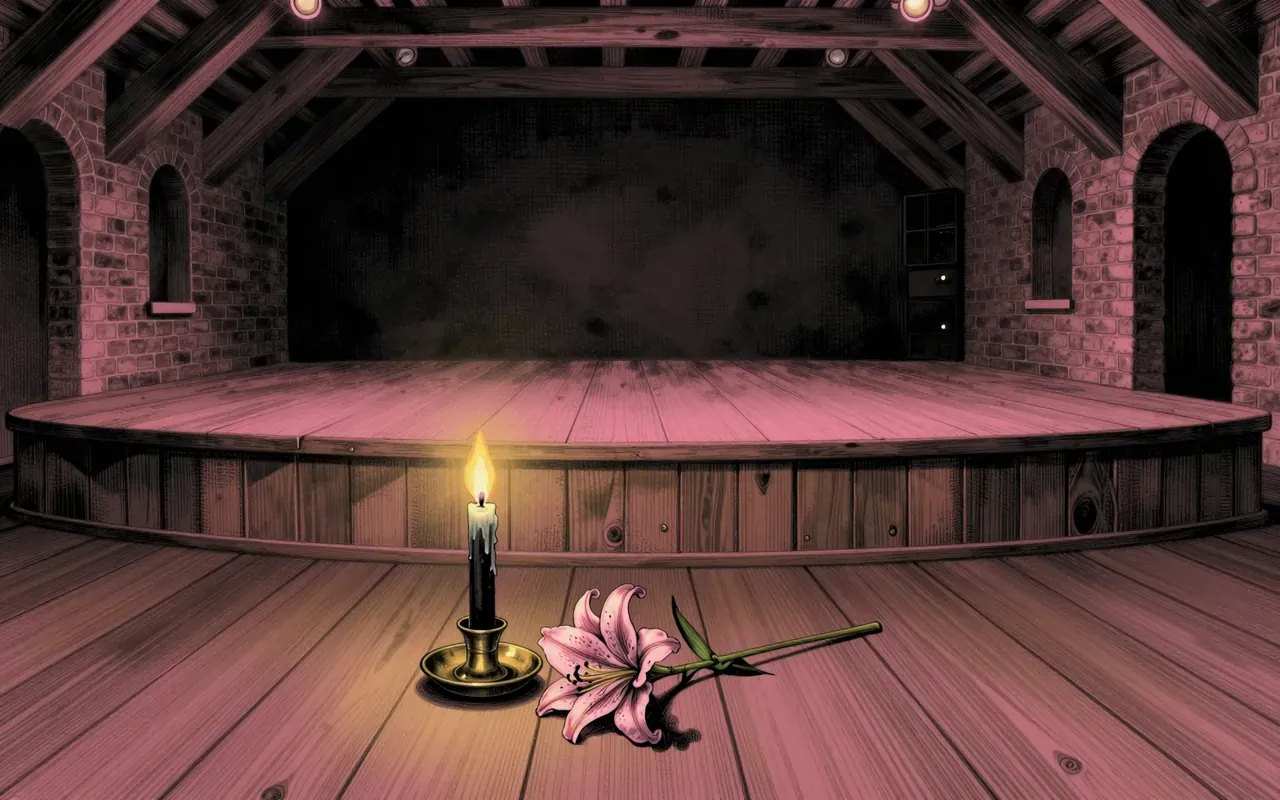
MTV Unplugged in New York is Nirvana’s 1994 live album, recorded at Sony Music Studios in Hell’s Kitchen, Manhattan, on November 18, 1993. It documents their MTV Unplugged appearance — 14 songs, filmed in one continuous take. Cobain insisted on running his acoustic guitar through an amplifier and effects pedals, disguised by a fake box built in front of the amp. He described the stage design — stargazer lilies, black candles, and a crystal chandelier — as 'like a funeral'. The title alludes to the Indian religious concept of nirvana: a 'blown out, extinguished' state of liberation from suffering and rebirth, first used soteriologically by Buddhists.

10:24

Murmur

R.E.M. · 1983

Murmur is R.E.M.'s 1983 debut, recorded at Reflection Sound Studios in Charlotte, North Carolina, with producers Mitch Easter and Don Dixon after rejecting Stephen Hague’s technically precise approach. The band adopted a 'process of negation', omitting guitar solos and synthesizers to avoid datedness. Bill Berry insisted on recording drums in an antiquated isolation booth. Peter Buck used Easter’s Ampeg Gemini II amplifier on all tracks except 'Pilgrimage'. Mike Mills played a borrowed Rickenbacker 4001. The production prioritised live feel over polish — vocals were re-recorded only when 'very substandard'. Rolling Stone named it record of the year, though sales remained modest.

13:02

Music for the Jilted Generation

The Prodigy · 1994

Music for the Jilted Generation is a breakbeat techno record defined by its political stance, sampling rigour, and studio discipline. It rejects commercial rave tropes while expanding the form’s emotional and structural range. It is not nostalgic. It is not ambient. It is not collaborative beyond Howlett and Reality. It is urgent, specific, and sonically uncompromising.

9:57

Music of My Mind

Stevie Wonder · 1972

Music of My Mind is the pivot point: the moment Stevie Wonder swapped Motown’s assembly line for a one-man synth lab. It is not warm. It is not nostalgic. It is precise, integrated, and politically aware — and it changed how soul records could be made.

8:20

My Aim Is True

Elvis Costello · 1977

My Aim Is True is Elvis Costello’s 1977 debut — raw, urgent, and deliberately unpolished. It captures a moment where punk attitude met country-rock instrumentation in a cramped London studio, with no second chances and no safety net.

11:06

My Favorite Things

John Coltrane · 1961

My Favorite Things is a modal jazz landmark built on repetition, not progression. It uses the soprano saxophone not for nostalgia but for incision. It replaces harmonic motion with tonal stasis. It is precise, not indulgent. It is demanding, not welcoming.

11:12

My Generation

The Who · 1965

The Who's 1965 debut album 'My Generation' is a ferocious, mono-dominated statement rooted in R&B, mod culture, and teenage rebellion — defined by its rushed recording, aggressive sonic density, and stylistic innovations that prefigured punk, heavy metal, and power pop.

9:47

My Life

Mary J. Blige · 1994

My Life is a record built from the inside out: fourteen lyrics written by Blige during clinical depression, addiction, and an abusive relationship with K-Ci Hailey; Chucky Thompson hired last-minute after prior producers raised fees; Sean Combs shifting direction after hearing Thompson’s first track; Prince Charles Alexander joining late to engineer the cover of 'I'm Going Down'; The Notorious B.I.G.’s verse cut from 'K. Murray Interlude' over parental advisory concerns and replaced by Keith Murray. Its sound is rooted in soul sampling—Curtis Mayfield, Al Green, Marvin Gaye—and its structure reflects real-time negotiation over voice, visibility, and authorship. It is not a cultural artifact frozen in time. It is a living document of process.

10:38

Neu! ’75

Neu! · 1975

Neu! ’75 is the third and final Neu! studio album of the 1970s, recorded at Conny Plank’s studio between December 1974 and January 1975. It emerged from irreconcilable creative directions between Michael Rother and Klaus Dinger, resulting in a split-sided structure — side one (Rother’s ambient, keyboard-led duo recordings) and side two (Dinger’s songs, performed with double drumming and expanded instrumentation).

12:50

New Boots and Panties!!

Ian Dury · 1977

New Boots and Panties!! is Ian Dury’s 1977 debut solo album on Stiff Records. It was written nearly a year earlier at Oval Mansions in Kennington, in partnership with Chas Jankel, and co-written on some tracks with Steve Nugent. It followed Dury’s August 1977 Stiff debut single ‘Sex & Drugs & Rock & Roll’. It was recorded in mid-1977: demo tapes in April at Alvic Studios in Wimbledon, final tracking one week later at the Workhouse Studio. Blackhill Management funded the £4,000 budget.

11:27

New Day Rising

Hüsker Dü · 1985

New Day Rising is a tightly wound coil of pop structure and punk force — recorded fast, played hard, produced raw. It rejects both nostalgia and polish. Its ideas land in the friction between melody and attack, not in resolution.

9:22

New York

Lou Reed · 1989

New York is a 57-minute, lyric-first rock record built on guitar, electric upright bass, drums, and two tracks of percussion. It names real public figures and social crises without metaphor or retreat. Its power lies in its refusal to decorate its argument.

10:01

New York Dolls

New York Dolls · 1973

New York Dolls is a live-sounding debut recorded in eight days at the Record Plant in April 1973. Todd Rundgren produced it, intervened physically during sessions—including using a cowbell as a click track and plugging in the bass cabinet—but later claimed minimal involvement in the mix. Critics compared the guitar tone to lawnmowers; sales were sluggish, especially in the American Midwest.

10:39

Nick of Time

Bonnie Raitt · 1989

Nick of Time is Bonnie Raitt’s tenth studio album, released March 21, 1989. Produced by Don Was, it features a smooth and understated rock sound rooted in Raitt’s earlier laid-back blues rock style. There is grit in her singing and playing, even when surfaces are clean. The album explores blues rock, country, R&B, and pop. It was built around stripped-down arrangements developed first in demos at Was’ home studio, then recorded live over one week at Ocean Way Recording in Los Angeles. There is less production and less slickness — a return to Raitt’s roots. It was her first sober album and first Capitol Records release, reaching number one on the U.S. album chart and selling over five million copies in the U.S. It marked the debut of her enduring rhythm section with Ricky Fataar and James 'Hutch' Hutchinson.

13:08

No Other

Gene Clark · 1974

No Other is Gene Clark’s 1974 Asylum Records album, produced by Thomas Jefferson Kaye in Los Angeles. Thirteen or fourteen songs were demoed acoustically; nine were recorded with a large ensemble of elite session musicians — including members of The Section and the Allman Brothers Band — and backing singers. Kaye’s production features intricate vocal harmonies and heavily overdubbed, vertiginous arrangements intended as his 'answer to Brian Wilson and Phil Spector'. The title track has a pronounced R&B/funk feel, often attributed to Sly Stone’s presence. Clark composed much of the album while gazing at the Pacific Ocean from his home’s picture window. Though critics praised its ambition and unconventional arrangements — which anticipated later innovations by Fleetwood Mac members — the album stalled at No. 144 on the Billboard chart due to high production costs (over $100,000), minimal promotion, and its demanding sonic density. Its legacy grew over time, culminating in a 2013 tribute performance and a 2019 remastered/remixed reissue.

10:18

Nothing’s Shocking

Jane’s Addiction · 1988

Nothing's Shocking is a bass-led, royalty-fractured 1988 debut that sounds like it was recorded mid-argument — and that’s why it still bites.

10:25

Odelay

Beck · 1996

Odelay is a 1995 album recorded primarily in the Dust Brothers’ home studio in Silver Lake, Los Angeles, after Beck abandoned an earlier acoustic album of somber, orchestrated folk tunes made with Tom Rothrock and Rob Schnapf in 1994. Only 'Ramshackle' survived that session. The Dust Brothers’ hip-hop–influenced, layered production — informed by their work with Beastie Boys, Tone Lōc and Young MC — shaped the album’s sound. Their record-filled studio supplied many of the album’s samples. Musicians worked 16-hour days, starting from scratch each day. The album blends country, blues, rap, jazz and rock using cut-and-paste, sample-heavy techniques.

10:58

Odessey and Oracle

The Zombies · 1968

Odessey and Oracle is a self-financed 1967 studio album by The Zombies, recorded after they were dropped by Decca and signed to CBS. Nine tracks were cut at Abbey Road Studio 3; three at Olympic Studios during an EMI scheduling gap. The band dissolved before its April 1968 UK release. It was their swansong — made without label support, under budget pressure, and with no safety net.

10:02

Off the Wall

Michael Jackson · 1979

Off the Wall is Michael Jackson’s fifth solo album, first as an adult, first with Epic Records, and first collaboration with Quincy Jones. Recorded between December 4, 1978, and June 3, 1979, it was conceived as a deliberate departure from his Jacksons output and Motown-era constraints. Rhythm tracks and vocals were recorded at Allen Zentz Recording, horns at Westlake Audio, and strings at Cherokee Studios in West Hollywood. Bruce Swedien mixed the album at Westlake Audio; A&M Recording Studio in Los Angeles mastered it. Jackson co-produced the songs he wrote. He insisted on including all three Rod Temperton compositions and secured Tom Bahler’s 'She’s Out of My Life' after hearing it years earlier. The album established Jackson as a solo performer and marked his transition from bubblegum pop to more complex sounds. It produced four top-10 US singles — 'Don’t Stop ’til You Get Enough', 'Rock With You', 'Off the Wall', and 'She’s Out of My Life' — with the first two reaching number one. It reached number three on the Billboard 200 and sold over 20 million copies worldwide. Jackson won the 1979 Grammy Award for Best Male R&B Vocal Performance for 'Don’t Stop ’til You Get Enough'.

10:24

OK Computer

Radiohead · 1997

OK Computer is Radiohead’s third studio album, released in May 1997. Most of it was recorded in 1996–1997 at two locations: Canned Applause, a converted apple shed near Didcot, Oxfordshire, and St Catherine’s Court, a 15th-century mansion near Bath owned by Jane Seymour. The band abandoned Canned Applause due to its proximity to home and lack of basic facilities. At St Catherine’s Court, they recorded 80% of the album live, exploiting room acoustics—vocals for 'Exit Music (for a Film)' were captured on a stone staircase; 'Let Down' was tracked in a ballroom at 3 am. Strings were recorded separately at Abbey Road Studios in London. Production avoided artificial reverb and minimised overdubbing. Nigel Godrich co-produced. The album marks a departure from the guitar-centred introspection of The Bends, favouring atmospheric density, thematic abstraction, and collective, room-responsive experimentation. Lyrics shift from personal confession to fragmented, character-based narratives reflecting 'end-of-the-millennium blues'.

11:07

On the Beach

Neil Young · 1974

On the Beach is a 1974 Neil Young album recorded mostly at Sunset Sound in Hollywood in late March and early April, with 'Walk On' and 'For the Turnstiles' cut earlier at his ranch. David Briggs missed most sessions due to illness; Ben Keith led recruitment of Rusty Kershaw, members of the Band, Crazy Horse, and CSNY. Honey slides shaped a melancholy, depressed atmosphere. Rusty Kershaw rejected rehearsal, favouring first-take immediacy. The album features varied instrumentation and shared production. Its second side — 'On the Beach', 'Motion Pictures', and 'Ambulance Blues' — lands with cumulative weight. It explores the collapse of 1960s folk ideals, the downside of success, and the underbelly of the Californian lifestyle. It sold poorly on release but later became a critical favourite.

12:10

Original Pirate Material

The Streets · 2002

A solitary, resourceful act of creation in a Brixton bedroom — no studio, no band, no analogue gear — that redefined British hip-hop by grounding it in place, process, and vernacular truth.

11:09

Otis Blue / Otis Redding Sings Soul

Otis Redding · 1965

Otis Blue / Otis Redding Sings Soul is Redding’s third studio album, recorded mostly in a single 24-hour session on July 9–10, 1965, in Memphis. Released in September 1965, it includes Redding’s 1965 cover of 'A Change Is Gonna Come'. Christgau called it 'the first great album by one of soul's few reliable long-form artists'.

11:01

Out of the Blue

Electric Light Orchestra · 1977

Out of the Blue is a double LP released in 1977. Written in three and a half weeks in a Swiss Alps chalet. Recorded over two months in Munich. A multi-platinum pop record built around weather, travel, and studio-as-instrument thinking.

9:55

Out to Lunch!

Eric Dolphy · 1964

Out to Lunch! is Eric Dolphy’s only Blue Note album, recorded in 1964 with Freddie Hubbard, Bobby Hutcherson, Richard Davis, and Tony Williams. It is often considered his magnum opus. Dolphy declared 'Everyone’s a leader in this session'. He praised Hutcherson’s vibes as 'freer' and 'more open' than piano, Davis’s bass for leading 'somewhere else', and Williams for playing 'pulse' not 'time'. The music holds to construction for thirteen bars, then releases into freedom. A unison duet between Dolphy and Davis delivers lyrical weight. The album showcases Dolphy’s fully developed avant-garde yet structured compositional style rooted in tradition.

8:52

Outlandos d’Amour

The Police · 1978

Outlandos d’Amour is a tightly wound, rhythm-first debut—punk’s architecture with pop’s hooks and reggae’s ghost notes. It succeeds by subtraction: no overdubs, no reverb, no safety net. Its power lies in what it refuses to do.

10:16

Oxygène

Jean Michel Jarre · 1976

Oxygène is a six-part electronic suite recorded in a Paris kitchen between August and November 1976. Jarre used EMS VCS 3 and Synthi AKS synthesizers, a Scully 8-track, Revox tape delay, AKG stereo reverb, EMT plate reverb, and eight stereo echoes. A partially functional Mellotron appears in Part II. The album evokes environmental themes through sound design rooted in musique concrète techniques. It made Jarre famous internationally after initial rejection by record companies.

11:25

Pacific Ocean Blue

Dennis Wilson · 1977

Pacific Ocean Blue is Dennis Wilson’s 1977 debut solo album — recorded at Brother Studios between autumn 1976 and spring 1977. It features grainy, soulful vocals, gospel choir augmentation on 'River Song', co-writes with Mike Love and Carl Wilson, and an unfinished vocal for 'Holy Man'. It reached No. 96 on Billboard — outperforming the next two Beach Boys albums — and sold nearly 250,000 copies. A planned solo tour was cancelled when record company support was withdrawn. Wilson performed selections from it during the 1977 Beach Boys tour. Though he dismissed it as having 'no substance', it has since gained cult status and critical esteem.

10:56

Parallel Lines

Blondie · 1978

Parallel Lines is a pop record made under duress. Its sound is precise, detached, and deliberately constructed—not discovered. It trades punk’s immediacy for pop’s control, and its ideas orbit romantic risk, not rebellion. It is worth hearing for how it reveals production as power.

9:42

Paris 1919

John Cale · 1973

Paris 1919 is John Cale’s third solo studio album, recorded in 1972–1973 at Sunwest Studios in Los Angeles and produced by Chris Thomas to add objectivity. It features Lowell George, Richie Hayward, Wilton Felder, and the UCLA Symphony Orchestra — uncredited on the original LP. Musically, it departs from Cale’s experimental tendencies toward an orchestral singer-songwriter style influenced by Brian Wilson, the Bee Gees, and Procol Harum’s 1972 live album. Lyrically, it references the 1919 Paris Peace Conference, Dylan Thomas, and Graham Greene. Critically acclaimed upon release and since, it is widely regarded as Cale’s most accessible and traditionally structured solo work — and retrospectively considered his masterpiece.

9:00

Parklife

Blur · 1994

Parklife is Blur’s third studio album, recorded quickly at Maison Rouge studio in August 1993—except for 'This Is a Low'. Damon Albarn described it as a loosely linked concept album about the travels of a 'mystical lager-eater' who observes and comments on the world. Martin Amis’s novel London Fields was a major influence. The songs span multiple genres including synthpop, instrumental waltz, punk rock, spacey Syd Barrett-esque, and new wave. Some songs—including 'To the End' and 'Badhead'—lie in a more personal space than the album’s broader bittersweet portrayal of the UK's human patchwork. Stephen Street produced all tracks except 'To the End', which was produced by Stephen Hague with additional engineering.

10:36

Parsley, Sage, Rosemary and Thyme

Simon and Garfunkel · 1966

Parsley, Sage, Rosemary and Thyme is Simon & Garfunkel’s third studio album, released in October 1966. It marks their first use of eight-track recording, their first full assertion of creative control, and their first active participation in mixing — especially on 'Scarborough Fair'. It is largely acoustic, drawing on Paul Simon’s 1965 English songwriting period and recycling material from The Paul Simon Songbook. Vocal takes were overdubbed to separate voice from guitar. 'Patterns' uses string snaps, syncopated bass, and a frenetic bongo part. 'Scarborough Fair' features fingerpicked guitar, delicate chimes, harpsichord embellishments, and vocal blend.

10:42

Pearl

Janis Joplin · 1971

Pearl is Janis Joplin’s final studio album, recorded between late August and early October 1970 in Los Angeles with producer Paul A. Rothchild. It was released posthumously in January 1971 after her death on October 4, 1970. Though unfinished, sufficient completed material existed to assemble the LP. It features her number-one hit 'Me and Bobby McGee', original songs 'Move Over' and 'Mercedes Benz', and covers including 'Trust Me' and 'Get It While You Can'. Joplin approved and arranged all nine tracks she sings on. She did not record vocals for 'Buried Alive in the Blues'. The album has a more polished sound than her earlier work with Big Brother and the Holding Company and the Kozmic Blues Band, due to Rothchild’s expertise and the Full Tilt Boogie Band. Many songs were first recorded live on stage in Canada two months before the LA sessions. It was crafted at Sunset Sound Recorders to showcase her extraordinary vocal talents.

10:11

Physical Graffiti

Led Zeppelin · 1975

Physical Graffiti is Led Zeppelin’s 1975 double album — their first release on Swan Song. It contains fifteen tracks: eight recorded at Headley Grange in early 1974, and seven drawn from earlier sessions. It was conceived as a double LP after the new material nearly filled three sides of an LP.

11:53

Pieces of the Sky

Emmylou Harris · 1975

Pieces of the Sky is Emmylou Harris’s 1975 major-label debut — her second studio album, but the one that launched her career. Produced by Brian Ahern, it features her voice as the central, unadorned instrument, backed by acoustic guitar, pedal steel, and bass. Its song selection is eclectic: originals like ‘Boulder to Birmingham’ (written for Gram Parsons), plus covers of Merle Haggard, the Beatles, and Dolly Parton. ‘If I Could Only Win Your Love’ became her first country hit — No. 4 in the US, No. 1 in Canada. The album reached No. 7 on Billboard’s country LPs chart and No. 45 on the Billboard 200. It is certified gold. It established her country rock sound, initiated her long collaboration with Ahern, and laid groundwork for the Hot Band and the Americana genre.

10:14

Pills ’n’ Thrills and Bellyaches

Happy Mondays · 1990

Pills ’n’ Thrills and Bellyaches is the 1990 Happy Mondays album recorded at Capitol Studios in Los Angeles after their US tour. Produced by Paul Oakenfold and Steve Osborne, it fused house, funk, Krautrock, and northern soul into a propulsive, loop-driven sound defined by Gary Whelan’s layered drum work and Rowetta’s soulful vocals on 'Kinky Afro', 'Step On', and 'Bob’s Yer Uncle'. It went platinum in the UK, sold over 350,000 copies, and remains the band’s commercial and artistic zenith — a document of Madchester’s peak, not its myth.

7:58

Pink Flag

Wire · 1977

Pink Flag is Wire’s debut album. Released 25 November 1977 via Harvest Records. Recorded September–October 1977 at Advision Studios, London. Produced by Mike Thorne. 21 tracks. Not songs. No easy structure or meter. Minimalism pushed to new heights. Manipulates classic rock forms into brief, intense explosions of attitude and energy.

9:34

Planet Rock: The Album

Afrika Bambaataa & Soulsonic Force · 1986

A foundational electro-funk record defined by its 1982 production: TR-808 rhythms, Kraftwerk synth hooks, and sample-based construction — not as collage, but as architectural logic.

12:12

Post

Björk · 1995

Post is Björk’s 1995 second studio album, conceived after her move to London and reflecting the city’s multicultural, club-driven energy. It features an eclectic fusion of electronic and organic elements, achieved through collaboration with co-producers Nellee Hooper, Graham Massey, Tricky, and Howie B. Recording began at Compass Point Studios in Nassau, where Björk integrated the natural environment — recording vocals in the ocean at sunset and inside a cave — and continued in London with intensive post-production. Tracks like 'Army of Me' and 'The Modern Things' were written earlier with Massey but withheld from Debut for their raw, brutal energy. The album balances synthetic textures with acoustic instrumentation — strings, brass, saxophone, trumpet, percussion — to achieve a dynamic, genre-defying cohesion rooted in lived experience and collaborative ethos.

9:50

Pretenders

Pretenders · 1979

Pretenders (1980) is a debut defined by refusal: no filler, no compromise, no producer loyalty beyond what served the music. It sounds like four musicians playing in real time, captured with clarity but no indulgence. Its power lies in precision, not poetry — in what is played, not what is implied.

10:55

Pretty Hate Machine

Nine Inch Nails · 1989

Pretty Hate Machine is Trent Reznor’s first full statement — made alone, with machines, in a state of withdrawal — aiming for claustrophobia, achieving intimacy, and changing the sound of rock by wiring noise to speak his name.

13:16

Pretzel Logic

Steely Dan · 1974

Pretzel Logic is Steely Dan’s decisive turn from band to studio construct — dry, precise, and ruthlessly edited.

9:42

Q: Are We Not Men? A: We Are Devo!

DEVO · 1978

Q: Are We Not Men? A: We Are Devo! is a controlled demolition of rock vocabulary. It replaces swing with syncopated rigidity. It replaces vocal expression with monotone delivery. It replaces room sound with dead air. It establishes post-punk as architecture, not attitude. It falls short only where it tries to be funny — the jokes land flat because the music refuses to wink.

9:09

Quadrophenia

The Who · 1973

Quadrophenia is a concept album about Jimmy, a young mod with a four-way split personality, set in 1965 London and Brighton. It features four interwoven musical themes representing each band member, layered synthesizers recorded at home, overdubbed horns, and field recordings. It was recorded using Ronnie Lane’s Mobile Studio due to delays in completing Ramport Studios. The album reached No. 2 in both the UK and US charts.

8:35

Rage Against the Machine

Rage Against the Machine · 1992

Rage Against the Machine (1992) is a self-titled debut album built from the band’s own demo tape, released November 1992. It fuses funk and heavy metal, uses no samples, keyboards or synthesizers, and features politically charged lyrics. Produced by Garth Richardson, the core quartet each contributed to production and art direction. Its cover uses Malcolm Browne’s Pulitzer Prize-winning photograph of Thích Quảng Đức’s 1963 self-immolation in Saigon. 'Killing in the Name' — the incendiary lead single — contains only eight lines of lyrics and was accidentally broadcast uncut on BBC Radio 1 in February 1993.

11:04

Rain Dogs

Tom Waits · 1985

Rain Dogs is Tom Waits’ ninth studio album, released in September 1985. It was written in a basement room at Washington and Horatio Streets in Lower Manhattan in fall 1984. It was recorded at RCA Studios in mid-1985. It features marimba, accordion, double bass, trombone and banjo. Waits rejected digital sampling, instead striking furniture with a two-by-four to create original percussion. Keith Richards and Marc Ribot both performed on the album. NME named it the best album of 1985.

10:23

Raw Power

Iggy and The Stooges · 1973

Raw Power is the Stooges’ third studio album, reformed as 'Iggy and the Stooges', recorded in London in late 1972 with James Williamson’s songwriting and guitar shaping its anthemic hard rock direction. Iggy Pop produced the sessions and attempted an initial mix that collapsed instrumentation into mono-like channels; David Bowie then remixed seven tracks in a single day under tight budget constraints, using minimal resources and rudimentary effects like the Time Cube. Though Bowie claimed only three tracks were usable, archival evidence shows full multi-track separation existed. Columbia required two ballads, and the final mix suffered from poor fidelity — later addressed in multiple reissues, especially Pop’s controversial 1997 remix, which prioritised volume and distortion over fidelity. The album’s raw production choices, instrumental roles (including celesta, piano, and tambourine), and stylistic pivot define its enduring significance as a proto-punk landmark.

10:35

Ray of Light

Madonna · 1998

Ray of Light is a singer-songwriter record disguised by synths.

9:53

Ritual de lo habitual

Jane’s Addiction · 1990

Ritual de lo Habitual is a fractured, urgent document — not a polished statement. Its power lies in its unresolved tensions: between memory and erasure, command and collapse, mourning and performance.

10:11

Rock Bottom

Robert Wyatt · 1974

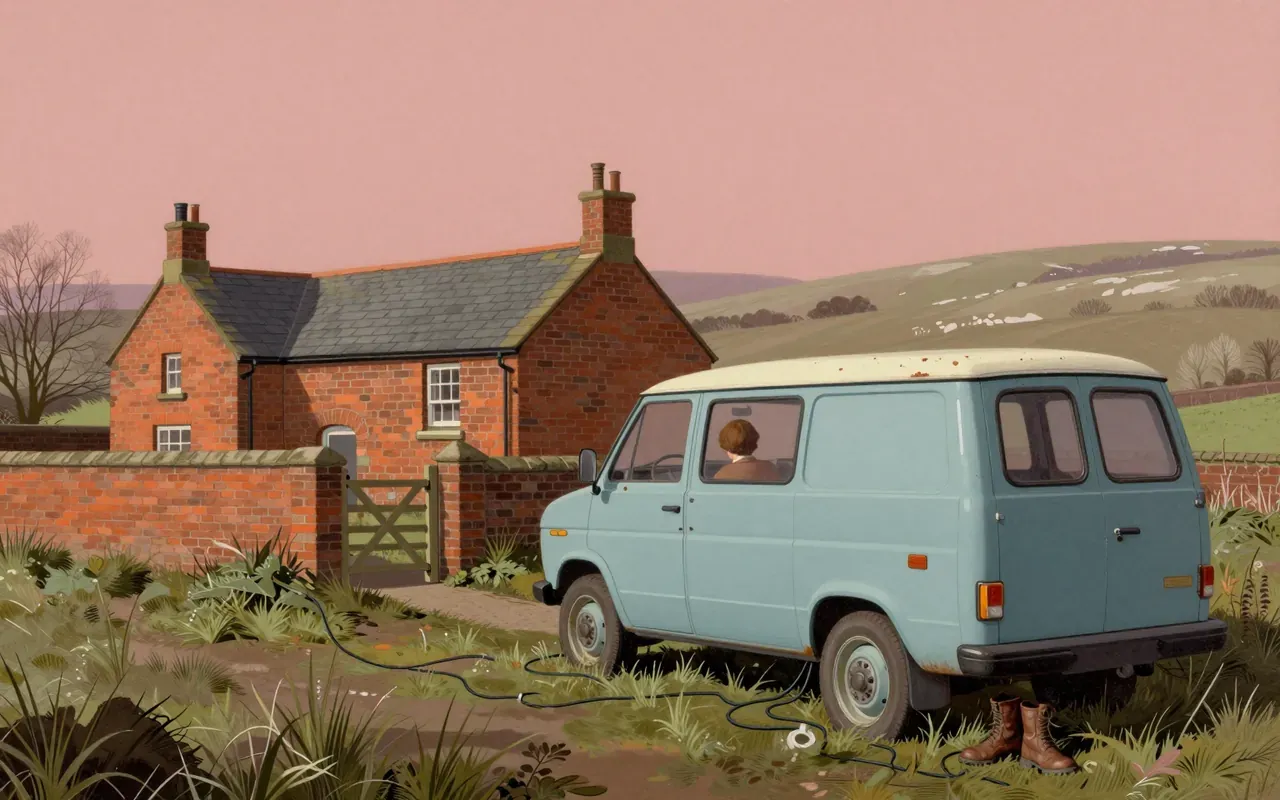
Rock Bottom is Robert Wyatt’s 1974 solo debut, produced by Nick Mason and recorded across three locations: a non-soundproofed van in a Wiltshire field, The Manor Studio, and CBS Studios in London. It combines jazz looseness, instrumentation, and improvisation with rock/folk song forms — an 'upside down' fusion designed to avoid the 'noodling' Wyatt associated with existing jazz-rock. Wyatt performed on vocals, keyboards, percussion, slide guitar, James’ drum, Delfina’s wineglass, Delfina’s tray, and a small battery. Much was composed pre-accident in Venice; arrangements and lyrics were reworked during convalescence. Collaborators included Mike Oldfield, Ivor Cutler, and Fred Frith. The album received mostly positive reviews.

10:53

Rocket to Russia

Ramones · 1977

Rocket to Russia is the Ramones’ third studio album, recorded in August 1977 at Mediasound Studios in a former Episcopalian church in Midtown Manhattan. With a budget of $25,000–$30,000—most spent on production—the band prioritised speed, using first takes almost exclusively. Ed Stasium engineered and mixed most of it; Tony Bongiovi’s involvement was limited to final mastering at Power Station. The album reached No. 49 on the Billboard 200, yielded the band’s highest-charting single (‘Rockaway Beach’ at No. 66), and was hailed by Rolling Stone’s Dave Marsh as ‘the best American rock & roll of the year’. Its sound is tighter, brighter, and more pop-oriented than earlier releases, integrating surf and bubblegum influences while retaining the band’s signature velocity and brevity.

9:43

Rocks

Aerosmith · 1976

Rocks is Aerosmith’s 1976 fourth studio album, recorded live at the Wherehouse in Waltham, Massachusetts. It is defined by total signal overload, a large metal room, stage monitors feeding sound back to the band, and meticulously constructed sound effects—including a whip made from a whirling cord and cap gun, and galloping hooves made from coconuts. It features two Top 40 hits ('Last Child' and 'Back in the Saddle') and the charting ballad 'Home Tonight'. It sold over four million copies and appears on Rolling Stone's 500 Greatest Albums of All Time. Kurt Cobain listed it as one of the most influential albums to Nirvana's sound.

11:15

Rough and Rowdy Ways

Bob Dylan · 2020

Rough and Rowdy Ways is Bob Dylan’s 39th studio album and first of original material since 2012. Recorded at Sound City Studios in Los Angeles in January and February 2020, it features Dylan’s current Never Ending Tour band — Matt Chamberlain, Bob Britt, Tony Garnier, Charlie Sexton, Donnie Herron — plus Blake Mills and Fiona Apple. Chris Shaw engineered and mixed. Released June 19, 2020, it reached No. 1 in the UK and scored 95 on Metacritic.

9:14

Roxy Music

Roxy Music · 1972

Roxy Music’s self-titled debut was recorded in March–April 1972 in one week after months of rehearsal. It was self-financed by EG Management at £5,000 and produced by Peter Sinfield. Phil Manzanera joined on 14 February 1972, replacing David O'List. The album and its Karl Stoecker cover were completed before the band signed with Island Records. Released in June 1972, it received good reviews and reached No. 10 on the UK Albums Chart in September 1972.

11:20

Rubber Soul

The Beatles · 1965

Rubber Soul is the Beatles’ sixth studio album, recorded at EMI Studios in London between 12 October and 15 November 1965. It was their first album made without concurrent live, radio, or film commitments — a shift that enabled intensive focus on arrangement and studio craft. Norman Smith engineered his final Beatles album here before promotion to producer. Thirteen days of recording (113 hours) and six days of mixing (17 hours) produced a record where the sitar debuted on 'Norwegian Wood', lyrics grew artful enough for fans to study, and Harrison and Starr both identified it as a turning point — 'the departure record'. Critics hailed its maturity and complexity. It is not psychedelic, orchestral, or technically experimental beyond the sitar; its innovation lies in intent, not gadgetry.

9:23

Run The Jewels 4

Run the Jewels · 2020

RTJ4 is Run the Jewels’ fourth studio album, released digitally on June 3, 2020 — two days ahead of its scheduled June 5 date — as a direct response to nationwide protests against racial injustice. All tracks were produced by El-P, with co-production by Little Shalimar and Wilder Zoby on most. Its cover art was conceived by El-P and realised by Tim Saccenti as a low-poly 3D-printed sculpture of the duo’s logo, photographed under multi-coloured lighting to reference past album palettes. The record is officially titled RTJ4 — the first in the series to use the abbreviated form — and features guest appearances from Greg Nice, DJ Premier, 2 Chainz, Pharrell Williams, Mavis Staples, Josh Homme, and Zack de la Rocha. Its lead singles were 'Yankee and the Brave (ep.4)' and 'Ooh LA LA', and it was performed in full during the voter-engagement YouTube stream Holy Calamavote on October 18, 2020.

11:53

Rust Never Sleeps

Neil Young · 1979

Rust Never Sleeps is a record about the friction between capture and construction — not a document, but a dossier.

10:19

Saxophone Colossus

Sonny Rollins · 1957

Saxophone Colossus is Sonny Rollins’s sixth studio album, recorded monophonically on June 22, 1956, at Rudy Van Gelder’s studio in Hackensack, New Jersey, with Tommy Flanagan, Doug Watkins, and Max Roach. It contains 'St. Thomas', his best-known composition — a Caribbean calypso based on a childhood tune — alongside 'Strode Rode' and 'Moritat'. It is widely acclaimed and often considered his breakthrough record.

8:50

Scary Monsters… and Super Creeps

David Bowie · 1980

Scary Monsters… and Super Creeps is Bowie’s most controlled record: hard-edged, lyrically unsparing, sonically precise. It uses the Berlin Trilogy’s tools — fragmentation, repetition, synthetic texture — but abandons their distance. It lands because it refuses to cushion its blows.

10:18

Sea Change

Beck · 2002

Sea Change is a 2002 folk and singer-songwriter album by Beck, recorded live in Los Angeles with Nigel Godrich and a core group of session musicians. It abandons sampling and irony in favour of acoustic textures, orchestral arrangements, and emotionally direct lyrics rooted in Beck’s breakup with Leigh Limon in 2000. Critically acclaimed as his finest work, it prioritises space, silence, and sincerity over momentum or artifice.

11:08

Shoot Out the Lights

Richard & Linda Thompson · 1982

Shoot Out the Lights is a folk-rock record defined by its making: quick, constrained, post-marital, pre-tour, pre-birth. Its sound is built from documented instruments and players — no speculation. Its weight comes from what was omitted or reduced, not what was added.

10:36

Siamese Dream

Smashing Pumpkins · 1993

Siamese Dream is the Smashing Pumpkins’ 1993 album, recorded December 1992 to March 1993 at Triclops Studios in Marietta, Georgia. It was made under duress: Jimmy Chamberlin’s heroin addiction led to multi-day disappearances; Billy Corgan’s depression deepened to suicidal ideation; band members withdrew physically and emotionally; Corgan overdubbed most guitar and bass parts himself for efficiency; Butch Vig co-produced using analog tape; Alan Moulder mixed the final product after Corgan and Vig exhausted themselves. The album contains up to 40 guitar parts in 'Soma', achieved through obsessive layering—not reverb or delay. It ran four months and $250,000 over budget. It peaked at No. 10 on the Billboard 200 and sold over four million copies in the US.

10:44

Since I Left You

The Avalanches · 2000

A sample-based daydream that trades coherence for texture—and wins.

9:06

Skeleton Tree

Nick Cave & the Bad Seeds · 2016

Skeleton Tree is a record shaped by absence — not just in subject, but in arrangement, timbre and space. Its electronic palette is functional, not decorative. Its lyrics avoid direct address. Its production leaves room tone intact. It assumes the listener will sit with unresolved feeling.

11:48

Sketches of Spain

Miles Davis · 1960

Sketches of Spain is a studio album by Miles Davis and Gil Evans, recorded between November 1959 and March 1960 at Columbia’s 30th Street Studio in New York City. It features arrangements of Spanish classical and folk works—including the adagio from Rodrigo’s Concierto de Aranjuez and 'Will o’ the Wisp' from de Falla’s El amor brujo—as well as Evans originals inspired by Alan Lomax’s 1955 field recordings from Galicia and Andalusia. Davis performed on flugelhorn and trumpet. The album marks Davis’s first collaboration with producer Teo Macero. It was critically acclaimed despite recording challenges: classical musicians struggled with improvisation; jazz musicians with complex notation. It won the 1961 Grammy for Best Jazz Composition of More Than Five Minutes Duration.

8:52

Slanted and Enchanted

Pavement · 1992

Slanted and Enchanted is Pavement’s debut studio album, recorded across three locations — South Makepeace Studios in Brooklyn on December 24, 1990; Louder Than You Think Studios in Stockton from January 13–20, 1991; and finally over ten days at drummer Gary Young’s home studio on a tight budget. It is the only Pavement album to feature Gary Young on drums. Released April 20, 1992, on Matador Records, it features a stripped-down sound and heavy distortion, with bass present on some tracks and detuned guitars substituting for bass on others. Malkmus played a Fender Stratocaster through a borrowed small boutique Epiphone amplifier; Kannberg played a Fender Mustang and a Gibson SG through a Fender Silverface Twin Reverb amplifier; both used ProCo TurboRat and Boss DS-1 distortion pedals. The recording process was relaxed. Alternate tunings (CGDGBE, DADABE) were developed partly out of necessity due to the absence of bass in early recordings. The album’s sonic character includes fuzzy, noisy guitars, feedback, noise, and pop-oriented hooks, with Malkmus’ vocals described as languid and lyrics as stream-of-consciousness.

9:31

So

Peter Gabriel · 1986

So is Peter Gabriel’s fifth studio album, recorded at Ashcombe House in Somerset between February 1985 and February 1986, co-produced with Daniel Lanois, and completed at Power Station Studios in New York.

9:34

Some Girls

The Rolling Stones · 1978

Some Girls is a tightly wound, reactive rock record — bright, aggressive, and uncluttered. It trades myth for muscle, and legacy for immediacy.

9:22

Somethin’ Else

Cannonball Adderley · 1958

Somethin’ Else is a tightly focused, studio-crafted jazz document—not a spontaneous blowout, but a deliberate distillation of what worked in Miles Davis’ band at that moment. Its power lies in subtraction: no excess instrumentation, no harmonic detours, no lyrical indulgence. It sounds like a rehearsal made permanent.

11:10

Something Else by The Kinks

The Kinks · 1967

Something Else by the Kinks is the band’s fifth studio album, released 15 September 1967 by Pye Records. It was recorded between autumn 1966 and summer 1967, with one exception: 'End of the Season' was cut in April 1966. It marks Ray Davies’s full production control after Shel Talmy’s departure.

10:48

Sometimes I Sit and Think, and Sometimes I Just Sit

Courtney Barnett · 2015

Sometimes I Sit and Think, and Sometimes I Just Sit is a debut album recorded quickly with minimal preparation, using only the core band and no embellishment. Its strength lies in rhythmic precision, lyrical specificity, and the unvarnished presence of four musicians playing together in a room. It avoids studio artifice and emotional crescendo. It is grounded in place — Melbourne, New York — and in the textures of ordinary life. It asks for attention, not surrender.

10:13

Songs for Swingin’ Lovers!

Frank Sinatra · 1956

Songs for Swingin’ Lovers! is Frank Sinatra’s tenth studio album and fourth for Capitol Records, released in March 1956. Arranged by Nelson Riddle, it departs from the introspective tone of In the Wee Small Hours in favour of exuberant, jazz-inflected interpretations of pop standards. Recorded in February 1956 in the newly opened Capitol Records Building studios, it features a 56-piece symphonic orchestra. ‘I’ve Got You Under My Skin’ required 22 takes to perfect. A slow ballad, ‘Memories of You’, was recorded but omitted to preserve the album’s uptempo, swinging concept — ‘We’ll Be Together Again’ stands alone as the sole ballad. The album was the first to top the UK Albums Chart upon its July 1956 launch.

10:56

Songs for the Deaf

Queens of the Stone Age · 2002

Songs for the Deaf is Queens of the Stone Age’s third studio album, released in 2002. It is structured as a loose concept record simulating a desert drive from Los Angeles to Joshua Tree, using faux-radio interludes. Dave Grohl’s drum parts were recorded twice per song — once with electronic cymbal pads and muted drums, once with live cymbals and dampened drums — then blended in a small, acoustically dead isolation booth to achieve a tight, punchy, claustrophobic sound. Several tracks are reworkings of earlier Desert Sessions recordings. The album was certified gold in 2003 with over 900,000 copies sold.

10:10

Songs From a Room

Leonard Cohen · 1969

Songs From a Room is Leonard Cohen’s second studio album, released in 1969. It follows his 1967 debut and precedes Songs of Love and Hate (1971) and New Skin for the Old Ceremony (1974). Recorded in Nashville with Bob Johnston after abandoning sessions with David Crosby in Hollywood, it features Ron Cornelius, Charlie Daniels, Bubba Fowler, and Johnston himself. The sound is austere: acoustic guitar, banjo, fiddle, bass, keyboards, and ornamental Jew’s harp. Drums are sparse. Johnston treated the process as painting, and for ‘The Partisan’, he and Cohen travelled to France to overdub three female French singers. The album responds directly to criticism of the lushness of Cohen’s first record — it is stark, lyric-forward, and deliberately simple.

10:24

Sound of Silver

LCD Soundsystem · 2007

Sound of Silver is LCD Soundsystem’s third studio album, released on March 20, 2007. It was produced by the DFA and recorded in 2006 at Long View Farm in North Brookfield, Massachusetts and DFA Studios in New York City. James Murphy covered the entire studio in silver fabric and tin foil during recording. He found recording his own vocals uncomfortable, describing it as 'horrifying'. Several songs incorporate elements from the band's 2006 composition '45:33', especially 'Someone Great', which appears there as an instrumental. The album was dedicated to the memory of Dr. George Kamen (1942–2006). It was preceded by the single 'North American Scum' (February 2007), followed by 'All My Friends' — which spawned an EP featuring covers by Franz Ferdinand, John Cale, and Joy Division — and later 'Someone Great' (late 2007). In September 2007, the band released the A Bunch of Stuff EP and toured with Arcade Fire. In December 2007, Sound of Silver received a Grammy nomination for Best Electronic/Dance Album.

12:22

Speakerboxxx / The Love Below

OutKast · 2003

A double album released 23 September 2003 after two years of work. It comprises Big Boi’s Speakerboxxx and André 3000’s The Love Below — two solo projects packaged as one OutKast release under pressure from Arista Records, which rejected separate releases.

11:26

Specials

The Specials · 1979

The Specials’ 1979 debut is a tightly wound, politically charged recalibration of 1960s Jamaican ska—stripped of Caribbean languor, amplified with punk’s bite, and anchored in the concrete reality of late-1970s Coventry. Produced by Elvis Costello, it foregrounds guitar, reduces horns and percussion, and uses cover versions as ideological tools. It is urgent, unified, and unapologetically functional: music built to move bodies and shift culture.

9:36

Spiderland

Slint · 1991

Spiderland is a live-recorded, effects-free document of four musicians playing in a room under pressure—both musical and psychological. Its influence is real, but its power lies in what it refuses: polish, explanation, relief.

9:40

Spiritual Unity

Albert Ayler Trio · 1965

Spiritual Unity is a radical act of presence — three players, one room, one afternoon, no safety net.

12:03

Stand!

Sly and the Family Stone · 1969

Stand! is a live-wire document of funk’s emergence—not a polished statement, but a working argument made in real time, in one room, with shifting roles and urgent ideas.

10:34

Steve McQueen

Prefab Sprout · 1985

Steve McQueen is a 1985 pop album by Prefab Sprout, produced by Thomas Dolby, recorded across three studios in London and Buckinghamshire, built from Paddy McAloon’s archive of 40–50 songs — some written up to 12 years earlier — and defined by literate, humorous lyrics about love and regret, delivered with lush, jazz-tinged production and structural restraint.

11:28

Still Bill

Bill Withers · 1972

Still Bill is Bill Withers’ second studio album, recorded during a hiatus from touring at Record Plant in Los Angeles with musicians from the Watts 103rd Street Rhythm Band. It features soul, funk, and blues rhythms supporting lyrically mature explorations of human nature, emotion, and sex, and showcases Withers’ self-production alongside key instrumental contributions from Ray Jackson, Benorce Blackmon, Melvin Dunlap, James Gadson, and Bobbye Hall. The album includes iconic tracks like 'Lean on Me' and 'Use Me', and its restrained, rhythmically driven aesthetic has been widely acclaimed as a defining work of 1970s R&B. It was released on May 1, 1972, through Sussex Records, and certified gold by the RIAA on September 7, 1972.

8:39

Supa Dupa Fly

Missy Misdemeanor Elliott · 1997

Supa Dupa Fly is a foundational hip-hop record because it treats rhythm as architecture, voice as texture, and production as world-building — all in under two weeks.

9:43

Surfer Rosa

Pixies · 1988

Surfer Rosa is a document of physical space, not sonic idealism. It trades separation for presence, control for consequence, and polish for pulse.

9:38

Sweet Baby James

James Taylor · 1970

Sweet Baby James is a tightly recorded, emotionally exposed folk-rock album made quickly and economically in Los Angeles. Its sound is defined by acoustic intimacy, uncluttered arrangements, and vocal delivery that treats silence as structural material. It succeeds where it commits to clarity—not where it attempts breadth.

9:40

Swordfishtrombones

Tom Waits · 1983

Swordfishtrombones is Tom Waits’s eighth studio album, released in 1983 on Island Records. It marks his first self-produced record, written during a two-week trip to Ireland and recorded at Sunset Sound. It departs from piano-based songwriting and jazz idiom, introducing banjo, accordion, bass-marimba, metal aunglongs, African squeeze drum, calliope, and harmonium—and deliberately excludes saxophone. Lyrically, it shifts from intimate tales of drunkenness and heartbreak to surreal, geographically expansive stories about societal misfits. Asylum Records rejected the finished album. Critical reception was immediate and enduring, praising its originality and compositional daring.

8:50

Synchronicity

The Police · 1983

Synchronicity is a pop record built on architectural restraint—synths instead of skank, separation instead of syncopation, clarity instead of clutter.

12:19

Talking Book

Stevie Wonder · 1972

A keyboard-led pivot from Motown’s strings to synthesised soul—tight, live, and decisive.

12:53

Teen Dream

Beach House · 2010

Teen Dream is Beach House’s third studio album, released January 26, 2010, through Sub Pop. It was recorded over three weeks in July 2009 at Dreamland Studios in Hurley, New York. Beach House produced and arranged it with Chris Coady as co-producer. They used mostly the same instruments as Devotion but significantly reduced reverb. The album includes a re-recorded version of their 2008 single "Used to Be" and the lead single "Norway", written on a train in Norway in 2008.

11:22

That’s the Way of the World

Earth, Wind & Fire · 1975

That’s the Way of the World is Earth, Wind & Fire’s 1975 studio album, co-produced by Maurice White and Charles Stepney, recorded and mixed over nine months at Hollywood Sound Recorders, and mastered at Kendun Recorders. It began as a commissioned soundtrack for Sig Shore’s film of the same name; the band disliked the film and released the album ahead of its premiere. Musical arrangements were jointly created by the band and Stepney. George Massenburg engineered all eight tracks. The record establishes a model of collaborative authorship—not mythmaking—through documented roles, timelines, and locations.
10:33

The Doors

The Doors · 1967

The Doors’ debut is a live-in-studio document made under strict technical limits: four-track tape, no guitar effects, echo only from the chamber, bass reinforced by overdubs. It captures the band’s physical precision and lyrical ambiguity without embellishment. Its power lies in immediacy—not legacy.