Finally Famous
Big Sean · 2011
Finally Famous is a technically polished, sample-driven debut that delivers on radio-ready craft but avoids risk or revelation.
Finally Famous is a technically polished, sample-driven debut that delivers on radio-ready craft but avoids risk or revelation.

Grievous Angel is Gram Parsons’s final album, recorded in summer 1973 at Wally Heider Studio 4 in Hollywood and mixed at Capitol Studios before his death in Joshua Tree. It features Emmylou Harris and members of Elvis Presley’s TCB Band. Only two new songs appear — 'Return of the Grievous Angel' and 'In My Hour of Darkness'. The rest draws from Parsons’s Harvard folk period, The Byrds, the Flying Burrito Brothers, and rejected material from GP. The 'live' medley is fabricated with canned applause. Critical attention focuses on Harris’s vocal role, especially on 'Love Hurts', and on the album’s paradox: disciplined energy amid personal collapse. It peaked at number 195 on the Billboard chart.
In My Lifetime, Vol. 1 is Jay-Z’s 1997 sophomore album. It follows Reasonable Doubt. It was shaped by The Notorious B.I.G.’s death. It marks a stylistic shift toward the 'jiggy' era.
Inception is not ambient. It is architectural. It is not nostalgic—it weaponises nostalgia. It does not breathe—it pulses.

A functional, architecturally driven score that treats the cathedral as its primary instrument. It lands where space and gravity meet sound — and fails where melody or motion is expected.
Karma is Kamelot’s fifth studio album, released a few months after their mid-2000 New Allegiance Tour. It is one of fourteen studio albums the band released as of 2026. The album uses the Sanskrit concept of karma—action and its consequences—as a structural device, particularly in the three-part 'Elizabeth' suite. It features layered guitar harmonies, orchestral synth pads, and clean, high-register vocals. Drums are both programmed and live, with gated reverb on snares. Bass is present but recessed. Vocals are double-tracked and treated with plate reverb. The album does not incorporate Indian musical elements. It is worth hearing for fans of early-2000s European power metal who value narrative continuity over instrumental complexity.
Kaya is a compact, mid-tempo reggae album built for warmth, not weight. Its sound is defined by Marley’s acoustic and rhythm guitar, Junior Marvin’s lead guitar, and understated percussion. Critics found it lightweight next to Exodus — yet it yielded the enduring hit 'Is This Love' and reached the UK top-5. It contains three re-recordings from Soul Revolution Part II and was mastered by Ted Jensen at Sterling Sound. The album offers intimacy over ideology, ease over insistence.
Funkadelic’s 1975 album Let’s Take It to the Stage is a funk rock record defined by its porous studio ethos, uncredited guitar fire, and deliberate tonal whiplash — from blunt sexual monologue to baroque organ quotation. It landed commercially like no prior Funkadelic release, but its power lies in instability, not polish.
A commercially successful but artistically marginal record — shaped by US production, English narration, and Makeba’s own ambivalence.

This is a 2018 recording of Stravinsky’s 1911 ballet Petrushka — a work rooted in Russian puppet tradition, set during Maslenitsa in 1830 Saint Petersburg, and built from folk tunes, Lanner waltzes, a French music hall melody, and Rimsky-Korsakov. Its defining feature is the 'Petrushka chord', an early use of bitonality. The record also includes Concertino, Agon, and Scherzo à La Russe — but the sources say nothing about how this 2018 version interprets them.

Ride the Lightning is Metallica’s second studio album, recorded in three weeks at Sweet Silence Studios in Copenhagen with co-producer Flemming Rasmussen. Drums were tracked in an unsoundproofed warehouse, creating a long, uncontrollable reverb. Rhythm guitar and drums were recorded live; bass and lead guitar were overdubbed. Songs were assembled from pre-studio 'riff tape' jam sessions. Dave Mustaine co-wrote two tracks. Released July 27, 1984, it reached No. 100 on the Billboard 200.
Saturnz Return is Goldie’s 1998 follow-up to Timeless. Its opening track 'Mother' is an hour-long orchestral drum and bass piece featuring a 30-piece string section and classically trained child singers. It was conceived as a sonic representation of Goldie’s adoption at age three, foster care, fame, and addiction. He described its arc as beginning with an unborn-child voice before descending into abandonment and rhythmic ferocity. He made it for one private moment: listening on headphones while seeing his mother’s body before her funeral. The album features David Bowie, Noel Gallagher and KRS-One, and received mixed reviews—including 'ambitious but monotonous and overlong—Pink Floyd with a gold tooth'.
Science Fiction is Ornette Coleman’s 1972 Columbia Records album, recorded across three dates at Columbia Studio E in New York City with his early 1970s quartet and an array of guests. It is dense, conversational, and structurally restless — a record built on presence, not polish.
Screaming for Vengeance is a hard, heavy, tightly focused heavy rock record made quickly across two countries. It trades melody and texture for consistency, riff clarity, and radio-ready hooks. Its success rests on one last-minute addition—and one drummer’s third consecutive appearance.
South of Heaven is Slayer’s 1988 fourth studio album, recorded in Los Angeles with Rick Rubin. It was the only Slayer album the band discussed before writing. They slowed tempos, dropped distortion, and softened vocals—not to soften the music, but to reframe it.

Speak & Spell is Depeche Mode’s 1981 debut: ten tracks recorded live on 8-track with an ARP 2600, built from songs played live for a year, written mostly by Vince Clarke, co-produced by Daniel Miller. It reached UK #10. Critics split: Melody Maker praised it; Rolling Stone dismissed it as ‘PG-rated fluff’. It established synth-pop as functional pop—not experimental, not atmospheric, not ironic—just direct, repeatable, and built for broadcast.
Supernatural is a pop-oriented 1999 album produced under Clive Davis’s guidance at Arista, built around radio-friendly melodies and structured collaborations with contemporary artists. It marks a deliberate departure from Santana’s earlier instrumental focus.
A deliberate, unadorned country record — recorded fast in Nashville and Hollywood, using documented session players and documented repertoire. It establishes country rock as a category, not a mood. It sounds like what it is: a studio document of genre allegiance.

A producer-driven, leak-compromised hip-hop album released in 2008, built on high-impact beats and strategic replacements rather than thematic unity.
Uprising is the final Bob Marley & The Wailers album released in Marley's lifetime — June 1980. It affirms Marley's Rastafarian beliefs. It contains 'Forever Loving Jah', 'Redemption Song' (described as solo acoustic and folk-based), and 'Could You Be Loved' (a successful single). 'Redemption Song' is the only track with verified sonic description: solo, acoustic, folk-based. The record is framed externally by the concept of rebellion as organized resistance against government — but no source verifies how the music itself enacts that idea.

Watch the Throne is a high-stakes, globally dispersed hip-hop record defined by its making — not its myth. Its sound is assembled, not born. Its ideas are architectural, not confessional. Its failures are instructive. Its successes are precise.
Waterloo is ABBA’s first album under that name — recorded in Stockholm between September and November 1973. It introduces their signature blend of crisp vocal harmony, theatrical lyricism and tightly arranged pop. Its strength lies in consistency of craft, not innovation. Its weakness is uneven ambition — especially on 'King Kong Song'.
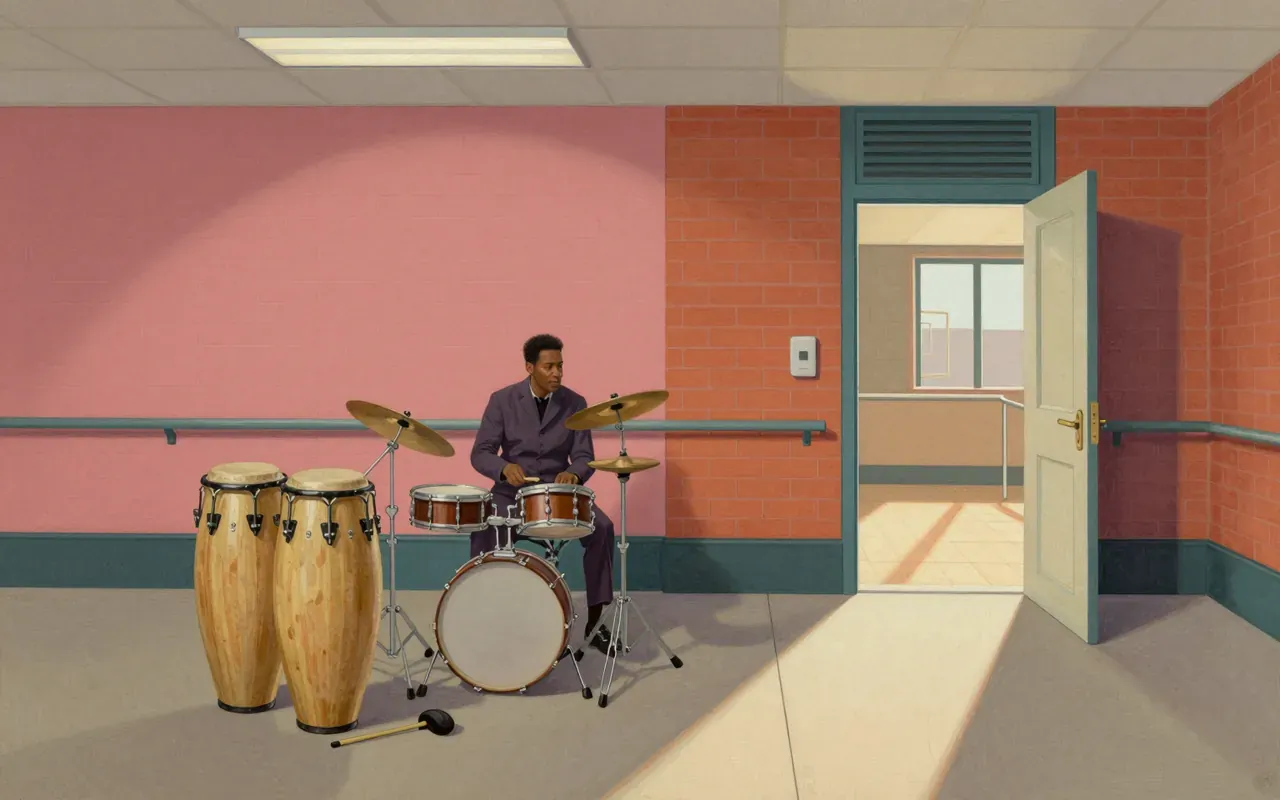
What’s New? is a 1962 RCA Victor album by Sonny Rollins built around Latin rhythms. It does not reinterpret the title song’s lyrical conceit or formal structure. It does not feature the trumpet solo for which the tune was originally written. It lands most clearly on ‘Jungoso’ and ‘Bluesongo’. It is worth hearing for its rhythmic focus — not for harmonic invention or narrative depth.
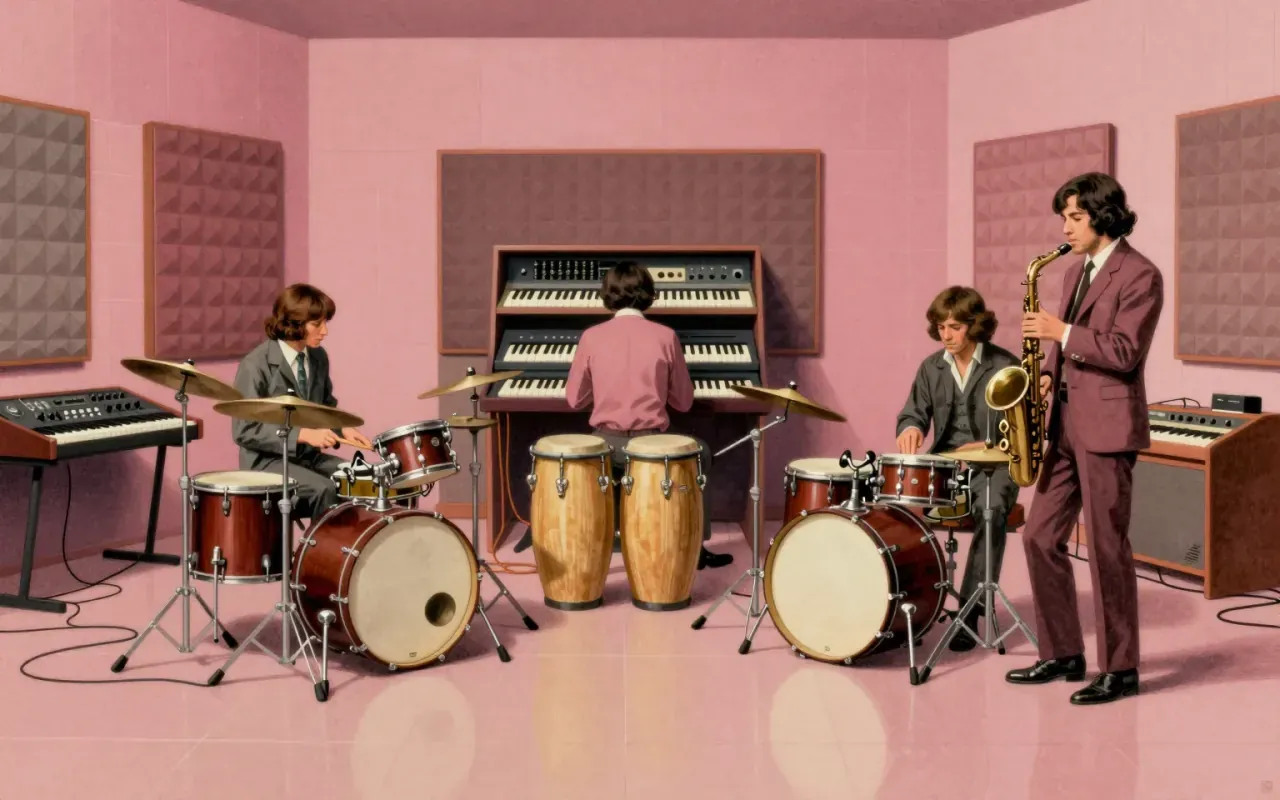
Weather Report's sixth album, recorded at Devonshire Studios in North Hollywood over the turn of 1975 into 1976, leans into African-derived percussion and Joe Zawinul's synthesizer textures rather than the soloistic fusion of earlier records. Wayne Shorter's Lyricon blurs horn and machine, Alex Acuña's congas anchor two drummers, and Jaco Pastorius makes his first, understated appearance on bass across two tracks.
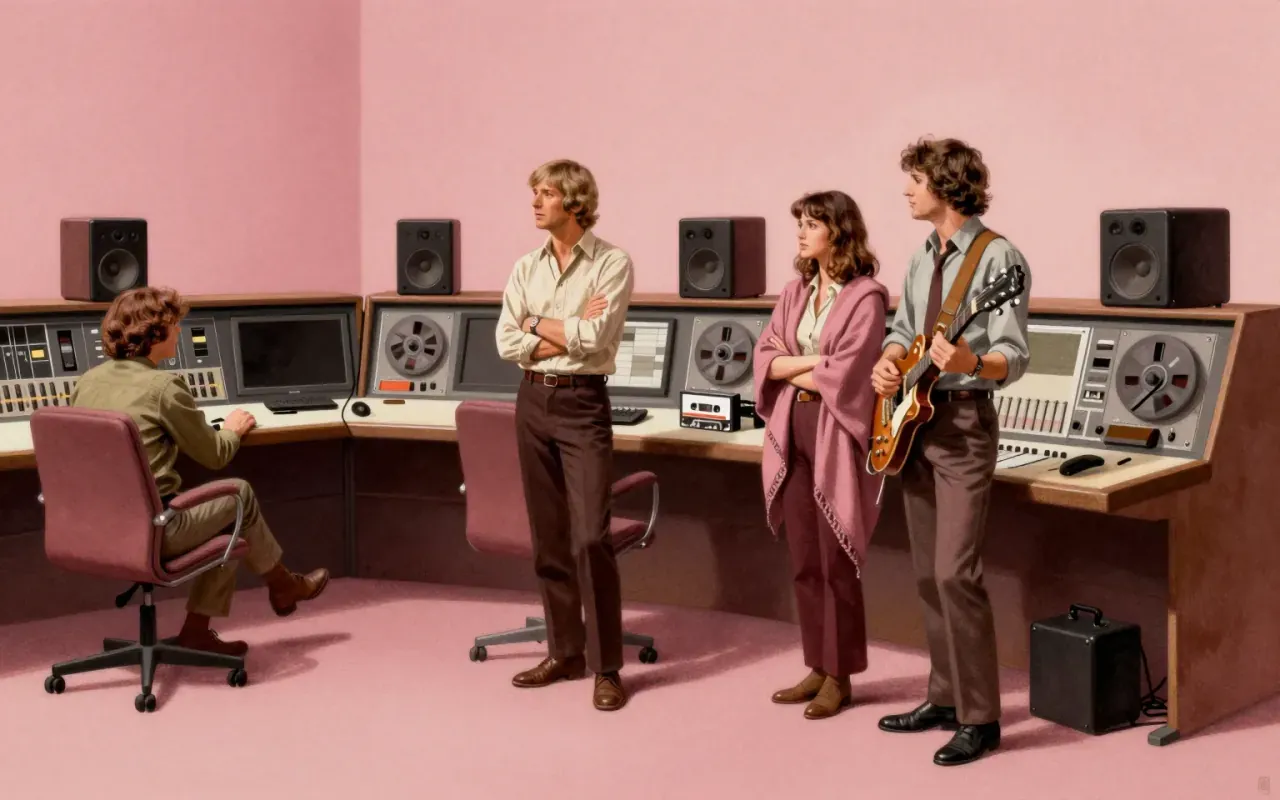
Fleetwood Mac's second self-titled album is the record where a band in crisis became the group that would make Rumours. Recorded fast at Sound City in Los Angeles with new arrivals Lindsey Buckingham and Stevie Nicks, it trades one songwriting voice for three, and though not every track carries equal weight, the hits and the quieter songs beside them still hold up fifty years on.
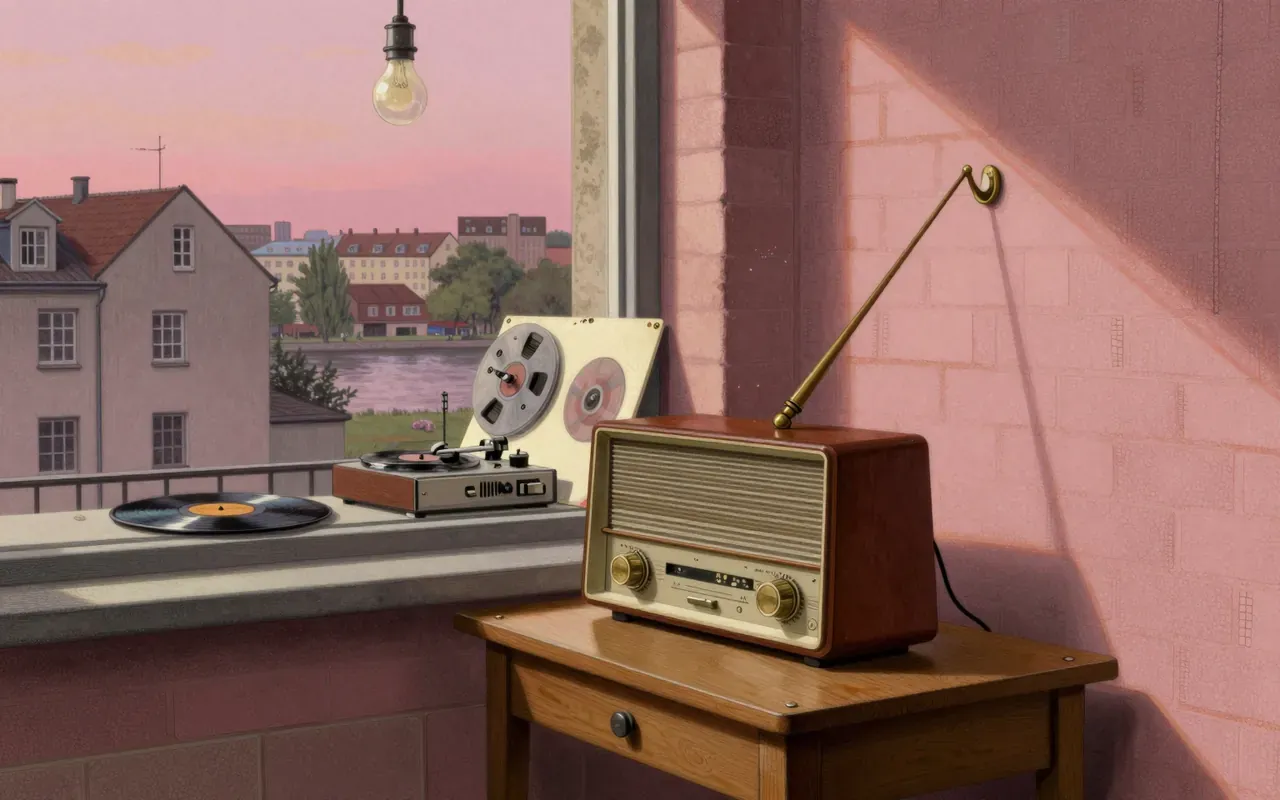
The record 'Movies' is verifiably a 1979 solo album by Holger Czukay, released after his departure from Can, and remastered in 2007. Its production method is inferable only as likely involving shortwave radio and tape splicing—because the source states those were Czukay’s trademarks across his solo work, though it never links them specifically to this album. Nothing else about its sound, personnel, studio, instrumentation, or intent is documented. Its title and track names evoke film, but the source material confirms no connection between the album and cinematic practice beyond that nominal link. The appearance of 'Hollywood Symphony' in later films involves entirely separate orchestral recordings—not Czukay’s version. There is no evidence of composition, performance, reception, or cultural impact beyond these bare facts.
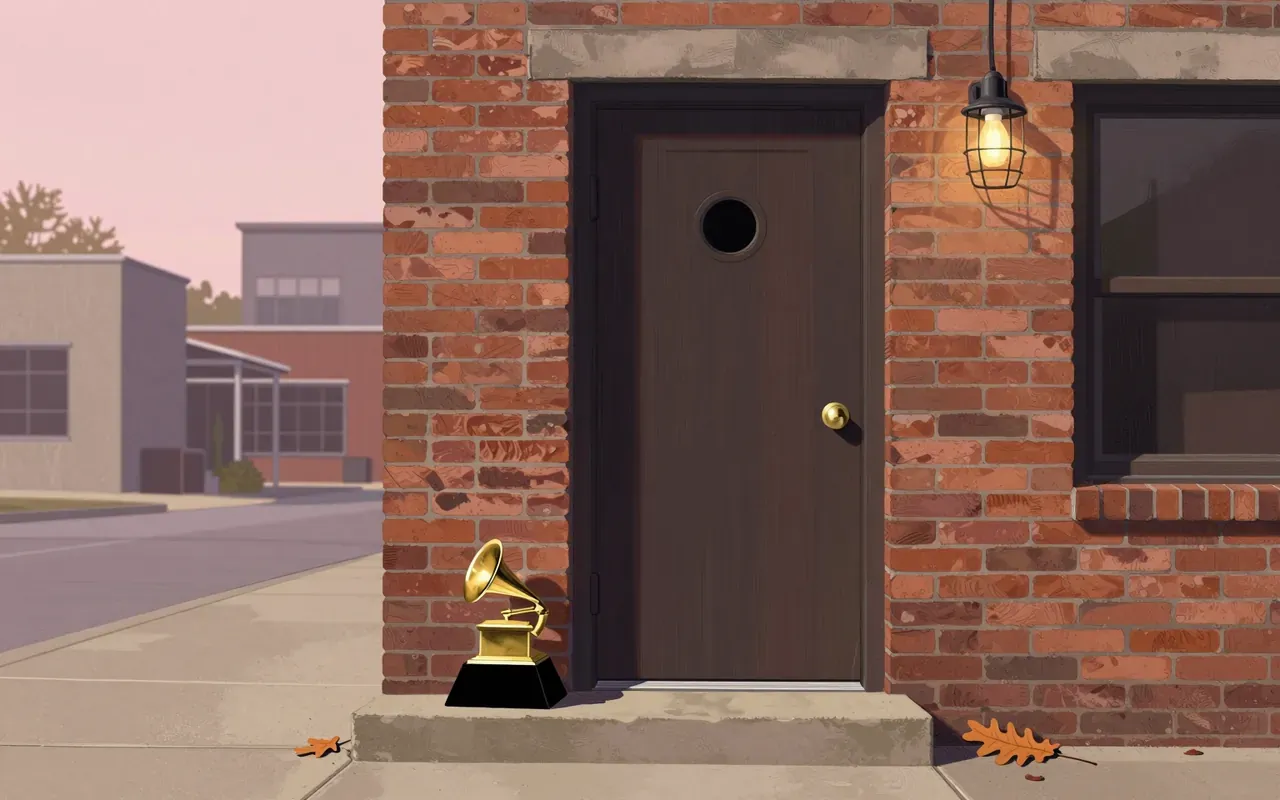
Raising Sand is a 2007 collaborative album by Robert Plant and Alison Krauss, produced by T Bone Burnett and released on Rounder Records. It won the 2009 Grammy Award for Album of the Year, 'Please Read the Letter' won Record of the Year, and 'Gone Gone Gone (Done Moved On)' won Best Pop Collaboration with Vocals. No detail about its sound, arrangements, performances, or production methods appears in the source.
Ricky Sings Again is a 1959 pop album defined by its writers, its singers, and its binary pacing — nothing more, nothing less.

X 100PRE is Bad Bunny’s debut studio album, released December 24, 2018, on Rimas Entertainment. It peaked at
Ella Fitzgerald Sings the Gershwin Song Book, Vol. 2 is a documented instalment in a pre-defined series — not a self-contained artistic event. Its value lies entirely in its position: following the Cole Porter volume, preceding others, and contributing to a structured survey of the Great American Songbook. Nothing in the source supports claims about its sound, performance, or originality.
Live! by Bob Marley and the Wailers is a title without a dossier. Verified facts are sparse: it exists in a list of live albums; it contains the Lyceum ‘No Woman, No Cry’ that charted in the UK in 1975; it credits multiple songwriters. Nothing confirms when or how it was recorded, who performed, or how it sounds beyond that single breakout moment. Its cultural weight comes from what happened after — covers, adaptations, film placements — not from what the record itself documents.

A Date With The Everly Brothers is a 2013 tribute album by the Chapin Sisters. It is not the 1960 Everly Brothers record. No sonic, technical, or interpretive detail is provided in the source material.
Cool Struttin’ is a 1958 Blue Note album led by Sonny Clark during his time as a house musician. No source describes its sound, personnel, recording location, or creative decisions. It exists solely as a documented leadership date in his discography.
Duck Stab / Buster & Glen is a functional 1978 release — not a creative milestone. Its value lies entirely in its role as a commercial pivot: packaging existing and concurrent recordings to sustain momentum after Duck Stab! drew press attention. Nothing in the source confirms its sonic character, production method or internal logic. It is archival infrastructure, not art.
The source material establishes only the commercial reception and basic provenance of the 'King Creole' soundtrack — not its sound, craft, or meaning.
Night Train (1963) is a factual placeholder: a trio configuration change, not a musical event. No source describes its sound, intent, or impact. It is defined solely by who played on it and when — nothing more.

A 1988 studio recording of Verdi’s Il trovatore, presenting 24 aria excerpts in strict sequence. No production context is provided. Its value lies only in its alignment with long-standing reception patterns — particularly around ‘Miserere’ and ‘Di quella pira’ — not in interpretive originality or sonic distinction.
Midnight Star (1988) is a post-breakout album with no documented commercial performance, stylistic departure, or critical repositioning. It relies on the same R&B/funk/vocoder foundation established by No Parking on the Dance Floor (1983), but none of its tracks charted, none received significant airplay, and none are cited as defining the band’s identity.
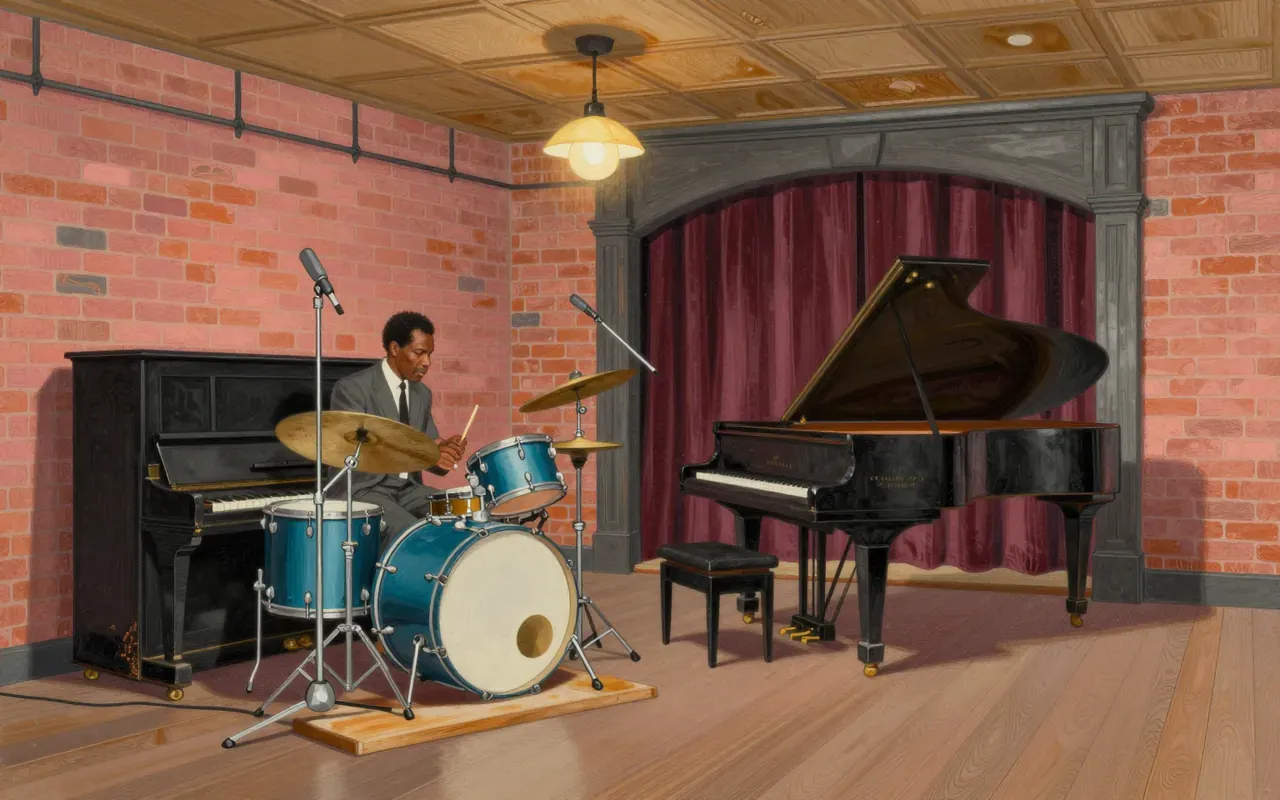
The sole verified fact about 'A Night at Birdland, Volume 1' is that it emerged from a 1954 live session during which Art Blakey declared his commitment to young musicians on-mic. Nothing else — personnel, label, venue, sound, repertoire context, or release status — is confirmed by the provided material.
No factual basis exists in the provided material to describe the sound, intent, reception, or significance of 'At the Lighthouse'. Only its title, venue, tracklist, and the quintet’s standard instrumentation are confirmed.
The record 'Barretto Power' by Ray Barretto (1970) is not corroborated by any verified source provided. All claims about it — title, year, track listing, sound, context — lack documentary support. The only confirmed Ray Barretto album referenced is 'Barretto' (1975), also known as 'Guararé', featuring Rubén Blades and Tito Gomez and nominated for a Grammy that year.
No recording is described. Only the 1943 composition is verified — commissioned by Koussevitzky, premiered by the Boston Symphony Orchestra in 1944, scored for symphony orchestra, structured in five movements, and defined by rotating soloistic emphasis. Everything else — sound, performance, recording, interpretation — is absent from the evidence.
No verified claim about the record 'Millions Now Living Will Never Die' by Tortoise (1996) can be made from the provided material. All sources are either irrelevant (zoological) or insufficient (film placement without sonic description). The brief cannot describe the music, its makers, its methods, or its meaning — because the evidence contains none of it.
The source contains zero factual reference to 'One Dozen Berrys'. No detail about its existence, content, creation, or context appears anywhere in the material. Therefore, no editorial claim about the record can be supported.
The source material contains no verifiable information about the record 'Portrait of a Legend 1951–1964'. It is not listed, described, contextualised, or referenced in any form. Therefore, no factual statement about it can be made.
The record 'The Eminent Jay Jay Johnson, Volume 1' (1955) is not substantiated by any of the provided sources. No detail about its sound, making, personnel, release, or cultural placement is verified. Its inclusion here rests entirely on external knowledge — which this brief forbids. Therefore, the record remains undocumented, unlocatable, and unsoundable within the constraints of the material.
No verified record titled 'The Nocturnes' by Chopin exists in the source material — especially not one from 1996. All claims pertain strictly to Chopin’s compositional development of the nocturne as a genre, not to a recorded artefact. The brief rejects invention, hedging, and myth-making. It affirms only what the text states: Chopin elevated Field’s form, wrote more structured and emotionally deep nocturnes after meeting him in 1832, and embedded agitated, technically demanding middle sections to heighten drama.
No verified information exists about the sound, structure, lyrics, reception, or artistic intent of 'Shahen-shah'. All claims must be limited to the three verified facts: it was recorded in 1989 at Zella Recording Studios in Birmingham, UK; commissioned by Oriental Star Agencies Ltd; and involved Andrew Kristy and Johnny Haynes.

The editorial brief cannot be written for a record that does not exist in the source material. All claims point to documented Slum Village releases — none to a 2005 self-titled album.
20 Golden Greats was first issued in Britain in 1978, collecting recordings associated with Buddy Holly and the Crickets from 1956–58. It also circulated as Buddy Holly Lives. The release date belongs to the retrospective, not to a newly assembled performing group.
Released in 2008, 808s & Heartbreak followed the death of Kanye West's mother and the end of his engagement. His fourth studio album shifts much of its emphasis from rapping to singing. That change makes the handling of the voice the central question of the record.
Faces' third album was their second release of 1971. Glyn Johns shared production duties, helping shape a programme shorter and more concentrated than its predecessors. Rod Stewart's growing solo profile is part of the context, but Ronnie Lane's three lead vocals make the group's broader identity essential.
At the Pershing was recorded in Chicago in January 1958 and released that year. Ahmad Jamal selected eight performances from a much larger recorded evening. Israel Crosby and Vernel Fournier join him, making the trio's working relationship the centre of the album.
Alive!, released in 1975, draws on Kiss concerts from several American cities and songs from their first three studio albums. The double album was intended to communicate a performance identity the band felt those records had not captured. Its title describes an ambition as much as a recording method.
Released in February 1996, All Eyez on Me was 2Pac's fourth studio album and his last released during his lifetime. The Death Row double album assembles numerous producers and guests around a performer concerned with both hard-won luxury and the threats surrounding it.

All Mirrors was released in 2019 and co-produced by Angel Olsen and John Congleton. Earlier versions of several songs later appeared on Whole New Mess. That parallel material helps establish this album as a particular interpretation of the writing, with arrangement central to its identity.
Armed Forces appeared in 1979, with Nick Lowe producing Costello and the Attractions. The working title Emotional Fascism points toward its concern with power inside human relationships. Its more commercial presentation changes the means of attack without removing the argument.
Army Arrangement belongs to Fela Kuti's mid-1980s work with Egypt 80. Its title song examines Nigeria's transition from military to civilian government, while “Government Chicken Boy,” included on editions of the album, attacks obedient service to authority. Political institutions change their presentation; Fela asks who continues to benefit.
Arthur was developed in 1969 with writer Julian Mitchell for a television play that was never produced. Ray Davies built the songs around Arthur Morgan, a carpet-layer partly based on a family member. The album survived as a musical account of domestic life within a changing national story.
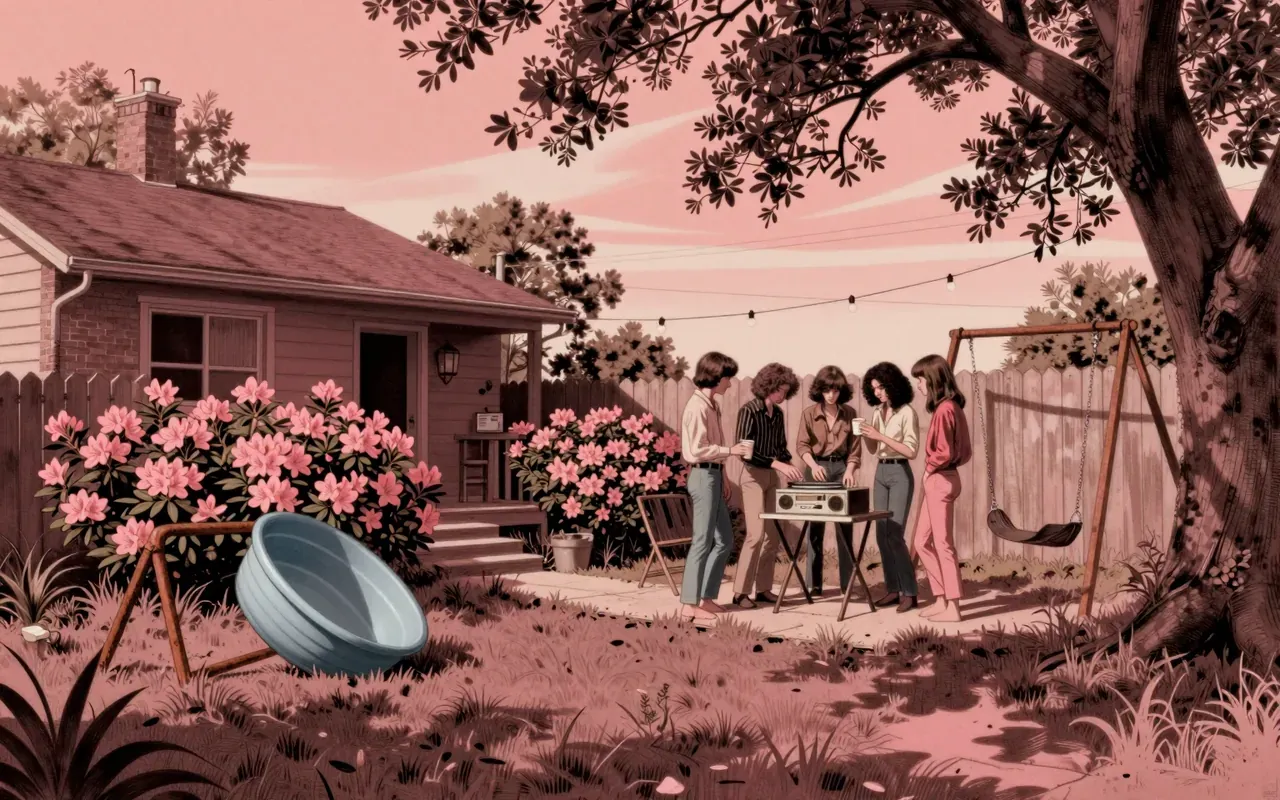
The B-52's released their debut in 1979, presenting a world of kitsch, dance rhythms and conspicuous vocal personalities. The record's social invitation is central to its identity. Its strangeness is something listeners are encouraged to join rather than solemnly decode.
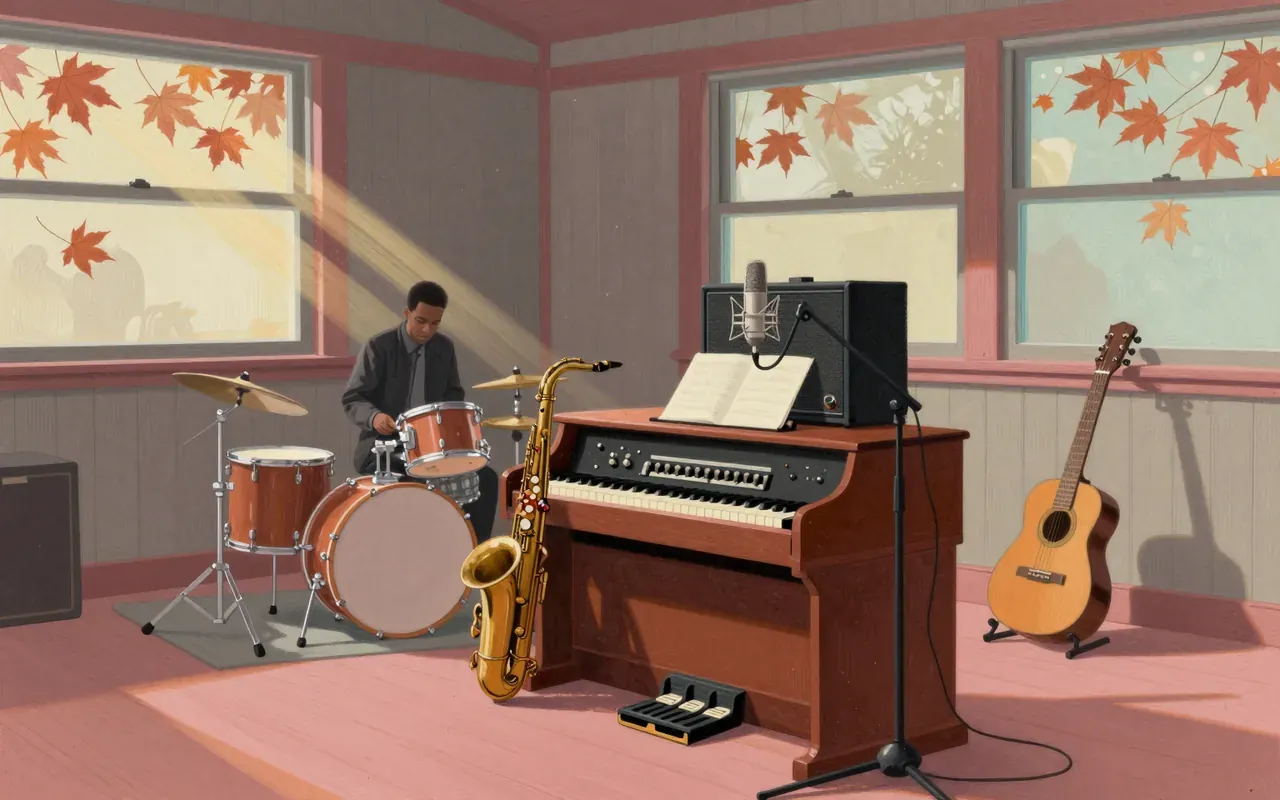
Back at the Chicken Shack was recorded in 1960 and released by Blue Note in 1963. The same session also produced Midnight Special. Alfred Lion produced and Rudy Van Gelder engineered, with Jimmy Smith joined by Stanley Turrentine, Kenny Burrell and Donald Bailey.
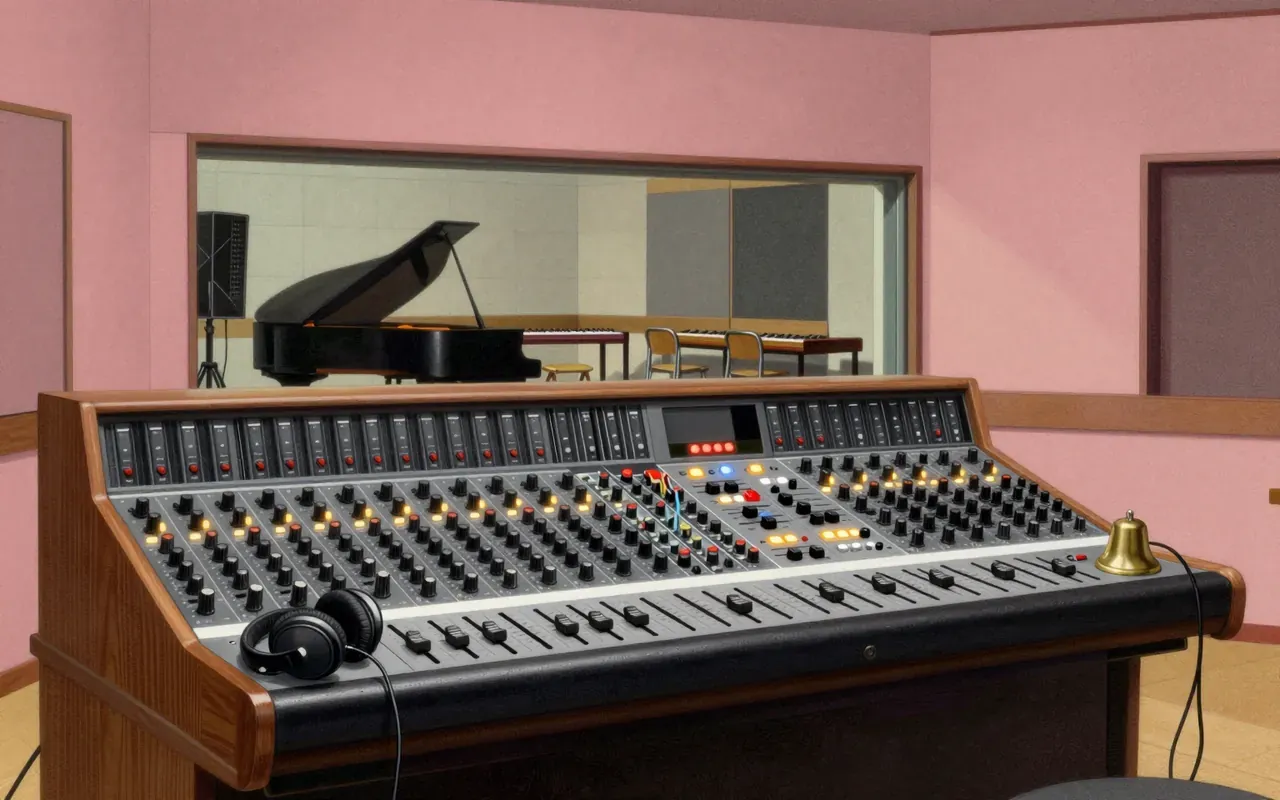
Bad Company's self-titled debut appeared in 1974 after sessions at Headley Grange with Ronnie Lane's mobile studio. Paul Rodgers, Mick Ralphs, Boz Burrell and Simon Kirke brought experience from earlier bands. The record's purpose is to establish how naturally that experience can fit a new working group.

Bad Girls was released as a double album in 1979, with Donna Summer continuing her work with Giorgio Moroder and Pete Bellotte. Additional collaborators and a broader stylistic range extend the project beyond a single version of disco. The album gives her several kinds of stage to occupy.
Recorded in October 1957 and released in 1958, this album originally appeared as Basie and became known as The Atomic Mr. Basie. Neal Hefti composed and arranged the original programme. Later expanded editions add material from the sessions that was not part of that initial sequence.
Pentangle's 1969 album brought an unusually flexible acoustic group to a broad audience. “Light Flight” served as the theme for the television drama Take Three Girls, and the album reached number five in Britain. Its appeal rests on the resources of the ensemble: several distinct players contributing to a shared musical space.

The Beach Boys Today! appeared in March 1965 as Brian Wilson increasingly concentrated on studio work. The first side favours more energetic songs, while the second turns toward introspective ballads. Its concerns extend beyond the cars and surfing associated with earlier records.
Beauty and the Beat, released in 1981, is the Go-Go's debut album. The group emerged from the California punk scene before developing a more broadly accessible song style. The record's success makes sense through that combination of band energy and clear melodic appeal.
Berry Is on Top appeared in July 1959. Almost all its selections had already been issued as singles; “Blues for Hawaiians” was the exception. The album's coherence comes from collecting a body of performances rather than documenting a newly conceived continuous session.
Beyoncé's self-titled fifth album arrived without a conventional advance campaign in December 2013. Conceived as a visual album, it joined songs and videos in a single release. The surprise matters historically, but its lasting musical question is how much room a major pop performer can claim for a more personal presentation.
Metallica's 1991 self-titled fifth album is widely known as The Black Album. Working with producer Bob Rock, the group moved toward a slower, more refined presentation than on its earlier thrash records. The change concerns the shape and scale of the songs as much as their commercial reach.
Black Messiah was released in 2014 under the credit D'Angelo and the Vanguard, following the long interval after Voodoo. Collaborators include Questlove, Pino Palladino, Isaiah Sharkey, Roy Hargrove and Kendra Foster. The ensemble credit matters to a record built from many interdependent contributions.

Vol. 4 was released in 1972 as Black Sabbath took greater control of production, with Tony Iommi doing much of the work. It continues the weight of Master of Reality while introducing conspicuous departures. The album is a record of expanding options as well as a demanding period for the band.
Recorded and released in 1963, The Black Saint and the Sinner Lady is a continuous composition divided into tracks and movements, partly conceived as a ballet. Charles Mingus worked with an eleven-piece band and co-orchestrator Bob Hammer. The album's unit is the whole developing work.
Blood, Sweat & Tears' self-titled second album arrived in December 1968 after Al Kooper and two other members had left. David Clayton-Thomas became the lead singer of a nine-piece band. Producer James William Guercio helped the new lineup make a more pop-oriented record with substantial outside repertoire.
Recorded at Rudy Van Gelder's Englewood Cliffs studio in 1959, this Blue Note album presents Horace Silver in quintet and trio settings. Blue Mitchell and Junior Cook supply trumpet and tenor saxophone; Eugene Taylor and Louis Hayes join Silver in the rhythm section. The title's two ensemble sizes describe a meaningful change in perspective.
Oliver Nelson's The Blues and the Abstract Truth was released by Impulse! in 1961. Freddie Hubbard, Eric Dolphy, Bill Evans, Paul Chambers, Roy Haynes and George Barrow join Nelson. The personnel are striking, but the record's organising intelligence lies in the compositions and the relationships they create.
Released in 1966, Blues Breakers with Eric Clapton followed an abandoned plan to make another live John Mayall album. Mike Vernon produced the studio recording. Its alternate nickname, the Beano album, comes from the cover rather than a separate musical identity.
Blues & Roots was recorded in February 1959 and released in 1960. Nesuhi Ertegun encouraged Mingus to foreground the blues after criticism that his music did not swing enough. Mingus accepted the focus while insisting it represented only one part of his musical world.
Bo Diddley's 1958 debut album gathers singles recorded between 1955 and 1958. It is therefore a collection of an already developing identity, rather than a single sustained studio project. That origin helps explain both the compactness of the songs and the changing supporting personnel.
Bongo Rock was released in 1973 after Michael Viner's soundtrack work with Perry Botkin Jr. developed into a full album project. The Incredible Bongo Band name describes an assembled studio undertaking. Its later use by DJs gives the recordings another history without replacing the original one.
This 1956 Atlantic album reunites Big Joe Turner with pianist Pete Johnson. Their partnership reached back to the Kansas City years and helped bring boogie-woogie to a wider public. By the time of this recording, Turner also had major rhythm-and-blues and rock-and-roll successes. The album gives the older repertoire a substantial new setting.
Burnin' appeared in October 1973, following Catch a Fire. Bob Marley, Peter Tosh and Bunny Wailer all contributed to the writing before pursuing separate solo careers. Recorded in Jamaica with further work in London, it captures a group whose members still share the record's creative identity.
The Cars' 1978 debut emerged from the Boston group's club work and demos, with Roy Thomas Baker producing. Its songs place an established appetite for rock hooks beside newer electronic resources. The combination supplies both familiarity and a measure of distance.

Catch a Fire introduced the Wailers to Island Records in 1973. Bob Marley, Peter Tosh and Bunny Wailer worked with a Jamaican rhythm section before Marley brought the tapes to London. Chris Blackwell then oversaw further work, making the released album the product of more than one setting.
Celia & Johnny pairs Celia Cruz with Johnny Pacheco on a 1974 Vaya album. The combination joined an established singer to a bandleader closely associated with New York salsa. The important issue is musical fit: how an ensemble can give a powerful voice the space and support it needs.
On their 1992 third album, the Beastie Boys put live bass, drums, guitar and Money Mark's keyboards alongside sampling and rap. Its musical detours can interrupt the momentum, but they also give the group a way to keep changing without leaving its earlier selves behind.
The band's 1969 debut was released as a double album under its original name, Chicago Transit Authority. Producer James William Guercio supported the combination of jazz-related brass writing and soulful rock. The scale announces a group interested in more than a short introduction.
Kraftwerk's 1981 album puts computers into ordinary life: work, calculation, surveillance and the search for company. Its German counterpart is Computerwelt. The concept feels prescient because it connects technology to familiar human activities rather than treating it only as futuristic machinery.
Control was released in 1986 after Janet Jackson changed important personal and professional relationships. Jimmy Jam and Terry Lewis became her central songwriting and production collaborators. The album presents independence as a practical claim about who gets to make decisions.
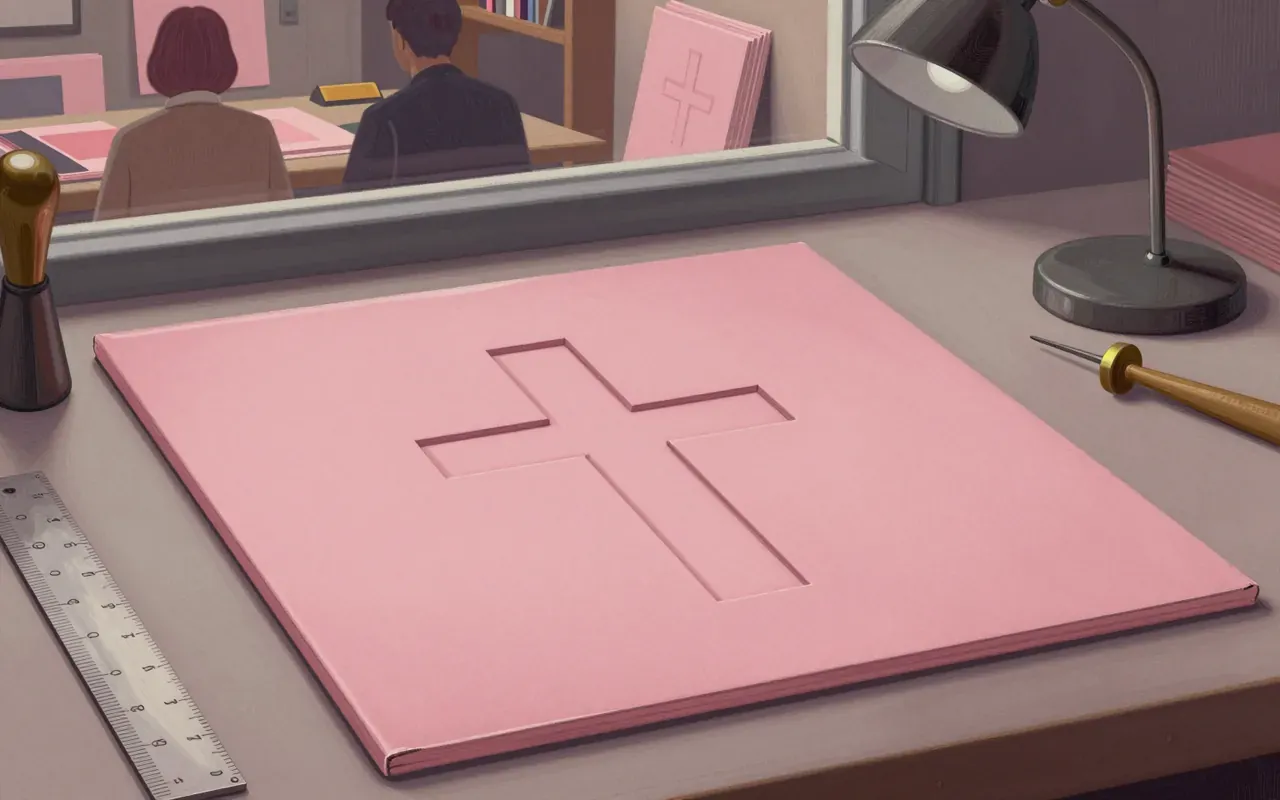
Justice's 2007 debut is commonly called Cross after its sleeve symbol, although the duo regard it as untitled. Recorded in Paris, it was conceived around a combination of disco and theatrical scale. The record's force comes from treating sound design as something that can transform familiar musical structures.