musicbriefs
Highest rated

All briefs

1188 briefs · 11103 min · 673–768 on page 8 of 13
13:00

Superfly

Curtis Mayfield · 1972

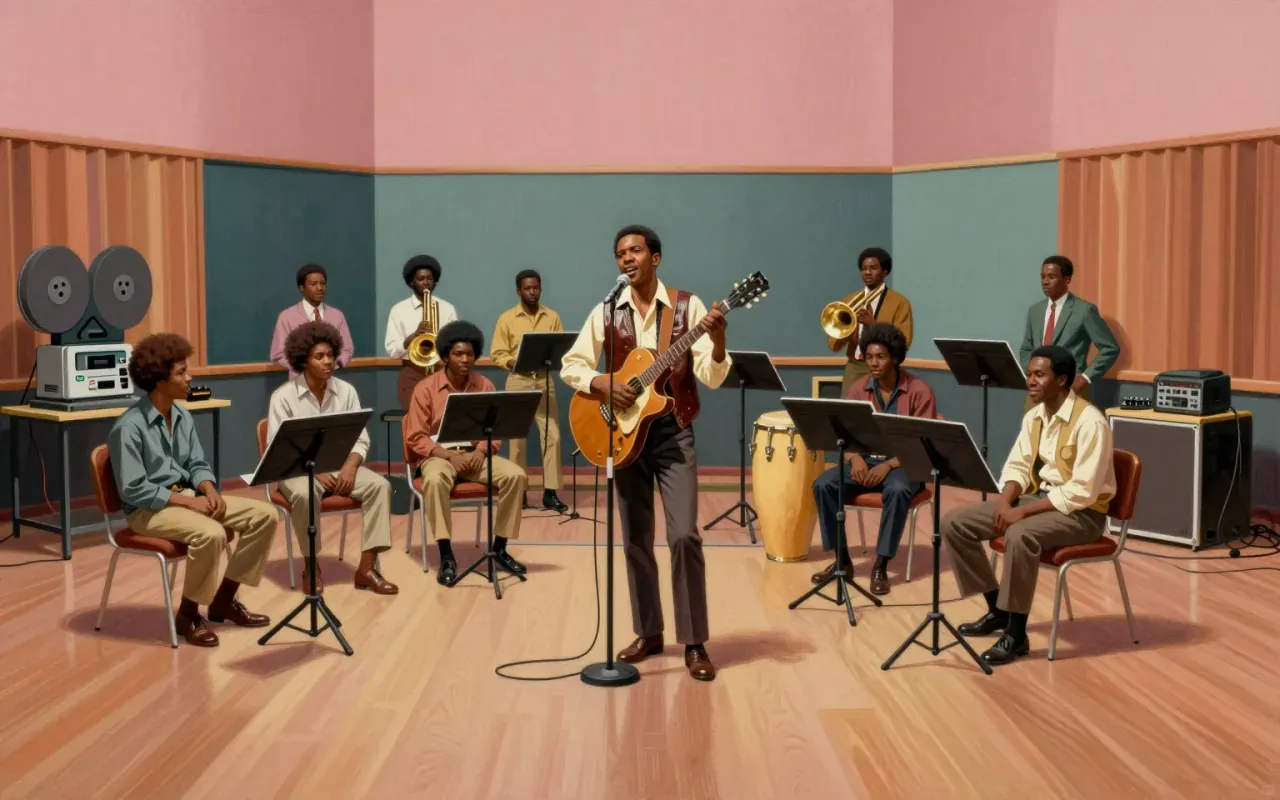
Curtis Mayfield's soundtrack to the 1972 blaxploitation film built a concept album around drug culture and poverty, written partly as a corrective to the picture's own ambivalence about its subject. Recorded with a large Chicago ensemble after early sessions in New York, it outsold the film itself and earned Mayfield a Grammy nomination for the score.
13:00

Tapestry

Carole King · 1971

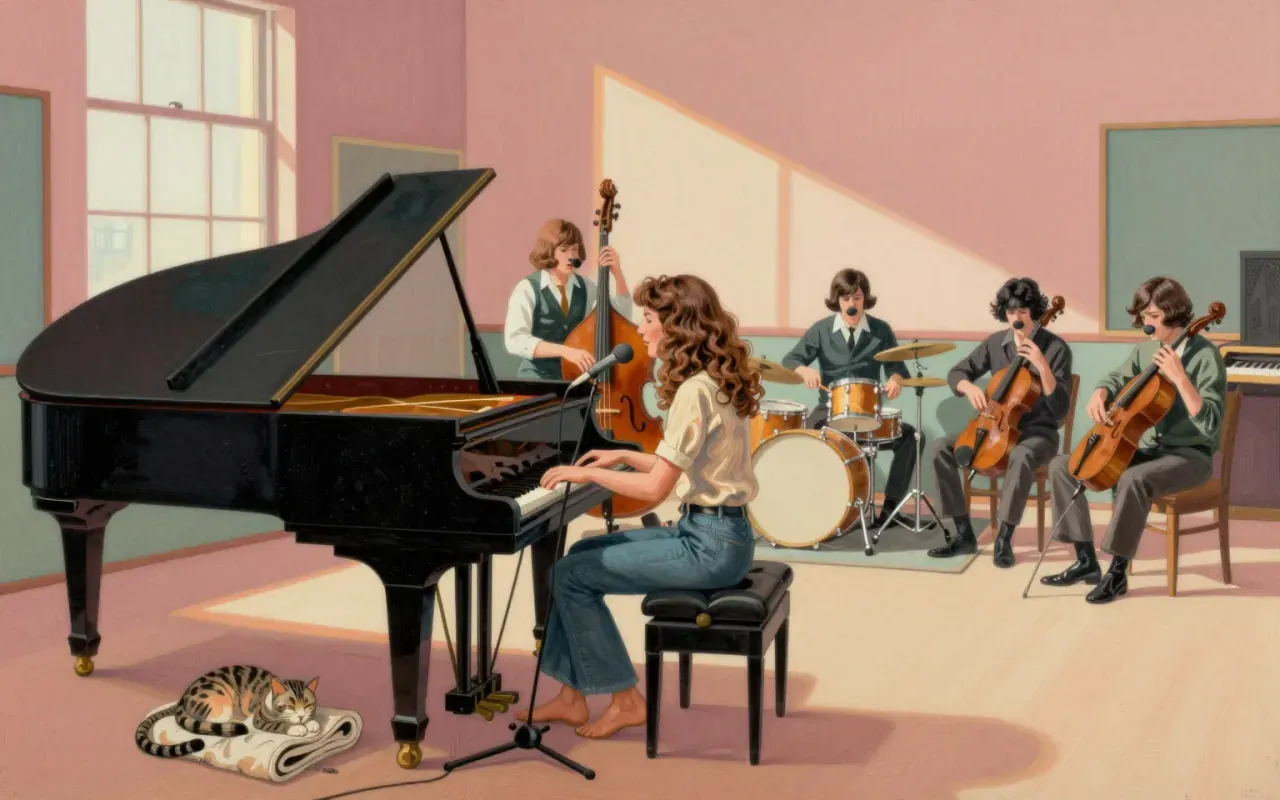
Recorded at A&M's Hollywood studios with James Taylor and a small circle of session players, Tapestry lets Carole King sing her own catalogue for the first time, trading polish for conviction across twelve mostly piano-led songs.

13:00

The Modern Lovers

The Modern Lovers · 1976

Recorded piecemeal between 1971 and 1972 by a teenage Jonathan Richman's band, with John Cale producing half the tracks, The Modern Lovers only became an album in 1976, patched together from abandoned label sessions into a record its own maker no longer fully claimed.

13:00

The Queen Is Dead

The Smiths · 1986

The Queen Is Dead is the Smiths' third album, written mostly at Johnny Marr's house in Bowdon and recorded across three studios between July and December 1985. Morrissey and Marr produced it themselves with engineer Stephen Street. It mixes jangling guitar pop with pointed lyrics about class, fame and the monarchy, and became the record most often cited as the band's best - later named the greatest album ever made in one influential magazine poll, a claim that says as much about the band's reputation as the record itself.

13:00

Time Out

The Dave Brubeck Quartet · 1959

Recorded in 1959 at Columbia's 30th Street Studio, Time Out grew out of Dave Brubeck's overseas tours for the State Department, where he heard rhythms outside the usual pulse of American jazz. The Dave Brubeck Quartet built seven tracks around metres like nine-eight and five-four, including Take Five, composed by saxophonist Paul Desmond almost as an afterthought, which went on to outsell every jazz single before it.

13:00

Unknown Pleasures

Joy Division · 1979

Unknown Pleasures is the 1979 debut from Joy Division, made at Strawberry Studios in Stockport with producer Martin Hannett and released on Tony Wilson's Factory label. Ian Curtis, Peter Hook, Bernard Sumner and Stephen Morris arrived with a harder live set; Hannett rebuilt it around delay units, tape echo and studio noise borrowed from the building itself. The band's own verdict on the result was divided for years. It sold no singles at all and still became one of the most cited records in British rock.

13:00

Wish You Were Here

Pink Floyd · 1975

Pink Floyd's ninth album wraps an attack on the music business around a long tribute to former member Syd Barrett, and was shadowed by his own unannounced, unrecognisable appearance in the studio while the band mixed the very song written for him.

13:00

Yellow Magic Orchestra

Yellow Magic Orchestra · 1978

Yellow Magic Orchestra's 1978 debut turned a mocking cover of a 1959 exotica tune into a synth-pop landmark, built almost entirely on a Roland Microcomposer and a rack of early synthesizers. Playful, cool and stranger than its chart success suggests, it is now heard less as a novelty than as an ancestor of electro, techno and much of the sampling culture that followed.

8:58

Glassworks

Philip Glass · 1982

Glassworks is a six-movement chamber work Philip Glass wrote for the recording studio after his large concert and stage pieces, released by CBS in 1982 on LP and on cassette, each with its own mix. It was meant to bring his music to a wider audience, and it did: the album sold well and made his name widely known.

9:12

A Night at Birdland, Volume 2

The Art Blakey Quintet · 1956

A Night at Birdland, Volume 2 is a live 1954 Birdland recording, part of the A Night at Birdland series, captured during the session where Blakey declared his commitment to young musicians.

10:20

American Pie

Don McLean · 1971

A folk record that treats the studio like a rehearsal hall—and grief like a rhythm section that won’t lock in.

12:37

Barrio fino

Daddy Yankee · 2004

Barrio fino is reggaeton’s first major export strategy — rhythm-locked, studio-sourced, and genre-flexible where it counts.

10:59

Beauty Behind the Madness

The Weeknd · 2015

Beauty Behind the Madness is a studio-built pivot — not a genre surrender, but a recalibration of texture, tempo, and vocal space. Its sound is defined by what was left out (pre-written material, mixtape-era reverb saturation, unfiltered vocal takes) and what was brought in (disco basslines, string arrangements, gate-processed drums). It lands where its architecture is clearest: three platinum-certified singles built for repetition, contrast, and radio. It falters where collaboration blurs authorship — guest vocals that sit beside rather than within the Weeknd’s tonal world, and cinematic flourishes that mute his earlier rhythmic tension. It is worth your time if you listen for process, not polish.

8:42

Black Angels

Kronos Quartet · 1990

A string quartet record that refuses to behave like one—and never tells you why.

10:09

Blues From the Gutter

Champion Jack Dupree · 1958

A stark, unembellished blues record defined by its minimal personnel and clinical lyrical focus.

10:54

Born This Way

Lady Gaga · 2011

Born This Way is Lady Gaga’s second studio album, released on May 23, 2011. It explores electronic rock and techno-pop. It debuted at number one on the Billboard 200 with 1.1 million first-week US sales. Its title track sold over one million copies on iTunes in five days.

9:22

Chester & Lester

Chet Atkins · 1976

Chester & Lester is a mid-1970s duet album by Chet Atkins and Les Paul. It was one of Atkins’s best-selling records. It reflects his longstanding jazz interest. Les Paul was one of Atkins’s major guitar influences.

9:30

Chief

Eric Church · 2011

Chief is a country record built on rock instrumentation and vocal processing—not as compromise, but as conviction.

9:50

Close to You

Carpenters · 1970

Close to You is a studio-crafted pop record defined by Karen Carpenter’s voice, Richard Carpenter’s arrangements, and familial oversight — not myth, not rebellion, not accident.

9:11

Come Fly With Me

Frank Sinatra · 1958

Come Fly With Me is a 1958 concept album by Frank Sinatra arranged by Billy May as a musical world tour. It reached number one on the Billboard album chart for five weeks and was nominated for Album of the Year at the inaugural Grammy Awards. Seven songs were recorded in a single session on May 29; 'Lush Life' was abandoned for being too technically demanding. The title track was written for Sinatra and became one of his best-known standards.

10:03

Confessions

Usher · 2004

Confessions is Usher’s fourth studio album, recorded 2003–2004. It is an R&B record that deliberately incorporates crunk, hip hop, and dance-pop — not as garnish, but as structural input from Lil Jon, Jimmy Jam, Terry Lewis, and Dupri.

8:36

D.o.A. The Third and Final Report

Throbbing Gristle · 1978

D.o.A. The Third and Final Report is Throbbing Gristle’s 1978 studio album, released on their own Industrial Records label as the follow-up to The Second Annual Report (1977) and the single 'United / Zyklon B Zombie'. It employs pre-recorded tape samples and self-modified effects units to produce a highly distorted sound, usually accompanied by spoken-word or lyrical delivery by Tutti or P-Orridge. The album builds on their transgressive and confrontational aesthetic.

10:36

Da Capo

Love · 1966

Da Capo is a pivotal 1966 album that pivots sharply from Love’s debut—expanding instrumentation, embracing jazz and baroque textures, and anchoring studio experimentation in Arthur Lee’s acoustic demos. Its first side remains a benchmark of psychedelic eclecticism. Its second side is a bold, unresolved gesture.

9:21

Dear Science

TV on the Radio · 2008

Dear Science is TV on the Radio’s third studio album, recorded in 2008 at Stay Gold studio in Brooklyn. It is described as indie rock, art rock, funk, soul, and post-punk. Its title originated from a studio note by Dave Sitek: 'Dear Science, please start solving problems and curing diseases or shut the fuck up.' It was released on September 23, 2008.

9:45

Down and Out Blues

Sonny Boy Williamson · 1959

Down and Out Blues is Sonny Boy Williamson’s debut LP, compiling his first six Checker singles — recorded between August 1955 and September 1957 — into a single, unvarnished sequence. It is dry, direct, and documentary in intent: no overdubs, no reverb, no narrative framing. Its power lies in its refusal to soften or explain.

9:10

Eternally Yours

The Saints · 1978

Eternally Yours is The Saints’ 1978 second album, produced by Chris Bailey and Ed Kuepper, featuring an R&B-influenced sound with horn arrangements and new bassist Algy Ward. Recorded at Wessex Studios under the original title International Robots, the sessions yielded stripped-down versions later issued as bonus tracks. Bailey regarded it as the band’s first proper release—distinct from the demo character of their debut—though its horn-heavy approach reportedly alienated some listeners at the time. Retrospective assessments have elevated it as a punk classic, praised for consistency, variety, and influence, with endorsements from major musicians including Kurt Cobain and Mark Lanegan.

8:56

Faust IV

Faust · 1973

Faust IV is the sound of a band choosing collapse over compromise.

7:46

Further Definitions

Benny Carter and His Orchestra · 1962

Further Definitions is a tightly focused 1962 octet session that revisits Benny Carter’s 1937 Paris format with full documentation of solo order and personnel. It offers no studio experimentation — just eight standards played with clarity, balance, and purpose.

11:04

FutureSex/LoveSounds

Justin Timberlake · 2006

FutureSex/LoveSounds is a studio document—not a concept album, not a narrative arc, but a set of rapid, vivid, off-the-cuff moments captured in Virginia Beach with Prince on repeat and no safety net.

9:18

Go Bo Diddley

Bo Diddley · 1959

Go Bo Diddley is a mono document of rhythmic insistence — not a curated album but a functional stack of takes, anchored by maracas, guitar, and a hambone pulse that refuses to yield.

9:05

Gold: Greatest Hits

ABBA · 1992

ABBA Gold: Greatest Hits is a 1992 compilation album compiled by Chris Griffin, Jackie Stansfield, George McManus, Ingemar Bergman, and John Tobler, with sequencing designed as a radio show—opening with 'Dancing Queen' and closing with 'Waterloo'—and featuring representative tracks from nearly all ABBA studio albums up to that point. It draws on performances by Agnetha Fältskog, Anni-Frid Lyngstad, Björn Ulvaeus, and Benny Andersson, and was produced by Andersson and Ulvaeus, with engineering and remastering by Michael B. Tretow (1992), Jon Astley (1999–2004), and Henrik Jonsson (2008).

9:56

Gris-Gris

Dr. John, the Night Tripper · 1968

Gris-Gris is Dr. John’s 1968 debut album, produced by Harold Battiste at Gold Star Studios in Los Angeles. It introduced his Dr. John persona—a voodoo-inspired frontman—and fused traditional New Orleans R&B with psychedelia. Though recorded in California, it featured numerous native New Orleans musicians. The sessions occurred under unusual circumstances: Dr. John secured studio time originally booked for Sonny & Cher due to an impending deadline and lack of a prepared lead singer. The album’s personnel included a cast of New Orleans players credited with elaborate, ritualistic titles, and its sound was described in original liner notes as steeped in bayou mysticism, voodoo chants, and studio experimentation rooted in post-Spector LA techniques. Initial commercial reception was poor—failing to chart in the US and UK—but later critical reassessment hailed it as a psychedelic landmark and one of the most enduring recordings of its era.

9:42

Groovin’

The Young Rascals · 1967

A soul record that swaps sweat for sway — and wins on rhythm alone.

8:34

I Am a Bird Now

Antony and the Johnsons · 2005

A record built around voice and string arrangement — sparse, deliberate, unadorned. No filler. No myth. Just what was played, who played it, and what the material says it means.

9:31

If I Could Only Remember My Name

David Crosby · 1971

If I Could Only Remember My Name is David Crosby’s 1971 solo debut, recorded at Wally Heider Studios in San Francisco. It features contributions from Graham Nash, Neil Young, Joni Mitchell, Jerry Garcia, and members of Jefferson Airplane, Quicksilver Messenger Service, and Santana. The loose ensemble was informally dubbed The Planet Earth Rock and Roll Orchestra by Paul Kantner, though Crosby clarified it was not an organised collective. Five tracks contain lyrics, including 'Orleans', a 15th-century round about French cathedrals. The final two tracks feature Crosby alone. The album was panned on release by Rolling Stone but has since been reappraised and remains in print. In a 2010 list published by L'Osservatore Romano, it ranked second to the Beatles' Revolver.

10:25

If You’re Reading This It’s Too Late

Drake · 2015

If You're Reading This It's Too Late is a production document disguised as a mixtape. Its strength is not mood, melody, or message — it is the granular, track-by-track assignment of bass, drums, and keys to specific Toronto-based musicians. Nothing here is left to chance, improvisation, or room acoustics. It is built to be parsed, not felt.

9:12

II

Boyz II Men · 1994

II is a 1994 Motown album by Boyz II Men. It sold over 12 million copies in the US and won the 1995 Grammy for Best R&B Album. Its sound is defined by high-profile producers — Tim & Bob (five tracks), Babyface (two), Jimmy Jam and Terry Lewis (two) — and Boyz II Men’s songwriting and production on several tracks. More than 20 songs were recorded; most were omitted. The interlude 'Khalil' honours road manager Roderick 'Khalil' Rountree, killed in Chicago in May 1992. No technical or sonic detail beyond these facts is established in the sources.

9:31

It’s So Hard to Tell Who’s Going to Love You the Best

Karen Dalton · 1969

Karen Dalton’s 1969 debut is a document of extraction: voice, guitar, banjo, bass, all captured in one night after deception and intervention. It refuses studio convention. It offers no comfort, no clarity, no finish — only presence, weight, and the sound of someone singing as if no one were listening.

9:01

Kelly Blue

Wynton Kelly · 1959

Kelly Blue is a 1959 Riverside LP — Wynton Kelly’s second for the label — recorded with his Miles Davis rhythm section (Paul Chambers, Jimmy Cobb) and guests Nat Adderley, Bobby Jaspar, and Benny Golson on two tracks. Produced by Orrin Keepnews, engineered by Jack Higgins, built around a blues concept. Three originals, four standards. No vocals. No effects. No digressions.

9:24

Love Deluxe

Sade · 1992

Love Deluxe is a controlled, atmospheric R&B record built on restraint and texture rather than groove or spontaneity.

10:05

Macalla

Clannad · 1985

Macalla is Clannad’s 1985 eighth studio album, recorded across Switzerland, England, and Ireland. It features bilingual Irish-English material, including two fully Irish-language tracks and a notable duet with Bono. Producer Steve Nye oversaw key tracks such as 'Closer to Your Heart' and 'Almost Seems (Too Late to Turn)', both of which became hit singles. The album also includes the hit duet 'In a Lifetime' with Bono, opening with Máire teaching him Irish phrases.

12:00

Madman Across the Water

Elton John · 1971

Madman Across the Water is Elton John’s first progressive rock album — a studio-built pivot using session players, Paul Buckmaster’s strings, and Davey Johnstone’s guitar. Only one track features his touring band. It was written alongside the 1971 film Friends. ‘Tiny Dancer’ and ‘Levon’ were hits. The title track was re-recorded after an earlier version with Mick Ronson was shelved. It was the last album fully recorded at London’s Trident Studios.

11:17

Magic

Bruce Springsteen · 2007

Magic is Bruce Springsteen’s fifteenth studio album, released in October 2007. Recorded over two months at Southern Tracks Recording Studio in Atlanta, it features 10 new Springsteen songs, the previously performed 'Long Walk Home', and the first hidden track on a Springsteen studio release: 'Terry's Song', a tribute to his late assistant Terry Magovern, who died in July 2007. The album was made with the E Street Band—but not as a full unit. Springsteen handled vocals and production during the week; drummer Max Weinberg, bassist Garry Tallent, and pianist Roy Bittan joined on weekends to lay down basic tracks. Other members overdubbed under producer Brendan O’Brien’s direction, except Clarence Clemons, who collaborated directly with Springsteen. The process was shaped by logistical constraints, especially Weinberg’s weekday commitments to Late Night with Conan O'Brien. Magic debuted at No. 1 in the U.S., Ireland, and the UK, and was supported by the Magic Tour—the first E Street Band tour since 2003.

11:46

Monk’s Music

Thelonious Monk Septet · 1957

Monk’s Music is a 1957 Thelonious Monk Septet album recorded in New York City on June 26. It features Coleman Hawkins and John Coltrane — their only recorded collaboration — and marks the sole studio meeting of Hawkins and Art Blakey. It was Riverside’s first Monk album issued in both mono and stereo, using distinct microphone setups resulting in markedly different sonic characteristics between the two versions — particularly reduced bass presence in stereo due to ceiling-suspended mics. 'Abide With Me' is performed by horns only; 'Ruby, My Dear' is a quartet of Monk, Hawkins, Ware, and Blakey; and Monk audibly cues Coltrane’s solo on 'Well, You Needn't'. Every track except 'Abide With Me' is a Monk original, and only 'Crepuscule with Nellie' had not been recorded before.
10:19

Morning Phase

Beck · 2014

Morning Phase is a companion piece to Sea Change. It uses nearly all the same musicians. It was recorded across three phases: Nashville (2005), Third Man Records (2012), and Los Angeles (early 2013). It features orchestral arrangements by Beck’s father. It is folk-infused. It shares mood and genre with Sea Change.

9:36

Motion

Lee Konitz · 1961

Motion is a 1961 Verve trio session by Lee Konitz, Elvin Jones, and Sonny Dallas. Spontaneous. Standards only. No piano. Chromatic phrasing over loose time. Physics in sound.

11:18

Music

Madonna · 2000

Madonna’s 'Music' is a studio document — not a concept, not a persona shift, but a sequence of hardware choices, personnel swaps, and tempo decisions made in one London room over five months. It lands where the gear speaks loudest: clipped vocals, dry acoustics, converter-coloured transfers. It fails where the logic breaks: the 6:34 sprawl of 'Paradise', the inert cover of 'American Pie'. It is pop as process, not product.

9:12

Mutations

Beck · 1998

Mutations is a live-recorded, country-influenced 1998 album built from Moog keyboards, acoustic guitars, and string arrangements. It rejects Odelay’s sampling and hip hop textures in favour of room-captured performances. Its somber tone, contractual friction with Geffen, and Grammy win for Best Alternative Music Performance mark a decisive turn toward restraint and interiority.

11:58

Odessa

Bee Gees · 1969

Odessa is the Bee Gees’ 1969 double album — their only one of original material — conceived as a concept about a fictional ship lost in 1899. Recording spanned July to November 1968. Vince Melouney left after eight tracks. Robin Gibb departed mid-1969 over the single choice ('First of May' vs. 'Lamplight'). Bill Shepherd added orchestral arrangements and three instrumentals after the band’s final session. Critics later hailed it as their finest 1960s work for its stylistic range: progressive rock, country-inflected songs, and string-laced ballads. It remains a document of fracture — artistic, interpersonal, structural.

8:52

Oh Yeah

Charles Mingus · 1962

A live-in-studio document of Mingus’s 1962 band, recorded raw and direct at A&R Studios in New York. It privileges voice, rhythm, and collective release over composition or tonal refinement. It is neither a peak nor a pivot—it is an eruption.

10:24

Old No. 1

Guy Clark · 1975

A debut defined by absence: no band, no studio detail, no production flourishes—only the force of Clark’s writing and the dry intimacy of voice and guitar. Its power lies in what it leaves out.

9:22

Our Man in Paris

Dexter Gordon · 1963

Our Man in Paris is a 1963 Blue Note session recorded in Paris with Dexter Gordon, Bud Powell, Kenny Clarke, and Pierre Michelot. It reflects a last-minute pivot: Gordon intended new compositions, but Powell insisted on standards. The rhythm section had already worked together for years as The Three Bosses. The album belongs to Gordon’s European-era output, alongside One Flight Up, Gettin’ Around, and Clubhouse. No sonic details, studio name, or production choices are documented beyond location and personnel.

12:28

Out of Time

R.E.M. · 1991

Out of Time is R.E.M.’s seventh studio album, recorded mid-1990 after a year-long break, released in March 1991. It marked their commercial breakthrough and stylistic pivot—away from Green’s guitar-driven rock, toward country, folk, pop, and classical textures, built on mandolin, organ, and acoustic guitar from the start.

10:02

Paradise and Lunch

Ry Cooder · 1974

Paradise and Lunch is a 1974 Reprise Records album of jazz, blues, and roots covers recorded at Warner Brothers Studios. Ry Cooder plays guitar, mandolin, and sings. Milt Holland plays drums and percussion. Russ Titelman and Lenny Waronker produced. Cooder’s updated arrangement of Washington Phillips’ 'The Tattler' stands out for its guitar playing. The closing track 'Ditty Wah Ditty' features a duet with Earl 'Fatha' Hines. It belongs to Cooder’s 1970s folk-and-blues triptych with Into the Purple Valley and Boomer's Story. It reflects his practice of exploring bygone genres and updating old-time recordings.

10:42

Red

Taylor Swift · 2012

Red is a deliberately fragmented studio document — recorded in fragments between tour dates, shaped by eight producers, and structured around emotional fidelity rather than genre continuity. Its sound combines acoustic instruments and electronic arrangements — synths, drum machines — with each track’s production calibrated to its feeling. It marks Swift’s first major collaborative pivot away from sole authorship and country conventions.

10:03

Rock and Rollin’ With Fats Domino

Fats Domino · 1956

Rock and Rollin’ With Fats Domino is a 1956 reissue of Fats Domino’s debut album, originally released in November 1955 on Imperial Records (catalogue number 9009). It contains several of his recent hits and earlier blues tracks not previously issued as singles. The reissue reached number 17 on the Billboard Pop Albums chart.

75:40

School’s Out

Alice Cooper · 1972

School's Out is a 1972 rock album by Alice Cooper, designed as a school desk with carved graffiti and wrapped in flammable paper panties. Its title track was a UK number one and US Top 10 hit. It marked a shift to a bratty, macho stage persona and provoked moral outrage — including a BBC video ban — without denting its popularity.

9:52

Siembra

Willie Colón · 1978

Siembra is the best-selling salsa album ever. Its documentation is unusually precise: who played, who engineered, who wrote, who produced — all named, all verified. Nothing about its sound beyond that is confirmed. Its legacy is commercial, not stylistic — and that is enough.

10:08

Sin & Soul

Oscar Brown Jr. · 1960

Sin & Soul is Oscar Brown Jr.'s 1960 debut LP — a lyric-driven jazz record built from pre-existing instrumentals. It states Black experience plainly, using rhythm, repetition, and vernacular language. Its sound is lean, dry, and voice-forward. No embellishment. No evasion.

9:56

Singin’ the Blues

B.B. King · 1957

A functional, focused document of early electric blues — technically unadorned, emotionally direct, structurally repetitive. Its power lies in what it omits: no embellishment, no explanation, no departure from the form.

9:17

Songs for Distingué Lovers

Billie Holiday · 1958

Songs for Distingué Lovers is Billie Holiday’s eighth studio album, recorded in early January 1957 at Capitol Studios in Los Angeles under producer Norman Granz. It features interpretations of standards from the Great American Songbook performed with a small jazz ensemble, reuniting Holiday with longtime collaborators Harry Edison and Ben Webster. The original track listing comprises six songs, with a 1997 reissue adding six bonus tracks drawn from the same sessions and other late-1950s Verve albums. Personnel varied across tracks, particularly on double bass and drums, while core instrumentalists remained consistent throughout the sessions. The album was originally released in mono and stereo formats on Verve Records in 1958.

10:54

Songs Our Daddy Taught Us

The Everly Brothers · 1958

A 1958 album of traditional American folk and country ballads, sung by The Everly Brothers. It was their second studio album and their first without original material.

10:00

Tha Carter II

Lil Wayne · 2005

Tha Carter II is a pivot: Wayne sheds Mannie Fresh’s bounce and builds a lean, sample-chopped Southern rap record. It trades groove for grip — every bar snaps, every sample serves rhythm, every guest appearance tightens the frame. It is precise, impatient, and technically assertive. It is not warm. It is not expansive. It is not nostalgic. It is a workshop, not a monument.

11:09

The Diary of Alicia Keys

Alicia Keys · 2003

Alicia Keys’ second album is a tightly controlled pivot into traditional soul — piano-forward, lyrically interior, and commercially unassailable. It lands its strongest ideas early and often, but offers no structural surprises. Its power lies in consistency, not rupture.
11:04

The Emancipation of Mimi

Mariah Carey · 2005

The Emancipation of Mimi is Mariah Carey’s 2005 pop-soul recalibration — minimal, roomy, Atlanta-made, and deliberately unadorned.

11:10

The Everly Brothers

The Everly Brothers · 1958

The Everly Brothers (1958) is their eponymous debut album, produced by Archie Bleyer, featuring only Don and Phil Everly on steel-string acoustic guitars and vocals. It combines rock and roll, country, and pop, pioneering country rock through close-harmony singing — Don on baritone, Phil on tenor — with voices overlapping intricately and subtly. The album includes original material and energetic covers of songs by Little Richard, Gene Vincent, and Ray Charles. It is a consistent debut, though the artists had not yet fully matured.

9:23

The Jazz Workshop

The George Russell Smalltet · 1957

The Jazz Workshop is George Russell’s 1957 debut album, featuring his Smalltet with Art Farmer, Hal McKusick, Barry Galbraith, and Bill Evans. It includes tracks such as 'Ye Hypocrite, Ye Beelzebub', 'Jack's Blues', and 'Witch Hunt', which appears in the film ParaNorman (2012). Verified claims confirm the personnel, instrumentation, and compositional devices used, including 'Concerto for Billy the Kid' as a feature for Bill Evans and 'Ezz-thetic' built on the chord changes of 'Love for Sale'.

9:53

Tragic Songs of Life

The Louvin Brothers · 1956

Tragic Songs of Life is the Louvin Brothers’ 1956 Capitol debut—a concept album of tragic heartbreak, misfortune, and murder ballads, performed by Charlie (vocals, guitar) and Ira (vocals, mandolin), with Paul Yandell on guitar and Ken Nelson producing. It is rooted in country music, with no verified use of bluegrass or gospel instrumentation beyond the stated roles.

9:42

Up the Bracket

The Libertines · 2002

Up the Bracket is a live-wire debut — urgent, unvarnished, and built on two guitars, a drum kit, and a shared sense of London as both home and hazard.

9:26

Viva la Vida or Death and All His Friends

Coldplay · 2008

A record built on enforced difference — one studio, four producers, no repeated instruments, no shared vocal register, no returning motif. It trades intimacy for scale, confession for image, consistency for contrast.

11:23

Whipped Cream & Other Delights

Herb Alpert’s Tijuana Brass · 1965

Whipped Cream & Other Delights is Herb Alpert & the Tijuana Brass’s fourth album, released in 1965. It marks a shift: away from Mexican-themed material, toward instrumental covers of popular songs, and toward a new studio configuration blending future band members and Wrecking Crew players. The cover features Dolores Erickson seemingly covered in whipped cream. One track — 'Love Potion No. 9' — continues the band’s 'strip-tease' arrangement tradition.

11:39

White Light Demo's

Gene Clark · 0

A set of demos tethered to White Light—not a reissue, not a reconstruction, but a quiet echo of what came before the album’s quiet arrival.

11:32

3+3

The Isley Brothers · 1973

3+3 is the Isley Brothers’ 1973 Epic debut and first album with six official members — Ronald, Rudolph, and O'Kelly Isley joined by Ernie Isley, Marvin Isley, and Chris Jasper. It features layered instrumentation including guitars, bass, clavinet, Moog and ARP synthesizers, and percussion, with guest contributions on drums, organ, and congas. Produced by the three eldest brothers and engineered by Malcolm Cecil and Robert Margouleff, it includes the Top 10 hit 'That Lady' and a UK Top 10 cover of 'Summer Breeze'. The album incorporated hard rock, folk-rock, funk, and soulful balladry, and became their breakthrough hit — selling over two million copies.

11:38

30

Adele · 2021

30 is Adele’s fourth studio album, released 19 November 2021. It reached number one in 24 territories and was the best-selling album of 2021 worldwide across multiple chart formats. It marked the first time Columbia Records marketed an Adele album globally. Its lead single, 'Easy on Me', won a Grammy Award in 2023.

10:04

A Wizard, a True Star

Todd Rundgren · 1973

A Wizard, a True Star is a studio-as-instrument document: chaotic, synthetic, structurally audacious, and technically frayed. It rewards attention to process over polish.

10:32

Abraxas

Santana · 1970

Abraxas is a live band caught in transition — between blues and salsa, between San Francisco and Latin roots, between cover and composition. Its strength is rhythmic clarity, keyboard contrast, and unselfconscious physicality. Its limits are vocal thinness and structural looseness. It rewards attention to how parts lock, not how they soar.

8:57

Acid jazz

A genre named after acid house that refused to sound like it.
10:20

África Brasil

Jorge Ben · 1976

África Brasil is a 1976 album by Jorge Ben, recorded over ten days at Phonogram Studios in Rio de Janeiro with a large ensemble including Admiral Jorge V, fourteen additional instrumentalists and five backing vocalists. Ben replaced his acoustic guitar with an electric guitar during these sessions, influenced by Dadi Carvalho, after swapping instruments following Carvalho’s acquisition of an Ibanez guitar in London. José Roberto Bertrami arranged orchestral parts; Marco Mazzola mixed the album before Philips withdrew him mid-session. The album is described as one of Ben’s most popular, a fusion of funk and samba relying more on electric guitar than previous efforts, and features a remake of 'Taj Mahal'.

10:58

Aqualung

Jethro Tull · 1971

Aqualung is Jethro Tull’s fourth studio album, recorded mostly in December 1970 at Island Records’ newly opened Basing Street Studios in London. It marks the debut of Jeffrey Hammond on bass and John Evan as a full-time keyboardist, and Clive Bunker’s final appearance with the band. Technical difficulties at the new studio—including cold, echoey acoustics—shaped the record’s raw, textural sound. Two tracks were laid down earlier in 1970 at Morgan Studios with Glenn Cornick on bass; he was fired after the last 1970 US tour and replaced by Hammond. The album rejects the 'concept album' label despite recurring themes of homelessness, religion, and alienation. Its sonic identity rests on Ian Anderson’s flute, Martin Barre’s electric guitar, and John Evan’s Mellotron—recorded in a room that refused to behave.
11:17

At Last!

Etta James · 1960

Etta James’s 1960 debut is a calculated, string-draped entry into pop—neither raw blues nor jazz improvisation, but a vocal showcase built for radio, supper clubs, and legacy.
11:22

Bad

Michael Jackson · 1987

Bad is Michael Jackson’s seventh studio album, released 31 August 1987. It was his final collaboration with Quincy Jones. Jackson composed and co-produced all but two tracks. The album used digital synthesizers—including FM synthesis, the Fairlight CMI, and the Synclavier PSMT—layered to create new sounds. It incorporated guitars, organs, drums, bass, percussion, saxophones, washboards, and digital guitars. Recording occurred across two workflows: Jackson’s 'B team' developed demos at his Hayvenhurst home studio from 1985–1986; the 'A team' (Jones and engineer Bruce Swedien) completed tracks at Westlake Studios. Sessions were extremely intense, with the team often working for days without rest. Bad was the first album to produce five US Billboard Hot 100 number-one singles: 'I Just Can't Stop Loving You', 'Bad', 'The Way You Make Me Feel', 'Man in the Mirror', and 'Dirty Diana'. 'Smooth Criminal' reached number seven. The album debuted at number one on the Billboard 200 and remained there for six weeks.

9:36

Berlin

Lou Reed · 1973

Berlin is a concept album about two amphetamine-addicted lovers in Berlin. Lou Reed plays acoustic guitar throughout. The title track is re-arranged for solo piano, with simplified structure and a changed key. 'Oh, Jim' uses the Velvet Underground outtake 'Oh, Gin'. 'Caroline Says II' rewrites 'Stephanie Says'. 'Sad Song' revises an earlier Velvet Underground demo with milder lyrics. 'Men of Good Fortune' was played by the Velvet Underground as early as 1966. The album was recorded as a 64-minute double LP but edited down by RCA. An untitled one-minute piano solo by Allan Macmillan appears between 'Berlin' and 'Lady Day' on early 8-track and cassette editions.

10:24

Billion Dollar Babies

Alice Cooper · 1973

Billion Dollar Babies is Alice Cooper’s most commercially successful studio album, reaching No. 1 in both the US and UK in February 1973. It was recorded across multiple locations—including the Galesi Estate in Greenwich, Connecticut, and Morgan Studios in London—with distinctive production techniques such as routing microphones through rooms and a greenhouse to shape vocal sound; it involved Bob Ezrin as producer and Gerry Lyon as assistant across three locations; featured Gibson SG guitars by Buxton and Bruce; employed three additional guitarists due to Buxton’s health issues; and included a quadraphonic mix with materially different arrangements, edits, and vocal placements compared to the stereo version. Lyrical themes include necrophilia, dental fear, horror, and sexual harassment, and the album’s title reflects the band’s ironic response to their sudden commercial success.

10:41

Blind Faith

Blind Faith · 1969

Blind Faith’s 1969 album is a tightly wound studio document — not a live statement, not a jam vehicle, not a star vehicle. It is defined by what is left out: no guitar solos longer than eight bars, no drum breaks, no overdubbed choirs, no reverb-drenched mysticism. Its authority comes from Winwood’s organ tone, Clapton’s muted string attack, Grech’s bass lines that walk rather than gallop, and Baker’s drums placed dry and close. Two songs — 'Can’t Find My Way Home' and 'Presence of the Lord' — achieve a rare balance of intimacy and clarity. The rest serves them. It is worth hearing because it proves that even under pressure, with minimal material and divergent instincts, four players can make something that breathes evenly — and that such restraint is harder than fireworks.

9:57

Blood Sugar Sex Magik

Red Hot Chili Peppers · 1991

Blood Sugar Sex Magik was recorded over 30 days in seclusion at Houdini’s former Los Angeles mansion, where the band installed a full studio; Frusciante, Kiedis, and Flea each occupied private rooms and pursued individual creative work between sessions; Kiedis recorded all vocals in his room; the album was written more rapidly than its predecessor and marked a stylistic shift—reducing heavy metal guitar riffs and foregrounding Frusciante’s melodic songwriting—under Rick Rubin’s production guidance, which included collaborative input on drum beats, guitar melodies, and lyrics; the setting and process fostered lyrical completion and structural refinement, moving away from pure jam-based composition toward more deliberate song forms while retaining funk-punk roots and integrating new textures and emotional range.

10:55

Brothers in Arms

Dire Straits · 1985

A digitally recorded rock album made in two phases: initial tracking at AIR Studios in Montserrat between 2 November and 21 December 1984, followed by overdubs at Power Station in New York in February 1985. Produced by Mark Knopfler and Neil Dorfsman, it features deliberate spatial arrangement of instruments in a small, acoustically limited room whose sonic character derived from its Neve 8078 desk; was among the first major rock albums recorded digitally on a Sony 24-track machine; suffered loss of material due to defective tape; and underwent key personnel changes—including Hal Lindes’ departure, Terry Williams’ suspension and replacement by Omar Hakim, and Guy Fletcher joining full-time as second keyboardist.

10:12

Bryter Layter

Nick Drake · 1971

Bryter Layter is Nick Drake’s second studio album, released March 5, 1971. His last to feature other musicians. It contains no unaccompanied songs. Arrangements were intended to evoke Pet Sounds. It features Fairport Convention members, John Cale on 'Northern Sky' and 'Fly', and Beach Boys session players. Drake played acoustic guitar throughout and electric guitar on 'Poor Boy'. Dave Pegg played bass on nine tracks. Dave Mattacks played drums on five. Joe Boyd produced. John Wood engineered. Trevor Dann called 'Northern Sky' Drake’s most chart-potential song.

10:15

Cheap Thrills

Big Brother & the Holding Company · 1968

Cheap Thrills is a studio album built to sound live — using crowd noise, one actual live track ('Ball and Chain'), and Bill Graham’s introduction — after Columbia rejected the band’s original live recordings from Detroit’s Grande Ballroom. Its rawness reflects concert energy, not engineering intent. Tensions with producer John Simon and label pressure shaped its making. Its iconic Crumb cover replaced rejected photos — including a nude hotel-room shot — and became the visual anchor of its rebellious identity. It is a record about controlled chaos: a negotiated, contested, deliberately rough-edged artefact.

8:47

Clandestino

Manu Chao · 1998

Clandestino is a document of accidental minimalism — made mobile, made human, made urgent.

10:38

Crosby, Stills & Nash

Crosby, Stills & Nash · 1969

Crosby, Stills & Nash (1969) is a foundational folk rock album built almost entirely by Stephen Stills — who played all bass, organ, and lead guitar — with Crosby and Nash contributing guitar only on their own songs. Two tracks omit Stills entirely. It was a major commercial success: released May 1969, peaked at No. 6 on Billboard, spent 107 weeks on chart, spawned two Top 40 singles, earned quadruple platinum certification, and defined FM radio in the late 1960s. It contains 'Suite: Judy Blue Eyes', 'Marrakesh Express', 'Helplessly Hoping', 'Long Time Gone', and 'Wooden Ships' — the last co-written with Paul Kantner. No studio, engineer, producer, or location is named in the source material.