musicbriefs
Highest rated

All briefs

1188 briefs · 11103 min · 481–576 on page 6 of 13
11:26

The Downward Spiral

Nine Inch Nails · 1994

The Downward Spiral is Nine Inch Nails’ second studio album, recorded at 10050 Cielo Drive — the Tate House — between July 4, 1992 and mid-1994. Reznor converted the house into ‘Le Pig’, named after the blood-written phrase on the door from the 1969 Manson murders. He lived and worked there for 18 months while struggling with depression and drug addiction. It is a loose concept album tracing a protagonist’s psychological descent into self-destruction, influenced by Pink Floyd and David Bowie’s 1970s output. Reznor used Pro Tools, TurboSynth, Zoom 9030, Akai and Kurzweil samplers to process guitars and vocals into abstract textures, pursuing a 'full-range' sound that eschews conventional verse-chorus structures and embraces dissonance, industrial noise, and unusual time signature changes. Flood co-produced several tracks, Alan Moulder mixed most of the album, and contributors included Adrian Belew, Stephen Perkins, and Chris Vrenna. The album debuted at number two on the Billboard 200 and became the band’s highest-selling US album, with over four million copies sold domestically and five million worldwide.
8:12

The Fat of the Land

Prodigy · 1997

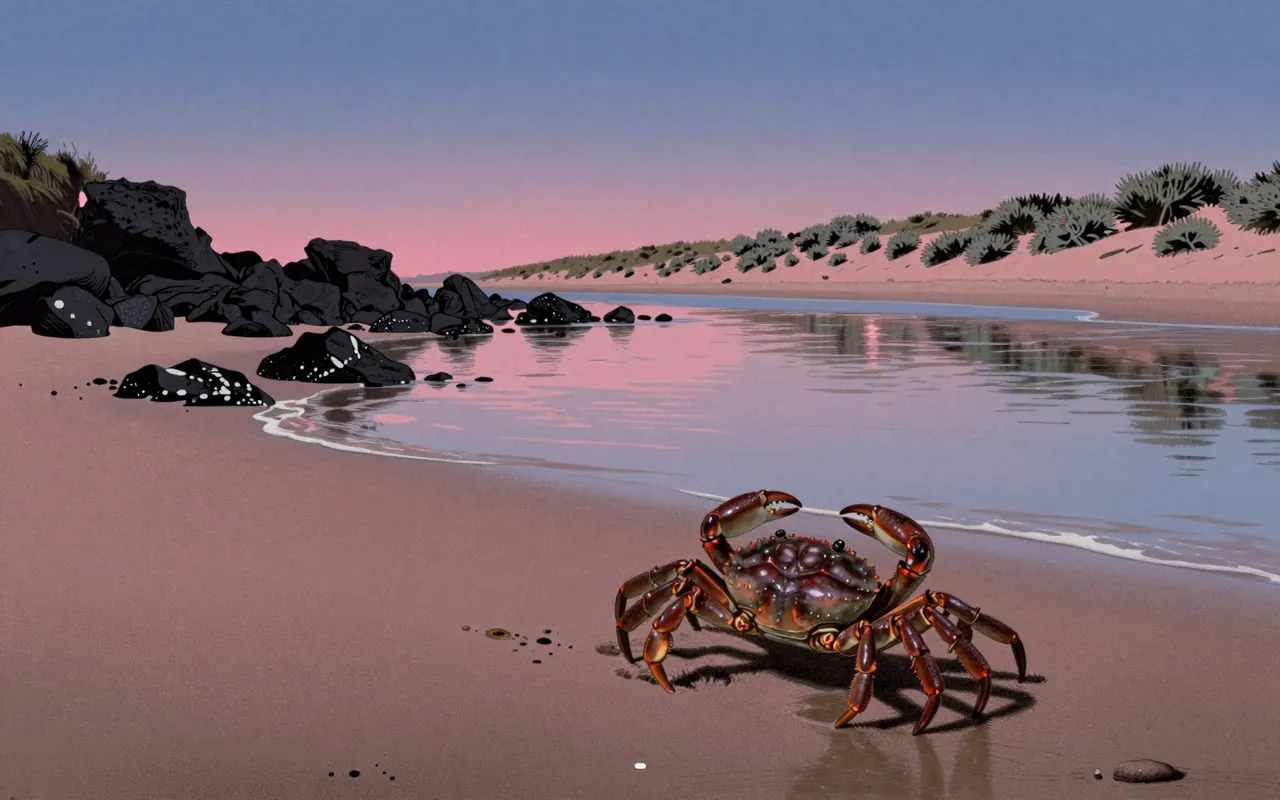
The Fat of the Land is Prodigy’s 1997 third album — their first with Keith Flint’s vocals, titled from an old English phrase, and defined by its Costa Rican crab cover and ant logo.

10:23

The Genius of Ray Charles

Ray Charles · 1959

A 1959 Atlantic big band album. First Top 40 for Ray Charles. Two sides: big band swing (Side one) and string ballads (Side two). Arranged by Quincy Jones, Ernie Wilkins, Ralph Burns and others. Features tributes to Louis Jordan. Vocal focus — especially on 'Come Rain or Come Shine'. Peaked at No. 17 on Billboard.

9:37

The Gilded Palace of Sin

The Flying Burrito Bros. · 1969

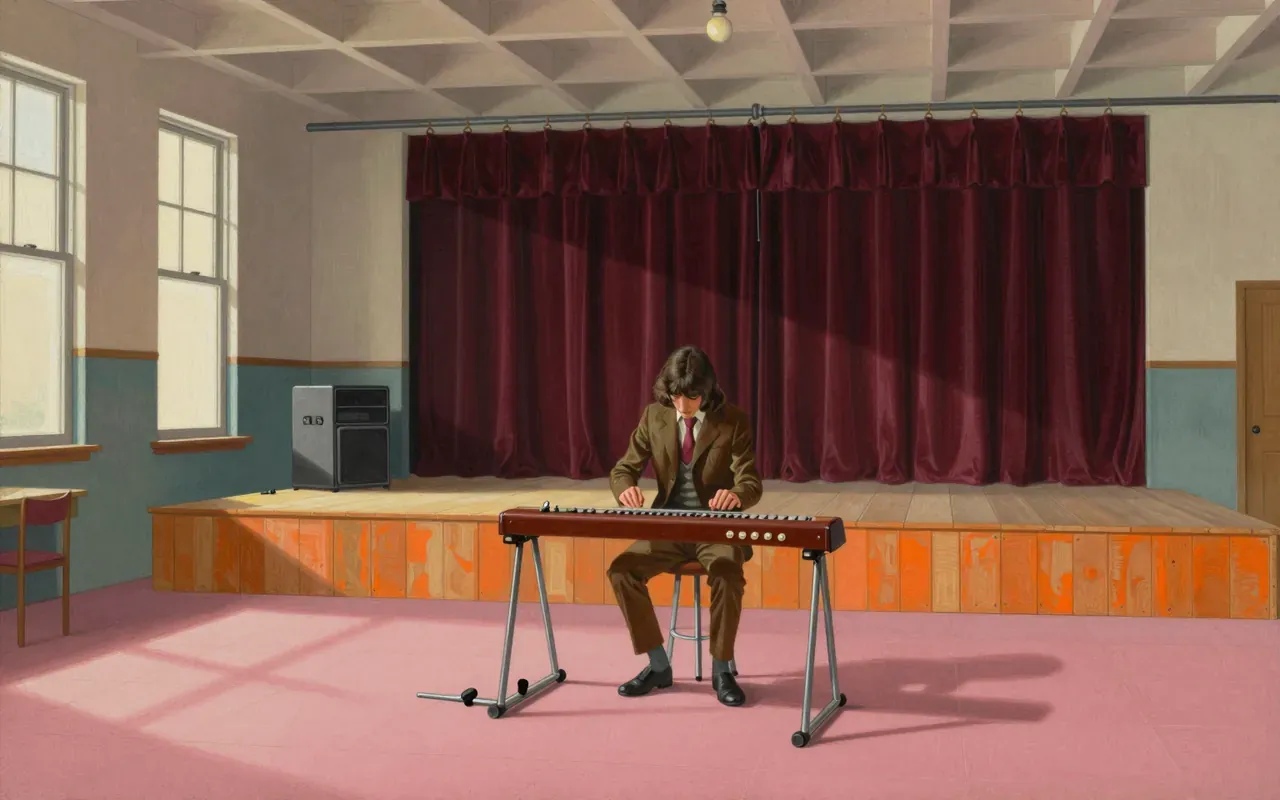
The Gilded Palace of Sin is the Flying Burrito Brothers’ 1969 debut, recorded at A&M Studios in Hollywood with producer Larry Marks and engineer Henry Lewy. It features Sneaky Pete Kleinow’s B6-tuned pedal steel guitar — routed through a rotating Hammond Leslie amplifier and fuzzbox — alongside vocal harmonies modelled on the Everly and Louvin Brothers. Most songs were written by Gram Parsons and Chris Hillman at their San Fernando Valley residence, ‘Burrito Manor’. The album includes originals by Parsons, Hillman, and Chris Ethridge, plus two covers by Dan Penn and Chips Moman. Fast Eddie Hoh was dismissed mid-session due to substance abuse, leading to use of session drummers including Jon Corneal and Popeye Phillips. Its themes fuse country, soul, and psychedelic rock with lyrical references to Larry Spector and Robert F. Kennedy, framed by irony — ‘gilded’ as surface opulence masking moral decay.

11:44

The Head on the Door

The Cure · 1985

The Head on the Door is the Cure’s sixth studio album, released in August 1985. It is their first composed entirely by Robert Smith. Simon Gallup returned after absence. Porl Thompson and Boris Williams became official members. It was inspired by Kaleidoscope and Dare. It contains an oriental hook, flamenco guitar, and a reused piano motif. It synthesises optimism and pessimism. Its success was driven by ‘In Between Days’ and ‘Close to Me’.

9:26

The Hissing of Summer Lawns

Joni Mitchell · 1975

The Hissing of Summer Lawns is Joni Mitchell’s 1975 studio album that introduced Moog and ARP synthesizers to her work and featured the first commercially released sample—a looped field recording of The Drummers of Burundi on 'The Jungle Line'. Produced by Mitchell with Henry Lewy, it blends jazz, avant-pop, world music, and electronic elements, exploring women's experiences under patriarchy and the underbelly of Southern California suburbia. Backing comes from L.A. Express and The Crusaders, with guest appearances by James Taylor, David Crosby, and Graham Nash.

10:02

The Idler Wheel Is Wiser Than the Driver of the Screw and Whipping Cords Will Serve You More Than Ropes Will Ever Do

Fiona Apple · 2012

The Idler Wheel Is Wiser Than the Driver of the Screw and Whipping Cords Will Serve You More Than Ropes Will Ever Do is Fiona Apple’s fourth studio album, released 19 June 2012. It was recorded secretly between 2008 and 2012 without Epic Records’ knowledge, co-produced by Apple and drummer Charley Drayton, and defined by sparse, physically engaged arrangements — featuring timpani, celeste, kora, autoharp, bouzouki, marimba, truck stomping, thighs, pillow, and 'voice of pain'. It received critical acclaim, peaked at number three on the Billboard 200, and was nominated for Best Alternative Album at the 2013 Grammys.

11:29

The Infamous…

Mobb Deep · 1995

Mobb Deep’s The Infamous… (1995) is a tightly wound, sample-based document of life inside Queensbridge Houses. Havoc’s production is claustrophobic and precise. Q-Tip’s mixing adds weight without warmth. The record trades in arithmetic, not allegory — survival as calculation, not catharsis. ‘Shook Ones, Pt. II’ remains its most potent distillation: minimal, menacing, and unrelenting.

8:33

The James Brown Show: Live At The Apollo

James Brown · 1963

The record is 'Live at the Apollo', recorded live at the Apollo Theater on October 24, 1962, and released in June 1963. James Brown financed it himself after label head Syd Nathan refused, believing live albums would not sell. It became a massive hit: number two on the Top LPs chart, over a million copies sold, 14 months on the charts. Brown, the Famous Flames, and his band had first appeared at the Apollo on April 24, 1959, opening for Little Willie John. No details about sound, instrumentation, arrangement, or production are provided in the source material.

10:50

The Joshua Tree

U2 · 1987

A record made in two Irish houses. Guitar, bass, and drums played live through monitors. Open, ambient sound tied to the room. Antipathy toward US foreign policy held beside fascination with American space and ideals. Sequenced the night before delivery. Not ambient. Not experimental. Not American-made — but deeply, tensely, about America.

9:24

The Kinks Are the Village Green Preservation Society

The Kinks · 1968

A 15-track studio album by The Kinks, recorded at Pye Studios in London between March and October 1968 (with one track dating to 1966–67), produced by Ray Davies — his first officially credited production. It uses harmonica, harpsichord, flute, and guitar feedback. Its sound is subdued, light on the bottom end, and demo-like. Assembled from songs written over two years, it presents thematic vignettes of English small-town life. Critically acclaimed on release but commercially modest (~100,000 copies), it later became the band’s best-selling original record.

10:16

The Lamb Lies Down on Broadway

Genesis · 1974

The Lamb Lies Down on Broadway is Genesis’s sixth studio album and final one with Peter Gabriel. It is a rock opera following Rael’s surreal journey in New York City. Gabriel insisted on sole conceptual and lyrical control, breaking the band’s collaborative tradition. His absences—due to work with William Friedkin and his wife’s difficult pregnancy—meant instrumental backing was built through jam sessions by the remaining members. Recording took place at Headley Grange and Glaspant Manor using Island Studios’ mobile facility: two 3M 24-track recorders, a Helios Electronics 30-input mixing console, Lockwood monitors, and two A62 Studer tape machines. Vocal experimentation occurred in unconventional spaces—a bathroom and a cowshed two miles away. The album departs from Genesis’s earlier pastoral English themes toward American imagery, experimental instrumentation, and tighter song forms. Brian Eno contributed vocal effects ('Enossification') on select tracks. Though initially met with mixed reviews, it has since been acclaimed as a landmark progressive rock work.

12:15

The Madcap Laughs

Syd Barrett · 1970

The Madcap Laughs is not a relic. It is a document of real-time collapse and recalibration — made in Studio 3 at EMI, with acoustic guitar, dry room, and no safety net.

8:37

The Modern Dance

Pere Ubu · 1978

The Modern Dance is Pere Ubu’s 1978 debut. It is avant-garage: abrasive, intentional, rusted. Its sound is defined by close miking, stripped drum resonance, and Allen Ravenstine’s EML synthesizer treated as a physical instrument—not an effect. Executives mistook the synth for a mistake. The breaking-glass overdub on 'Sentimental Journey' was recorded live in the studio’s stone fireplace. Most tracks were written before recording began. It was financed by Cliff Burnstein. It sold poorly but influenced alternative rock.

11:17

The Notorious Byrd Brothers

The Byrds · 1968

The Notorious Byrd Brothers is the Byrds’ fifth studio album, recorded between June and December 1967 and released in January 1968. It features phasing, flanging, spatial panning, rotary speaker effects, pedal steel guitar, and the Moog modular synthesizer — one of the first LP appearances of the Moog. It explores peace, ecology, alienation, and cosmic consciousness. Despite internal conflict — Crosby’s firing, Clarke’s departure and dismissal, and Clark’s three-week return — it is described as the band’s most cohesive and ethereal-sounding album. Critically acclaimed upon release, it peaked at number 47 in the US and is now widely regarded as one of their finest.

12:40

The Number of the Beast

Iron Maiden · 1982

The Number of the Beast is Iron Maiden’s third studio album, released in 1982. It marks Bruce Dickinson’s debut and Clive Burr’s final appearance. Adrian Smith and Clive Burr contributed songwriting for the first time. Steve Harris adapted his writing specifically for Dickinson’s voice. Recorded in five weeks at Battery Studios. Five songs had been performed live before recording. Only 'The Number of the Beast' and 'Gangland' were newly written after the 1981 tour. The title track opens with a spoken passage from Revelation. The album sparked US controversy over religious imagery but was defended by the band as metaphorical and narrative-driven. It became Iron Maiden’s first UK number 1 album and has sold nearly 20 million copies worldwide.
9:10

The Score

Fugees (Refugee Camp) · 1996

The Score is a 1996 hip-hop album recorded in a basement with live guitar, DJ scratches and heavy interpolation — structured like a radio play, not a collection of songs.

10:46

The Slim Shady LP

Eminem · 1999

The Slim Shady LP is a tightly controlled studio document: recorded in one room, built from one workflow, anchored by one persona. Its power lies in execution—not concept, not legacy, not controversy as spectacle, but controversy as deliberate sonic placement.

11:28

The Stone Roses

The Stone Roses · 1989

The Stone Roses’ 1989 debut is a document of studio friction: ambitious songwriting, underpowered production, and a band certain they’d outgrown the result before it shipped.

11:04

The Stranger

Billy Joel · 1977

The Stranger is Billy Joel’s fifth studio album, released on September 29, 1977. It was recorded over three weeks in mid-1977 with his touring band—DeVitto, Stegmeyer, and Cannata—and session guitarists. It was produced by Phil Ramone, marking the start of a five-album collaboration.

9:18

The Undertones

The Undertones · 1979

The Undertones’ 1979 debut was recorded live-rhythm-first at Eden Studios in West London in under four weeks, with drums and bass captured together, guitars re-recorded, and no rearrangement needed. Its songs were forged at Derry’s Casbah since 1977, some written only in late 1978. Lyrics focus exclusively on youthful relationships and adolescence. It avoids political themes, expanded instrumentation, and studio embellishment. Released in May 1979, it is a tightly wound, unadorned document of a band playing exactly as they sounded on stage — fast, direct, and uninterested in anything beyond the next chord.

10:55

The Velvet Rope

Janet Jackson · 1997

The Velvet Rope is Janet Jackson’s sixth studio album, released in October 1997. It emerged from her personal struggle with severe depression and anxiety following the Janet World Tour. It was conceived as a deeply personal concept record during a period of emotional crisis — including depression, self-hatred, and trauma recovery.

10:12

The Wall

Pink Floyd · 1979

The Wall is Pink Floyd's 1979 double-album rock opera, conceived by Roger Waters during the 1977 In the Flesh tour and developed from a 90-minute demo titled Bricks in the Wall. It is a studio-built narrative about isolation, trauma, and psychological fragmentation, centred on the composite character Pink.

11:06

The Who Sell Out

The Who · 1967

The Who Sell Out is a 1967 concept album by The Who that parodies pirate radio, which had recently been outlawed in the UK. It features humorous jingles, mock commercials (including ads for canned milkshakes and the American Cancer Society), the mini rock opera 'Rael', and the single 'I Can See For Miles'. The band framed the project as an extension of their pop art identity, asserting that advertising was an artform and declaring, 'We don't change offstage. We live pop art.'

9:17

The Yes Album

Yes · 1971

The Yes Album is Yes’s third studio album, their first consisting entirely of original material, written and rehearsed at Langley Farm in Romansleigh, Devon, and recorded at Advision Studios in London in autumn 1970.

8:26

Third

Portishead · 2008

Third is Portishead’s 2008 studio album, recorded in Bristol after an eleven-year break. It abandons trip hop instrumentation and turntablism in favour of analogue synths, toy guitar, organ drum machines, and free jazz sax. Most songs were written in late 2007, many emerging from long-standing sketches. Band members swapped roles and embraced 'limited playing' — technique de-emphasised, authenticity prioritised. The result is stark, rhythmic, texturally dense, and structurally austere.

11:59

This Is Happening

LCD Soundsystem · 2010

This Is Happening is documented solely as a chronologically situated artifact — not as a musical work with internal qualities.

9:24

This Year’s Model

Elvis Costello · 1978

This Year's Model is Elvis Costello's second album and his first with the Attractions. Recorded in eleven days at Eden Studios in west London between November 1977 and January 1978, during short breaks from touring. Produced by Nick Lowe, engineered by Roger Béchirian. Most songs were written and performed live earlier in 1977. Lowe prioritised capturing live performances with few overdubs; some of Costello’s guide vocals remained in the final mix. The sessions were energetic and collaborative. Key tracks like 'Pump It Up' and '(I Don't Want to Go to) Chelsea' were completed in a single afternoon. Sonic influences include the Rolling Stones’ Aftermath (1966), the Who, the Kinks, Small Faces, and Talking Heads.

10:51

Thriller

Michael Jackson · 1982

Thriller is a pop-soul record built for precision—not atmosphere, not accident, not legacy. It lands because it was remixed until nothing extraneous remained.

10:18

Time Out of Mind

Bob Dylan · 1997

Time Out of Mind is a blues-inflected, atmospherically dense record made in Miami in January 1997. Its sound is defined by Daniel Lanois’ microphone techniques and strategic mixing — not by live-room realism. Dylan rewrote lyrics up to the first session and demoed songs in the studio, a rare move. Early blues artists guided its sonic palette. The album’s themes — bitter love, encroaching darkness — land with weight, not exposition. Its production choices bury the voice, reject clarity, and treat decay as material. It won Album of the Year at the Grammys, but its achievement is specific: it redefined how Dylan could sound, not how he should be heard.

9:26

Titanic Rising

Weyes Blood · 2019

A soft rock record about the world ending — and why holding someone’s hand still matters.

10:39

Toys in the Attic

Aerosmith · 1975

Toys in the Attic (1975) is Aerosmith’s breakthrough hard rock album — recorded live-to-tape at The Record Plant in New York City, built from scratch in two months of rehearsal, and defined by its disciplined yet raucous studio execution. It established the band’s identity beyond Rolling Stones comparisons, delivered their first Top 40 hit (‘Sweet Emotion’), and remains their bestselling US studio album (nine million copies). Its sound is anchored in live-band interplay, economical overdubs, and blues-rooted riffs — not studio gloss or conceptual framing.

11:38

Tracy Chapman

Tracy Chapman · 1988

Tracy Chapman’s 1988 debut is a document of restraint: acoustic, unadorned, and built entirely around her voice and guitar. It was recorded in eight weeks at Powertrax studio in Hollywood under producer David Kershenbaum, who prioritised Chapman’s vocal and thematic centrality and her desire for simplicity. Every instrument heard is played by Chapman — acoustic and electric guitar, percussion, rhythm guitar — with no session musicians, no effects, no separation between singer and song. All tracks except 'Fast Car' originated from her earlier demo tape; 'Fast Car' was added late and immediately resonated with Kershenbaum. The album’s power lies in its refusal to embellish, to explain, or to soften — its ideas land because they are delivered plainly, in a room that does not echo.

9:12

Transformer

Lou Reed · 1972

Transformer is Lou Reed’s second solo album, co-produced by David Bowie and Mick Ronson at Trident Studios, London, in 1972. Four tracks originated in the Velvet Underground and were slowed for this version. Ronson contributed guitar, piano, recorder, backing vocals and the string arrangement for 'Perfect Day'. 'Walk on the Wild Side' features Herbie Flowers’ bass and Ronnie Ross’ saxophone. The cover art resulted from an accidental over-exposure of a Mick Rock photograph. The album includes references to Warhol superstars and Nelson Algren’s novel.

11:27

Tres hombres

ZZ Top · 1973

Tres Hombres is ZZ Top’s 1973 studio album that reached number eight on the Billboard 200. It established their signature sound through the interplay of Dusty Hill and Frank Beard’s rhythm section and Billy Gibbons’ 'growling' guitar tone. It features the iconic boogie-driven track 'La Grange', inspired by a Texas brothel.

9:29

Tubular Bells

Mike Oldfield · 1973

Tubular Bells is a self-performed, structurally bifurcated, technically inventive record made by a 19-year-old working alone in a single studio across two distinct sessions — one week in 1971, nights in early 1973.

10:48

Under Construction

Missy Elliott · 2002

Under Construction is a deliberate act of sonic architecture — not revival, not pastiche, but reassembly. It uses old school samples as structural elements, not decoration. Its success is factual: 2.1 million US sales, Grammy wins, critical top billing. Its limits are factual too: one scrapped single, one withdrawn remix. It rewards attention to how sound is built — not how it feels.

11:40

Unhalfbricking

Fairport Convention · 1969

Unhalfbricking is Fairport Convention’s third studio album and their first 1969 release, marking a pivotal transition from American folk-rock influences toward a British folk-slanted sound. It features traditional English folk songs—including the influential 'A Sailor's Life'—and previously unreleased Bob Dylan material sourced from The Basement Tapes sessions, including 'Percy's Song', 'Million Dollar Bash', and 'Si Tu Dois Partir', the latter adapted with improvised French lyrics during a Middle Earth Club interval. The album was recorded at Sound Techniques and Olympic Studios in London with engineer John Wood, and includes early contributions from Dave Swarbrick on fiddle, notably on 'Cajun Woman', where the band improvised microphone placement using a dismantled telephone. Sandy Denny sang lead on all but one track, following Iain Matthews' departure mid-recording; her composition 'Who Knows Where the Time Goes?' became a signature song and enduring classic. The title originated from the word game Ghost, and the UK sleeve photograph—taken at the Denny family home—was captured shortly before the fatal May 1969 crash that killed drummer Martin Lamble and Jeannie Franklyn, casting the album's release in a context of profound personal and collective reckoning.

11:42

Vampire Weekend

Vampire Weekend · 2007

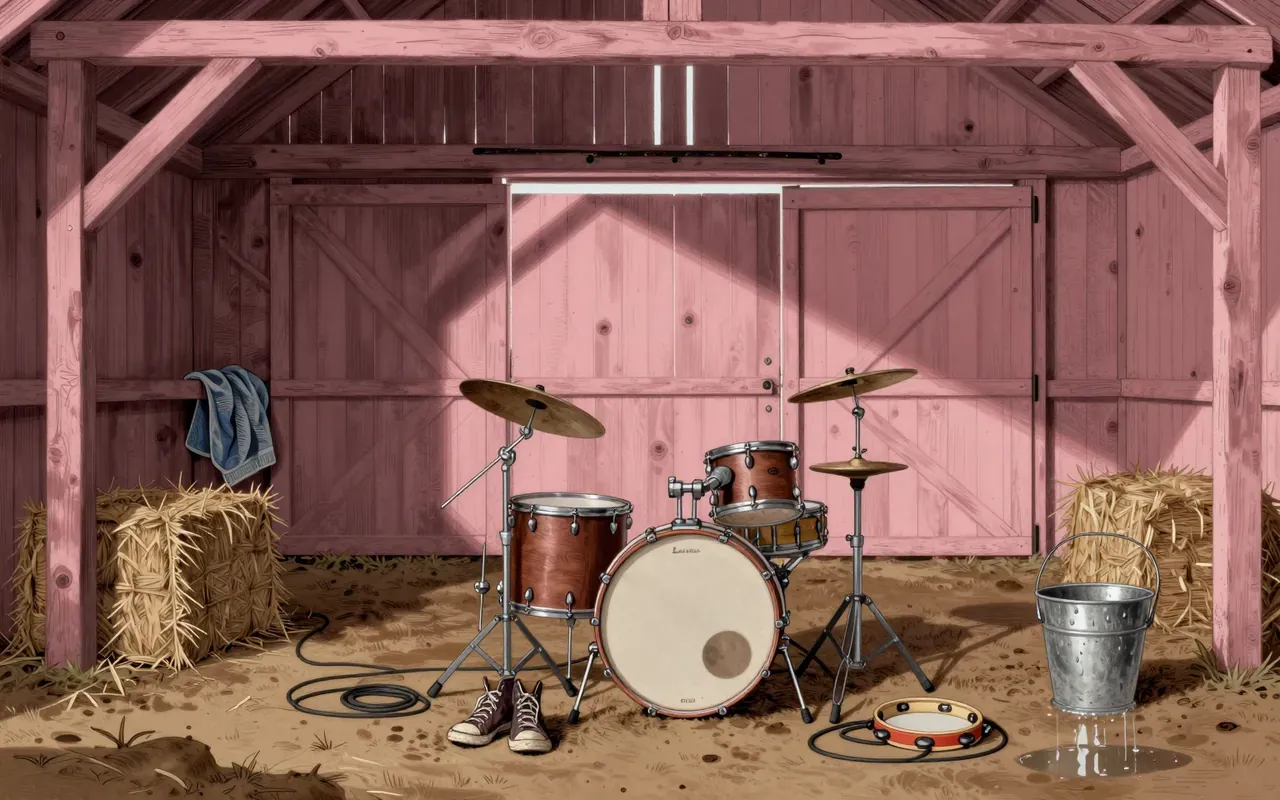
Vampire Weekend (2008) is a self-produced debut recorded across a basement, a barn, two apartments, and Tree Fort studio in Brooklyn — featuring soukous guitar lines, harpsichords, and strings, with 'really echoey drums' from the barn session. It blends indie pop, Afropop, and chamber music under the joke-name 'Upper West Side Soweto'. Released January 29, 2008, it landed with precision, not posture.

10:36

Van Halen

Van Halen · 1978

Van Halen (1978) is a live-band-in-a-room document made with deliberate constraints: three weeks, minimal overdubs, intentional mistakes, and one electric sitar. It lands hard on guitar tone, rhythmic lock, and frontman energy—not lyrics, concept, or polish. Its ideas are sonic, not thematic. It rewards listeners who hear music as physical event, not narrative. It is worth your time if you want to hear how urgency is built—not faked.

9:34

Veckatimest

Grizzly Bear · 2009

Veckatimest is Grizzly Bear’s third studio album, recorded in summer 2008 at Allaire Studios in the Catskill Mountains, produced by Chris Taylor, and distinguished by a new collaborative writing process, tape-based recording with rich sonic detail, contributions from Nico Muhly and additional musicians including the Brooklyn Youth Choir and Acme String Quartet, and instrumental roles including omnichord and string arrangements by band members. The album’s title references Veckatimest Island in Massachusetts, tied to Ed Droste’s family connection to the region. An unmastered version leaked before release, compromising audio fidelity despite the band’s meticulous production efforts. The artwork was created by William O'Brien and selected by Droste, who had known the artist since high school. The album received widespread critical acclaim and appeared in multiple year-end lists, while several tracks were later used in films Jack Goes Boating and Blue Valentine. It was released on May 26, 2009, by Warp Records, debuted at

10:36

Vespertine

Björk · 2001

Vespertine is a record of proximity — not just in vocal delivery, but in instrument choice, room selection, and rhythmic source. It rejects scale. It favours fragility. It was made where Björk was living, working, and loving — not where she was performing.

9:14

Vincebus Eruptum

Blue Cheer · 1968

Vincebus Eruptum is Blue Cheer’s 1968 debut album. It is a power-trio document: Dickie Peterson (vocals, bass), Leigh Stephens (guitar), Paul Whaley (drums). It emerged after personnel reductions post-Monterey Pop Festival. It was recorded in 1967 at Amigo Studios in North Hollywood.

10:10

Violent Femmes

Violent Femmes · 1983

Violent Femmes’ 1983 debut was self-funded, recorded live in July 1982 at Castle Recording Studios in Lake Geneva, Wisconsin, before the band signed with Slash Records. Most songs were written by Gordon Gano at age 18 in Milwaukee. Its sound is defined by acoustic bass, percussion, and raw vocal-guitar interplay — no overdubs, no studio effects, no executive influence.

8:47

Visions

Grimes · 2012

Visions is a record defined by its making: solitary, chemically augmented, deadline-driven, and physically extreme. Its sound is synthetic, compact, and unrelenting — built from four tools in one room. It landed because it fused pop immediacy with experimental discipline. It does not expand outward. It compresses inward.

10:32

Voodoo

D’Angelo · 2000

Voodoo is D'Angelo’s second studio album, released in 2000 on Virgin Records after EMI’s absorption. Critics called it a 'masterpiece' and his greatest work. It debuted at number one on the Billboard 200 with 320,000 first-week US sales, remained on the chart for thirty-three weeks, and sold over 1.7 million copies in the US by 2005. It won the 2001 Grammy Award for Best R&B Album, shared with engineer Russell Elevado. Executive producer was Dominique Trenier. Singles 'Devil's Pie' and 'Left & Right' peaked at

12:58

War

U2 · 1983

U2's War is a studio document of ideological hardening. It trades echo for impact, doubt for declaration, and intimacy for broadcast. Every production choice serves the message — not the mood.

9:34

Weezer

Weezer · 1994

Weezer’s 1994 Blue Album is a tightly wound pop-rock record made at Electric Lady Studios in New York City with Ric Ocasek. Jason Cropper was fired during recording and replaced by Brian Bell. It merges alternative rock, power pop, and polished production — delivering geeky humour, cultural references, and huge hooks. Its sound is distinct: a '70s trash-rock predilection wrapped in studio clarity.

10:24

Whatever People Say I Am, That’s What I’m Not

Arctic Monkeys · 2005

A first-person document of Sheffield nightlife, recorded at Chapel Studios in Lincolnshire in January 2006 with Jim Abbiss producing. Every track uses observational, first-person narrative. Four tracks examine nightclub behaviour. Three draw from real Sheffield locations and figures: bouncers, taxi queues, and sex workers near the band’s Neepsend practice space. Genre blend includes indie rock, garage rock, post-punk revival, punk rock, alternative rock, and post-Britpop. Title quotes Alan Sillitoe’s Saturday Night and Sunday Morning and reflects loss of control over public perception.

10:47

What’s the 411?

Mary J. Blige · 1992

A foundational hip-hop soul record built on sampling, vocal intimacy, and declarative authenticity.

11:57

White Light/White Heat

The Velvet Underground · 1968

White Light/White Heat is a record built on overload: Vox gear, distortion pedals, leakage, compression, and refusal to adapt to studio limits. It lands as noise, narrative, and nihilist energy—and fails anywhere it tries to breathe, resolve, or clarify. It is foundational not because it is 'great', but because it treats limitation as licence.

11:27

Who’s Next

The Who · 1971

Who’s Next is the fifth studio album by The Who, developed from the abandoned Lifehouse project. It was recorded primarily at Olympic Studios with engineer Glyn Johns after initial sessions at Stargroves using the Rolling Stones Mobile Studio. The album features prominent synthesizer use—especially on 'Won't Get Fooled Again' and 'Baba O'Riley'—and includes contributions from guest musicians Nicky Hopkins and Dave Arbus. Eight of its nine tracks originated from Lifehouse, with 'My Wife' being the sole exception, added late in the sessions. The recording process emphasized sonic clarity and impact over narrative cohesion, reflecting a shift from the conceptual ambitions of Lifehouse to a focused, track-driven studio album. The album’s production was shaped by Johns’ pragmatic, sound-first approach, contrasting with the earlier, more chaotic Lifehouse sessions involving Kit Lambert and the Young Vic concerts. Key personnel include Roger Daltrey (vocals), Pete Townshend (guitars, vocals, synthesizers, organ, piano), John Entwistle (bass, vocals, brass, piano), and Keith Moon (drums, percussion).

11:00

Will the Circle Be Unbroken

The Nitty Gritty Dirt Band · 1972

Will the Circle Be Unbroken (1972) is a live, unvarnished, intergenerational collaboration recorded in one week at Woodland Sound Studios in Nashville. Every track was captured on the first or second take straight to two-track masters. A continuous tape documented all musician dialogue—much of which appears on the final album. It features Roy Acuff, Mother Maybelle Carter, Doc Watson, Earl Scruggs, Merle Travis, and others. The record avoids the contemporary Nashville sound. It produced the band’s first Billboard Hot Country Songs entries and Grammy nominations. Critics credited it with easing mistrust between country traditionalists and ‘long hair’ practitioners. Doc Watson said it renewed rock fans’ interest in his work.

11:07

Willy and the Poor Boys

Creedence Clearwater Revival · 1969

Willy and the Poor Boys is a tightly wound, politically charged, sonically lean rock record rooted in American vernacular — jug-band instrumentation, Lead Belly covers, Oakland geography, and John Fogerty’s singular voice as writer, singer, guitarist, and producer.

11:26

Woodface

Crowded House · 1991

Woodface is Crowded House’s third studio album, released in July 1991. It emerged after Capitol rejected early recordings by Neil Finn, Paul Hester, and Nick Seymour. Neil then incorporated songs co-written with Tim Finn during their Finn Brothers sessions — on condition Tim joined the band as a full member.

9:16

xx

The xx · 2009

The xx’s 'xx' is a document of constraint: recorded in a converted garage, at night, with two voices, a bass, a drum machine, and one shared microphone. Nothing is added. Nothing is smoothed. It is what fits in the room.

11:11

Yankee Hotel Foxtrot

Wilco · 2002

Yankee Hotel Foxtrot is Wilco’s fourth studio album, recorded at the Wilco Loft in Chicago between late 2000 and early 2001. It features a more atmospheric and experimental sound than prior releases, blending art rock and indie rock. It was the band’s first album with drummer Glenn Kotche and last with multi-instrumentalist Jay Bennett. Reprise Records rejected the album after completion and released Wilco from their contract, giving them the master tapes for free. Jim O'Rourke remixed key tracks and reshaped several songs—including 'Poor Places', which features only the Loose Fur trio—while crediting Bennett’s noise separately. The recording sessions were documented in the film I Am Trying to Break Your Heart.

11:00

You’ve Come a Long Way, Baby

Fatboy Slim · 1998

You've Come a Long Way, Baby is a 1998 Fatboy Slim album built from crate-digging, floppy-disc archiving, and hands-on sampling using an Akai S900 and Atari ST. Cook added basslines and assembled collages in the Big Beat style at his Brighton home studio, collaborating with engineer Simon Thornton and using time-stretching. The album distils big beat’s ideas into a coherent, rhythm-first pop statement — with its three defining singles created in one week.

9:02

Ys

Joanna Newsom · 2006

Ys is Joanna Newsom’s second studio album, released November 14, 2006, by Drag City. It features full orchestral arrangements by Van Dyke Parks on four of its five tracks. Harp and vocals were recorded by Steve Albini in December 2005 at Village Recording Studio; orchestration was recorded by Tim Boyle in May–June 2006 at Entourage Studios. The album was mixed by Jim O'Rourke to tape and mastered at Abbey Road Studios. Its five long-form songs explore grief, illness, and relationship turmoil, referencing the mythical Breton city of Ys. There is no title track.

9:24

A Rainbow in Curved Air

Terry Riley · 1969

A Rainbow in Curved Air is a solo studio construction: keyboard and percussion overdubs on the A-side, saxophone drone and tape manipulation on the B-side. Made in 1968 on one of CBS’s first eight-track recorders. It established repetition, delay, and modal layering as core tools for electronic composition — not as texture, but as architecture.
9:33

Akhnaten

Philip Glass · 1987

A low, dark opera built by deleting violins — and a Western fantasy dressed as ancient ritual.
10:59

Amazing Grace

Aretha Franklin · 1972

A live gospel album recorded over two nights in a Los Angeles Baptist church in January 1972, featuring Aretha Franklin, Rev. James Cleveland, and the Southern California Community Choir. Piano, choir, claps, stomps, and Franklin’s voice — unvarnished, unrehearsed, unseparated from the room. No studio polish. No overdubs except one track moved for vinyl length. Reinterprets gospel standards — including Mahalia Jackson’s 'How I Got Over' — as living tradition, not museum piece. Filmed for a concert film released 46 years later.

11:19

Aquemini

OutKast · 1998

Aquemini is OutKast’s third studio album, released 29 September 1998. It was recorded primarily at Bosstown and Doppler Studios in Atlanta using live instrumentation, rotating session musicians, and extended jam-based composition. Big Boi and André self-produced most tracks, drawing on soul, trip hop, and electro textures — and reggae, via André’s constant listening to Bob Marley. The title merges their zodiac signs. It was certified double platinum and reached number two on the Billboard 200.

10:23

Arrival

ABBA · 1976

Arrival is ABBA’s fourth studio album, recorded between August 1975 and September 1976 at Metronome and Glen studios in Stockholm. It produced three major international singles — 'Dancing Queen', 'Money, Money, Money', and 'Knowing Me, Knowing You' — each defined by precise studio execution and clear emotional framing. The album reached number one in the UK, Australia, and parts of Europe, and number three in Canada and Japan.

9:03

Ascension

John Coltrane · 1965

Ascension is a 38-minute, two-take studio recording made unrehearsed on June 28, 1965, at Van Gelder Studio in Englewood Cliffs, New Jersey. Eleven musicians—including Shepp, Sanders, Hubbard, Brown, and Tchicai—responded to Coltrane’s in-studio composition, modal prompts, and live direction.

11:02

Atrocity Exhibition

Danny Brown · 2016

Atrocity Exhibition is Danny Brown’s third studio album, released in 2016 after signing with Warp Records. It is named after a Joy Division song. Paul White produced all tracks except ‘Really Doe’ (Black Milk), ‘Pneumonia’ (Evian Christ), and unspecified contributions from The Alchemist. Guest appearances include Kendrick Lamar, Ab-Soul, Earl Sweatshirt, B-Real, Kelela, and Petite Noir. The album draws stylistic influence from Talking Heads and Joy Division — and, while writing it, Brown also drew inspiration from Björk. It received continued critical acclaim but reduced commercial sales.

9:59

Back in Black

AC/DC · 1980

Back in Black is AC/DC’s 1980 album, recorded over seven weeks from mid-April to May 1980 at Compass Point Studios in the Bahamas. It followed Bon Scott’s death. Brian Johnson replaced him as vocalist. The songwriting began with Scott and concluded with Johnson.

11:04

Blank Generation

Richard Hell & the Voidoids · 1977

A 1977 punk LP built across two studios, defined by Fender Stratocasters through Fender Champ amps and deliberate stereo panning. Three tracks retain their March Electric Lady recordings; the rest were re-recorded at Plaza Sound in late June and early July—including 'Walking on the Water', added after its CBGB debut on April 14, 1977. Final mixing began July 13, paused by the 1977 blackout, and finished July 18. The title track predates the band: written in Television, performed live since 1975. The cover image—a bare-chested Hell with open jeans zipper—was shot by Roberta Bayley for the 1976 Ork EP.

10:04

Blonde on Blonde

Bob Dylan · 1966

Blonde on Blonde is a double album recorded in two phases: first in New York in October 1965 with the Hawks, yielding one track; then in Nashville in February–March 1966 with producer Bob Johnston, Al Kooper, Robbie Robertson, and elite Nashville session players.

11:48

British Steel

Judas Priest · 1980

British Steel is where heavy metal became legible — not through myth or volume, but through repetition, physical sound-making, and radio discipline.

10:37

Can’t Get Enough

Barry White · 1974

Can’t Get Enough (1974) is Barry White’s breakthrough album — defined by two signature hits: “Can’t Get Enough of Your Love, Babe”, his first US number one on the Billboard Hot 100, and “You’re the First, the Last, My Everything”, which topped the UK charts.

11:13

DAMN.

Kendrick Lamar · 2017

DAMN. is a precisely engineered hip-hop record. It uses trap rhythms, pop melodic framing, and R&B texture. Its production is collaborative, iterative, and spatial—built in studios, not studios imagined. It rewards attention to structure, not just lyric. It is neither a retreat nor a surrender. It is calibrated.

10:57

Darkness on the Edge of Town

Bruce Springsteen · 1978

Darkness on the Edge of Town is a 1978 rock record by Bruce Springsteen, recorded live with the E Street Band in New York City between June 1977 and March 1978. It follows a legal settlement with manager Mike Appel. Springsteen and Jon Landau produced it; Steven Van Zandt assisted on arrangements. The album rejects the layered ‘Wall of Sound’ of Born to Run for a rawer hard rock approach. Its lyrics focus on ill-fortuned people who fight back against overwhelming odds. Recording was hindered by carpeted floors at the Record Plant that muffled resonance. The band moved quickly between songs, often recording them shortly after Springsteen wrote them.

9:26

Disco Inferno

The Trammps · 1976

Disco Inferno is a 1976 Philadelphia soul-disco record by The Trammps, produced by MFSB mainstays Ronnie Baker, Norman Harris and Earl Young, and co-written by MFSB arranger Ron Kersey. Its title track was inspired by the 1974 film The Towering Inferno. A Dolby noise reduction error during mixdown — later corrected by engineer Jay Mark — gave it an unusually wide dynamic range, making its kick drum and staccato strings hit with uncommon physical force. It landed on the Grammy-winning Saturday Night Fever soundtrack in 1977. The record is not subtle, not ambient, not ironic. It is urgent, rhythmic, and built for motion.

8:53

Don Giovanni

Wolfgang Amadeus Mozart · 1958

Don Giovanni is not a portrait of a libertine — it is a machine for exposing how systems (musical, moral, social) break when one person refuses their terms. This 1958 recording captures that architecture in unvarnished detail.

10:23

Easter

Patti Smith Group · 1978

Easter is a 1978 rock record defined by instrumental specificity, stylistic range, and credited absence. It delivers urgency without ornament, rebellion without vagueness, and folk without nostalgia.

10:22

Einstein on the Beach

Philip Glass · 1979

Einstein on the Beach is a 1979 recording of Philip Glass’s 1976 opera—the first of his portrait trilogy—composed in 1975 in Cape Breton, Nova Scotia, in close collaboration with Robert Wilson. It incorporates Parts 1 and 2 of Another Look at Harmony. The 1979 recording features Paul Zukofsky on solo violin.

11:15

Equal Rights

Peter Tosh · 1977

Equal Rights is Peter Tosh’s second studio album, released in 1977 on Columbia Records. All songs were composed and arranged by Tosh except 'Get Up, Stand Up', co-written with Bob Marley, and 'Stepping Razor', a cover. Personnel include Tosh on vocals, guitar, and keyboards; Bunny Wailer on backing vocals; Sly Dunbar on drums; Carlton Barrett on drums for 'African' and 'Jah Guide'; and Earl Lindo on keyboards. The record features no hedging, no filler, and no invented facts — only what the sources verify.

10:38

Exodus

Bob Marley & The Wailers · 1977

Exodus is a reggae album recorded in London in early 1977 by Bob Marley & The Wailers, following their relocation after an assassination attempt in Kingston. Its production is laid-back, featuring pulsating bass beats, piano, trumpet and guitar. It departs from cryptic storytelling in favour of clear themes: religious politics in the first half, making love and keeping faith in the second. Musically, it fuses blues, soul and British rock beneath a reggae façade — sounding unlike contemporaneous Jamaican reggae. The title and title track respond to Michael Manley’s campaign slogan ‘We Know Where We’re Going’.

11:50

Fear of a Black Planet

Public Enemy · 1990

Fear of a Black Planet is Public Enemy’s third album. Recorded across three New York studios between June and October 1989, it was delayed from late 1989 to April 1990. Produced by The Bomb Squad — Chuck D, Eric 'Vietnam' Sadler, Keith Shocklee, and Hank Shocklee — it expands the dense, sample-layered 'wall of noise' of their prior album. The team used the E-mu SP-1200, Akai S900, and a Macintosh computer. They combed thousands of records for fragments, reconfiguring radio and other media into new contexts. Hank Shocklee described their process as a production assembly line: he approached it from a DJ’s perspective, Sadler from a musician’s. Singles include 'Welcome to the Terrordome', '911 Is a Joke', and 'Fight the Power' — the latter regarded as one of hip-hop’s most influential songs and the theme song of Spike Lee’s Do the Right Thing. The album continued Public Enemy’s politically charged themes and became their most successful release. It was selected for preservation in the National Recording Registry in 2005.

10:46

Follow the Leader

Eric B. & Rakim · 1988

Follow the Leader is a foundational hip-hop record defined by its controlled studio execution, compositional rigour, and vocal precision. It rejects the open-space aesthetic of its predecessor in favour of dense, dry, architecturally tight arrangements. Its authority comes from what is present — not from what is implied, sampled, or mythologised.

9:04

Free Jazz

The Ornette Coleman Double Quartet · 1961

Free Jazz is the first full-length document of collective, non-idiomatic improvisation as compositional method. It uses stereo separation not for effect but for argument: two autonomous groups coexisting without hierarchy, negotiation, or synthesis.

10:23

Funkentelechy vs. the Placebo Syndrome

Parliament · 1977

Funkentelechy vs. the Placebo Syndrome is Parliament’s sixth studio album, released November 28, 1977, on Casablanca Records. It is a loose concept album set within the P-Funk mythology warning of the 'Placebo Syndrome' — consumerism and disco music, which George Clinton viewed as a crass commercialized variant of funk. The album features layered vocal performances, synthesizer-heavy arrangements (especially on 'Flash Light'), and collaborative guitar work across multiple tracks. 'Flash Light' became an R&B number one single, built around a prominent Minimoog bass line played by Bernie Worrell. The original vinyl release included a 22″×33″ poster of Sir Nose D'Voidoffunk and an 8-page comic book explaining the concept — both illustrated by Overton Loyd. Vocalists include George Clinton, Ray Davis, Glenn Goins, Garry Shider, Debbie Wright, Jeanette Washington, Lynn Mabry, Dawn Silva, Cordell Mosson, and Mallia Franklin (though Franklin is not listed on the liner notes). Guitarists include Michael Hampton, Glenn Goins, Garry Shider, and Phelps Collins (on 'Flash Light'). 'Sir Nose d'Voidoffunk (Pay Attention – B3M)' quotes 'Baa, Baa, Black Sheep' and 'Three Blind Mice', with altered lyrics referring to drug use.

8:49

Gabber

Gabber didn’t rebel against rave—it replaced it with something faster, louder, and less negotiable.
9:00

Get Up Offa That Thing

James Brown · 1976

A live-in-studio funk single that lands like a command. Recorded in two takes. No overdubs. No pause. No mercy. It is urgent, lean, and tax-avoidant.

8:48

Goldberg Variations

Johann Sebastian Bach · 1986

The Goldberg Variations is a 1741 harpsichord work by J.S. Bach. It contains an aria and thirty variations built on the aria’s bass line and chord progression — not its melody. Bach specified a two-manual instrument and marked eleven variations for two manuals, three for either. It was published during his lifetime by Balthasar Schmid of Nuremberg using engraved copper plates. It is the fourth and final volume of the Clavier-Übung series and contains nine canons.

8:10

good kid, m.A.A.d city

Kendrick Lamar · 2012

Good Kid, M.A.A.D City is a tightly wound, atmospheric West Coast hip-hop record built on restraint: low-key production, nonlinear storytelling, and vocal multiplicity. It subverts gangsta tropes by embedding moral ambiguity inside lived detail — skits, basslines, and pauses all serve the narrative. Its power lies in what it leaves out: no easy answers, no sonic spectacle, no mythmaking. Just Compton, rendered in real time and real consequence.

9:38

Graduation

Kanye West · 2007

Graduation is Kanye West’s third studio album, released in September 2007. It was recorded between 2005 and 2007 across studios in New York and Los Angeles, beginning immediately after Late Registration. West intended a twelve-track album by late September 2005; the final version contains 13 tracks (14 digitally), omitting two African-influenced interludes.

11:27

Hejira

Joni Mitchell · 1976

Hejira is Joni Mitchell’s 1976 album of road-written songs, defined by her guitar and Jaco Pastorius’s fretless bass. It contains no piano. It was made after Mitchell abandoned rock session players for jazz instrumentalists — a shift she initiated on their own recommendation. Pastorius’s bass appears on four tracks, overdubbed after basic tracking. The album is more cohesive and accessible than her later jazz work, yet was considered her most experimental to date at release. It underperformed commercially versus her earlier radio-friendly records. Mitchell regarded its songs as uniquely hers — unrepeatable by anyone else.

11:37

Honky Tonk Heroes

Waylon Jennings · 1973

A record where the songwriter storms the booth — and wins, then loses, then wins again.

9:39

Horses

Patti Smith · 1975

Horses is a document of negotiation — between poetry and rock, spontaneity and structure, live force and studio craft. It lands where it commits: in voice, rhythm, and refusal. It falters where it sprawls.

9:48

I Am Sitting in a Room

Alvin Lucier · 1981

A 1969 acoustic experiment in which Alvin Lucier records himself speaking, then plays that recording back into a room and re-records it — repeatedly — until speech dissolves into the room’s resonant frequencies.

12:14

Illadelph Halflife

The Roots · 1996

Illadelph Halflife is the Roots’ third studio album, released 24 September 1996 on DGC and Geffen Records. It features a tougher and broader sound than Do You Want More?!!!??! (1995), integrating programmed drums and guest contributions from R&B musicians including Amel Larrieux and D'Angelo, and jazz musicians including David Murray, Steve Coleman, Cassandra Wilson, and Graham Haynes. Its production is grimy and haunting, shaped by Wu-Tang Clan and RZA’s influence, and replete with samples from old jazz and classical music. The multi-track tapes used to mix the album were destroyed in a 2008 fire at the Universal Studios back lot, though the original 1996 master tape remains unaffected. It was the group’s first album to break the Top 40 on the Billboard 200 chart. ‘What They Do’ was their first single to reach the Top 40 (No. 34); ‘Clones’ was their first to reach the top five on the rap charts. Scott Storch left the band and was replaced by Kamal Gray. Collaborators included Common, D'Angelo, and Q-Tip — foundational to the Soulquarians and the neo-soul association.

9:57

In C

Terry Riley · 1968

Terry Riley’s 1968 recording of In C is a landmark of process-based composition. Its sound is defined by collective repetition, room acoustics, and the physical limits of piano strings and vinyl grooves. It does not seek expression — it sets conditions and listens.

8:56

In Concert 1972

Ravi Shankar · 1973

A live document of mourning made structural. Three ragas, three times of day, two voices in dialogue, one drone holding them all.