musicbriefs
Highest rated

All briefs

1188 briefs · 11103 min · 1057–1152 on page 12 of 13
1:58

Crossing the Red Sea with the Adverts

The Adverts · 1978

The Adverts released Crossing the Red Sea in February 1978 after “No Time to Be 21” introduced the album as a single. John Leckie produced the Abbey Road recording. The debut places an established live-band format inside a focused studio presentation.
2:39

D Train

D Train · 1982

D Train's 1982 debut, also known as You're the One for Me, pairs singer James Williams with producer and keyboardist Hubert Eaves III. Released by Prelude in the United States, it is an original album rather than a later hits collection. Its programme gives the duo's best-known song a surrounding musical world.

2:08

Dance Mania

Tito Puente and His Orchestra · 1958

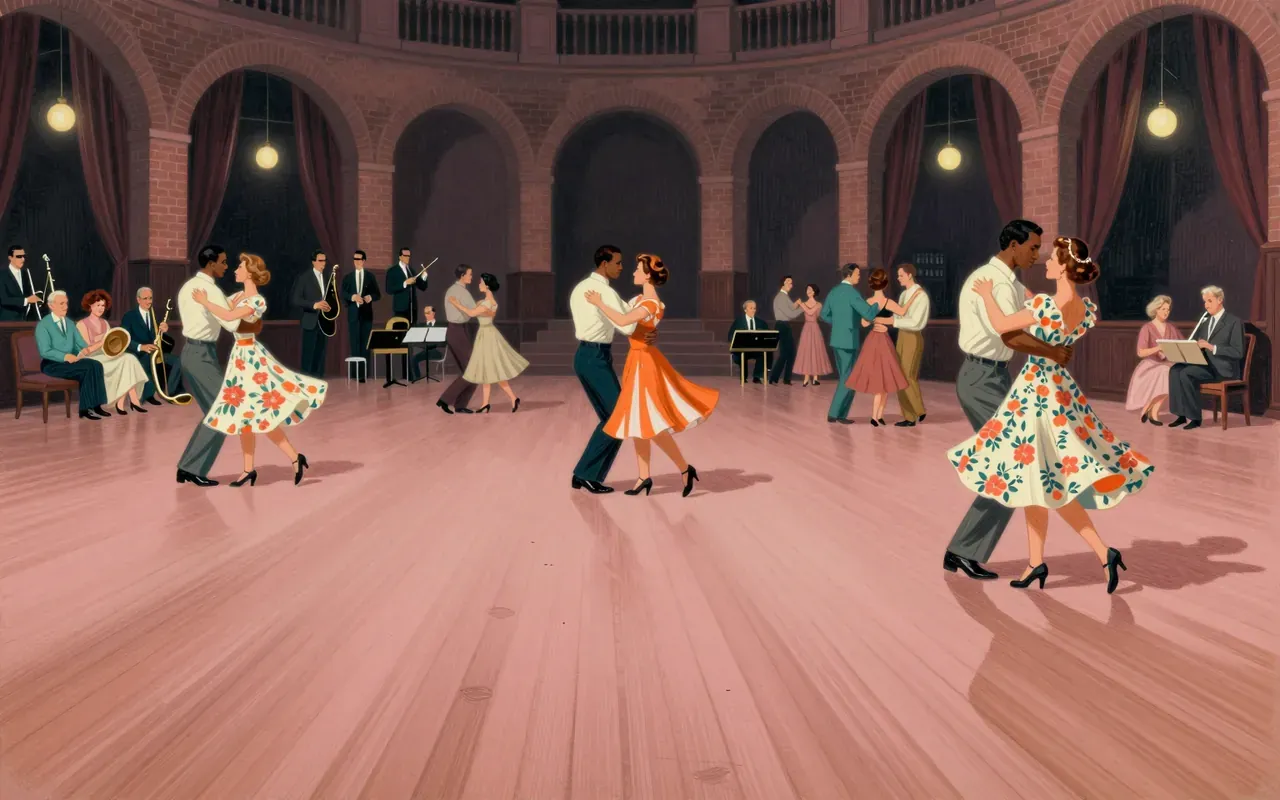
Dance Mania, released in 1958, places Tito Puente at the head of an orchestra built for dancing. His roles as leader, arranger and percussionist are inseparable from the result. The album offers a useful way into a band whose rhythmic identity involves many coordinated players.

2:02

My Life in the Bush of Ghosts

Brian Eno, David Byrne · 1981

Brian Eno and David Byrne's 1981 collaboration was recorded before Remain in Light but delayed by sample-clearance problems. Its title comes from Amos Tutuola's novel, though the musicians had not read it when choosing the name. The record is a constructed encounter with recorded voices and sounds.

2:09

Daydream Nation

Sonic Youth · 1988

Sonic Youth recorded Daydream Nation in New York in 1988 and released it as a double album. Longer pieces reflected the group's live improvisations, while a prolific period of writing supplied material for the enlarged format. The result expands the space available to both songs and noise.

1:58

Debut

Björk · 1993

Debut was Björk's first international solo album after the Sugarcubes, released in 1993. Produced with Nellee Hooper, it draws on electronic pop, house, jazz and other forms. The title announces a new public role rather than the literal beginning of her recording life.

2:11

Diana

Diana Ross · 1980

Diana was released in 1980 after Ross approached Nile Rodgers and Bernard Edwards for a new musical direction. Conversations with her informed much of their songwriting. The finished album also reflects Ross' own intervention: she worked with engineer Russ Terrana on a remix that the producers initially opposed.

2:07

Doggystyle

Snoop Dogg · 1993

Snoop Doggy Dogg's 1993 debut followed his prominent contributions to Dr. Dre's The Chronic. Released by Death Row, it develops that partnership into an album built around Snoop's own vocal character. The setting is collective, with Tha Dogg Pound and other associates contributing to its social atmosphere.

2:05

Dry

PJ Harvey · 1992

Dry was recorded in Yeovil and released in 1992 by Too Pure. PJ Harvey worked with her original trio and approached the opportunity as though it might be her only album. That urgency helps explain the concentration of the presentation without turning the record into a mere statement of ambition.

2:08

East-West

The Butterfield Blues Band · 1966

East-West, the Butterfield Blues Band's second album, was recorded at Chess Studios in Chicago and released in 1966. Mike Bloomfield and Elvin Bishop share the guitar work, while Billy Davenport replaces Sam Lay on drums. The repertoire broadens the group's blues foundation rather than discarding it.

2:04

Either/Or

Elliott Smith · 1997

Either/Or was recorded across several locations, mainly in Portland, and released in 1997. Elliott Smith worked with Tom Rothrock and Rob Schnapf while his time in Heatmiser was ending. The album occupies a point between his earlier spare recordings and the fuller arrangements that followed.

1:59

El Camino

The Black Keys · 2011

El Camino was released in 2011, co-produced and co-written with Danger Mouse. The Black Keys began the Nashville sessions without finished material. Difficulties translating slower Brothers songs to the stage helped direct the new record toward a more immediately propulsive programme.

2:03

El mal querer

Rosalía · 2018

El mal querer was released in 2018 after developing as Rosalía's graduation project. Co-produced with El Guincho, it follows the medieval Occitan narrative Flamenca through a sequence of chapters. The literary source provides a structure for examining a destructive relationship.

1:58

Electric Music for the Mind and Body

Country Joe and the Fish · 1967

Country Joe and the Fish released their debut in May 1967 after developing from an acoustic group into an electric band. Samuel Charters produced the sessions at Sierra Sound. Several pieces had already appeared in earlier versions on the group's independently released EPs.

1:54

Ella and Louis

Ella Fitzgerald, Louis Armstrong · 1956

Ella and Louis was released in 1956, the first of Fitzgerald and Armstrong's three Verve albums together. Norman Granz selected the ballad repertoire and produced the session. Armstrong had the final say over songs and keys, making the partnership a practical arrangement as well as a marquee pairing.

2:00

Ellington at Newport

Duke Ellington and His Orchestra · 1956

Ellington at Newport draws on Duke Ellington's 1956 festival appearance, an important renewal of public attention to his orchestra. The original album also used studio recreations. That distinction matters when the record's reputation rests so heavily on the excitement of a particular night.

2:01

The Elvis Presley Sun Collection

Elvis Presley · 1975

The Elvis Presley Sun Collection was issued in the UK in 1975; the related American release followed as The Sun Sessions in 1976. The recordings come from 1954–55 at Sun in Memphis under Sam Phillips. The album date therefore describes the act of collecting the performances.

2:03

Entertainment!

Gang of Four · 1979

Gang of Four's 1979 debut places political questions inside the subjects a pop record usually treats as private. Love, consumption and work share the programme. Its title is therefore a useful provocation: the music asks what entertainment does while offering an energetic version of it.

2:04

Everybody Knows This Is Nowhere

Neil Young, Crazy Horse · 1969

Neil Young's second solo album, released in 1969, was his first with Crazy Horse. Danny Whitten, Billy Talbot and Ralph Molina brought an existing working relationship into the collaboration. The record marks a change from elaborate studio assembly toward capturing musicians playing together.
2:24

Ezz-thetics

George Russell Sextet · 1961

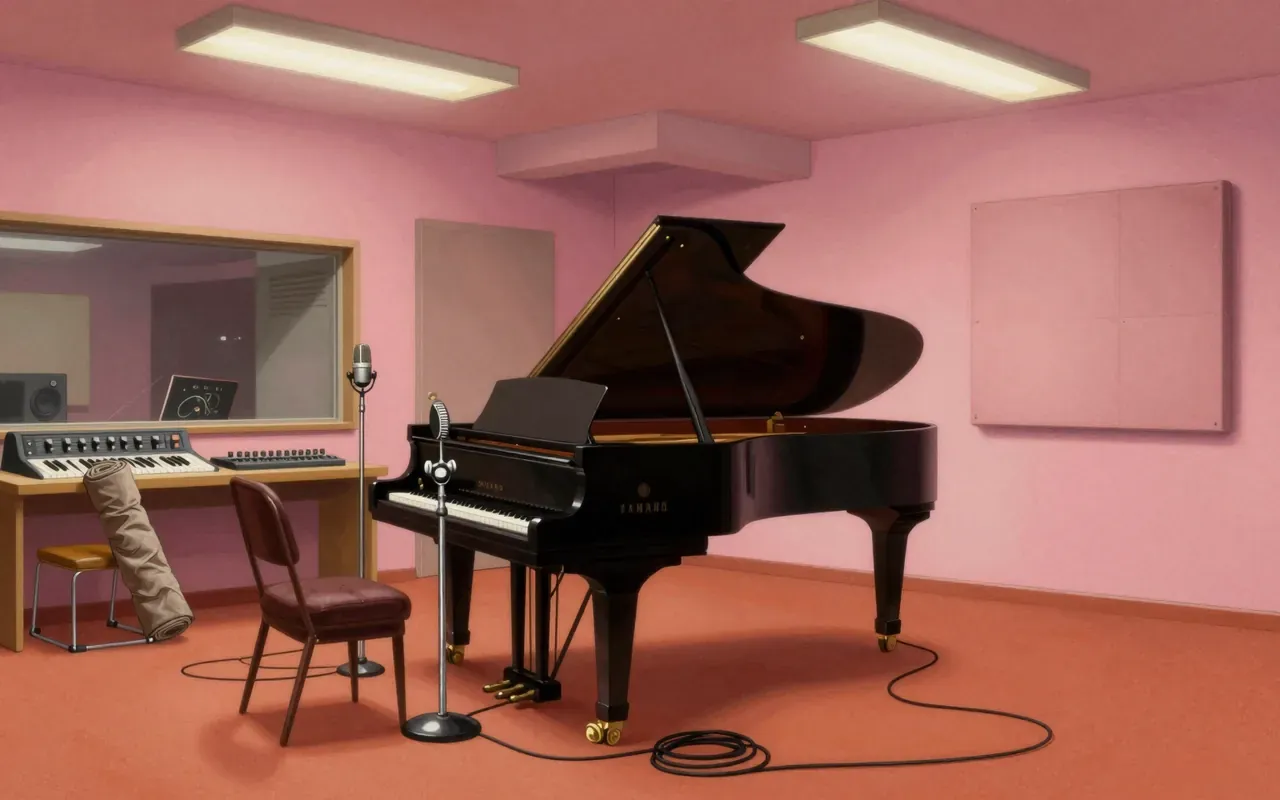
George Russell recorded Ezz-thetics in May 1961 for Riverside. His sextet brings together Don Ellis, Dave Baker, Eric Dolphy, Steve Swallow and Joe Hunt, with Russell at the piano. Three original compositions sit alongside material by Miles Davis, Baker and Thelonious Monk. The programme places the leader's writing within a broader set of musical problems.

1:57

The Famous 1938 Carnegie Hall Jazz Concert

Benny Goodman · 1950

Benny Goodman's January 1938 Carnegie Hall concert first appeared as an album in 1950. The delay matters: this is a later release of a particular historical performance. The programme includes his orchestra, smaller groups and guests associated with the Basie and Ellington bands.

1:59

Fifth Dimension

The Byrds · 1966

Fifth Dimension was released in 1966 after Gene Clark's departure forced the Byrds to redistribute songwriting responsibilities. Jim McGuinn and David Crosby contributed more, while covers and an instrumental helped fill the programme. The album contains bold advances without entirely resolving that transition.
2:00

Folklore

Taylor Swift · 2020

Folklore was conceived during the early pandemic and released in July 2020. Swift recorded remotely with Aaron Dessner and Jack Antonoff. Fictional characters and linked narratives broaden the writing beyond a straightforward autobiographical reading, even where the emotional situations feel intimate.

2:34

For You

Tatsuro Yamashita · 1982

For You, released in January 1982, is Tatsuro Yamashita's sixth solo studio album. It followed the success of Ride on Time and a period of touring that helped develop his working band. Eizin Suzuki's cover and the record's summer associations have become part of its identity, but the arrangements deserve attention beyond that imagery.

1:58

Reach Out

Four Tops · 1967

Reach Out was released in 1967, the Four Tops' last album with Holland–Dozier–Holland. It includes six successful singles alongside contemporary pop covers selected by Berry Gordy. The programme therefore combines a concentrated creative partnership with a broader commercial repertoire.

2:50

Frampton Comes Alive!

Peter Frampton · 1976

Peter Frampton had released four solo studio albums before this 1976 double album made him a major commercial presence. The material was not entirely new; the setting changed its reach. Performances recorded at several venues in 1975 were assembled into an album that gave the songs the scale of an event.

1:57

Franz Ferdinand

Franz Ferdinand · 2004

Franz Ferdinand's debut was released in February 2004 after sessions in Malmö with Tore Johansson. The band produced “Tell Her Tonight” and “This Fire” themselves. The programme establishes a compact identity through songs designed to work as memorable performances.

1:58

Fulfillingness' First Finale

Stevie Wonder · 1974

Fulfillingness' First Finale was released in 1974, following Innervisions. Much of the programme turns toward a more personal and reflective mood, without abandoning public concerns. Its value lies partly in that adjustment of scale rather than in repeating the previous album's breadth.

2:00

Genius of Modern Music, Volume One

Thelonious Monk · 1956

This brief covers the first twelve-inch Genius of Modern Music volume, issued by Blue Note in 1956. Earlier ten-inch releases and later CDs organise the material differently. Alfred Lion produced the underlying sessions, making the album a selection from Monk's early recording work rather than a new 1956 session.
2:36

Getz/Gilberto

Stan Getz, João Gilberto · 1964

Getz/Gilberto pairs American saxophonist Stan Getz with Brazilian singer and guitarist João Gilberto, with Antônio Carlos Jobim contributing piano and much of the repertoire. Recorded in New York in March 1963, it appeared on Verve in 1964. Astrud Gilberto sings on “The Girl from Ipanema” and “Corcovado.”

1:58

The Great Twenty-Eight

Chuck Berry · 1982

The Great Twenty-Eight was released in 1982, surveying Chuck Berry's first decade at Chess. It gathers twenty-one singles, six B-sides and an album track. The selection makes the short recorded performance, rather than a later album concept, the unit around which the retrospective is built.

1:59

40 Greatest Hits

Hank Williams · 1978

40 Greatest Hits was released in 1978, twenty-five years after Hank Williams' death. Its two-record selection offered more breadth than a short hits package. A significant editorial choice was to avoid the posthumous alterations that had affected several earlier presentations of his catalogue.

2:02

The Harder They Come

A soundtrack makes a small collection of Jamaican singles speak through several distinct performers.
1:52

Call of the Valley

Hariprasad Chaurasia, Brij Bhushan Kabra, Shivkumar Sharma · 1968

Call of the Valley brings Hariprasad Chaurasia, Brij Bhushan Kabra and Shivkumar Sharma together in a suite following a Kashmiri shepherd's day. This record uses the 1968 release dating found in the album reference and label-linked digital catalogue; some discographies date it 1967.

1:57

Heavy Weather

Weather Report · 1977

Heavy Weather, released in 1977, brings Joe Zawinul and Wayne Shorter together with Jaco Pastorius, Alex Acuña and Manolo Badrena. Zawinul produced and orchestrated, with additional production from Shorter and Pastorius. Its success rests on a strongly defined ensemble language rather than a parade of unrelated showcases.

2:05

Here Come the Warm Jets

Brian Eno · 1974

Brian Eno's first solo album followed his departure from Roxy Music and appeared in 1974. It combines glam and pop forms with experimental working methods. A large cast of guests supplied performances that Eno could direct, combine and transform.

2:40

Highway to Hell

AC/DC · 1979

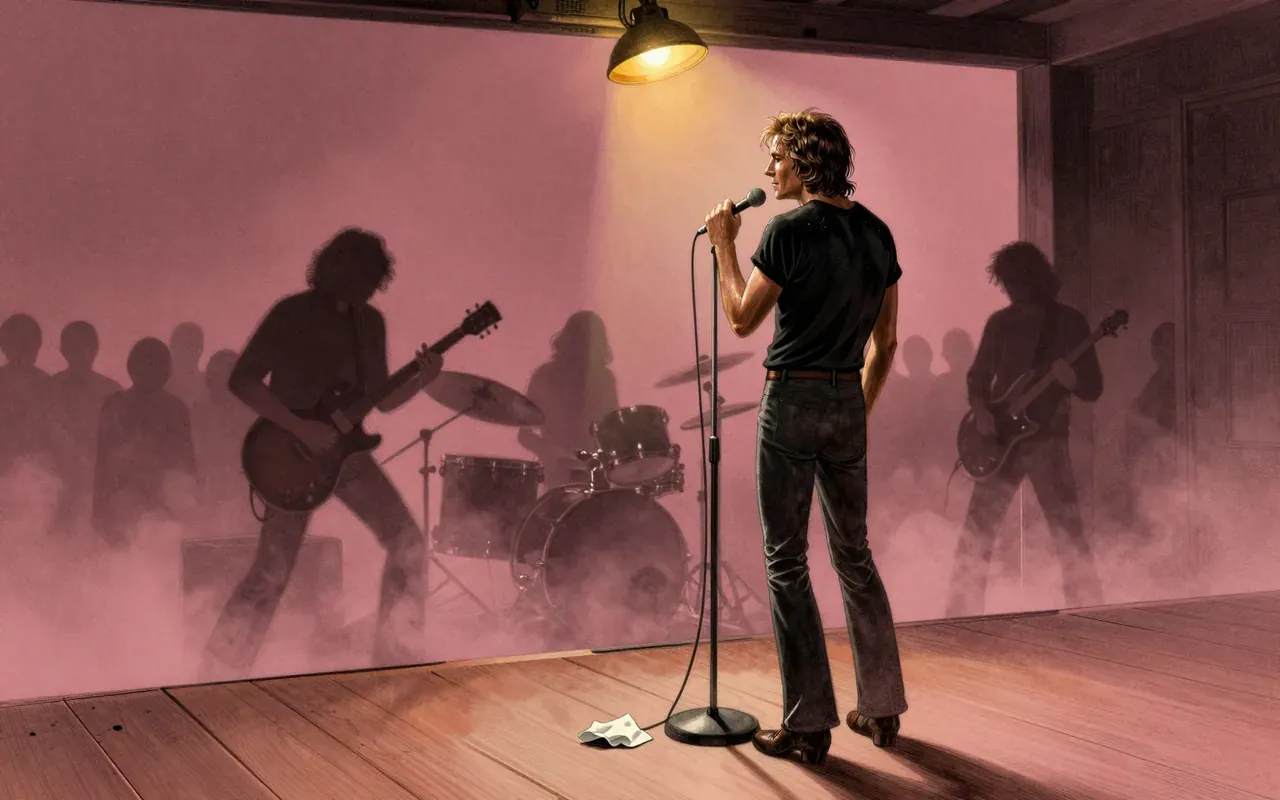
Released in 1979, Highway to Hell was AC/DC's first album with producer Robert John “Mutt” Lange and their last with singer Bon Scott. Its place before Scott's death can make it seem like a farewell, but the working project was a band refining its approach for a wider audience.

2:37

Hosono House

Haruomi Hosono · 1973

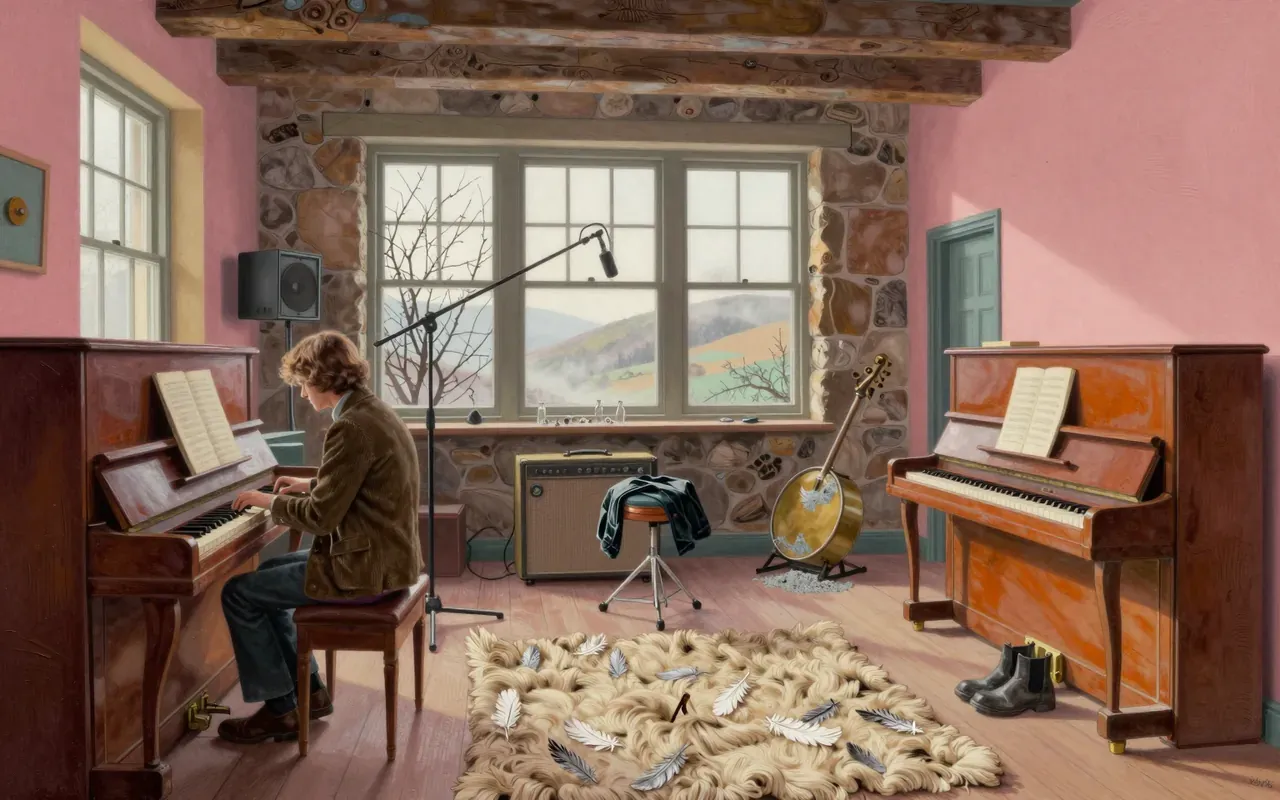
Haruomi Hosono's 1973 solo debut followed Happy End and was recorded at his home in Sayama. The title is literal. A bedroom held the players, with recording equipment elsewhere in the house, and the sessions took place during the afternoons. Domestic space supplied the practical conditions for a full group record.

2:05

I Want to See the Bright Lights Tonight

Richard Thompson, Linda Thompson · 1974

Recorded in London in 1973 and released the following year, I Want to See the Bright Lights Tonight was Richard and Linda Thompson's first credited album together. Richard co-produced with John Wood. Its songs move through a world where pleasure is attractive partly because ordinary life can be hard.

1:57

The Immaculate Collection

Madonna · 1990

The Immaculate Collection appeared in 1990 with fifteen earlier singles and two new songs. The established material runs from “Holiday” to “Vogue.” “Justify My Love” and “Rescue Me” prevent the retrospective from being only an account of completed work.

2:04

Imperial Bedroom

Elvis Costello, The Attractions · 1982

Imperial Bedroom was released in 1982 after sessions at AIR Studios with producer Geoff Emerick. Costello and the Attractions treated recording as a place for continual revision. The album's relationship songs gained a more elaborate setting than the group's earlier, more immediately forceful work.
1:56

James Blake

James Blake · 2011

James Blake's 2011 debut followed three stylistically varied EPs. Much of its material was new, and his own singing became more prominent than in the earlier sample-led work. He also sampled himself, complicating the distinction between a vocal performance and a production element.

2:06

Janet Jackson's Rhythm Nation 1814

Janet Jackson · 1989

Rhythm Nation 1814 was released in 1989 after Janet Jackson chose a socially concerned concept over simply repeating Control. Working again with Jimmy Jam and Terry Lewis, she placed racism, poverty and substance abuse alongside romantic material. The album imagines pop as a place to assemble a public.

1:56

Jazz in Silhouette

Sun Ra and His Arkestra · 1959

Jazz in Silhouette was recorded and released in 1959 during Sun Ra's Chicago period. The session predates the more openly avant-garde work of the following decade. Its date was once disputed, but the original tape box establishes the March 1959 recording.

2:20

The Jimmy Giuffre 3

The Jimmy Giuffre 3 · 1957

This 1957 album introduces the Jimmy Giuffre 3 with Jim Hall on guitar and Ralph Peña on bass. Giuffre plays clarinet, tenor saxophone and baritone saxophone. The trio's unusual distribution of instruments gives it an immediate point of distinction: there is no drummer.

2:37

Joan Baez

Joan Baez · 1960

Joan Baez recorded her first solo album for Vanguard in 1960, when she was nineteen. The original release contains thirteen traditional songs. Her appearance at Newport the previous year had brought attention, but the record's task was more intimate: to make inherited material persuasive through an individual performance.
1:56

John Coltrane and Johnny Hartman

John Coltrane, Johnny Hartman · 1963

John Coltrane and Johnny Hartman was recorded in March 1963 and released that summer by Impulse! Bob Thiele brought the collaboration together. Hartman initially doubted their compatibility, but work on the repertoire with Coltrane and McCoy Tyner established a practical basis for the session.

1:58

Johnny Burnette and the Rock 'n Roll Trio

The Rock and Roll Trio · 1956

The Rock and Roll Trio's debut first appeared as a UK ten-inch album in December 1956, followed by an American twelve-inch release in 1957. It gathers material from sessions that year. Johnny Burnette fronts a group whose recorded energy outgrew its initial commercial reach.

2:32

At Folsom Prison

Johnny Cash · 1968

At Folsom Prison was recorded at California's Folsom State Prison on January 13, 1968, and released that year. Producer Bob Johnston supported Cash's plan to record a prison concert. The resulting album draws on two performances rather than presenting one show from beginning to end.

2:07

Joy as an Act of Resistance

Idles · 2018

Joy as an Act of Resistance is Idles' second album, released in 2018. After scrapping material that felt too dependent on repeating Brutalism, the band made vulnerability a central purpose. Joe Talbot's personal experiences sit beside songs addressing masculinity, immigration and class.

2:00

Kala

M.I.A. · 2007

Kala, released in 2007, was recorded across several countries after M.I.A.'s original American working plans were obstructed by visa difficulties. She and Switch became the main creative partnership, with other collaborators contributing. The album takes its name from her mother.

2:28

King Tubbys Meets Rockers Uptown

Augustus Pablo, King Tubby · 1976

This 1976 album brings Augustus Pablo's production and instrumental work together with King Tubby's mixing. Musicians recorded at Randy's in Kingston; the tapes then became material for another creative stage. The record belongs to a culture in which a recorded performance could generate further versions rather than settle into one definitive form.

1:58

Ladies and Gentlemen We Are Floating in Space

Spiritualized · 1997

Spiritualized's 1997 third album joins the band with the Balanescu Quartet, the London Community Gospel Choir and Dr. John. Jason Pierce built the project across several studios. Although often read through his private relationships, some key songs predate the breakup used to explain them.

2:02

Lady in Satin

Billie Holiday · 1958

Lady in Satin was recorded with Ray Ellis's orchestra and released in 1958. Holiday wanted a delicate orchestral setting and actively sought Ellis for the project. That choice matters: the arrangement is part of her artistic intention, not merely something imposed on a vulnerable singer.

2:09

Lady Soul

Aretha Franklin · 1968

Lady Soul was released by Atlantic in January 1968, during a prolific period in Aretha Franklin's recording career. Jerry Wexler produced, with Tom Dowd engineering. Its best-known songs belong to a programme in which lead singing, accompaniment and backing voices continually define one another.

1:57

Larks' Tongues in Aspic

King Crimson · 1973

King Crimson's fifth album introduced a new lineup in 1973: Robert Fripp, John Wetton, David Cross, Bill Bruford and Jamie Muir. It was the only studio album made by this exact group. Modernist composition and free improvisation helped define its new direction.

2:02

LCD Soundsystem

LCD Soundsystem · 2005

LCD Soundsystem's debut was released in 2005 and produced by the DFA partnership of James Murphy and Tim Goldsworthy. Its new album material was accompanied by a second disc gathering earlier releases. The package therefore combines a first sustained album statement with an account of the project before it.

2:07

Licensed to Ill

Beastie Boys · 1986

Licensed to Ill introduced the Beastie Boys on album in 1986, with Rick Rubin producing for Def Jam. Their debut brings rock's confrontational scale into a rap setting and makes the group itself the central attraction. It belongs to a different stage of their work than the denser sampling of Paul's Boutique.

2:03

Life After Death

The Notorious B.I.G. · 1997

Life After Death appeared in March 1997, sixteen days after the Notorious B.I.G.'s murder. The double album continues from Ready to Die's ending, but its musical ambitions spread outward through a much larger cast. Its posthumous release should not erase the deliberate breadth of the project.

1:56

Coltrane “Live” at the Village Vanguard

John Coltrane · 1962

This 1962 album selects three performances from Coltrane's November 1961 Village Vanguard engagement. Bob Thiele produced and Rudy Van Gelder recorded the concerts. It is distinct from later Vanguard releases and the larger archive eventually issued from the same run.

2:17

Lonesome, On'ry and Mean

Waylon Jennings · 1973

Released in 1973, Lonesome, On'ry and Mean followed Waylon Jennings's struggle for greater artistic freedom at RCA. The album belongs to the period in which that control became central to his identity. The useful question is what a singer can do differently when decisions about recording move closer to him.

2:08

Look-Ka Py Py

The Meters · 1969

Look-Ka Py Py is the Meters' second studio album, released in 1969 and produced by Allen Toussaint. The instrumental quartet offers a particularly clear view of its working parts. With no lead singer to organise attention, the relationships inside the band become the main event.

2:40

Madvillainy

Madvillain · 2004

Released by Stones Throw in 2004, Madvillainy joins rapper MF DOOM and producer Madlib under the name Madvillain. Much of their collaboration took place at the Los Angeles house that also housed the label. DOOM could concentrate on writing and performing while Madlib supplied a shifting musical environment.

2:01

Mama's Gun

Erykah Badu · 2000

Mama's Gun was released in 2000 after Erykah Badu worked with the Soulquarians circle at Electric Lady in New York. Collaborators included Questlove, Pino Palladino, James Poyser, Roy Hargrove and Jay Dee. The setting supported writing about self-worth, relationships and social inequality.

1:56

McCartney

Paul McCartney · 1970

McCartney was released in April 1970 during the Beatles' breakup. Much was recorded privately at home on basic equipment, with further work in professional studios. Apart from Linda McCartney's occasional vocals, Paul performed the album alone through overdubbing.

1:58

Metal Box

Public Image Ltd · 1979

Metal Box was released in 1979, named after the canister containing its original discs. It later appeared in conventional packaging as Second Edition. The music marks a substantial move beyond Public Image Ltd's debut, with several sessions and drummers contributing to its formation.
1:58

The Moon & Antarctica

Modest Mouse · 2000

The Moon & Antarctica was Modest Mouse's first major-label album, released in 2000. Brian Deck produced the sessions at Chicago's newly built Clava Studios. The expanded resources became an opportunity to develop unusual sounds rather than simply smooth the band's existing edges.

2:01

Moon Safari

Air · 1998

Moon Safari introduced the French duo Air on album in 1998. Its relaxed electronic-pop presentation helped make downtempo music accessible to a broad audience. The useful point of entry is the care given to melody, rather than the fashionable atmosphere that gathered around it.

1:56

Night Beat

Sam Cooke · 1963

Night Beat was recorded over three nights in February 1963 and released that August. Sam Cooke worked with a small studio ensemble at RCA in Hollywood. The setting offers a different perspective from the larger arrangements associated with some of his crossover recordings.

2:30

Nighthawks at the Diner

Tom Waits · 1975

Released in 1975, Tom Waits's third album was recorded at the Record Plant in Los Angeles before an invited audience. Tables, a bar and a small crowd helped turn a studio into a club for four shows over two nights. That arrangement is central to the record: its atmosphere was deliberately made.

2:00

Norman Fucking Rockwell!

Lana Del Rey · 2019

Released in 2019, Norman Fucking Rockwell! was chiefly produced by Lana Del Rey and Jack Antonoff. Its title invokes the American illustrator while the songs explore less reassuring versions of romance and place. The album's ambitions extend beyond a single relationship without abandoning intimate address.

1:59

Oar

Alexander Spence · 1969

Oar was recorded in Nashville in December 1968 and released in 1969. Alexander “Skip” Spence played all the instruments. He later said he understood the recordings as demos intended for fuller production, a significant complication when discussing the finished album's spare character.

2:04

The Only Ones

The Only Ones · 1978

The Only Ones' debut appeared in April 1978. The band produced it with Robert Ash, drawing on several engineers and additional musicians. Its relationship to the punk period is useful context, but its instrumental resources extend beyond the most stripped-down version of that scene.

2:08

Opposite People

Fela Kuti, Africa 70 · 1977

Opposite People is a 1977 Fela Kuti and Africa 70 album, originally released by Decca Afrodisia. Its two tracks approach social behaviour through apparently ordinary examples. Later paired reissues with Sorrow Tears and Blood can obscure the identity of this original programme.

1:55

Miles Ahead

Miles Davis · 1957

Miles Ahead was released in 1957, reuniting Miles Davis with Gil Evans after their earlier nonet work. Producer George Avakian conceived a larger setting that would place Davis prominently in front. The project changes the relationship between soloist and ensemble rather than simply enlarging the usual quintet.

2:08

Complete & Unbelievable: The Otis Redding Dictionary of Soul

Otis Redding · 1966

Dictionary of Soul appeared in 1966 as Otis Redding's fifth solo studio album and the last released during his lifetime. The original first side draws largely on covers, while the second concentrates on Redding's writing. The arrangement of the programme makes interpretation and authorship neighbouring activities.

2:12

OXO

Oxo · 1983

OXO's self-titled 1983 debut was also the band's only album. Led by Ish Ledesma, previously of Foxy, the group reached the American Top 40 with “Whirly Girl.” The record offers a small, specific view of the early-eighties crossover between dance music, pop and rock.

2:18

Palo Congo

Sabú Martínez · 1957

Palo Congo is the 1957 debut led by conga player Sabú Martínez, credited on the record as Sabu. Recorded in April and released by Blue Note, it brings together an eight-person ensemble with several percussionists and singers. Its instrumentation gives a clear reason to hear it on its own terms.

2:36

Piñata

Freddie Gibbs, Madlib · 2014

Piñata is Freddie Gibbs and Madlib's 2014 collaborative album, released through Madlib Invazion after the Thuggin’, Shame and Deeper EPs. Its seventeen tracks developed over several years. Gibbs brings the perspective of a rapper from Gary, Indiana, into a project produced throughout by Madlib.

2:07

(Pronounced 'Lĕh-'nérd 'Skin-'nérd)

Lynyrd Skynyrd · 1973

Lynyrd Skynyrd's 1973 debut was recorded with producer Al Kooper after extensive rehearsal. Much of the material already belonged to the live repertoire. The record's apparent assurance therefore has a practical source: a band arriving with songs it had worked through repeatedly.

1:55

The Psychedelic Sounds of the 13th Floor Elevators

The 13th Floor Elevators · 1966

The 13th Floor Elevators' 1966 debut announces its psychedelic identity explicitly. It retains garage-rock and R&B foundations while introducing a particularly unusual instrumental presence. The record's strangeness is not a decorative layer added to an otherwise calm performance.

2:00

Public Image: First Issue

Public Image Ltd · 1978

Public Image Ltd's debut was released in December 1978 after John Lydon's departure from the Sex Pistols. Keith Levene, Jah Wobble and Jim Walker formed the new band with him. The record makes its break with the prior group through musical priorities as well as personnel.

2:06

Ram

Paul McCartney, Linda McCartney · 1971

Ram was released in 1971 under Paul and Linda McCartney's joint credit. Recorded in New York with guitarists David Spinozza and Hugh McCracken and drummer Denny Seiwell, it uses a more developed studio approach than McCartney's preceding solo record. Its domestic identity does not mean it was made without collaborators.

2:01

Rastaman Vibration

Bob Marley and The Wailers · 1976

Rastaman Vibration was released in 1976, with Marley leading the Wailers after Peter Tosh and Bunny Wailer's departure. Its American success brought the music to a larger audience, but the record's substance remains the relationship between an inviting song and a demanding message.

2:02

Ready to Die

The Notorious B.I.G. · 1994

The Notorious B.I.G.'s 1994 debut is a partly autobiographical sequence about crime, ambition and emotional instability. Released by Bad Boy, it moves from an introduction sketching a life toward an ending that undermines any easy success story. It was the only album issued during his lifetime.

2:03

Reggatta de Blanc

The Police · 1979

The Police's second album appeared in 1979, following Outlandos d'Amour. Recording took place in sessions spread across several months, with the band choosing continuity over the larger studio and more famous producer its label proposed. That setting allowed the trio to keep developing its own balance.

2:12

Return to the 36 Chambers: The Dirty Version

Ol' Dirty Bastard · 1995

Ol' Dirty Bastard's 1995 solo debut arrived after Wu-Tang Clan's first album and Method Man's Tical. RZA handles much of the production, with contributions from ODB, True Master and 4th Disciple. The wider Clan remains present through guest appearances, even as the lead performer claims his own unruly space.

2:06

Rid of Me

PJ Harvey · 1993

Rid of Me, released in 1993, was the final album by PJ Harvey's original trio with bassist Steve Vaughan and drummer Rob Ellis. Most of it was recorded by Steve Albini at Pachyderm in Minnesota. Harvey wanted the recording to convey the group playing together in a room.

2:00

Safe as Milk

Captain Beefheart and His Magic Band · 1967

Safe as Milk was released in 1967 after Captain Beefheart and the Magic Band's relationship with A&M ended. Buddah issued the debut, whose blues foundation remains clearly visible. A young Ry Cooder contributed guitar and arrangements, helping shape this particular version of the group.

2:23

At Mister Kelly's

Sarah Vaughan and Her Trio · 1957

At Mister Kelly's records Sarah Vaughan in a Chicago jazz club in 1957, accompanied by pianist Jimmy Jones, bassist Richard Davis and drummer Roy Haynes. The setting is a useful alternative to hearing a major singer surrounded by a large arrangement: four musicians carry the performance.

2:02

Scott 4

Scott Walker · 1969

Scott 4 appeared in 1969 under Walker's birth name, Scott Engel. It was his first album made entirely from his own songs, rather than a mixture including covers and Jacques Brel translations. That change places the dramatic situations more firmly within his authorship.

2:05

The Scream

Siouxsie and the Banshees · 1978

The Scream is Siouxsie and the Banshees' 1978 debut, produced with Steve Lillywhite. Recording at RAK took a week, followed by three weeks of mixing. The distinction matters: this is a band establishing a carefully shaped recorded identity, rather than merely documenting its arrival.

2:34

Shakara

Fela Kuti · 1972

Released in 1972 and recorded in Lagos the previous year, Shakara contains two substantial pieces: “Lady” and “Shakara (Oloje).” Fela Kuti fronts Africa 70, with Tony Allen on drums. The short track list gives each argument a large share of the album's space.

2:02

Sheer Heart Attack

Queen · 1974

Sheer Heart Attack was released in 1974, with Queen and Roy Thomas Baker producing. The third album moves toward more conventional rock and pop forms than the preceding records. That concentration helped make the band's already theatrical identity easier to grasp.

2:38

Sign o' the Times

Prince · 1987

Released in 1987 after the Revolution's breakup, Sign o' the Times gathers material from several abandoned or reshaped projects. The double album's sixteen tracks retain that sense of abundant possibilities. Its unity comes from a musician moving confidently among them, rather than from a single band sound or subject.

2:00

Sister

Sonic Youth · 1987

Sister was released in 1987 with Sonic Youth's previous lineup intact: Thurston Moore, Kim Gordon, Lee Ranaldo and Steve Shelley. It continues the movement toward song structures begun on EVOL. Philip K. Dick's life and fiction provide a loose conceptual background rather than a straightforward plot.