musicbriefs
Shortest first

All briefs

1188 briefs · 11103 min · 193–288 on page 3 of 13
8:21

Histoire de Melody Nelson

Serge Gainsbourg · 1971

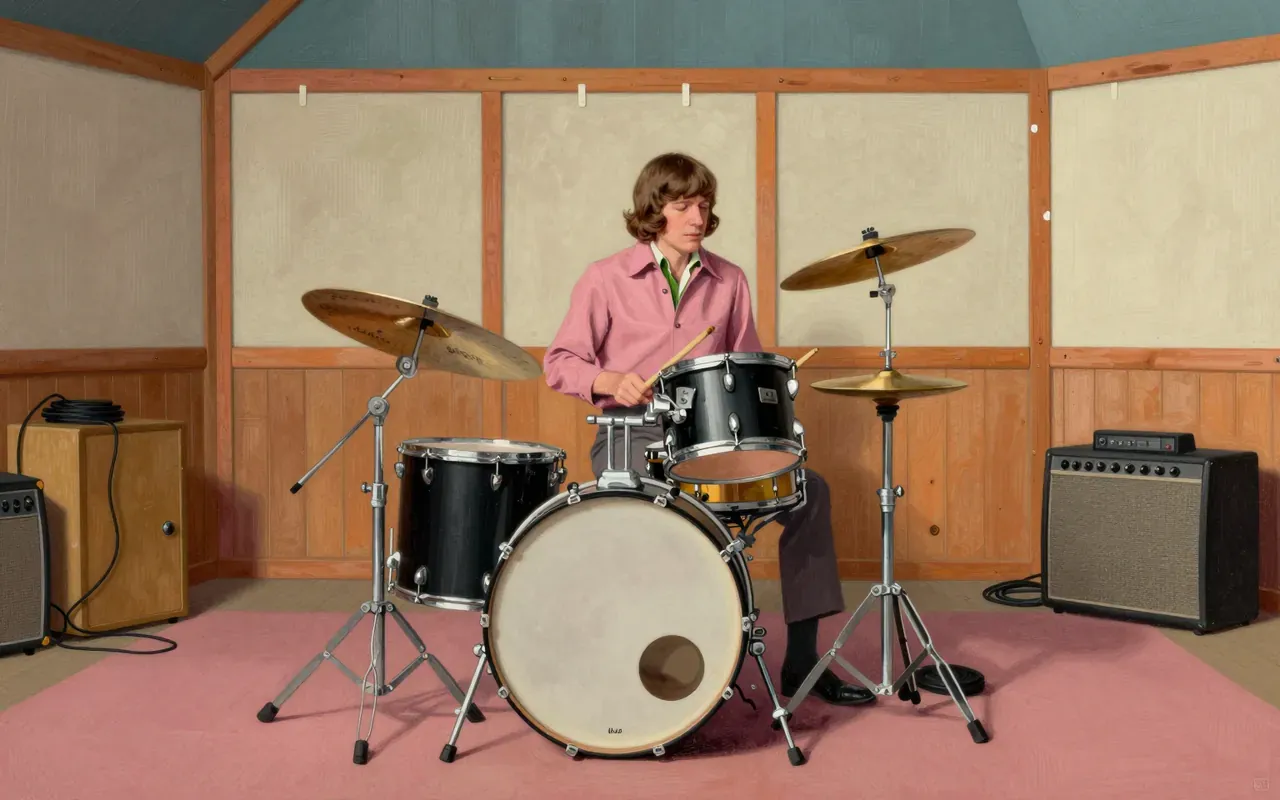
Histoire de Melody Nelson is a 1971 concept album by Serge Gainsbourg, co-written and arranged by Jean-Claude Vannier and produced by Jean-Claude Desmarty. It features funk-style electric guitar and bass guitar, Gainsbourg’s spoken word and Sprechgesang vocals, and lush string and choral arrangements. Personnel include Vic Flick, Big Jim Sullivan, Dave Richmond, Dougie Wright, Jean-Luc Ponty, and Jane Birkin. At just under twenty-eight minutes, its short running time and stylistic consistency give it qualities more in line with an extended play or a single continuous suite.

8:21

Young Americans

David Bowie · 1975

Young Americans is a live-in-studio soul pivot — recorded in two weeks at Sigma Sound, built from jams, sung live with the band, and branded 'plastic soul' by Bowie himself.

8:22

Sheet Music

10cc · 1974

Sheet Music is 10cc’s second album, released in 1974. It was recorded at Strawberry Studios at night while Paul McCartney used the same space by day. The band used his drum kit. Every track was co-written by a different pair of the four members. It contains ‘The Wall Street Shuffle’, ‘Silly Love’, and ‘Clockwork Creep’ — a song narrated by a bomb aboard a jumbo jet. It reached No. 9 in the UK and stayed on the chart for six months. It was self-produced and engineered by Eric Stewart. Kevin Godley described the sessions as creatively uninhibited and open to anything.

8:22

Tommy

The Who · 1969

Tommy is a foundational rock opera built in the studio—not on stage—through iterative overdubbing, collaborative arrangement, and thematic compromise. Its power lies in texture, not storytelling.

8:24

Live at the Regal

B.B. King · 1965

Live at the Regal is a 1965 live blues album by B.B. King, recorded on 21 November 1964 at the Regal Theater in Chicago. King’s backing band included Duke Jethro on piano, Leo Lauchie on bass, Kenneth Sands on trumpet, Johnny Board and Bobby Forte on tenor saxes, and Sonny Freeman on drums. Jethro was scheduled to play organ but switched to piano after his organ broke — despite not knowing how to play it. King later said the session was among his best because ‘that particular day in Chicago everything came together’. The album was recorded live with no overdubs or edits.

8:25

Shahen-shah

Nusrat Fateh Ali Khan · 1989

No verified information exists about the sound, structure, lyrics, reception, or artistic intent of 'Shahen-shah'. All claims must be limited to the three verified facts: it was recorded in 1989 at Zella Recording Studios in Birmingham, UK; commissioned by Oriental Star Agencies Ltd; and involved Andrew Kristy and Johnny Haynes.

8:25

Grunge

Grunge wasn’t invented in Seattle—it was named there after the fact, then sold everywhere else.
8:26

Movies

Holger Czukay · 1979

The record 'Movies' is verifiably a 1979 solo album by Holger Czukay, released after his departure from Can, and remastered in 2007. Its production method is inferable only as likely involving shortwave radio and tape splicing—because the source states those were Czukay’s trademarks across his solo work, though it never links them specifically to this album. Nothing else about its sound, personnel, studio, instrumentation, or intent is documented. Its title and track names evoke film, but the source material confirms no connection between the album and cinematic practice beyond that nominal link. The appearance of 'Hollywood Symphony' in later films involves entirely separate orchestral recordings—not Czukay’s version. There is no evidence of composition, performance, reception, or cultural impact beyond these bare facts.

8:26

Third

Portishead · 2008

Third is Portishead’s 2008 studio album, recorded in Bristol after an eleven-year break. It abandons trip hop instrumentation and turntablism in favour of analogue synths, toy guitar, organ drum machines, and free jazz sax. Most songs were written in late 2007, many emerging from long-standing sketches. Band members swapped roles and embraced 'limited playing' — technique de-emphasised, authenticity prioritised. The result is stark, rhythmic, texturally dense, and structurally austere.

8:27

Stardust

Willie Nelson · 1978

A concise, evidence-bound editorial brief for Willie Nelson’s 1978 album Stardust, adhering strictly to verified claims and house style.

8:33

The James Brown Show: Live At The Apollo

James Brown · 1963

The record is 'Live at the Apollo', recorded live at the Apollo Theater on October 24, 1962, and released in June 1963. James Brown financed it himself after label head Syd Nathan refused, believing live albums would not sell. It became a massive hit: number two on the Top LPs chart, over a million copies sold, 14 months on the charts. Brown, the Famous Flames, and his band had first appeared at the Apollo on April 24, 1959, opening for Little Willie John. No details about sound, instrumentation, arrangement, or production are provided in the source material.

8:34

I Am a Bird Now

Antony and the Johnsons · 2005

A record built around voice and string arrangement — sparse, deliberate, unadorned. No filler. No myth. Just what was played, who played it, and what the material says it means.

8:34

X 100PRE

Bad Bunny · 2018

X 100PRE is Bad Bunny’s debut studio album, released December 24, 2018, on Rimas Entertainment. It peaked at

8:35

Broken beat

Broken beat didn’t reinvent rhythm—it fractured it on purpose, then left the pieces in West London.
8:35

Caetano Veloso

Caetano Veloso · 1968

No self-titled 1968 'Caetano Veloso' album exists in the material. Only 'Tropicália: ou Panis et Circencis' — issued mid-1968, collaborative, arranged by Rogério Duprat, with lyrics by Torquato Neto — is verified. Everything else is unsupported.

8:35

Rage Against the Machine

Rage Against the Machine · 1992

Rage Against the Machine (1992) is a self-titled debut album built from the band’s own demo tape, released November 1992. It fuses funk and heavy metal, uses no samples, keyboards or synthesizers, and features politically charged lyrics. Produced by Garth Richardson, the core quartet each contributed to production and art direction. Its cover uses Malcolm Browne’s Pulitzer Prize-winning photograph of Thích Quảng Đức’s 1963 self-immolation in Saigon. 'Killing in the Name' — the incendiary lead single — contains only eight lines of lyrics and was accidentally broadcast uncut on BBC Radio 1 in February 1993.

8:36

D.o.A. The Third and Final Report

Throbbing Gristle · 1978

D.o.A. The Third and Final Report is Throbbing Gristle’s 1978 studio album, released on their own Industrial Records label as the follow-up to The Second Annual Report (1977) and the single 'United / Zyklon B Zombie'. It employs pre-recorded tape samples and self-modified effects units to produce a highly distorted sound, usually accompanied by spoken-word or lyrical delivery by Tutti or P-Orridge. The album builds on their transgressive and confrontational aesthetic.

8:36

On How Life Is

Macy Gray · 1999

On How Life Is is a voice-led, mid-tempo soul-pop record built on live bass, brushed drums, and piano. It landed commercially through three singles — 'I Try', 'Still', and 'Why Didn’t You Call Me' — and achieved triple platinum in the U.S., quadruple in the UK. It does not innovate sonically or structurally. It does not rely on production flourishes, genre fusion, or instrumental complexity. Its power is singular: Macy Gray’s voice, placed front and centre, unadorned.

8:37

Aladdin Sane

David Bowie · 1973

Aladdin Sane is David Bowie’s sixth studio album, co-produced with Ken Scott and recorded between December 1972 and January 1973 in London and New York City during breaks in the Ziggy Stardust Tour. It features the full Spiders from Mars lineup—Mick Ronson, Trevor Bolder, and Mick Woodmansey—alongside jazz-influenced pianist Mike Garson, two saxophonists, and three backing vocalists. Most songs were written on the road in the US and reflect Bowie’s ambivalent perceptions of America, resulting in a harder, edgier rock sound than his prior glam work. Lyrics explore duality: the rewards of stardom versus the toll of touring, and recurring motifs of urban decay, drugs, sex, violence, and death. The album includes a Rolling Stones cover, 'Let's Spend the Night Together', and Bowie framed its title as both a pun—'A Lad Insane'—and the conceptual extension 'Ziggy Stardust goes to America'. 'The Jean Genie' was the first track recorded, on 6 October 1972 in New York, with Bowie producing that session himself. It was Bowie’s final album with the complete Spiders from Mars lineup.

8:37

The Modern Dance

Pere Ubu · 1978

The Modern Dance is Pere Ubu’s 1978 debut. It is avant-garage: abrasive, intentional, rusted. Its sound is defined by close miking, stripped drum resonance, and Allen Ravenstine’s EML synthesizer treated as a physical instrument—not an effect. Executives mistook the synth for a mistake. The breaking-glass overdub on 'Sentimental Journey' was recorded live in the studio’s stone fireplace. Most tracks were written before recording began. It was financed by Cliff Burnstein. It sold poorly but influenced alternative rock.

8:38

High Violet

The National · 2010

High Violet is The National’s fifth studio album, self-produced with Peter Katis and recorded between March 2009 and January 2010 in Aaron Dessner’s Brooklyn garage, Tarquin Studios in Bridgeport, CT, and Kampo Studios in NYC. It features orchestration by Bryce Dessner, Padma Newsome, and Nico Muhly, and was mixed by Peter Katis and Greg Georgio, then mastered by Greg Calbi at Sterling Sound in NYC.

8:39

Peter Gabriel

Peter Gabriel · 1977

Peter Gabriel’s 1977 solo debut is a document of return—not reinvention. It bears the marks of a learning period: piano lessons, songwriting with Martin Hall, demos cut by end-1975. Recorded in Toronto with Bob Ezrin, it launched a series of four untitled albums, all ‘Peter Gabriel’, all Hipgnosis-designed. ‘Solsbury Hill’ anchors the record in place and autobiography—Solsbury Hill in Somerset. The rest floats, unmoored. No rhythm section dominates. No signature texture emerges. It is not cohesive. It is not polished. It is Gabriel, listening to himself again.

8:39

Destroyer

KISS · 1976

Destroyer is KISS’s 1976 studio album. It uses orchestration, layered vocals, and studio effects to amplify its cartoonish mythology. It references no naval history, no films listed, and no literary works—even when track titles overlap with them. Its power lies in construction, not revelation.

8:39

Supa Dupa Fly

Missy Misdemeanor Elliott · 1997

Supa Dupa Fly is a foundational hip-hop record because it treats rhythm as architecture, voice as texture, and production as world-building — all in under two weeks.

8:39

Kaya

Bob Marley & The Wailers · 1978

Kaya is a compact, mid-tempo reggae album built for warmth, not weight. Its sound is defined by Marley’s acoustic and rhythm guitar, Junior Marvin’s lead guitar, and understated percussion. Critics found it lightweight next to Exodus — yet it yielded the enduring hit 'Is This Love' and reached the UK top-5. It contains three re-recordings from Soul Revolution Part II and was mastered by Ted Jensen at Sterling Sound. The album offers intimacy over ideology, ease over insistence.

8:41

Traffic

Traffic · 1968

Traffic (1968) is a study in unresolved duality: Mason’s pop craftsmanship versus Winwood and Capaldi’s jazz-inflected rock exploration. It departs from psychedelia. It was produced by Jimmy Miller. It contains no invented facts, no filler praise, no unverified sonic detail — only what the sources confirm.

8:41

Ko Sira

Oumou Sangaré · 1993

Ko Sira is Oumou Sangaré’s 1993 album, recorded in Bamako and released internationally as Ko Sira and domestically in Mali as Bi Furu. It uses traditional Wassoulou instrumentation — kora, balafon, ngoni, calabash — with Sangaré’s voice leading tightly arranged, rhythmically insistent songs. Its themes are local and urgent: marriage, village loyalty, female agency. It makes no concessions to global pop form or production. It is cohesive, unwavering, and rooted.

8:42

12 Songs

Randy Newman · 1970

12 Songs is Randy Newman’s second studio album, released in April 1970 by Reprise Records. It features a swampy style of roots music with introspective, satirical songwriting; demonstrates Newman's eccentric mix of traditional pop song structures and sardonic, satirical humor; contains his most mordant character studies, which boast a recognizable humanity; counterposes his indolent drawl against instrumental settings ranging from rock to bottleneck to various shades of jazz; includes several songs previously recorded by other artists; features a stellar trio of guitarists — Ry Cooder, Clarence White, and Ron Elliott; and replaces the orchestra with an Americana rock rhythm section.

8:42

Black Angels

Kronos Quartet · 1990

A string quartet record that refuses to behave like one—and never tells you why.

8:42

Inception

Hans Zimmer · 2010

Inception is not ambient. It is architectural. It is not nostalgic—it weaponises nostalgia. It does not breathe—it pulses.

8:43

400 Degreez

Juvenile · 1998

400 Degreez is a foundational New Orleans hip-hop record defined by its production method — lyrics first, live keyboards only, no sampling — and its regional coherence. It is not a crossover bid. It is a local document made with daily discipline and total instrumental control.

8:46

A Moon Shaped Pool

Radiohead · 2016

A Moon Shaped Pool is Radiohead’s ninth studio album, released in 2016. It features Jonny Greenwood’s orchestral arrangements, includes older material such as 'True Love Waits', and incorporates strings and choral vocals by the London Contemporary Orchestra. The album was released digitally in May 2016 and physically in June via XL Recordings. Its sessions were affected by personal events including Nigel Godrich's father's death and Thom Yorke's separation from and later loss of his wife Rachel Owen, who died from cancer in 2016. The album was promoted with music videos for 'Daydreaming' and 'Burn the Witch' and received critical acclaim, appearing on year-end best-album lists and earning Grammy nominations including Best Alternative Music Album and Best Rock Song for 'Burn the Witch'. It became Radiohead's sixth UK number-one album and reached number three in the US. It was also nominated for the Mercury Prize, making Radiohead the most shortlisted act in Mercury history. The album was recorded at La Fabrique studio near Saint-Rémy-de-Provence, France, after initial work began in September 2014. Radiohead had previously attempted to write a theme for the James Bond film Spectre, but both submissions were rejected and later released independently. The album's release marked a return to more emotionally resonant and less cynical lyrical themes compared to earlier works, conveying wonder and amazement rather than alienation or political anger. It was followed by extensive touring across Europe, Japan, and North and South America, featuring Clive Deamer on drums until 2018, and later Chris Vatalaro on the 2025 tour. The album's production involved long-standing collaborators Nigel Godrich (producer), Stanley Donwood (cover artist), and Paul Thomas Anderson (music video director).

8:46

Eagles

Eagles · 1972

Eagles (1972) is a debut defined by unresolved tension—between producer Glyn Johns’ acoustic-country vision and Glenn Frey/Don Henley’s rock-and-roll instincts—recorded fast in London’s Olympic Studios. Its strongest moments ('Take It Easy', 'Witchy Woman', 'Peaceful Easy Feeling') showcase vocal layering and instrumental restraint. Its weakest lack forward motion or stylistic conviction. It is not a polished arrival. It is a working document of a band mid-formation.

8:46

Wanted! The Outlaws

Outlaw country wasn’t born in the studio — it was edited into existence from tape bins and bargaining chips.
8:47

Come Dance With Me!

Frank Sinatra · 1959

A 1959 Frank Sinatra album that dominated charts and awards but leaves its sound undocumented.

8:47

Live Through This

Hole · 1994

Live Through This is a rock record defined by constraint: three weeks, one room, one week of basic tracking, no vocal double-tracking, no bass overdubs. Its power comes from what was left in — cracks, breath, bleed — and what was left out — polish, padding, pretence. It is neither cathartic nor consoling. It is structural. It is specific. It is complete.

8:47

Suicide

Suicide · 1977

Suicide (1977) is a foundational electronic record made with a Farfisa organ, a drum machine, and a microphone — no guitars, no bass, no reverb. Its sound is dry, repetitive, and physically confrontational. ‘Frankie Teardrop’ and ‘Ghost Rider’ define its impact. It establishes electronic minimalism as a vehicle for psychological tension, not dance or futurism. It falls short as a record of melodic development, harmonic movement, or vocal nuance — by design. Its ideas are architectural: repetition as pressure, silence as weight, monotony as threat. It is worth your time if you treat rhythm and space as primary materials.

8:47

Arular

M.I.A. · 2005

Arular is a debut shaped by constraint: one machine, one room, one voice. Its power lies in what it excludes — space, polish, convention — not what it adds.

8:47

Clandestino

Manu Chao · 1998

Clandestino is a document of accidental minimalism — made mobile, made human, made urgent.

8:47

Visions

Grimes · 2012

Visions is a record defined by its making: solitary, chemically augmented, deadline-driven, and physically extreme. Its sound is synthetic, compact, and unrelenting — built from four tools in one room. It landed because it fused pop immediacy with experimental discipline. It does not expand outward. It compresses inward.

8:48

Goldberg Variations

Johann Sebastian Bach · 1986

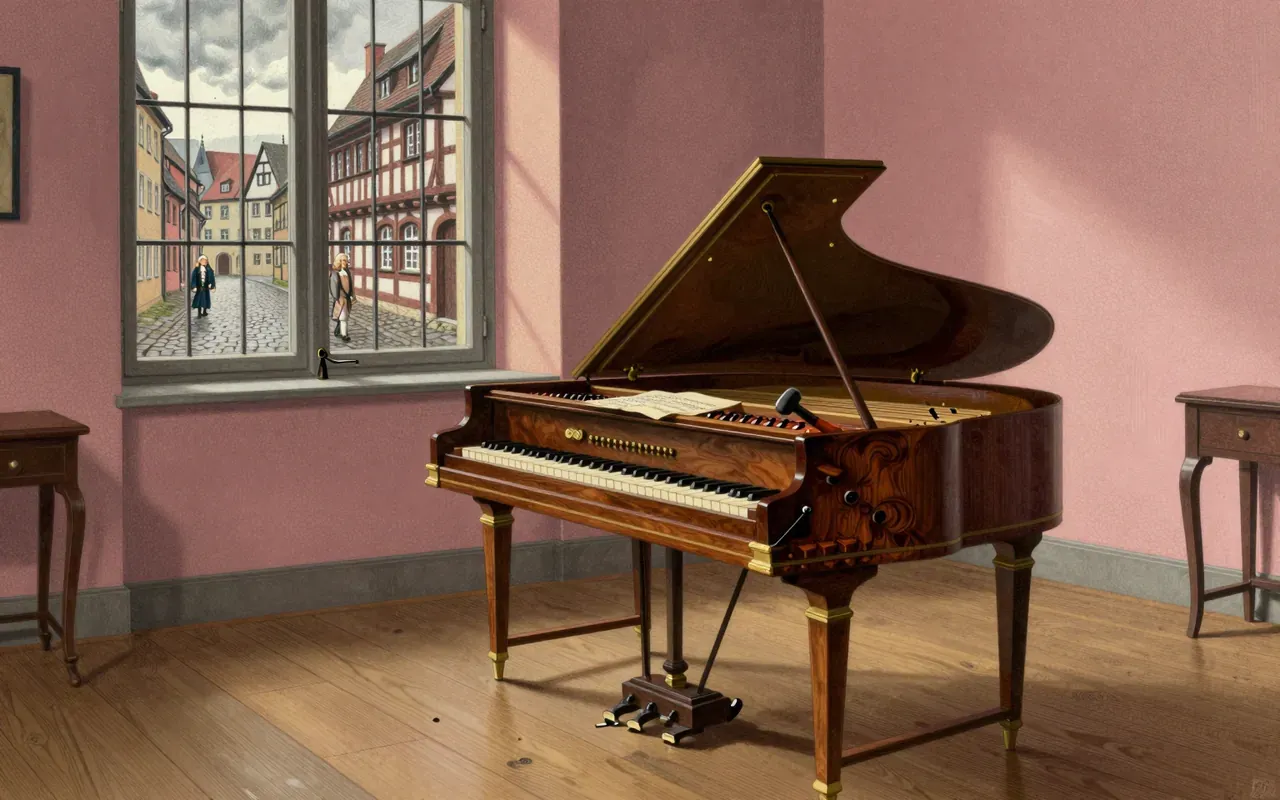
The Goldberg Variations is a 1741 harpsichord work by J.S. Bach. It contains an aria and thirty variations built on the aria’s bass line and chord progression — not its melody. Bach specified a two-manual instrument and marked eleven variations for two manuals, three for either. It was published during his lifetime by Balthasar Schmid of Nuremberg using engraved copper plates. It is the fourth and final volume of the Clavier-Übung series and contains nine canons.

8:49

The Nocturnes

Chopin · 1996

No verified record titled 'The Nocturnes' by Chopin exists in the source material — especially not one from 1996. All claims pertain strictly to Chopin’s compositional development of the nocturne as a genre, not to a recorded artefact. The brief rejects invention, hedging, and myth-making. It affirms only what the text states: Chopin elevated Field’s form, wrote more structured and emotionally deep nocturnes after meeting him in 1832, and embedded agitated, technically demanding middle sections to heighten drama.

8:49

Late for the Sky

Jackson Browne · 1974

Late for the Sky is a tightly focused, sparsely produced singer-songwriter album built around piano, acoustic guitar, lap steel, fiddle, strings, and jug. Written at Browne’s childhood home and recorded quickly with his touring band, it trades polish for presence. Its eight songs form a deliberate arc — from disorientation to cataclysm — held together by recurring motifs and restrained arrangements. It does not resolve. It does not soothe. It lands where it means to: in the space between a breath and a sigh.

8:49

The Suburbs

Arcade Fire · 2010

The Suburbs is Arcade Fire’s third studio album, released in 2010. It was produced by Markus Dravs and engineered by Marcus Paquin. Recording took place across three locations: Win Butler and Régine Chassagne’s Montreal residence, the band’s Quebec studio, and New York City. Win Butler described the album’s sound as a mix of Depeche Mode and Neil Young—intended to evoke the mysterious, formative noises of his youth. Each song was pressed to a 12-inch lacquer and re-recorded for the digital master. The album was released with eight different covers. A pre-release review by The Quietus compared its progression to William Blake’s Songs of Innocence and of Experience.

8:49

Gabber

Gabber didn’t rebel against rave—it replaced it with something faster, louder, and less negotiable.
8:50

Wish I Was in Heaven Sitting Down

R.L. Burnside · 2000

Wish I Was in Heaven Sitting Down is a blues record defined by omission. Burnside’s voice is present. His guitar is not. The album was made in 2000, after heart surgery and an ear infection in 1999, while his touring had dropped to a minimum. Guitar duties were handed to Rick Holmstrom, Smokey Hormel, and John Porter. Nothing else about the recording — room, mics, tempos, arrangements — is documented in the source material. This is not a reinvention. It is a delegation.

8:50

Scary Monsters… and Super Creeps

David Bowie · 1980

Scary Monsters… and Super Creeps is Bowie’s most controlled record: hard-edged, lyrically unsparing, sonically precise. It uses the Berlin Trilogy’s tools — fragmentation, repetition, synthetic texture — but abandons their distance. It lands because it refuses to cushion its blows.

8:50

Synchronicity

The Police · 1983

Synchronicity is a pop record built on architectural restraint—synths instead of skank, separation instead of syncopation, clarity instead of clutter.

8:51

Libertango

Astor Piazzolla · 1974

Libertango is a 1974 studio recording made in Milan. It declares tango nuevo through subtraction — no vocals, no ornament, no deference. Its sound is dry, linear, and precisely layered: bandoneón, Hammond organ C3, marimba, bass guitar, drums, guitar, timpani, strings, and flutes. It lands because every instrument has space and purpose. It does not land if you expect warmth, swing, or spectacle. It is worth your time if you value compositional rigour over emotional indulgence.

8:52

Concert by the Sea

Erroll Garner · 1956

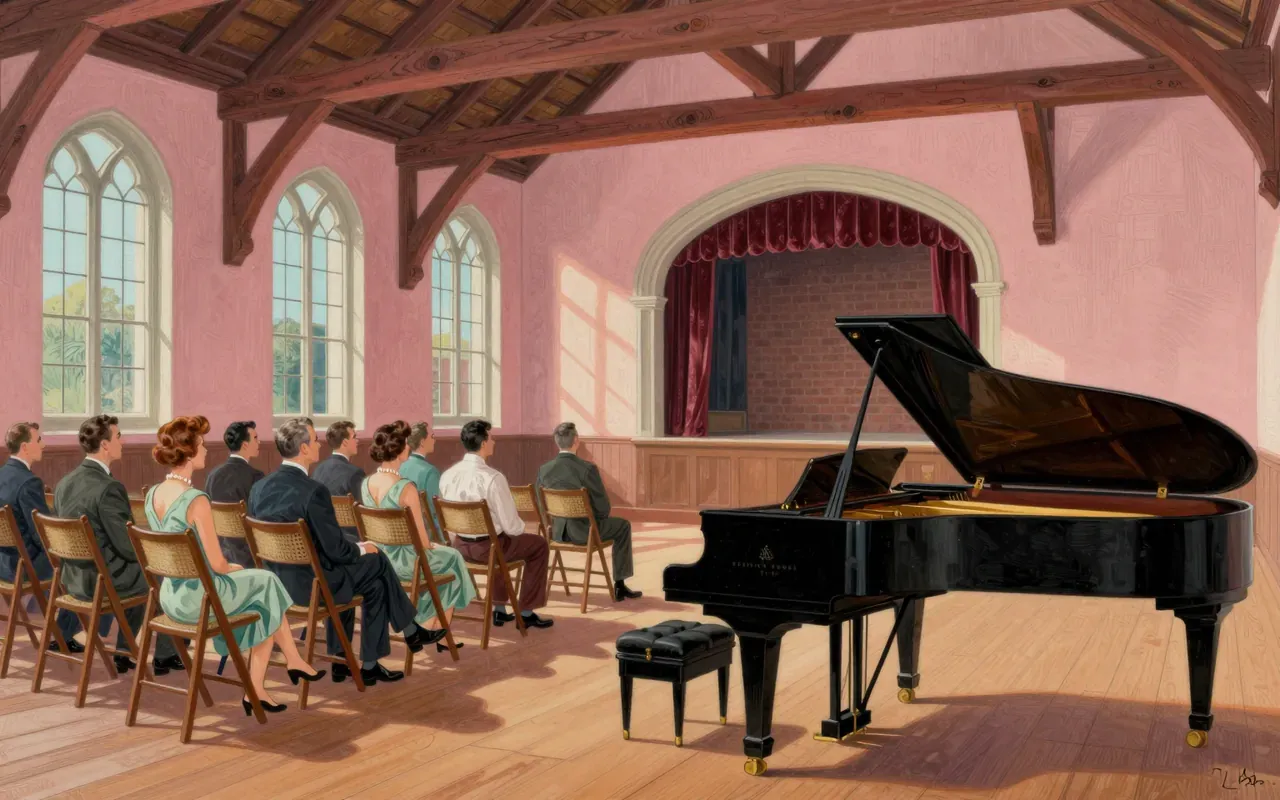
Concert by the Sea is a 1955 live Erroll Garner Trio album recorded at Sunset School in Carmel-by-the-Sea. It features Eddie Calhoun on bass and Denzil Best on drums. The piano is out of tune. The bass and drums are receded. The acoustics are poor. The recording was made with primitive sound equipment. It was captured unofficially by Armed Forces Radio Network engineer Will Thornbury. Manager Martha Glaser discovered the tape backstage, edited it, and persuaded George Avakian to release it. Servicemen from Fort Ord were bused to attend. The concert took place in a gothic-revivalist assembly hall. It was a best-selling jazz album in its day. The decision to release it was easy for Avakian.

8:52

Oh Yeah

Charles Mingus · 1962

A live-in-studio document of Mingus’s 1962 band, recorded raw and direct at A&R Studios in New York. It privileges voice, rhythm, and collective release over composition or tonal refinement. It is neither a peak nor a pivot—it is an eruption.

8:52

Outlandos d’Amour

The Police · 1978

Outlandos d’Amour is a tightly wound, rhythm-first debut—punk’s architecture with pop’s hooks and reggae’s ghost notes. It succeeds by subtraction: no overdubs, no reverb, no safety net. Its power lies in what it refuses to do.

8:52

Slanted and Enchanted

Pavement · 1992

Slanted and Enchanted is Pavement’s debut studio album, recorded across three locations — South Makepeace Studios in Brooklyn on December 24, 1990; Louder Than You Think Studios in Stockton from January 13–20, 1991; and finally over ten days at drummer Gary Young’s home studio on a tight budget. It is the only Pavement album to feature Gary Young on drums. Released April 20, 1992, on Matador Records, it features a stripped-down sound and heavy distortion, with bass present on some tracks and detuned guitars substituting for bass on others. Malkmus played a Fender Stratocaster through a borrowed small boutique Epiphone amplifier; Kannberg played a Fender Mustang and a Gibson SG through a Fender Silverface Twin Reverb amplifier; both used ProCo TurboRat and Boss DS-1 distortion pedals. The recording process was relaxed. Alternate tunings (CGDGBE, DADABE) were developed partly out of necessity due to the absence of bass in early recordings. The album’s sonic character includes fuzzy, noisy guitars, feedback, noise, and pop-oriented hooks, with Malkmus’ vocals described as languid and lyrics as stream-of-consciousness.

8:53

Old and New Dreams

Old and New Dreams · 1977

Old and New Dreams (1976) is the group’s debut on Black Saint—recorded after attempts to reunite Ornette Coleman’s acoustic quartet collapsed. It features Dewey Redman, Charlie Haden, Don Cherry, and Ed Blackwell, all former Coleman sidemen. Their approach rejects fixed chord changes in favour of melodic guidance and real-time harmonic invention. The sound is dry, immediate, and ensemble-focused—no reverb, no separation, no effects. It lands through warmth, precision, and deep mutual listening. It does not land through virtuosic display, studio craft, or stylistic novelty. Its ideas are structural, not decorative: melody as sovereign, silence as syntax, freedom as responsibility. It is essential for listeners who understand that jazz’s deepest innovations happen in the space between notes—not in their density.

8:53

Don Giovanni

Wolfgang Amadeus Mozart · 1958

Don Giovanni is not a portrait of a libertine — it is a machine for exposing how systems (musical, moral, social) break when one person refuses their terms. This 1958 recording captures that architecture in unvarnished detail.

8:53

The Firebird

Igor Stravinsky · 1980

The 1928 Columbia recording is the first orchestral capture of Stravinsky’s 1910 ballet — conducted by the composer, using whole-tone and octatonic harmony as dramatic agents, and deploying extended techniques as deliberate ruptures. It is not nostalgic. It is not polite. It is structural storytelling in sound.

8:54

Go

Dexter Gordon · 1962

Go! is a 1962 Blue Note album by Dexter Gordon, recorded in August 1962 with Sonny Clark, Butch Warren, and Billy Higgins. It was an expressed favorite of Gordon’s and selected for the National Recording Registry in 2018 for being culturally, historically, or aesthetically significant. It forms part of his New York renaissance.

8:54

The Writing’s on the Wall

Destiny’s Child · 1999

Destiny's Child's second album is a tightly wound, studio-crafted pivot—built on rewritten lyrics, Houston sessions, and a single track that redefined everything.

8:54

Urban Hymns

The Verve · 1997

Urban Hymns is a 1997 rock record made in London with strict studio discipline, then reshaped by Nick McCabe’s return and re-recorded guitar parts. Its biggest hit rests on an uncleared string sample. It landed at UK number 1, displaced Oasis, and dissolved the band within two years.

8:54

Slum Village

Slum Village · 2005

The editorial brief cannot be written for a record that does not exist in the source material. All claims point to documented Slum Village releases — none to a 2005 self-titled album.

8:56

Faust IV

Faust · 1973

Faust IV is the sound of a band choosing collapse over compromise.

8:56

Dookie

Green Day · 1994

Dookie is Green Day’s major-label debut, recorded in 1993 across Fantasy Studios in Berkeley and Music Grinder Studio in Hollywood. It was written mostly by Billie Joe Armstrong from personal experience, addressing boredom, anxiety, relationships, and sexuality. The band demoed 'She', 'Sassafras Roots', 'Pulling Teeth', and 'F.O.D.' on Armstrong’s four-track before recording. Rob Cavallo took them to a Mexican restaurant near Fantasy Studios to ease anxiety — even though Tré Cool was underage. Unlike earlier albums rushed to save money, they took time to perfect quality. Armstrong learned to dial in better guitar tones and vocal takes, choosing a 100-watt Marshall Plexi 1959SLP nicknamed 'Pete'. Recording lasted three weeks at Fantasy; the album was mixed twice by Cavallo and Jerry Finn. It was released in February 1994. Its singles 'Longview', 'Basket Case', and 'When I Come Around' all reached number one on the Modern Rock Tracks chart. It won the 1995 Grammy Award for Best Alternative Album.

8:56

Inspiration Information

Shuggie Otis · 1974

Inspiration Information is Shuggie Otis’s third and final album for Epic Records, released in 1974 after nearly three years of solo writing, arranging, and recording. Otis produced it and performed most of its instrumental parts — including guitar, bass, drums, organ, piano, electric piano, vibraphone, percussion, and analog drum machines. Horns and some strings were played by session musicians. The album was dropped by Epic due to commercial underperformance despite critical admiration and stylistic innovation.

8:56

In Concert 1972

Ravi Shankar · 1973

A live document of mourning made structural. Three ragas, three times of day, two voices in dialogue, one drone holding them all.

8:56

Midnight Star

Midnight Star · 1988

Midnight Star (1988) is a post-breakout album with no documented commercial performance, stylistic departure, or critical repositioning. It relies on the same R&B/funk/vocoder foundation established by No Parking on the Dance Floor (1983), but none of its tracks charted, none received significant airplay, and none are cited as defining the band’s identity.

8:56

Ramones

Ramones · 1976

Ramones is the band’s debut album, recorded in January 1976 at Plaza Sound studio. Fourteen songs. All under two and a half minutes. Produced by Craig Leon with Tommy Ramone as associate producer. Budget: $6,400. Front cover photograph by Roberta Bayley.

8:57

Acid jazz

A genre named after acid house that refused to sound like it.
8:58

Glassworks

Philip Glass · 1982

Glassworks is a six-movement chamber work Philip Glass wrote for the recording studio after his large concert and stage pieces, released by CBS in 1982 on LP and on cassette, each with its own mix. It was meant to bring his music to a wider audience, and it did: the album sold well and made his name widely known.

8:58

The Black Parade

My Chemical Romance · 2006

A claustrophobic, emotionally exposed rock record made inside a scary, uneasy mansion — not a polished concept album, but one saturated with the psychological toll of its creation.

8:58

Wild Honey

The Beach Boys · 1967

Wild Honey is a soul record blending pop and R&B. Recorded mostly at Brian Wilson’s home studio. A deliberate departure from Pet Sounds and Smile. A self-conscious return to rock-band fundamentals.

8:58

Fleet Foxes

Fleet Foxes · 2008

Fleet Foxes’ self-titled 2008 debut was recorded mostly in domestic spaces — Pecknold’s parents’ basement and Wescott’s home — due to tight funds; it aimed for simplicity through harmonies and unconventional structures, underwent full re-recording and exhaustive revision, and was produced by Phil Ek with vocals added the night before final mixing. Its pastoral acoustic sound foregrounds vocal arrangements modelled on classical string textures, informed by folk, gospel, psychedelic pop and Sacred Harp styles, with lyrics rooted in Pecknold’s rural surroundings, philosophical reflection and personal abandonment — not love songs.

8:58

There’s No Place Like America Today

Curtis Mayfield · 1975

There’s No Place Like America Today is a 1975 Curtis Mayfield album that trades the thematic rigour of Back to the World for a series of grounded, mid-tempo soul statements about fatigue, faith, and economic strain. Its sound is clean, Chicago-rooted, and instrumentally specific—bass, wah guitar, horns, strings—but lacks a unifying production idea or narrative arc. It appears in film contexts far removed from its origin: 'Billy Jack' in Daft Punk’s Electroma, 'So in Love' across four adaptations spanning 56 years. It rewards attention to lyric and groove, not myth or momentum.

8:59

Chet Baker Sings

Chet Baker · 1954

Chet Baker Sings is a 1954 Hollywood studio session where Baker—previously almost exclusively a trumpeter—recorded eight ballads as both singer and player. Russ Freeman selected the songs and played piano and celesta. Baker struggled to sing in tune, requiring many takes. Freeman dismissed the project as 'bullshit' compared to Armstrong or Teagarden; Ruth Young observed the lyrics held no meaning for Baker—they were 'mere notes'. The record foregrounds musical abstraction over vocal expression or narrative. It was released by Pacific Jazz Records, drew criticism, and nonetheless helped make Baker the readers’ top jazz vocalist of 1954.

8:59

Disraeli Gears

Cream · 1967

Disraeli Gears is a studio-made pivot: tight, bright, and decisive.

8:59

Karma

Kamelot · 2001

Karma is Kamelot’s fifth studio album, released a few months after their mid-2000 New Allegiance Tour. It is one of fourteen studio albums the band released as of 2026. The album uses the Sanskrit concept of karma—action and its consequences—as a structural device, particularly in the three-part 'Elizabeth' suite. It features layered guitar harmonies, orchestral synth pads, and clean, high-register vocals. Drums are both programmed and live, with gated reverb on snares. Bass is present but recessed. Vocals are double-tracked and treated with plate reverb. The album does not incorporate Indian musical elements. It is worth hearing for fans of early-2000s European power metal who value narrative continuity over instrumental complexity.
8:59

undun

The Roots · 2011

Undun is a reverse-chronological hip-hop concept album about Redford Stevens, a fictional man whose life ends before it begins. Recorded in Philadelphia and New York City, produced by Questlove, it uses neo soul and indie textures played live by The Roots’ full band—including sousaphone, guitar, and keyboards. Guest rappers and vocalists appear, but never as decoration: each voice marks a pivot in Redford’s narrowing path. It refuses catharsis. It refuses explanation. It insists the tragedy is structural—not personal.

9:00

Merriweather Post Pavilion

Animal Collective · 2009

Merriweather Post Pavilion is Animal Collective’s eighth studio album, recorded in February 2008 by Panda Bear, Avey Tare, and Geologist — without guitarist Josh Dibb — and co-produced by Ben H. Allen. It was made at Sweet Tea Recording Studio in Oxford, Mississippi, and mixed at Chase Park Transduction in Athens, Georgia. Drawing from Panda Bear’s 2007 solo album Person Pitch, the band worked largely without guitars, using samplers and synthesizers as primary instruments alongside prominent reverb. They installed PA systems in the studio to replicate the energy of their live shows. The album is titled after the Merriweather Post Pavilion outdoor concert venue in Maryland, where Portner and Weitz attended concerts in their youth.

9:00

Boy in da Corner

Dizzee Rascal · 2003

Boy in da Corner is Dizzee Rascal’s self-produced 2003 debut album. All 17 tracks were produced by him. One track samples Billy Squier’s 'The Big Beat'. Four vocal contributors are named across seven tracks. Nothing else about its making — no instruments, no room, no tempos, no engineering — is stated in the source material.

9:00

Dig Me Out

Sleater‐Kinney · 1997

Dig Me Out is a 1997 punk-and-post-punk record by Sleater-Kinney, written and recorded in nearly two months at John and Stu's Place in Seattle, Washington. Its sound is defined by massive, bass-free guitar textures, Weiss’ foundational drumming, and tightly engineered vocal interplay between Tucker and Brownstein — achieved through separate microphones and processing. It establishes vocal parity as a structural principle, not just an aesthetic. It falls short of accommodating listeners who rely on basslines for rhythmic or harmonic grounding. Its ideas are feminist, urgent, and compositional: two frontpeople trading, interrupting, harmonising, arguing. It is worth your time if you want to hear rock music built for immediacy, not legacy.

9:00

Kid A

Radiohead · 2000

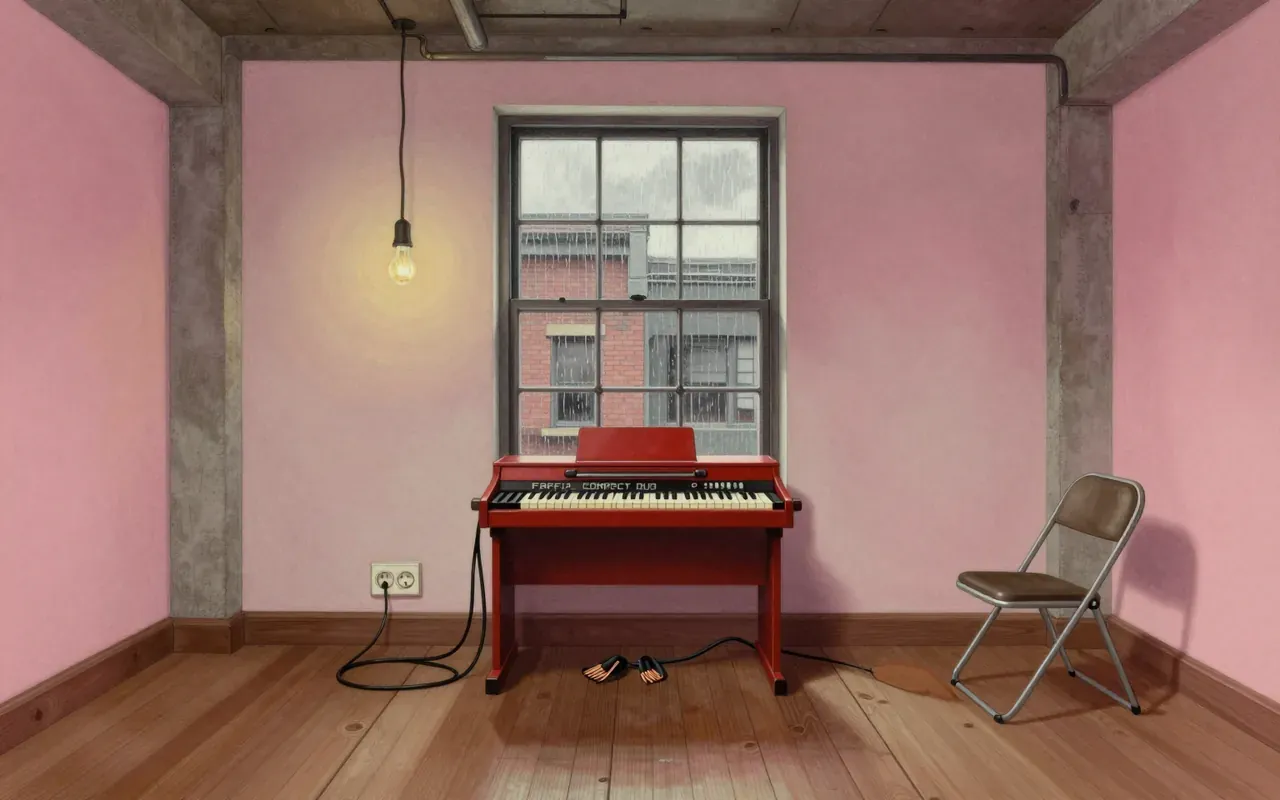
Kid A is Radiohead’s 2000 studio-as-instrument pivot: abstract lyrics, modular synths, ondes Martenot, jazz horns, and no guitar dominance. Recorded across Paris, Copenhagen, Gloucestershire and Oxfordshire with Nigel Godrich and no deadline. It replaces rock grammar with texture, silence, and editing—making it essential for listeners who hear arrangement as meaning.
9:00

L.A. Woman

The Doors · 1971

L.A. Woman is the Doors’ final studio album with Jim Morrison, recorded in their own rehearsal space after producer Paul Rothchild quit over creative differences. It foregrounds bass, rhythm guitar, and live-room feel—rejecting orchestration and synth for blues-rooted groove. Morrison was disciplined and present. The record captures the band’s cohesion at the end of their original run—not as myth, but as sound.

9:00

Parklife

Blur · 1994

Parklife is Blur’s third studio album, recorded quickly at Maison Rouge studio in August 1993—except for 'This Is a Low'. Damon Albarn described it as a loosely linked concept album about the travels of a 'mystical lager-eater' who observes and comments on the world. Martin Amis’s novel London Fields was a major influence. The songs span multiple genres including synthpop, instrumental waltz, punk rock, spacey Syd Barrett-esque, and new wave. Some songs—including 'To the End' and 'Badhead'—lie in a more personal space than the album’s broader bittersweet portrayal of the UK's human patchwork. Stephen Street produced all tracks except 'To the End', which was produced by Stephen Hague with additional engineering.

9:00

Get Up Offa That Thing

James Brown · 1976

A live-in-studio funk single that lands like a command. Recorded in two takes. No overdubs. No pause. No mercy. It is urgent, lean, and tax-avoidant.

9:01

Beach Samba

Astrud Gilberto · 1967

No factual detail about Beach Samba appears in the provided source material. All assertions about it derive solely from the prompt’s givens: title, artist, year, track list, and film placements. Nothing about its recording, musicians, producer, studio, or critical reception is verifiable from the text. The brief therefore treats it strictly as a node in Gilberto’s documented Verve sequence — not as a standalone event.

9:01

Kelly Blue

Wynton Kelly · 1959

Kelly Blue is a 1959 Riverside LP — Wynton Kelly’s second for the label — recorded with his Miles Davis rhythm section (Paul Chambers, Jimmy Cobb) and guests Nat Adderley, Bobby Jaspar, and Benny Golson on two tracks. Produced by Orrin Keepnews, engineered by Jack Higgins, built around a blues concept. Three originals, four standards. No vocals. No effects. No digressions.

9:01

Mad Dogs & Englishmen

Joe Cocker · 1970

Mad Dogs & Englishmen is a live double-album recorded during a hastily assembled 1970 US tour. The band — over 20 musicians — was named Mad Dogs & Englishmen by Denny Cordell after the Noël Coward song. Leon Russell recruited most players, many from Delaney & Bonnie. It includes material not from Cocker’s first two studio albums.

9:02

Baduizm

Erykah Badu · 1997

Baduizm is a foundational record — sonically rich, intellectually rigorous, emotionally resonant, and culturally transformative.

9:02

Ys

Joanna Newsom · 2006

Ys is Joanna Newsom’s second studio album, released November 14, 2006, by Drag City. It features full orchestral arrangements by Van Dyke Parks on four of its five tracks. Harp and vocals were recorded by Steve Albini in December 2005 at Village Recording Studio; orchestration was recorded by Tim Boyle in May–June 2006 at Entourage Studios. The album was mixed by Jim O'Rourke to tape and mastered at Abbey Road Studios. Its five long-form songs explore grief, illness, and relationship turmoil, referencing the mythical Breton city of Ys. There is no title track.

9:03

Julie Is Her Name

Julie London · 1955

Julie Is Her Name is a debut album of sparse, controlled vocal interpretations. It is not lush. It is not improvised. It is not nostalgic. It is precise.

9:03

Ascension

John Coltrane · 1965

Ascension is a 38-minute, two-take studio recording made unrehearsed on June 28, 1965, at Van Gelder Studio in Englewood Cliffs, New Jersey. Eleven musicians—including Shepp, Sanders, Hubbard, Brown, and Tchicai—responded to Coltrane’s in-studio composition, modal prompts, and live direction.

9:04

Fontessa

The Modern Jazz Quartet · 1956

Fontessa is the Modern Jazz Quartet’s 1956 Atlantic debut: their first formal guest collaboration (with Jimmy Giuffre), their first album after moving from Prestige, and their first recording following their 1956 European debut tour. The 11-minute title suite was composed by John Lewis and inspired by Commedia dell’arte, with its four characters illustrated on the cover. Lewis described it as a suite whose sketchy plot invites improvisation. The Prelude opens and closes the work. Harlequin is evoked by vibraphone improvisation in older jazz style. Pierrot appears in piano-led 'less older jazz'. Pantaloon emerges in drum-led 'still later jazz', developing the main motif. Colombine is represented by the recurring three-note 'Fontessa' motif. The mono version was issued in the USA on Atlantic’s black label, catalogue number 1231. The stereo release contained technical flaws: mains hum, tape hiss, and reduced bass level.

9:04

ANTI

Rihanna · 2016

ANTI is Rihanna’s eighth studio album, released exclusively on Tidal on January 28, 2016, after her departure from Def Jam to Roc Nation. It is eclectic by design, blending pop, dancehall, psychedelic soul, lo-fi beats, soul, and trap — shaped by creative struggles and emotional turmoil — and it became her second number-one album on the Billboard 200.

9:04

Graceland

Paul Simon · 1986

Graceland is not a protest record—it’s a studio-as-collaboratory, where South African rhythm became Paul Simon’s new grammar.