musicbriefs
Shortest first

All briefs

1188 briefs · 11103 min · 289–384 on page 4 of 13
9:04

MTV Unplugged in New York

Nirvana · 1994

MTV Unplugged in New York is Nirvana’s 1994 live album, recorded at Sony Music Studios in Hell’s Kitchen, Manhattan, on November 18, 1993. It documents their MTV Unplugged appearance — 14 songs, filmed in one continuous take. Cobain insisted on running his acoustic guitar through an amplifier and effects pedals, disguised by a fake box built in front of the amp. He described the stage design — stargazer lilies, black candles, and a crystal chandelier — as 'like a funeral'. The title alludes to the Indian religious concept of nirvana: a 'blown out, extinguished' state of liberation from suffering and rebirth, first used soteriologically by Buddhists.

9:04

Free Jazz

The Ornette Coleman Double Quartet · 1961

Free Jazz is the first full-length document of collective, non-idiomatic improvisation as compositional method. It uses stereo separation not for effect but for argument: two autonomous groups coexisting without hierarchy, negotiation, or synthesis.

9:04

Koyaanisqatsi

Philip Glass · 1983

The 1983 album of Philip Glass’s score for Koyaanisqatsi is a landmark application of minimalism to film: nine movements built from repetition, brass sustain, choral tonality, and synth-driven ostinatos—performed by the Philip Glass Ensemble and the Western Wind Vocal Ensemble under Michael Riesman. It does not develop themes, resolve harmonically, or prioritise individual expression. It treats musical time as malleable, like the film’s time-lapse and slow motion. It is essential for listeners who treat sound as architecture—not atmosphere.

9:04

Post-punk

Post-punk wasn’t a sound—it was a refusal to inherit.
9:05

Gold: Greatest Hits

ABBA · 1992

ABBA Gold: Greatest Hits is a 1992 compilation album compiled by Chris Griffin, Jackie Stansfield, George McManus, Ingemar Bergman, and John Tobler, with sequencing designed as a radio show—opening with 'Dancing Queen' and closing with 'Waterloo'—and featuring representative tracks from nearly all ABBA studio albums up to that point. It draws on performances by Agnetha Fältskog, Anni-Frid Lyngstad, Björn Ulvaeus, and Benny Andersson, and was produced by Andersson and Ulvaeus, with engineering and remastering by Michael B. Tretow (1992), Jon Astley (1999–2004), and Henrik Jonsson (2008).

9:05

In‐A‐Gadda‐Da‐Vida

Iron Butterfly · 1968

Iron Butterfly’s 1968 album In-A-Gadda-Da-Vida is a two-part statement: four short psychedelic tracks on Side A, and a 17-minute title track filling Side B. It was made by the classic quartet — Ingle (Vox Continental organ, vocals), Brann (guitar, lead vocals on 'Termination'), Dorman (bass, backing vocals), and Bushy (drums, percussion). Ingle wrote all tracks except 'Termination', co-written by Brann and Dorman. The album was a commercial milestone — Atlantic’s first in-house platinum award — and its title track became a top-30 US hit when edited to 2:52. Critics identified its sound as a pioneering fusion of hard rock with acid-friendly textures, trippy exploration, open-ended jams, and a hard, distorted attack.

9:05

Lonerism

Tame Impala · 2012

Lonerism is a studio-built world where pop melody meets ambient alienation. It uses synthesizers, dictaphone field recordings, and spatial production to evoke isolation — not as absence, but as a deliberate, textured condition.

9:05

Northern soul

Northern soul wasn’t about soul music—it was about building a world from what the market discarded.
9:06

Is the Actor Happy?

Vic Chesnutt · 1995

Is the Actor Happy? is Vic Chesnutt’s 1995 folk rock album, produced by John Keane, with Michael Stipe on vocals for 'Guilty by Association'. Chesnutt wrote the songs while opening for Live in 1994. The Sunday Times noted he learned to write for a band — brushed drums and ringing lead-guitar lines layered over his simple strumming. AllMusic described arrangements shifting from heartbreakingly delicate folk rock to crashing guitar crescendos. Pitchfork called it his most extroverted record, extending subject matter beyond himself into relationships and the Southern landscape. Forrest Gander wrote the liner notes. The Guardian offered a dissenting view, calling the songs unremarkable.

9:06

Midnight Marauders

A Tribe Called Quest · 1993

Midnight Marauders is A Tribe Called Quest’s third studio album, released 9 November 1993. It synthesises jazz, funk, soul and R&B sampling into a gritty, cohesive whole — built across nine months in three New York City studios, with foundational work in Phife Dawg’s grandmother’s basement. Q-Tip and Phife Dawg refine their lyrical interplay, supported by deliberate production choices: retained sample noise, SSL sheen, layered drums, and a recurring tour guide voice. Guests include Large Professor, Busta Rhymes and Raphael Saadiq (credited as Raphael Wiggins). The album was mixed at Battery Studios and mastered at The Hit Factory.

9:06

Skeleton Tree

Nick Cave & the Bad Seeds · 2016

Skeleton Tree is a record shaped by absence — not just in subject, but in arrangement, timbre and space. Its electronic palette is functional, not decorative. Its lyrics avoid direct address. Its production leaves room tone intact. It assumes the listener will sit with unresolved feeling.

9:07

#1 Record

Big Star · 1972

A debut made by people teaching themselves how to record—sharp guitars, no safety net, zero pretence.

9:07

Songs of Leonard Cohen

Leonard Cohen · 1967

Songs of Leonard Cohen is Leonard Cohen’s 1967 debut folk album, released by Columbia Records. It was recorded amid creative tension between Cohen and producer John Simon, following John Hammond’s withdrawal. Cohen preferred a sparse, intimate sound — working first with bassist Willie Ruff — and resisted Simon’s ornate arrangements involving strings, horns, and drums, which he had explicitly forbidden. He insisted on using a mirror during recording and objected to specific production choices: the orchestration on 'Suzanne', the softness of 'Hey, That's No Way to Say Goodbye', excessive bass, and a disruptive pause in 'So Long, Marianne'. Some of Simon’s additions proved irreversible due to technical limitations of the four-track master tape. Instrumentalists — including members of Kaleidoscope — were personally recruited by Cohen but remained uncredited on the original sleeve. All tracks are written solely by Cohen.

9:08

Ascenseur pour l’échafaud

Miles Davis · 1958

Ascenseur pour l’échafaud is the 1958 soundtrack album for Louis Malle’s Elevator to the Gallows, recorded in Paris in November 1957 by Miles Davis and a quartet of French and American musicians during a single improvised session.

9:08

Bridge Over Troubled Water

Simon and Garfunkel · 1970

Bridge Over Troubled Water is Simon & Garfunkel’s final studio album, released in January 1970. It was their first to credit session musicians in the liner notes. It was recorded amid deepening personal and artistic strain, and it marked a deliberate shift away from their earlier folk rock sound.

9:08

Love to Love You Baby

Donna Summer · 1975

A foundational disco record built on repetition, restraint, and vocal embodiment — not songwriting.

9:09

Currents

Tame Impala · 2015

Currents is a tightly controlled, emotionally exposed electronic pop record made alone in a beach house. It replaces guitar-layered psychedelia with vintage synths, drum machines, and clear vocals. Its strength is precision — its weakness is airlessness. It rewards attention to texture, not spectacle.

9:09

Quadrophenia

The Who · 1973

Quadrophenia is a concept album about Jimmy, a young mod with a four-way split personality, set in 1965 London and Brighton. It features four interwoven musical themes representing each band member, layered synthesizers recorded at home, overdubbed horns, and field recordings. It was recorded using Ronnie Lane’s Mobile Studio due to delays in completing Ramport Studios. The album reached No. 2 in both the UK and US charts.

9:10

Eternally Yours

The Saints · 1978

Eternally Yours is The Saints’ 1978 second album, produced by Chris Bailey and Ed Kuepper, featuring an R&B-influenced sound with horn arrangements and new bassist Algy Ward. Recorded at Wessex Studios under the original title International Robots, the sessions yielded stripped-down versions later issued as bonus tracks. Bailey regarded it as the band’s first proper release—distinct from the demo character of their debut—though its horn-heavy approach reportedly alienated some listeners at the time. Retrospective assessments have elevated it as a punk classic, praised for consistency, variety, and influence, with endorsements from major musicians including Kurt Cobain and Mark Lanegan.

9:10

Queen II

Queen · 1974

Queen II is a decisive pivot toward studio-as-instrument. It is precise, intentional, and unromantic about process. Its sound is built on vocal layering, guitar doubling, and rigid scheduling—not mystique. It fails where it reaches too far, succeeds where it stays tight.

9:10

Sarah Vaughan

Sarah Vaughan · 1950

The 1955 EmArcy album 'Sarah Vaughan' — reissued as 'Sarah Vaughan with Clifford Brown' — is Vaughan’s only recorded collaboration with Clifford Brown. It features Vaughan’s voice, Brown’s trumpet, and a tight ensemble arranged and conducted by Ernie Wilkins. Vaughan reconfigures melody so deliberately that lyrics lose sense — linguistic phrasing replaced by musical phrasing. Brown’s bop virtuosity anchors the session. It is one of the most important jazz-meets-vocal sessions ever recorded. None of the listed tracks (East of the Sun, Ain’t Misbehavin’, etc.) appear on this album. The film citations are irrelevant to this record.

9:10

The Score

Fugees (Refugee Camp) · 1996

The Score is a 1996 hip-hop album recorded in a basement with live guitar, DJ scratches and heavy interpolation — structured like a radio play, not a collection of songs.

9:11

Come Fly With Me

Frank Sinatra · 1958

Come Fly With Me is a 1958 concept album by Frank Sinatra arranged by Billy May as a musical world tour. It reached number one on the Billboard album chart for five weeks and was nominated for Album of the Year at the inaugural Grammy Awards. Seven songs were recorded in a single session on May 29; 'Lush Life' was abandoned for being too technically demanding. The title track was written for Sinatra and became one of his best-known standards.

9:11

We Insist! Max Roach’s Freedom Now Suite

Max Roach · 1961

We Insist! is a 1960 jazz suite commissioned for the Emancipation Proclamation centennial. Abbey Lincoln sings. Oscar Brown Jr. writes the lyrics. Nothing more is verifiable.

9:11

Gasoline Alley

Rod Stewart · 1970

Gasoline Alley is Rod Stewart’s second solo album, released in the autumn of 1969. It continues the musical approach of his debut and introduces mandolin into his sound.

9:11

Aida

Giuseppe Verdi · 1989

A studio recording of Verdi’s Aida, made in 1989. Contains all vocal and orchestral numbers across four acts. Omits Verdi’s rejected overture. No source material describes performers, conductor, recording venue, or engineering choices.

9:11

Supernatural

Santana · 1999

Supernatural is a pop-oriented 1999 album produced under Clive Davis’s guidance at Arista, built around radio-friendly melodies and structured collaborations with contemporary artists. It marks a deliberate departure from Santana’s earlier instrumental focus.

9:11

The Art of Fugue

Johann Sebastian Bach · 1995

The Art of Fugue is not a piece to be performed. It is a set of problems posed in musical notation. Its 1995 recording makes no claim to solve them — only to present the lines as clearly as possible. It is austere. It is complete in its incompleteness. It asks only that you follow the voices.

9:11

The Four Seasons

Antonio Vivaldi · 1977

A foundational work of programme music — vivid, intentional, and tightly bound to its textual guides.

9:12

A Night at Birdland, Volume 2

The Art Blakey Quintet · 1956

A Night at Birdland, Volume 2 is a live 1954 Birdland recording, part of the A Night at Birdland series, captured during the session where Blakey declared his commitment to young musicians.

9:12

A Night in Tunisia

Art Blakey & The Jazz Messengers · 1960

A functional, unvarnished hard bop document — not a statement, not a departure, just the band working the tune as written.

9:12

Headquarters

The Monkees · 1967

Headquarters is The Monkees’ third album, released May 22, 1967, after firing Don Kirshner and winning full creative control. It is their first record made entirely with their own instruments and original writing — six songs by the band, two experimental interludes, and production by Chip Douglas.

9:12

II

Boyz II Men · 1994

II is a 1994 Motown album by Boyz II Men. It sold over 12 million copies in the US and won the 1995 Grammy for Best R&B Album. Its sound is defined by high-profile producers — Tim & Bob (five tracks), Babyface (two), Jimmy Jam and Terry Lewis (two) — and Boyz II Men’s songwriting and production on several tracks. More than 20 songs were recorded; most were omitted. The interlude 'Khalil' honours road manager Roderick 'Khalil' Rountree, killed in Chicago in May 1992. No technical or sonic detail beyond these facts is established in the sources.

9:12

Mutations

Beck · 1998

Mutations is a live-recorded, country-influenced 1998 album built from Moog keyboards, acoustic guitars, and string arrangements. It rejects Odelay’s sampling and hip hop textures in favour of room-captured performances. Its somber tone, contractual friction with Geffen, and Grammy win for Best Alternative Music Performance mark a decisive turn toward restraint and interiority.

9:12

Please Please Me

The Beatles · 1963

Please Please Me is the Beatles’ debut studio album, recorded in a single day on 11 February 1963 at EMI Studios, with overdubs added on 20 February. It captures their live stage repertoire — originals and covers — with minimal production. John Lennon sang 'Twist and Shout' while ill, in one take at 10 pm. The album was conceived as a live broadcast, not a studio construction. It reflects instinctive, derivative songwriting — sound over lyric, ensemble over individuality. It is essential as a document of performance energy, not as a polished record.

9:12

Transformer

Lou Reed · 1972

Transformer is Lou Reed’s second solo album, co-produced by David Bowie and Mick Ronson at Trident Studios, London, in 1972. Four tracks originated in the Velvet Underground and were slowed for this version. Ronson contributed guitar, piano, recorder, backing vocals and the string arrangement for 'Perfect Day'. 'Walk on the Wild Side' features Herbie Flowers’ bass and Ronnie Ross’ saxophone. The cover art resulted from an accidental over-exposure of a Mick Rock photograph. The album includes references to Warhol superstars and Nelson Algren’s novel.

9:14

St. Elsewhere

Gnarls Barkley · 2006

St. Elsewhere is a tightly edited, sample-built record that uses vocal immediacy and psychedelic-soul juxtaposition to create impact without overstaying its welcome. Its strength is precision, not sprawl.

9:14

Another Music in a Different Kitchen

Buzzcocks · 1978

Another Music in a Different Kitchen is Buzzcocks’ 1978 debut studio album, recorded by their classic line-up — Pete Shelley, Steve Diggle, Steve Garvey, John Maher — after Howard Devoto’s departure. Martin Rushent produced it; Doug Bennet engineered it. Malcolm Garrett designed the sleeve. Its title came from a Linder Sterling collage. Some early pressings omitted 'I Need' due to a pressing plant error. It reached number 15 in the UK chart.

9:14

Blonde

Frank Ocean · 2016

Blonde is Frank Ocean’s second studio album, released independently on August 20, 2016 — the day after the visual album Endless — fulfilling his contractual obligations with Def Jam. It arrived alongside the 'Nikes' music video and the Boys Don't Cry magazine.

9:14

channel ORANGE

Frank Ocean · 2012

Channel Orange is Frank Ocean’s 2012 debut studio album, written in two weeks with producer Malay and recorded at EastWest Studios in Hollywood. It abandons sampling in favour of live instrumentation — keyboards, guitars, layered vocals, ambient noise and film dialogue — and draws on soul, funk, jazz and electronic music. Its songs tell specific stories about unrequited love, class, drugs and identity, anchored by precise sonic choices: falsetto, room tone, abrupt silences, and unconventional structures. It won Best Urban Contemporary Album at the 55th Grammys and was named best album of 2012 in HMV’s Poll of Polls.

9:14

I Against I

Bad Brains · 1986

I Against I is a pivotal, uneven pivot — where Bad Brains trade velocity for vocabulary, and pay for it in cohesion.

9:14

Roxy Music

Roxy Music · 1972

Roxy Music’s self-titled debut was recorded in March–April 1972 in one week after months of rehearsal. It was self-financed by EG Management at £5,000 and produced by Peter Sinfield. Phil Manzanera joined on 14 February 1972, replacing David O'List. The album and its Karl Stoecker cover were completed before the band signed with Island Records. Released in June 1972, it received good reviews and reached No. 10 on the UK Albums Chart in September 1972.

9:14

Vincebus Eruptum

Blue Cheer · 1968

Vincebus Eruptum is Blue Cheer’s 1968 debut album. It is a power-trio document: Dickie Peterson (vocals, bass), Leigh Stephens (guitar), Paul Whaley (drums). It emerged after personnel reductions post-Monterey Pop Festival. It was recorded in 1967 at Amigo Studios in North Hollywood.

9:15

The Unforgettable Fire

U2 · 1984

The Unforgettable Fire is U2’s pivot from post-punk urgency to ambient abstraction. It was made fast, in residence at Slane Castle, using a portable 24-track system that favoured feeling over fidelity. Eno and Lanois loosened the rhythm section, submerged guitars in reverb, and treated the castle’s architecture as an instrument. Its ideas are visual, open, unresolved. Its sound is spacious, hushed, orchestrated — but never lush. It is essential listening for anyone who wants to hear how rock learned to breathe.

9:15

Yeezus

Kanye West · 2013

Yeezus is a record defined by constraint: made in a bad room, stripped under deadline, and built from industrial textures rather than melody.

9:16

Fly

Dixie Chicks · 1999

Fly is the Dixie Chicks’ 1999 sophomore Monument Records album, produced by Blake Chancey and Paul Worley, with five co-written tracks, string arrangements by Dennis Burnside on 'Without You', Keith Urban’s guitar on 'Some Days You Gotta Dance', and controversy sparked by 'Goodbye Earl' and 'Sin Wagon'.

9:16

Swingin' Easy

Sarah Vaughan and Her Trio · 1957

Swingin' Easy is a 1957 studio album by Sarah Vaughan featuring recordings made in April 1954 and February 1957 in New York City; eight tracks from the April 1954 session—featuring John Malachi on piano and Joe Benjamin on bass—originally appeared on the 10-inch LP Images; the album showcases Vaughan’s vocal virtuosity, including octave-spanning bop phrasing on 'All of Me' and a reimagined, slower-tempo melody on 'Pennies from Heaven'; critical reception emphasized her professionalism, relaxed delivery, and freedom when backed solely by a rhythm section, highlighting specific tracks such as 'Words Can't Describe', 'Shulie a Bop', 'Lover Man', and 'Linger Awhile'; personnel include Jimmy Jones and John Malachi alternating on piano, Richard Davis and Joe Benjamin alternating on double bass, and Roy Haynes on drums; the album contains twelve standard jazz songs plus one bonus track, 'Linger Awhile', not on the original LP; the Billboard review praised its ease and cogency, while The Penguin Guide underscored its freewheeling, good-humoured character within a stripped-down instrumental setting.

9:16

1989

Taylor Swift · 2014

1989 is Taylor Swift’s fifth studio album, released October 27, 2014. It marks her deliberate transition from country to pop. She relocated from Nashville to New York City in March 2014 and titled the album after her birth year to signal artistic rebirth. Songwriting began in mid-2013 on the Red Tour and concluded after the tour ended in mid-2014.

9:16

xx

The xx · 2009

The xx’s 'xx' is a document of constraint: recorded in a converted garage, at night, with two voices, a bass, a drum machine, and one shared microphone. Nothing is added. Nothing is smoothed. It is what fits in the room.

9:17

Carrie & Lowell

Sufjan Stevens · 2015

Carrie & Lowell is Sufjan Stevens’ seventh studio album, released March 31, 2015. It is a set of songs written and recorded in 2014, prompted by his mother Carrie’s death from stomach cancer in 2012 and shaped by his relationship with her and his stepfather Lowell Brams.

9:17

Hello Nasty

Beastie Boys · 1998

Hello Nasty is a studio-dug experiment — reclusive, unplanned, genre-fluid. It uses 808s, disco breaks, analogue synths, and samples to build a freer, looser Beastie Boys record than before. Mix Master Mike reshapes the group’s sound. Guest vocals from Miho Hatori and Lee 'Scratch' Perry add distinct textures. Its sprawl works in moments — ‘Intergalactic’, ‘Body Movin’’, ‘Dr. Lee, PhD’, ‘Three MC’s and One DJ’ — but not across all 22 tracks.

9:17

Songs for Distingué Lovers

Billie Holiday · 1958

Songs for Distingué Lovers is Billie Holiday’s eighth studio album, recorded in early January 1957 at Capitol Studios in Los Angeles under producer Norman Granz. It features interpretations of standards from the Great American Songbook performed with a small jazz ensemble, reuniting Holiday with longtime collaborators Harry Edison and Ben Webster. The original track listing comprises six songs, with a 1997 reissue adding six bonus tracks drawn from the same sessions and other late-1950s Verve albums. Personnel varied across tracks, particularly on double bass and drums, while core instrumentalists remained consistent throughout the sessions. The album was originally released in mono and stereo formats on Verve Records in 1958.

9:17

The Yes Album

Yes · 1971

The Yes Album is Yes’s third studio album, their first consisting entirely of original material, written and rehearsed at Langley Farm in Romansleigh, Devon, and recorded at Advision Studios in London in autumn 1970.

9:18

Go Bo Diddley

Bo Diddley · 1959

Go Bo Diddley is a mono document of rhythmic insistence — not a curated album but a functional stack of takes, anchored by maracas, guitar, and a hambone pulse that refuses to yield.

9:18

American Recordings

Johnny Cash · 1994

American Recordings is Johnny Cash’s 1994 solo album for Rick Rubin’s American Recordings label. It was recorded mostly in Cash’s Tennessee cabin or Rubin’s Los Angeles home, with Cash accompanied only by his Martin Dreadnought acoustic guitar. Two tracks—'Tennessee Stud' and 'The Man Who Couldn’t Cry'—were recorded live at the Viper Room in Los Angeles. The album features newly commissioned songs by Tom Waits and Glenn Danzig, a cover written by Nick Lowe, and two re-recordings of Cash’s earlier material. Rubin granted Cash full creative control, resulting in a stark, intimate record that launched a late-career resurgence. It won the 1995 Grammy for Best Contemporary Folk Album.

9:18

Dirty Mind

Prince · 1980

Dirty Mind was composed partly on tour while opening for Rick James, recorded in Prince’s home basement studio in May–June 1980 with Prince performing nearly all instruments and engineering under the alias Jamie Starr, featuring a raw, demo-like aesthetic, clean production, and a fusion of funk, new wave, R&B, dance, and punk rock — and it is the only Prince album without a slow jam.

9:18

Golden Hour

Kacey Musgraves · 2018

Golden Hour is a pop-country record that merges acoustic instruments with electronics to evoke lightness, love, and cosmic scale. Its sound is smooth, its themes universal, its production deliberate. It does not challenge genre boundaries — it dissolves them quietly.

9:18

John Lennon/Plastic Ono Band

John Lennon · 1970

John Lennon/Plastic Ono Band is a 1970 solo debut shaped by primal therapy. Recorded at Abbey Road Studios in September–October 1970 with Ringo Starr, Klaus Voormann, and co-producers John Lennon, Yoko Ono, and Phil Spector. Its lyrics confront childhood trauma and psychological suffering. Its sound is raw and minimalist—guitar, bass, drums, voice—recorded live with no overdubs or effects. It features 'Mother', 'Working Class Hero', and 'God'. It was critically acclaimed but commercially limited by its starkness and confrontational content. It established the template for emotionally unfiltered rock autobiography.

9:18

The Undertones

The Undertones · 1979

The Undertones’ 1979 debut was recorded live-rhythm-first at Eden Studios in West London in under four weeks, with drums and bass captured together, guitars re-recorded, and no rearrangement needed. Its songs were forged at Derry’s Casbah since 1977, some written only in late 1978. Lyrics focus exclusively on youthful relationships and adolescence. It avoids political themes, expanded instrumentation, and studio embellishment. Released in May 1979, it is a tightly wound, unadorned document of a band playing exactly as they sounded on stage — fast, direct, and uninterested in anything beyond the next chord.

9:18

…And Justice for All

Metallica · 1988

…And Justice for All is Metallica’s 1988 studio album, recorded January–May at One on One Recording Studios in Los Angeles. It is defined by its dry, sterile production, inaudible bass, clicking drums, and thin guitar buzz—results of a methodical, instrument-by-instrument process overseen partly by Flemming Rasmussen (who joined six weeks in) and mixed by Thompson and Barbiero in Rasmussen’s absence. Jason Newsted recorded bass alone. Hetfield prioritised a hard vibe over singing. The album premiered at Brooklyn’s L’Amour in September 1988.

9:19

Ctrl

SZA · 2017

Ctrl is SZA’s debut studio album, recorded between 2014 and 2017 at the TDE Red Room in Carson, California, and other locations including Chicago and Carter Lang’s Michigan home. It uses analog techniques—physically unplugging and re-plugging wires—to shape sound. Rick Rubin guided its minimalism, stripping reverb and background vocals to foreground SZA’s voice. Producers competed, exchanging beats; SZA studied Top 40 hits from the 1940s and 1980s for stylistic reference. The album features sampled voice recordings of her maternal grandmother, Norma Rowe. It was universally acclaimed, earned seven Grammy nominations, and debuted at number three on the Billboard 200.

9:20

Psychocandy

The Jesus and Mary Chain · 1985

Psychocandy is a tightly wound studio record that uses white noise as architecture — not ornament — for pop melody. It is precise, confrontational, and deliberately unromantic in its treatment of 60s influence. It does not sprawl. It does not soothe. It sets terms and keeps them.

9:20

Random Access Memories

Daft Punk · 2013

Random Access Memories is Daft Punk’s fourth and final studio album, released 17 May 2013 on Columbia Records. It abandons sampling (except on 'Contact') and minimal electronics in favour of live instrumentation—drums, horns, strings, woodwinds—recorded across Henson, Conway, Capitol, Electric Lady, and Gang Studios between 2008 and 2012. Session musicians including Omar Hakim, Nile Rodgers, Pharrell Williams, and Giorgio Moroder were directed via sheet music and humming—not MIDI or grids. Most vocals were tracked in Paris; rhythm sections in the US. Orchestral parts were recorded for nearly every track but used selectively. The album reflects a shift from futurism to presence and pursues a 'west coast vibe' rooted in Fleetwood Mac, the Doobie Brothers, the Eagles, and Jean-Michel Jarre—not as reference, but as method.

9:20

The Best of the Classic Years

King Sunny Adé · 2003

A functional, unadorned distillation of King Sunny Adé’s Island Records years — valuable for its fidelity to the original sequencing and instrumental palette, but silent on why these tracks, in this order, constitute ‘the best’.

9:20

Damaged

Black Flag · 1981

Damaged is not a document of rebellion — it is the sound of a room, a wrist, a decision to record twice and choose the first take of 'Damaged I'. Its power lies in what it leaves unplayed, unsoftened, unexplained.

9:20

Lost in the Dream

The War on Drugs · 2014

Lost in the Dream is a solo record disguised as a band album — a two-year excavation of mood, texture, and repetition, built from synthesizers, ambient guitars, horns, and keyboards. It lands where patience meets precision. It fails where urgency or concision are required. Its ideas are internal, its execution deliberate, its value tied entirely to whether you accept drifting as direction.

9:21

Dear Science

TV on the Radio · 2008

Dear Science is TV on the Radio’s third studio album, recorded in 2008 at Stay Gold studio in Brooklyn. It is described as indie rock, art rock, funk, soul, and post-punk. Its title originated from a studio note by Dave Sitek: 'Dear Science, please start solving problems and curing diseases or shut the fuck up.' It was released on September 23, 2008.

9:21

For Emma, Forever Ago

Bon Iver · 2007

For Emma, Forever Ago is a folk record defined by its limits — one room, one microphone, one voice multiplied, one guitar tuned to itself. It is not raw; it is meticulously assembled. It does not feel like confession — it feels like architecture.

9:21

Psychobilly

Psychobilly isn’t rebellion—it’s a costume made of rockabilly riffs and horror posters.
9:22

Chester & Lester

Chet Atkins · 1976

Chester & Lester is a mid-1970s duet album by Chet Atkins and Les Paul. It was one of Atkins’s best-selling records. It reflects his longstanding jazz interest. Les Paul was one of Atkins’s major guitar influences.

9:22

Our Man in Paris

Dexter Gordon · 1963

Our Man in Paris is a 1963 Blue Note session recorded in Paris with Dexter Gordon, Bud Powell, Kenny Clarke, and Pierre Michelot. It reflects a last-minute pivot: Gordon intended new compositions, but Powell insisted on standards. The rhythm section had already worked together for years as The Three Bosses. The album belongs to Gordon’s European-era output, alongside One Flight Up, Gettin’ Around, and Clubhouse. No sonic details, studio name, or production choices are documented beyond location and personnel.

9:22

Illinois

Sufjan Stevens · 2005

Illinois is a tightly wound studio artefact—self-recorded, self-performed, self-constrained. Its power lies in how much it builds from so little: cheap mics, narrow bandwidth, and total solitude. It is not about Illinois. It is about what one person can assemble when they treat geography as grammar, not gospel.

9:22

New York

Lou Reed · 1989

New York is a 57-minute, lyric-first rock record built on guitar, electric upright bass, drums, and two tracks of percussion. It names real public figures and social crises without metaphor or retreat. Its power lies in its refusal to decorate its argument.

9:22

Ocean Rain

Echo & the Bunnymen · 1984

Ocean Rain is Echo & the Bunnymen’s 1984 orchestral post-punk album, written in 1983 and recorded across Paris, Bath, and Liverpool. It features a 35-piece orchestra, self-production on 'The Killing Moon', and vocal re-recording in Liverpool after dissatisfaction with Paris takes. Three singles charted — 'The Killing Moon' (UK Top 10), 'Silver' (No. 30), and 'Seven Seas' (No. 16). It reached No. 4 on the UK Albums Chart and was certified gold in 1984. Its legacy rests on structural use of strings, not lyrical or rhythmic innovation.

9:22

Rapture

Anita Baker · 1986

Rapture is Anita Baker’s second studio album, released in March 1986 on Elektra Records after she secured creative control and production authority under her new contract. It followed initial slow sales of the debut single 'Watch Your Step' but gained momentum with the mid-tempo ballad 'Sweet Love', ultimately yielding four hit singles and two Grammy Awards in 1987. The album was promoted through The Rapture Tour and later released on home video as A Night of Rapture. It sold over eight million copies worldwide by 1988, five million in the United States alone. Baker's involvement in production and song selection reflects her expanded artistic autonomy at Elektra following her legal departure from Beverly Glen. No details about recording sessions, musicians, studios, or technical decisions are provided in the source text. The document emphasizes commercial performance, chart positions, and award outcomes rather than musical craft or studio process.

9:22

Somethin’ Else

Cannonball Adderley · 1958

Somethin’ Else is a tightly focused, studio-crafted jazz document—not a spontaneous blowout, but a deliberate distillation of what worked in Miles Davis’ band at that moment. Its power lies in subtraction: no excess instrumentation, no harmonic detours, no lyrical indulgence. It sounds like a rehearsal made permanent.

9:22

Reign in Blood

Slayer · 1986

Reign in Blood is a surgical strike on metal production conventions. It replaces reverb with proximity. It replaces sprawl with velocity. It replaces myth with documentation. Its power comes from what it leaves out—not what it adds.

9:23

King Creole

Elvis Presley · 1958

The source material establishes only the commercial reception and basic provenance of the 'King Creole' soundtrack — not its sound, craft, or meaning.

9:23

The Eminent Jay Jay Johnson, Volume 1

Jay Jay Johnson · 1955

The record 'The Eminent Jay Jay Johnson, Volume 1' (1955) is not substantiated by any of the provided sources. No detail about its sound, making, personnel, release, or cultural placement is verified. Its inclusion here rests entirely on external knowledge — which this brief forbids. Therefore, the record remains undocumented, unlocatable, and unsoundable within the constraints of the material.

9:23

The Jazz Workshop

The George Russell Smalltet · 1957

The Jazz Workshop is George Russell’s 1957 debut album, featuring his Smalltet with Art Farmer, Hal McKusick, Barry Galbraith, and Bill Evans. It includes tracks such as 'Ye Hypocrite, Ye Beelzebub', 'Jack's Blues', and 'Witch Hunt', which appears in the film ParaNorman (2012). Verified claims confirm the personnel, instrumentation, and compositional devices used, including 'Concerto for Billy the Kid' as a feature for Bill Evans and 'Ezz-thetic' built on the chord changes of 'Love for Sale'.

9:23

The Raincoats

The Raincoats · 1979

The Raincoats’ 1979 debut is a document of intuition over instruction. Four women — Ana da Silva, Gina Birch, Palmolive, and Vicky Aspinall — recorded it with Mayo Thompson and Geoff Travis, using minimal gear and maximal trust in their own ears. Its sound is ragged, homespun folk-punk: elastic rhythms, reedy vocals, rickety structures. Lora Logic’s saxophone appears once. Ross Crighton’s lyrics for 'Life on the Line' name Ladbroke Grove tube station. Palmolive left before release; Ingrid Weiss replaced her. No myth. Just music made in real time, with what they had.

9:23

Clube da Esquina

Milton Nascimento · 1972

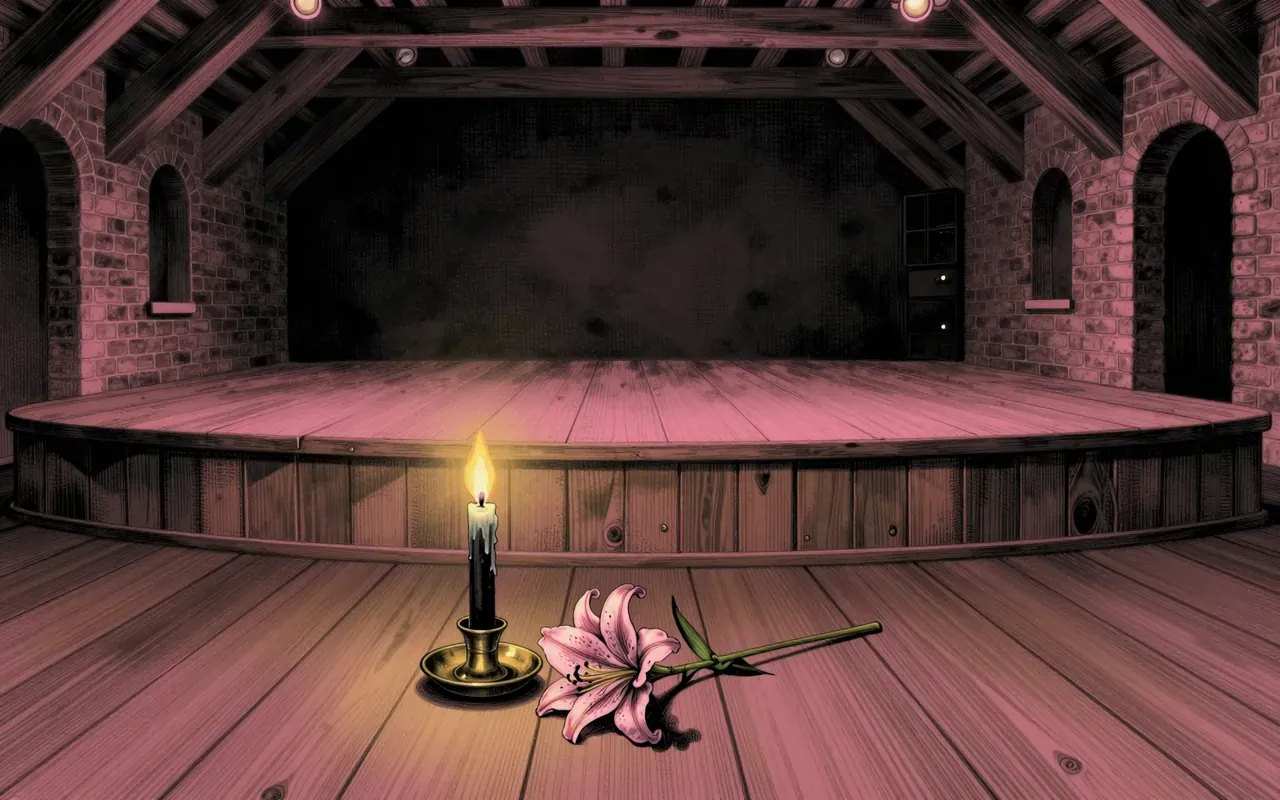
Clube da Esquina is a 1972 double album by Milton Nascimento and Lô Borges, emerging from a collective formed in Belo Horizonte in 1963. Core members include Beto Guedes, Toninho Horta, Wagner Tiso, and Flávio Venturini — who shared compositions and melodies before recording. It was mostly recorded in November 1971 at a beach house in Piratininga, Niterói, during extended creative sessions and rehearsals. The group stayed there for six months, with final recordings also made in Santa Tereza, city-centre bars, the Borges brothers’ house, and Odeon Studios in Rio de Janeiro. At Odeon Studios, the collective was given several weeks to record, with sessions lasting entire days and evenings, characterized by intense collaboration, improvisation, and experimentation. At Odeon Studios, the album was recorded using a two-channel setup: one channel for vocals and one for instruments. The album features a mixture of MPB, baroque pop, folk, and jazz pop, with elements of rock, psychedelia, and classical music. Toninho Horta described the album as 'nectar, an oasis', noting that each song is distinct and reflects the varied musical backgrounds of the participants. Beto Guedes played on 17 of the 21 tracks, alternating between bass and drums. Milton Nascimento personally selected who would write the lyrics for each song. Clube da Esquina was released in 1972 by the collective and some others.
9:23

Run The Jewels 4

Run the Jewels · 2020

RTJ4 is Run the Jewels’ fourth studio album, released digitally on June 3, 2020 — two days ahead of its scheduled June 5 date — as a direct response to nationwide protests against racial injustice. All tracks were produced by El-P, with co-production by Little Shalimar and Wilder Zoby on most. Its cover art was conceived by El-P and realised by Tim Saccenti as a low-poly 3D-printed sculpture of the duo’s logo, photographed under multi-coloured lighting to reference past album palettes. The record is officially titled RTJ4 — the first in the series to use the abbreviated form — and features guest appearances from Greg Nice, DJ Premier, 2 Chainz, Pharrell Williams, Mavis Staples, Josh Homme, and Zack de la Rocha. Its lead singles were 'Yankee and the Brave (ep.4)' and 'Ooh LA LA', and it was performed in full during the voter-engagement YouTube stream Holy Calamavote on October 18, 2020.

9:23

What’s New?

Sonny Rollins · 1962

What’s New? is a 1962 RCA Victor album by Sonny Rollins built around Latin rhythms. It does not reinterpret the title song’s lyrical conceit or formal structure. It does not feature the trumpet solo for which the tune was originally written. It lands most clearly on ‘Jungoso’ and ‘Bluesongo’. It is worth hearing for its rhythmic focus — not for harmonic invention or narrative depth.

9:24

Love Deluxe

Sade · 1992

Love Deluxe is a controlled, atmospheric R&B record built on restraint and texture rather than groove or spontaneity.

9:24

The Music From Peter Gunn

Henry Mancini · 1959

The Music From Peter Gunn is a television soundtrack album composed by Henry Mancini for the series Peter Gunn, produced by Blake Edwards in 1958. It won the inaugural Grammy Award for Album of the Year in 1958. Mancini pioneered the integration of jazz elements into late-romantic orchestral television scoring.

9:24

All Mod Cons

The Jam · 1978

All Mod Cons is a re-recorded crisis album that treats the UK as a series of locked rooms — and makes every key turn with purpose.

9:24

The Kinks Are the Village Green Preservation Society

The Kinks · 1968

A 15-track studio album by The Kinks, recorded at Pye Studios in London between March and October 1968 (with one track dating to 1966–67), produced by Ray Davies — his first officially credited production. It uses harmonica, harpsichord, flute, and guitar feedback. Its sound is subdued, light on the bottom end, and demo-like. Assembled from songs written over two years, it presents thematic vignettes of English small-town life. Critically acclaimed on release but commercially modest (~100,000 copies), it later became the band’s best-selling original record.

9:24

This Year’s Model

Elvis Costello · 1978

This Year's Model is Elvis Costello's second album and his first with the Attractions. Recorded in eleven days at Eden Studios in west London between November 1977 and January 1978, during short breaks from touring. Produced by Nick Lowe, engineered by Roger Béchirian. Most songs were written and performed live earlier in 1977. Lowe prioritised capturing live performances with few overdubs; some of Costello’s guide vocals remained in the final mix. The sessions were energetic and collaborative. Key tracks like 'Pump It Up' and '(I Don't Want to Go to) Chelsea' were completed in a single afternoon. Sonic influences include the Rolling Stones’ Aftermath (1966), the Who, the Kinks, Small Faces, and Talking Heads.

9:24

A Rainbow in Curved Air

Terry Riley · 1969

A Rainbow in Curved Air is a solo studio construction: keyboard and percussion overdubs on the A-side, saxophone drone and tape manipulation on the B-side. Made in 1968 on one of CBS’s first eight-track recorders. It established repetition, delay, and modal layering as core tools for electronic composition — not as texture, but as architecture.
9:24

Interstellar

Hans Zimmer · 2014

A functional, architecturally driven score that treats the cathedral as its primary instrument. It lands where space and gravity meet sound — and fails where melody or motion is expected.

9:25

Millions Now Living Will Never Die

Tortoise · 1996

No verified claim about the record 'Millions Now Living Will Never Die' by Tortoise (1996) can be made from the provided material. All sources are either irrelevant (zoological) or insufficient (film placement without sonic description). The brief cannot describe the music, its makers, its methods, or its meaning — because the evidence contains none of it.

9:25

Sound & Color

Alabama Shakes · 2015

Sound & Color is Alabama Shakes’ second studio album, recorded over more than a year beginning in late 2013 without pre-written songs or a fixed end-goal; it is rooted in Southern rock and soul but expands into eclectic, experimental territory, incorporating jazz, cowpunk, hardcore punk, new wave, proto-punk, funk, blues, country, garage punk, punk rock, swamp rock, talking blues, space rock, psychedelic funk, R&B, stoner-desert rock, and grunge-funk fusion — all while drawing influence from artists including MC5, Erykah Badu, Curtis Mayfield, and the Strokes.
9:25

Dig Your Own Hole

The Chemical Brothers · 1997

Dig Your Own Hole is the Chemical Brothers’ second studio album, recorded between 1996 and 1997 at their own south London studio and released 7 April 1997. It features guest vocalists Noel Gallagher and Beth Orton. Key tracks originated as DJ promos ('Electronic Battle Weapon 1' and '2'). Its sound is built from verified samples: Schoolly D’s 'Gucci Again', Lothar and the Hand People’s 'It Comes On Anyhow', and John Schroeder’s 'Money Runner'. The title comes from graffiti outside the studio. It was critically acclaimed, earning a 10/10 from Mixmag.

9:25

S.F. Sorrow

The Pretty Things · 1968

S.F. Sorrow is the first rock opera: a studio-bound, narrative-driven, sonically dense 1968 record made at Abbey Road with experimental instrumentation, relentless tape bouncing, and zero concern for live performance. It landed as a landmark—not because it succeeded on all fronts, but because it attempted everything at once, in real time, with limited tools and no map.

9:25

Beats, Rhymes and Life

A Tribe Called Quest · 1996

Beats, Rhymes and Life is a tightly wound, sonically restrained document of a group at breaking point — not a triumph, but a testimony.