musicbriefs
Shortest first

All briefs

1188 briefs · 11103 min · 769–864 on page 9 of 13
10:36

Groovin' High

Dizzy Gillespie Big Band · 1990

A 1945 bebop composition by Dizzy Gillespie, first performed in February and preserved in full on December 29, 1945, by Armed Forces Radio Service. It uses the chord structure of the 1920 standard 'Whispering'. It is a pleasant medium-tempo tune demonstrating Gillespie's skill in fashioning interesting textures using only six instruments. It features a two-bar unison figure by Gillespie and Charlie Parker at the opening and a Gillespie coda at the end. Parker's 16-bar solo is praised for its lovely, logical, melodic construction. It was regarded as the first famous bebop recording. It sounds radically different, harmonically and rhythmically, from the swing popular at the time.

10:36

Jazz at Massey Hall

The Quintet · 1956

Jazz at Massey Hall is a live album recorded on 15 May 1953 at Massey Hall in Toronto. It documents the only full-session collaboration of Dizzy Gillespie, Charlie Parker, Bud Powell, Charles Mingus, and Max Roach — billed as 'The Quintet' — released in December 1953 on Debut Records.

10:36

Funky Kingston

Toots & The Maytals · 1973

Funky Kingston is a 1973 reggae album by Toots & The Maytals, recorded at Dynamic Sound Studios in Kingston. It features authentic Jamaican arrangements with only minor producer interventions — most notably horn overdubs by the Ghanaian band Sons of the Jungle — and incorporates American R&B covers alongside original material. The album reflects working-class life in Jamaica and bridges reggae with soul inflections, particularly through Toots Hibbert’s vocal delivery. Personnel include core Maytals members plus additional drummers and horn players. Critical reception highlights its exuberance, authenticity, and significance as a foundational reggae document distinct from Bob Marley’s output, though assessments vary between the two versions due to their differing contents and production contexts. The title track has appeared widely in film, television, and video game soundtracks. The album’s title was suggested by producer Chris Blackwell, inspired by the crossover success of 'Funky Nassau' and the rising popularity of the term 'funky'.

10:36

Parsley, Sage, Rosemary and Thyme

Simon and Garfunkel · 1966

Parsley, Sage, Rosemary and Thyme is Simon & Garfunkel’s third studio album, released in October 1966. It marks their first use of eight-track recording, their first full assertion of creative control, and their first active participation in mixing — especially on 'Scarborough Fair'. It is largely acoustic, drawing on Paul Simon’s 1965 English songwriting period and recycling material from The Paul Simon Songbook. Vocal takes were overdubbed to separate voice from guitar. 'Patterns' uses string snaps, syncopated bass, and a frenetic bongo part. 'Scarborough Fair' features fingerpicked guitar, delicate chimes, harpsichord embellishments, and vocal blend.

10:36

Siamese Dream

Smashing Pumpkins · 1993

Siamese Dream is the Smashing Pumpkins’ 1993 album, recorded December 1992 to March 1993 at Triclops Studios in Marietta, Georgia. It was made under duress: Jimmy Chamberlin’s heroin addiction led to multi-day disappearances; Billy Corgan’s depression deepened to suicidal ideation; band members withdrew physically and emotionally; Corgan overdubbed most guitar and bass parts himself for efficiency; Butch Vig co-produced using analog tape; Alan Moulder mixed the final product after Corgan and Vig exhausted themselves. The album contains up to 40 guitar parts in 'Soma', achieved through obsessive layering—not reverb or delay. It ran four months and $250,000 over budget. It peaked at No. 10 on the Billboard 200 and sold over four million copies in the US.

10:36

Van Halen

Van Halen · 1978

Van Halen (1978) is a live-band-in-a-room document made with deliberate constraints: three weeks, minimal overdubs, intentional mistakes, and one electric sitar. It lands hard on guitar tone, rhythmic lock, and frontman energy—not lyrics, concept, or polish. Its ideas are sonic, not thematic. It rewards listeners who hear music as physical event, not narrative. It is worth your time if you want to hear how urgency is built—not faked.

10:36

Vespertine

Björk · 2001

Vespertine is a record of proximity — not just in vocal delivery, but in instrument choice, room selection, and rhythmic source. It rejects scale. It favours fragility. It was made where Björk was living, working, and loving — not where she was performing.

10:36

Rigoletto

Giuseppe Verdi · 1989

Rigoletto (1989) is a recording of Verdi’s 1851 opera, premiered at La Fenice in Venice. It uses offstage band, onstage chamber strings, and pit orchestra as distinct dramatic agents. Its innovations include melody assigned to low woodwinds and strings—not voices—in key duets; humming chorus as diegetic wind; and continuous pacing that replaces sectional numbers. Censorship shaped its structure: the Duke substitutes for royalty, and 'La donna è mobile' was rehearsed in isolation to control its impact. It contains only one conventional double aria and no concerted act finales. Julian Budden calls it revolutionary—comparable to Beethoven’s Eroica—for dissolving barriers between recitative and melody.

10:36

The Futuristic Sounds of Sun Ra

Sun Ra · 1962

Sun Ra’s 1962 album is a clean break: acoustic, lean, and club-ready. It marks his New York arrival — no electronics, no myth-making, just piano, percussion, and precision.

10:37

Hard Again

Muddy Waters · 1977

Hard Again is a 1977 studio album by Muddy Waters, produced by Johnny Winter for Blue Sky Records. It was recorded in three days with Waters’s touring band — Bob Margolin, Pinetop Perkins, Willie 'Big Eyes' Smith — plus James Cotton and Charles Calmese. It includes re-recordings of Chess-era staples and new co-writes. Critics describe it as Waters’s comeback album. It won a Grammy.

10:37

Can’t Get Enough

Barry White · 1974

Can’t Get Enough (1974) is Barry White’s breakthrough album — defined by two signature hits: “Can’t Get Enough of Your Love, Babe”, his first US number one on the Billboard Hot 100, and “You’re the First, the Last, My Everything”, which topped the UK charts.

10:37

Il trovatore

Giuseppe Verdi · 1988

A 1988 studio recording of Verdi’s Il trovatore, presenting 24 aria excerpts in strict sequence. No production context is provided. Its value lies only in its alignment with long-standing reception patterns — particularly around ‘Miserere’ and ‘Di quella pira’ — not in interpretive originality or sonic distinction.

10:37

The Rite of Spring

Igor Stravinsky · 1960

A 1960 recording of Stravinsky’s 1913 ballet score, conceived as a solemn pagan rite depicting a young girl dancing herself to death. Composed in a tiny room in Clarens, Switzerland, using a muted upright piano. Its sound features uneven rhythms, superimposed harmonies, atonality, and extensive instrumentation. The opening bassoon melody derives from a Lithuanian folk song anthology. Its 1913 premiere caused a near-riot due to its avant-garde nature. It scattered musical language irreversibly, influencing composers including Copland, Glass, Bartók, and Boulez.

10:38

Night Train

The Oscar Peterson Trio · 1963

Night Train (1963) is a factual placeholder: a trio configuration change, not a musical event. No source describes its sound, intent, or impact. It is defined solely by who played on it and when — nothing more.

10:38

Crosby, Stills & Nash

Crosby, Stills & Nash · 1969

Crosby, Stills & Nash (1969) is a foundational folk rock album built almost entirely by Stephen Stills — who played all bass, organ, and lead guitar — with Crosby and Nash contributing guitar only on their own songs. Two tracks omit Stills entirely. It was a major commercial success: released May 1969, peaked at No. 6 on Billboard, spent 107 weeks on chart, spawned two Top 40 singles, earned quadruple platinum certification, and defined FM radio in the late 1960s. It contains 'Suite: Judy Blue Eyes', 'Marrakesh Express', 'Helplessly Hoping', 'Long Time Gone', and 'Wooden Ships' — the last co-written with Paul Kantner. No studio, engineer, producer, or location is named in the source material.

10:38

Good Old Boys

Randy Newman · 1974

Good Old Boys is a piano-led, lyric-first concept album about the American South, built from irony, historical reference, and vocal ambiguity—not sonic spectacle. It trades resolution for resonance, and clarity for complicity.

10:38

Mellow Gold

Beck · 1994

Mellow Gold is a lo-fi, genre-blending 1994 album recorded on a four-track in two LA homes. Beck performed most instruments and co-produced with Tom Rothrock, Rob Schnapf, and Carl Stephenson. Its sound is deliberately degraded, satirical, and texturally dense — built from home recordings, obscure samples, and sparse guest contributions. It launched Beck’s major-label career but resists cohesion, favouring collage over continuity. Its ideas orbit absurdism, sampling, and the myth of the corrupted artefact.

10:38

Neu! ’75

Neu! · 1975

Neu! ’75 is the third and final Neu! studio album of the 1970s, recorded at Conny Plank’s studio between December 1974 and January 1975. It emerged from irreconcilable creative directions between Michael Rother and Klaus Dinger, resulting in a split-sided structure — side one (Rother’s ambient, keyboard-led duo recordings) and side two (Dinger’s songs, performed with double drumming and expanded instrumentation).

10:38

The Basement Tapes

Bob Dylan · 1975

The Basement Tapes is not a studio album. It is a 1975 compilation of 1967 basement recordings — raw, unvarnished, and made with borrowed gear — stitched together with later Band-only tracks and 1975 overdubs. It documents process, not product.

10:38

Exodus

Bob Marley & The Wailers · 1977

Exodus is a reggae album recorded in London in early 1977 by Bob Marley & The Wailers, following their relocation after an assassination attempt in Kingston. Its production is laid-back, featuring pulsating bass beats, piano, trumpet and guitar. It departs from cryptic storytelling in favour of clear themes: religious politics in the first half, making love and keeping faith in the second. Musically, it fuses blues, soul and British rock beneath a reggae façade — sounding unlike contemporaneous Jamaican reggae. The title and title track respond to Michael Manley’s campaign slogan ‘We Know Where We’re Going’.

10:38

Ride the Lightning

Metallica · 1984

Ride the Lightning is Metallica’s second studio album, recorded in three weeks at Sweet Silence Studios in Copenhagen with co-producer Flemming Rasmussen. Drums were tracked in an unsoundproofed warehouse, creating a long, uncontrollable reverb. Rhythm guitar and drums were recorded live; bass and lead guitar were overdubbed. Songs were assembled from pre-studio 'riff tape' jam sessions. Dave Mustaine co-wrote two tracks. Released July 27, 1984, it reached No. 100 on the Billboard 200.

10:38

Tunnel of Love

Bruce Springsteen · 1987

Tunnel of Love is a 1987 studio album by Bruce Springsteen. It is not officially an E Street Band album. Springsteen recorded most of it himself using drum machines and synthesizers. The record is sedate and contemplative. It reflects maturely on love found, lost and squandered. The full E Street Band sound is included only selectively. Roy Bittan played synthesizers on 'Tunnel of Love' and acoustic piano on 'Brilliant Disguise'. Danny Federici played Hammond organ on 'Tougher Than the Rest', 'Spare Parts', and 'Brilliant Disguise'. Clarence Clemons contributed backing vocals on 'When You're Alone'. Nils Lofgren performed a guitar solo on 'Tunnel of Love' and backing vocals on 'When You're Alone'. Patti Scialfa provided backing vocals on 'Tunnel of Love', 'One Step Up', and 'When You're Alone'.

10:39

Houses of the Holy

Led Zeppelin · 1973

Houses of the Holy is Led Zeppelin’s 1973 studio album, recorded primarily at Stargroves in April 1972 using the Rolling Stones Mobile Studio, with additional sessions at Olympic Studios and Electric Lady Studios. It was produced by Jimmy Page and engineered by Eddie Kramer. The album marks a stylistic pivot toward cleaner, more eclectic sounds—incorporating reggae, funk, swing, and psychedelic elements—built from fully developed compositions Page and John Paul Jones brought from their home studios. It features experimental use of mellotron and synthesizers, avoids blues-rock distortion, and prioritises arrangement over improvisation. Its cover, designed by Hipgnosis, shows nude children at the Giant's Causeway and carried no band or album name—a deliberate, controversial choice. It topped global charts and anchored a record-breaking 1973 North American tour.

10:39

Nick of Time

Bonnie Raitt · 1989

Nick of Time is Bonnie Raitt’s tenth studio album, released March 21, 1989. Produced by Don Was, it features a smooth and understated rock sound rooted in Raitt’s earlier laid-back blues rock style. There is grit in her singing and playing, even when surfaces are clean. The album explores blues rock, country, R&B, and pop. It was built around stripped-down arrangements developed first in demos at Was’ home studio, then recorded live over one week at Ocean Way Recording in Los Angeles. There is less production and less slickness — a return to Raitt’s roots. It was her first sober album and first Capitol Records release, reaching number one on the U.S. album chart and selling over five million copies in the U.S. It marked the debut of her enduring rhythm section with Ricky Fataar and James 'Hutch' Hutchinson.

10:39

Toys in the Attic

Aerosmith · 1975

Toys in the Attic (1975) is Aerosmith’s breakthrough hard rock album — recorded live-to-tape at The Record Plant in New York City, built from scratch in two months of rehearsal, and defined by its disciplined yet raucous studio execution. It established the band’s identity beyond Rolling Stones comparisons, delivered their first Top 40 hit (‘Sweet Emotion’), and remains their bestselling US studio album (nine million copies). Its sound is anchored in live-band interplay, economical overdubs, and blues-rooted riffs — not studio gloss or conceptual framing.

10:40

Wowee Zowee

Pavement · 1995

Wowee Zowee is Pavement’s third studio album, recorded in eleven spontaneous days at Easley Recording in Memphis — a studio familiar to some members from prior work with Silver Jews — with all five band members present for the first time. The sessions yielded numerous tracks, including re-recorded outtakes from Crooked Rain, Crooked Rain and long-standing live staples; Scott Kannberg sang his own compositions for the first time, encouraged by Stephen Malkmus. The band prioritised looseness and sprawl over cohesion, per Malkmus’ directive that 'the less it fits together, the better,' and immersed themselves in Memphis’ laid-back culture between takes. Final mixing and overdubbing occurred at Random Falls in Manhattan in February 1995. The album showcases experimental, eclectic songwriting — ranging from acoustic ballads to noise rock and punk — with lyrics oscillating between cryptic, humorous, and deliberately nonsensical, and marks Pavement’s longest studio release at nearly one hour, sequenced entirely by Malkmus across three vinyl sides (with side four left blank).

10:41

Blind Faith

Blind Faith · 1969

Blind Faith’s 1969 album is a tightly wound studio document — not a live statement, not a jam vehicle, not a star vehicle. It is defined by what is left out: no guitar solos longer than eight bars, no drum breaks, no overdubbed choirs, no reverb-drenched mysticism. Its authority comes from Winwood’s organ tone, Clapton’s muted string attack, Grech’s bass lines that walk rather than gallop, and Baker’s drums placed dry and close. Two songs — 'Can’t Find My Way Home' and 'Presence of the Lord' — achieve a rare balance of intimacy and clarity. The rest serves them. It is worth hearing because it proves that even under pressure, with minimal material and divergent instincts, four players can make something that breathes evenly — and that such restraint is harder than fireworks.

10:42

Kaleidoscope

Kelis · 1999

Kaleidoscope is Kelis’s 1999 debut studio album, produced entirely by the Neptunes and released by Virgin Records. It draws from 1970s jazz, disco, soul, R&B, hip hop, urban and rock, and features club-oriented electro beats. Several tracks were designed for dancing. The Neptunes performed instruments and created arrangements. Dave Hummel and Andrew Coleman engineered it. Şerban Ghenea mixed thirteen tracks; Ken 'Duro' Ifill mixed track 10. Kelis cited Sarah Vaughan, Ella Fitzgerald and Dinah Washington as major vocal influences. The album was recorded between mid-1998 and mid-1999.

10:42

Red

Taylor Swift · 2012

Red is a deliberately fragmented studio document — recorded in fragments between tour dates, shaped by eight producers, and structured around emotional fidelity rather than genre continuity. Its sound combines acoustic instruments and electronic arrangements — synths, drum machines — with each track’s production calibrated to its feeling. It marks Swift’s first major collaborative pivot away from sole authorship and country conventions.

10:42

3rd

Big Star · 1978

Big Star’s Third/Sister Lovers is not a polished artefact—it is a document of dissolution. Recorded in late 1974 at Ardent Studios with producer Jim Dickinson, it features Alex Chilton and Jody Stephens working alongside a rotating group of Memphis musicians—including drummer Richard Rosebrough and vocalist Lesa Aldridge, whose parts were later erased. The sessions ended in early 1975 with 250 plain-label promos pressed, but label interest failed in New York and California. The band broke up before the album was titled. Dickinson framed his role as removing ‘oppressive production’ to enable Chilton’s integrity—not to shape a marketable product. The result is a stark, emotionally extreme, and stylistically fractured record that diverges entirely from Big Star’s earlier power-pop. Its cult status rests on its honesty, not its polish.

10:42

All That You Can’t Leave Behind

U2 · 2000

All That You Can’t Leave Behind is U2’s 2000 return to live ensemble recording, made with Brian Eno and Daniel Lanois at Hanover Quay Studios. It abandons Pop’s fragmentation for clarity, cohesion, and vocal-led uplift. Its strength is commitment—not revelation.

10:42

Goo

Sonic Youth · 1990

Goo is Sonic Youth’s 1990 DGC debut: a calculated expansion of their noise-pop vocabulary using expanded studio capacity, abstract mic placement, and heightened vocal roles. It landed ‘Kool Thing’ and ‘Mote’ with force, stumbled through brevity and excess, and proved accessibility need not mean simplicity. It is a record about making space—not for listeners, but for ideas, instruments, and friction.

10:42

Pearl

Janis Joplin · 1971

Pearl is Janis Joplin’s final studio album, recorded between late August and early October 1970 in Los Angeles with producer Paul A. Rothchild. It was released posthumously in January 1971 after her death on October 4, 1970. Though unfinished, sufficient completed material existed to assemble the LP. It features her number-one hit 'Me and Bobby McGee', original songs 'Move Over' and 'Mercedes Benz', and covers including 'Trust Me' and 'Get It While You Can'. Joplin approved and arranged all nine tracks she sings on. She did not record vocals for 'Buried Alive in the Blues'. The album has a more polished sound than her earlier work with Big Brother and the Holding Company and the Kozmic Blues Band, due to Rothchild’s expertise and the Full Tilt Boogie Band. Many songs were first recorded live on stage in Canada two months before the LA sessions. It was crafted at Sunset Sound Recorders to showcase her extraordinary vocal talents.

10:42

ASTROWORLD

Travis Scott · 2018

ASTROWORLD is Travis Scott’s third studio album, named after the defunct Houston theme park. Recorded between 2016 and 2018, final sessions took place in Hawaii with Mike Dean, Nav, Frank Dukes, Sonny Digital, WondaGurl, Sheck Wes, Gunna, Wheezy, Don Toliver, Allen Ritter and Amir 'Cash' Esmailian. Mike Dean played keyboards on track 4, guitar on track 17, and synthesizer on track 17. Stevie Wonder played harmonica on track 5. John Mayer played guitar on tracks 8, 11 and 13. Sheldon Ferguson played guitar on track 12. Nineteen85 played bass on track 17. Isaiah Gage played cello on track 17. The album was released on August 3, 2018, debuted at number one on the Billboard 200 with 537,000 album-equivalent units in its first week, and was met with widespread critical acclaim.

10:43

Back to Black

Amy Winehouse · 2006

Back to Black is Amy Winehouse’s second studio album, released in 2006. It was inspired by 1960s girl groups and soul music, recorded with producers Salaam Remi and Mark Ronson, and backed in the studio by Sharon Jones’s band the Dap-Kings. The 11-track album was completed in five months, with production credits split between Remi and Ronson. Winehouse engaged directly in the process—giving blunt feedback and refining her performances meticulously, even testing vocal takes in her father’s taxi to gauge how they would sound to most listeners. The album’s lead single, 'Rehab', was produced by Ronson and became a global hit, praised for its originality and soul-referencing production without imitation. The record achieved massive critical and commercial success, winning five Grammy Awards in 2008—including Record of the Year and Song of the Year for 'Rehab'—and was later preserved in the US National Recording Registry in 2025. Its legacy endures as one of the best-selling and most influential albums of the 21st century, noted for its authentic fusion of retro soul aesthetics and deeply personal songwriting. The making of the record reflects Winehouse’s artistic control, collaborative precision, and stylistic clarity—grounded in genre homage but executed with singular vocal and lyrical authority. It stands as a definitive artifact of her artistry, distinct from the turbulence that later overshadowed her public life. The album’s enduring cultural weight is affirmed by its inclusion in major institutional archives and critical lists, underscoring its significance beyond sales or celebrity narrative. Its creation remains anchored in deliberate musical choices: the selection of vintage-inspired arrangements, the integration of live soul instrumentation, and the tight, focused studio collaboration that shaped its unmistakable sound. This coherence—between influence, execution, and voice—makes Back to Black not just a milestone in Winehouse’s career but a landmark in modern popular music production. Its preservation and continued reappraisal signal its status as a canonical work whose formal and emotional integrity withstands time and context. The record’s power lies in its synthesis: the discipline of craft meeting raw autobiographical expression, all wrapped in a sonic world both nostalgic and urgently new. That duality—of studied reference and unfiltered presence—is what gives Back to Black its lasting resonance and distinguishes it within the broader landscape of 2000s pop and soul revivalism. It is less a pastiche than a reclamation—of sound, of agency, of voice—and its making reveals Winehouse not as a passive inheritor of tradition but as an active, exacting architect of it. The album’s cohesion, from songwriting to arrangement to vocal delivery, testifies to a rare convergence of vision, skill, and environment—one that cannot be replicated, only revered. In this light, Back to Black is not merely a record but a statement: about what soul means when filtered through contemporary consciousness, and how authenticity is forged—not found—in the studio, in the writing room, and in the quiet, repeated act of listening back, again and again, until it feels true. Its endurance is not accidental; it is earned, note by note, decision by decision, in the space where influence meets intention. And that space—where Winehouse stood, microphone in hand, Dap-Kings behind her, Ronson and Remi at the boards—is where the record lives, unbroken and undeniable. It remains, above all, a testament to the possibility of making something timeless in real time—without compromise, without concession, and with absolute fidelity to feeling. That fidelity is its final, unassailable claim on our attention—and on history. So the record does more than document a moment: it defines one. Not through spectacle, but through substance. Not through volume, but through velocity of meaning. Not through trend, but through truth-telling dressed in Motown gloss and London grit. And in that balance—between polish and pulse, between memory and immediacy—lies the reason Back to Black continues to speak, decades later, with undimmed clarity and force. It is, simply, the sound of an artist arriving fully formed—and then going further. Further into herself. Further into the music. Further into the light, even as shadows gathered. And that journey—recorded, mixed, mastered, released—is why the album remains not just important, but essential. Essential to understanding Winehouse. Essential to understanding soul in the 21st century. Essential to understanding what happens when talent, timing, and truth align—and produce something that lasts. That is the record’s quiet, unshakeable achievement. And that is why it endures. Because it was made with care. With courage. With craft. And with a voice that could hold the weight of all three—and still sing.
10:43

Funeral

Arcade Fire · 2004

Funeral is Arcade Fire’s debut studio album, recorded mostly over one week in August 2003 at Hotel2Tango in Montreal, with extra sessions at Win Butler and Régine Chassagne’s apartment, completed in 2004. It is a document of collective bereavement — Chassagne’s grandmother (June 2003), the Butlers’ grandfather Alvino Rey (February 2004), Parry’s aunts (April 2004) — and of a winter power outage remembered from the 1998 North American ice storm.

10:43

In Rainbows

Radiohead · 2007

In Rainbows is Radiohead’s seventh studio album, self-released in 2007. It was recorded between March 2005 and June 2007 across four locations: their Oxfordshire studio, Halswell House, Tottenham House, and the Hospital Club in London. After initial unproductive sessions without Nigel Godrich and a failed collaboration with Spike Stent, the band re-enlisted Godrich in 2006. The lyrics are less political and more personal than previous albums, exploring mortality, embodiment, and transience. Production techniques include merging rhythm tracks, phasing guitars inspired by Steve Reich, and capturing white noise via full-scale string clusters. The album runs 45 minutes. Its release used a 'pay what you want' digital download model. It won the 2009 Grammy Award for Best Alternative Music Album.

10:44

We’re Only in It for the Money

The Mothers of Invention · 1968

We’re Only in It for the Money is a 1968 album by The Mothers of Invention, recorded in New York between March and October 1967. It features tape splicing, speed manipulation, and layered vocals applied to psychedelic rock, musique concrète, and orchestral fragments. Its satire targets both mainstream politics and the commodification of the counterculture. Zappa produced it alone — the first time — with Tom Wilson as executive producer. Its cover parodies Sgt. Pepper’s. It was selected for the National Recording Registry in 2005.

10:44

Since I Left You

The Avalanches · 2000

A sample-based daydream that trades coherence for texture—and wins.

10:45

Elephant

The White Stripes · 2003

Elephant is The White Stripes’ fourth studio album, recorded mostly between April 24 and May 13, 2002, at Toe Rag Studios in London. It was produced by Jack White using an 8-track tape machine, no computers, and pre-1960s gear. Engineer Liam Watson worked six-hour shifts across ten days. All songs—including B-sides—were mixed in one day at Toe Rag. Meg White sings lead for the first time on 'In the Cold, Cold Night'. 'I Just Don’t Know What to Do With Myself' was recorded separately at BBC’s Maida Vale Studios. The album was recorded on a budget of £4,000–£6,000. Jack returned in late September 2002 to re-record and remix certain vocals. The band exhausted the 8-track’s capacity deliberately, citing the Beatles’ precedent. Elephant features Jack’s first guitar solos and expands keyboard and piano use. Its red-white-black artwork was shot in Detroit.

10:45

The “Chirping” Crickets

The Crickets · 1957

The 'Chirping' Crickets is the debut album of The Crickets. Its sleeve documents the original line-up: Buddy Holly (lead vocals, lead guitar), Niki Sullivan (rhythm guitar), Jerry Allison (drums), and Joe B. Mauldin (bass). The recordings were issued under the group name because they featured dubbed backing vocals — a marketing distinction from Holly’s solo releases. The band name was chosen for legal reasons, to avoid conflict with Holly’s prior solo recordings.

10:45

Refavela

Gilberto Gil · 1977

Refavela is not a fusion record. It is a declaration of continuity — Afro-Brazilian culture as unbroken line, not borrowed motif.

10:46

1999

Prince · 1982

1999 is Prince’s 1982 double LP, his first with the Revolution, defined by synth-and-drum machine-heavy arrangements that codified the Minneapolis sound. It uses ARP Omni, Oberheim OB-SX, OB-X, OB-Xa, OB-8 synths and the Linn LM-1 drum machine. Themes include nuclear anxiety, Computer Age alienation, eroticism, and spiritual gratitude. Its production is tightly controlled, layered, and mechanised—no live drums, no guitar solos, no acoustic piano leads. It landed with urgency, intimacy, rhythmic insistence, theatricality, and groove. It is worth hearing if you want to understand how funk became electronic without losing its body.

10:46

Blunderbuss

Jack White · 2012

Blunderbuss is Jack White’s debut solo album, self-produced and released on 24 April 2012. It was recorded at Third Man Studio in Nashville following RZA’s last-minute cancellation of a session, prompting White to record his own songs with assembled musicians. He directed up to 12 players at once—more than in any prior project—and used both all-female and all-male ensembles, recording multiple versions of songs to test feel. The album was cut to analog 8-track tape with minimal compression, favouring dynamic range and immediacy. Its sound integrates blues rock, country soul, R&B, jazz, and hip hop elements, though the latter two remain stylistic nods rather than structural commitments. Lyrically, it grapples with breakup and duality. It debuted at number one on the Billboard 200 and earned Grammy nominations for Album of the Year, Best Rock Album, and Best Rock Song ('Freedom at 21'). White toured it with two alternating bands—the all-female Peacocks and all-male Buzzards—but abandoned the format after the tour due to expense.

10:46

Surrealistic Pillow

Jefferson Airplane · 1967

Surrealistic Pillow is Jefferson Airplane’s second studio album, recorded over 13 days in late 1966 at RCA Victor studios in Hollywood. It marks the arrival of Grace Slick and Spencer Dryden, and features songs by Slick, Balin, Kantner, Kaukonen and Spence. Producer Rick Jarrard enforced tight commercial discipline: no onstage jams, no marijuana, heavy reverb on the stereo mix. Jerry Garcia contributed arrangements and suggested the title but received no formal production credit — only 'spiritual advisor'. The album launched the band internationally and became a defining document of the Summer of Love.

10:46

The Slim Shady LP

Eminem · 1999

The Slim Shady LP is a tightly controlled studio document: recorded in one room, built from one workflow, anchored by one persona. Its power lies in execution—not concept, not legacy, not controversy as spectacle, but controversy as deliberate sonic placement.

10:46

Follow the Leader

Eric B. & Rakim · 1988

Follow the Leader is a foundational hip-hop record defined by its controlled studio execution, compositional rigour, and vocal precision. It rejects the open-space aesthetic of its predecessor in favour of dense, dry, architecturally tight arrangements. Its authority comes from what is present — not from what is implied, sampled, or mythologised.

10:47

One Dozen Berrys

Chuck Berry · 1958

The source contains zero factual reference to 'One Dozen Berrys'. No detail about its existence, content, creation, or context appears anywhere in the material. Therefore, no editorial claim about the record can be supported.

10:47

Zen Arcade

Hüsker Dü · 1984

Zen Arcade is a double LP by Hüsker Dü, released July 1984 on SST Records. It tells a conceptual story of a boy fleeing an abusive home, encountering disillusionment through military service, religion, love, and loss — ending when he wakes, revealing the narrative as a dream. Recorded in 45 hours at Total Access Studio in Redondo Beach, California, with producer Spot, it features first-take performances, acoustic folk passages, piano interludes, and psychedelic guitar textures. The band rehearsed in a church-turned-punk squat in St. Paul, Minnesota, during summer 1983, brainstorming lyrics and musical ideas in multi-hour jam sessions. Bob Mould and Grant Hart wrote all songs; Mould demanded individual songwriter credits after seeing Hart’s artwork for another band. Dez Cadena contributed guest vocals to 'What's Going On'. 'Eight Miles High' was recorded during these sessions but released as a non-album single in April 1984. The album’s artistic and conceptual ambitions challenged prevailing U.S. punk purism.

10:47

MAGDALENE

FKA twigs · 2019

Magdalene is FKA Twigs’s second studio album, released on 8 November 2019 after a four-year hiatus. It features self-production alongside Nicolas Jaar, Koreless, Daniel Lopatin, Skrillex, Benny Blanco, Michael Uzowuru, and Noah Goldstein. Its sound blends electronic art pop with 'lurid' modern dance and 'carnal' soul, defying genre classification while incorporating elements of avant-garde, R&B, trap, hip hop, trip hop, alt-pop, punk rock, industrial, opera, chamber pop, and Bulgarian folk. It samples 'Moma Hubava' by Le Mystère des Voix Bulgares in 'Holy Terrain' and 'Storm Clouds Rising' by the Florida Mass Choir in 'Fallen Alien'. Inspired by Twigs’s 2017 breakup with Robert Pattinson, it explores heartbreak, physical collapse, self-compassion, and emotional reassembly. Critical reception was universal, with the album ranking No. 1 on year-end lists from The A.V. Club, Clash, Now, and Time.

10:47

What’s the 411?

Mary J. Blige · 1992

A foundational hip-hop soul record built on sampling, vocal intimacy, and declarative authenticity.

10:47

Violator

Depeche Mode · 1990

Violator is Depeche Mode’s 1990 album, co-produced by the band and Flood, recorded in mid-1989 across Milan, Gjerlev, and London, and mixed in London by François Kevorkian.

10:48

At the Five Spot, Volume 1

Eric Dolphy · 1961

At the Five Spot, Volume 1 documents a single live night in 1961 by the co-led quintet of Eric Dolphy and Booker Little at the Five Spot Café in Manhattan. The rhythm section is Richard Davis, Mal Waldron, and Ed Blackwell. Released in 1961 on New Jazz Records.

10:48

Searching for the Young Soul Rebels

Dexys Midnight Runners · 1980

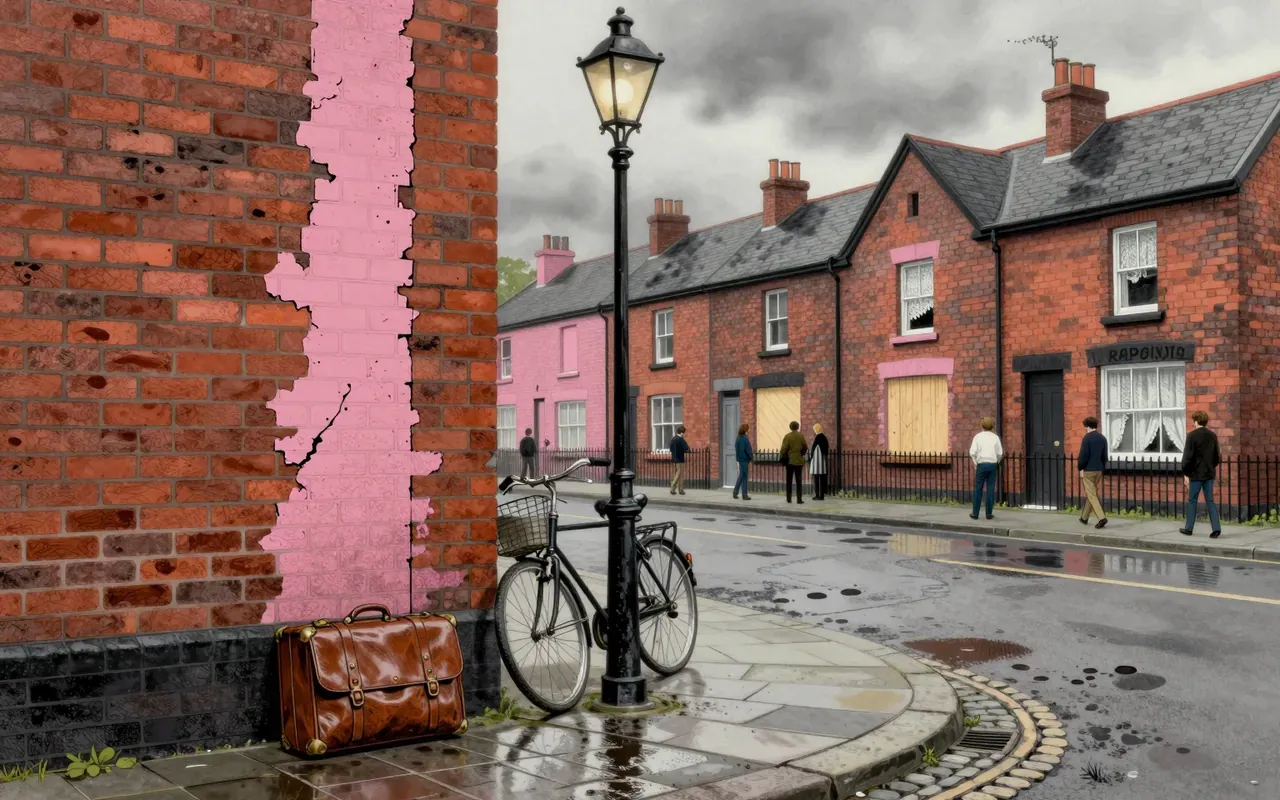
Searching for the Young Soul Rebels is Dexys Midnight Runners’ debut studio album, recorded over 12 days at Chipping Norton Recording Studios in April 1980 and released in July 1980. Produced by Pete Wingfield, it features the UK No. 1 single 'Geno' and bears the band’s 'Late Night Feelings' imprint. Its sleeve uses a photograph of a Belfast Catholic boy carrying his belongings after moving from his home during the Troubles. The album’s sound is an energetic mix of pop, Northern soul and punkish attitude—brassy, urgent, and deliberately unpolished.

10:48

Sometimes I Sit and Think, and Sometimes I Just Sit

Courtney Barnett · 2015

Sometimes I Sit and Think, and Sometimes I Just Sit is a debut album recorded quickly with minimal preparation, using only the core band and no embellishment. Its strength lies in rhythmic precision, lyrical specificity, and the unvarnished presence of four musicians playing together in a room. It avoids studio artifice and emotional crescendo. It is grounded in place — Melbourne, New York — and in the textures of ordinary life. It asks for attention, not surrender.

10:48

Under Construction

Missy Elliott · 2002

Under Construction is a deliberate act of sonic architecture — not revival, not pastiche, but reassembly. It uses old school samples as structural elements, not decoration. Its success is factual: 2.1 million US sales, Grammy wins, critical top billing. Its limits are factual too: one scrapped single, one withdrawn remix. It rewards attention to how sound is built — not how it feels.
10:48

Port of Miami

Rick Ross · 2006

Port of Miami is a debut album that treats Miami as infrastructure — not atmosphere, not character, but a node in a supply chain. Its sound is monolithic: engineered for repetition, built on one unvarnished sample, and delivered with zero tonal deviation. It landed because it refused ambiguity.

10:50

At the Lighthouse

The Cannonball Adderley Quintet · 1960

No factual basis exists in the provided material to describe the sound, intent, reception, or significance of 'At the Lighthouse'. Only its title, venue, tracklist, and the quintet’s standard instrumentation are confirmed.

10:50

Songs in A Minor

Alicia Keys · 2001

Songs in A Minor is a piano-led neo soul record rooted in classical technique, recorded across multiple New York-area studios—including Keys’ Harlem bedroom and the Queens basement she converted into KrucialKeys Studios—with minimal production, warm close-miked vocals, and structural clarity. It establishes Keys as a composer who treats piano not as colour but as architecture—and falls short where groove or rhythmic surprise is expected.

10:50

Different Class

Pulp · 1995

Different Class is Pulp’s fifth studio album, released in 1995. Its title came from a phrase Jarvis Cocker heard at Smashing, a club night in Eve’s Club on Regent Street in London. The sleeve design was by Blue Source and featured six double-sided inserts in initial pressings—cardboard cutouts of the band in staged scenarios. The cover photograph was taken at Dom O’Connor’s self-organized wedding, facilitated through a photographer who had previously worked with Blur and Elastica. The album’s back cover reads: 'We don't want no trouble, we just want the right to be different. That's all.'

10:50

Songs of Love and Hate

Leonard Cohen · 1971

Songs of Love and Hate is Leonard Cohen’s third studio album, released in 1971. It follows Songs of Leonard Cohen (1967) and Songs from a Room (1969). It is part of his early sequence of folk music albums. Most of the album was recorded at Columbia Studio A in Nashville between 22 and 26 September 1970. 'Sing Another Song, Boys' was recorded live at the Isle of Wight Festival on 30 August 1970. Further recording took place at Trident Studios in London. Cohen reunited with producer Bob Johnston and brought back guitarist Ron Cornelius, who led the backing band called The Army. Cohen described 'Joan of Arc' as exploring how humans meet and embrace their destiny. He stated that 'Famous Blue Raincoat' is about a man writing to another man who had an affair with his wife, and that the title references his own blue Burberry raincoat. Cohen expressed dissatisfaction with 'Famous Blue Raincoat', feeling it was unfinished and revealed its compositional 'carpentry', though he praised its tune and some images. Cohen's syncopated classical guitar 'chop' is especially prominent on 'Avalanche', and he considered 'Dress Rehearsal Rag' unreperformable by him. Songs of Love and Hate was not referenced in the document as having been used in film soundtracks or performed on BBC TV.

10:50

The Joshua Tree

U2 · 1987

A record made in two Irish houses. Guitar, bass, and drums played live through monitors. Open, ambient sound tied to the room. Antipathy toward US foreign policy held beside fascination with American space and ideals. Sequenced the night before delivery. Not ambient. Not experimental. Not American-made — but deeply, tensely, about America.

10:50

Born to Run

Bruce Springsteen · 1975

A meticulously constructed studio artifact — not a live document — built on tension, layering, and unresolved sonic ambition.

10:51

The Electric Prunes

The Electric Prunes · 1967

A rushed, producer-driven debut where psychedelic texture overpowers pop-song filler — held together by accidental tape manipulation, fuzz, and tremolo.

10:51

Johnny Cash at San Quentin

Johnny Cash · 1969

Johnny Cash at San Quentin (1969) is a live album recorded at San Quentin State Prison on February 24, 1969. It is Cash’s first album without Luther Perkins, who had recently died. Two songs — 'San Quentin' and 'A Boy Named Sue' — debuted live there. Producer Bob Johnston chose to include both performances of 'San Quentin'. 'A Boy Named Sue' was performed spontaneously, with Cash using a lyric sheet while the band improvised. 'Starkville City Jail' and 'Blistered' were unintentionally slowed by half a step. 'Jackson' and 'Orange Blossom Special' were performed but omitted from the original LP. The album reached number one on both Billboard country and pop album charts. 'A Boy Named Sue' reached number one on country charts and number two on US pop charts. It won the Grammy for Best Male Country Vocal Performance and was certified triple platinum.

10:51

Thriller

Michael Jackson · 1982

Thriller is a pop-soul record built for precision—not atmosphere, not accident, not legacy. It lands because it was remixed until nothing extraneous remained.

10:51

Black Celebration

Depeche Mode · 1986

Black Celebration is a tightly wound, claustrophobic electronic record built on tension, not release.

10:52

Dub Housing

Pere Ubu · 1978

Dub Housing is Pere Ubu’s second album, recorded in late 1978 at Suma Recording studio in Ohio. It was conceived and executed as a unified set of interconnected tracks — not standalone songs. It was released on November 17, 1978, via Chrysalis Records.

10:52

Highway 61 Revisited

Bob Dylan · 1965

Highway 61 Revisited is a 1965 rock record made in two sessions at Columbia's Studio A in Midtown Manhattan. It features Mike Bloomfield’s blues guitar and Al Kooper’s improvised organ riffs. 'Desolation Row' departs from the electric template, using acoustic guitar and understated bass. The album is named after the actual highway from Dylan’s Minnesota birthplace to New Orleans.

10:53

Singles Going Steady

Buzzcocks · 1979

Singles Going Steady is a chronologically ordered compilation of Buzzcocks’ UK singles and B-sides from 1977–1979. Released in the US in 1979 by I.R.S. Records before the band’s first US tour, it features Pete Shelley (vocals, guitar), Steve Diggle (guitar, backing vocals, lead on 'Harmony in My Head'), Steve Garvey (bass on all but two tracks), Garth Smith (bass on 'Orgasm Addict' and 'What Ever Happened To?'), and John Maher (drums, unlisted but confirmed by standard band line-up). Critics describe it as a 'punk masterpiece' built on emotional honesty, melodic sophistication, and pop-punk energy — but the source gives no detail on how it was recorded, mixed, or produced. Its value lies in its structure, personnel, and reputation — not its sound design.

10:53

Can’t Buy a Thrill

Steely Dan · 1972

Can’t Buy a Thrill is Steely Dan’s 1972 debut, written by Walter Becker and Donald Fagen, recorded in August 1972 at the Village Recorder in Los Angeles with producer Gary Katz. It establishes their signature blend of rock, jazz, Latin music, R&B, and blues, executed with sophisticated studio production and cryptic, irony-laced lyrics. Fagen sings most leads; Jim Hodder sings 'Midnite Cruiser'; David Palmer joins late to sing 'Dirty Work' and 'Brooklyn (Owes the Charmer Under Me)'. Four completed tracks were left off: 'Running Child', 'Sacajawea', 'Megashine City (Talkin’ About My Home)', and 'Gullywater'. Singles 'Do It Again' (No. 6) and 'Reelin’ In the Years' (No. 11) charted; 'Dirty Work' became a rock radio staple.

10:53

Coat of Many Colors

Dolly Parton · 1971

A lean, writer-led country record — recorded fast, written tighter, released before myth could set in.

10:53

Mama Said Knock You Out

L.L. Cool J · 1990

Mama Said Knock You Out is LL Cool J's fourth studio album, released in 1990 and produced primarily by Marley Marl. It was recorded at Marley Marl's 'House of Hits' home studio in Chestnut Ridge and at Chung King House of Metal in New York City. All tracks were co-written by James Todd Smith and Marlon Williams unless otherwise noted. The single version of 'Jingling Baby (Remixed but Still Jingling)' was remixed by Marley Marl. 'The Boomin' System' is censored on all album editions; the uncensored version appears only on the 12" single.

10:53

Rocket to Russia

Ramones · 1977

Rocket to Russia is the Ramones’ third studio album, recorded in August 1977 at Mediasound Studios in a former Episcopalian church in Midtown Manhattan. With a budget of $25,000–$30,000—most spent on production—the band prioritised speed, using first takes almost exclusively. Ed Stasium engineered and mixed most of it; Tony Bongiovi’s involvement was limited to final mastering at Power Station. The album reached No. 49 on the Billboard 200, yielded the band’s highest-charting single (‘Rockaway Beach’ at No. 66), and was hailed by Rolling Stone’s Dave Marsh as ‘the best American rock & roll of the year’. Its sound is tighter, brighter, and more pop-oriented than earlier releases, integrating surf and bubblegum influences while retaining the band’s signature velocity and brevity.

10:53

The Lexicon of Love

ABC · 1982

A studio-crafted pop record that merges disco rhythm, post-punk economy, and Broadway lyricism — built on orchestral arrangement and early digital texture, not personality or grit.

10:54

Born This Way

Lady Gaga · 2011

Born This Way is Lady Gaga’s second studio album, released on May 23, 2011. It explores electronic rock and techno-pop. It debuted at number one on the Billboard 200 with 1.1 million first-week US sales. Its title track sold over one million copies on iTunes in five days.

10:54

Songs Our Daddy Taught Us

The Everly Brothers · 1958

A 1958 album of traditional American folk and country ballads, sung by The Everly Brothers. It was their second studio album and their first without original material.

10:54

The Amazing Bud Powell

Bud Powell · 1954

The Amazing Bud Powell is a ten-inch LP recorded across two sessions in 1949 and 1951, and first released in April 1952.

10:54

Crime of the Century

Supertramp · 1974

Crime of the Century is Supertramp’s third studio album, recorded in 1974 at Trident and Ramport Studios with co-producer Ken Scott. It features eight songs selected from ~42 demos, includes field recordings from London Paddington and Leicester Square, and reflects collaborative and individual songwriting between Rick Davies and Roger Hodgson.

10:54

Happy Trails

Quicksilver Messenger Service · 1969

Happy Trails is a constructed live album — not a document, but a collage. It uses Fillmore recordings as source material, then edits, scores, overdubs and juxtaposes them to make something new: rhythmic, theatrical, and self-aware.

10:54

The Hangman’s Beautiful Daughter

The Incredible String Band · 1968

The Hangman’s Beautiful Daughter is a 1968 psychedelic folk album by The Incredible String Band, recorded in December 1967 at Sound Techniques in Chelsea, London. It uses multitrack recording to recreate live performance energy, layers exotic instruments including sitar, gimbri, shenai, oud, harpsichord, panpipes and kazoo, and features contributions from Licorice McKechnie (vocals, finger cymbals), Dolly Collins (flute organ, piano) and David Snell (harp). Robin Williamson contributes dreamlike, surreal songs such as 'The Minotaur’s Song', while Mike Heron’s 'A Very Cellular Song' — a 13-minute centrepiece — integrates the Bahamian spiritual 'I Bid You Goodnight'. Lyrically, it explores life, mythology and religious properties in a free musical structure, with esotericism as a consistent anchor. It departs from earlier work through layered production and expands on themes first developed on The 5000 Spirits or the Layers of the Onion.

10:55

A Night at Birdland, Volume 1

The Art Blakey Quintet · 1956

The sole verified fact about 'A Night at Birdland, Volume 1' is that it emerged from a 1954 live session during which Art Blakey declared his commitment to young musicians on-mic. Nothing else — personnel, label, venue, sound, repertoire context, or release status — is confirmed by the provided material.

10:55

Brothers in Arms

Dire Straits · 1985

A digitally recorded rock album made in two phases: initial tracking at AIR Studios in Montserrat between 2 November and 21 December 1984, followed by overdubs at Power Station in New York in February 1985. Produced by Mark Knopfler and Neil Dorfsman, it features deliberate spatial arrangement of instruments in a small, acoustically limited room whose sonic character derived from its Neve 8078 desk; was among the first major rock albums recorded digitally on a Sony 24-track machine; suffered loss of material due to defective tape; and underwent key personnel changes—including Hal Lindes’ departure, Terry Williams’ suspension and replacement by Omar Hakim, and Guy Fletcher joining full-time as second keyboardist.

10:55

Hounds of Love

Kate Bush · 1985

Hounds of Love is a structurally intentional, sonically sourced, format-aware record — not a mood piece, not a retrospective, not a ‘masterpiece’ by default.

10:55

Pretty Hate Machine

Nine Inch Nails · 1989

Pretty Hate Machine is Trent Reznor’s first full statement — made alone, with machines, in a state of withdrawal — aiming for claustrophobia, achieving intimacy, and changing the sound of rock by wiring noise to speak his name.

10:55

The Velvet Rope

Janet Jackson · 1997

The Velvet Rope is Janet Jackson’s sixth studio album, released in October 1997. It emerged from her personal struggle with severe depression and anxiety following the Janet World Tour. It was conceived as a deeply personal concept record during a period of emotional crisis — including depression, self-hatred, and trauma recovery.

10:56

Amor Prohibido

Selena · 1994

Amor Prohibido is Selena’s fourth studio album, released 22 March 1994. It was recorded over six months at Manny Guerra’s San Antonio studio, engineered by Brian "Red" Moore, squeezed between touring and boutique openings. Keyboard sequencing opened the first session — which ran until 4 a.m. — followed by instrumental tracking, then Selena’s vocals (completed in two weeks), then two weeks of post-production. The band rehearsed all music in advance. Progress stalled; the band rushed to meet a deadline. The album explores forbidden love, infidelity, and heartbreak. It popularised Tejano music among a younger and wider audience than at any other time in the genre’s history. It spawned four US Latin number-one singles: 'Amor Prohibido', 'Bidi Bidi Bom Bom', 'No Me Quidra Más', and 'Fotos Y Recuerdos'. It became one of the best-selling Latin albums in the US and was among the best-selling US albums of 1995 — certified 36× platinum by the RIAA for 2.16 million album-equivalent units.

10:56

A Rush of Blood to the Head

Coldplay · 2002

A Rush of Blood to the Head is Coldplay’s second studio album, recorded in Liverpool after relocating from London in September 2001. It follows their global success with Parachutes and 'Yellow'. The album was produced by Ken Nelson and features 11 tracks, including 'In My Place', 'Clocks', and 'The Scientist'. It was inspired by urgency, heartbreak, and impulse — themes reflected in both lyrics and musical texture. The recording process was collaborative and focused, with Martin and Buckland developing ideas independently on weekends before presenting them to the full band each Monday. 'Politik' was recorded two days after 9/11; 'Clocks' emerged late in the process from a spontaneous piano riff. The album won the Grammy Award for Best Alternative Music Album in 2003 and Record of the Year for 'Clocks' in 2004. It was certified 12-times platinum in the UK and sold over 17 million copies worldwide.

10:56

Buena Vista Social Club

Buena Vista Social Club · 1997

A six-day studio gathering in a frozen-in-time Havana room — not revival, but resurrection.

10:56

Parallel Lines

Blondie · 1978

Parallel Lines is a pop record made under duress. Its sound is precise, detached, and deliberately constructed—not discovered. It trades punk’s immediacy for pop’s control, and its ideas orbit romantic risk, not rebellion. It is worth hearing for how it reveals production as power.

10:56

Songs for the Deaf

Queens of the Stone Age · 2002

Songs for the Deaf is Queens of the Stone Age’s third studio album, released in 2002. It is structured as a loose concept record simulating a desert drive from Los Angeles to Joshua Tree, using faux-radio interludes. Dave Grohl’s drum parts were recorded twice per song — once with electronic cymbal pads and muted drums, once with live cymbals and dampened drums — then blended in a small, acoustically dead isolation booth to achieve a tight, punchy, claustrophobic sound. Several tracks are reworkings of earlier Desert Sessions recordings. The album was certified gold in 2003 with over 900,000 copies sold.

10:56

The Real Folk Blues

Muddy Waters · 1966

The Real Folk Blues is a 1966 Chess Records compilation drawing from Muddy Waters’ career-spanning recordings — beginning with his 1947 Aristocrat debut alongside Big Crawford and extending through early-1960s sessions — and featuring an array of Chicago blues musicians across guitar, piano, harmonica, bass, and drums. It notes the stylistic range of the material, bridging rural folk-blues roots and urban electric developments.

10:57

Man on the Moon: The End of Day

Kid Cudi · 2009

Man on the Moon: The End of Day is Kid Cudi’s debut studio album, recorded from 2007 to 2009 across Avex in Honolulu, The Broski Room and Chung King in NYC, and Jim Henson and Record Plant in Hollywood. Producers include Kanye West, Emile Haynie, Plain Pat, Jeff Bhasker, Dot da Genius, Free School, the Kickdrums, Ratatat, Ryan Leslie, 88-Keys, and The Alchemist. Session collaborators include Travis Barker and will.i.am. Guest appearances are by Kanye West, Common (who narrates throughout), Billy Cravens, Ratatat, MGMT, and Chip tha Ripper. Snoop Dogg and Clipse were announced but excluded. The album blends psychedelic, indie pop, R&B, electronica, and rock. Its themes are depression, anxiety, loneliness, and escapism. It is structured in five acts centred on 'Day ’n’ Nite', with recurring samples and motifs. It was released on Universal Motown Records on September 15, 2009. It sold 104,419 copies in its first week, debuted at number four on the Billboard 200, and achieved quadruple platinum certification by the RIAA. 'Pursuit of Happiness' is diamond-certified. 'Make Her Say' features a sample from Lady Gaga’s 'Poker Face'. 'My World' appears in Born Villain and Winnie the Pooh (2011). 'Sky Might Fall' appears in the extended trailer for Transformers: Revenge of the Fallen (2009).

10:57

Something/Anything?

Todd Rundgren · 1972

Something/Anything? is a self-contained universe of sound built by one person’s relentless will to explore, adapt, and express—without compromise, without precedent, and without looking back.