musicbriefs
Shortest first

All briefs

1188 briefs · 11103 min · 481–576 on page 6 of 13
9:42

Saturnz Return

Goldie · 1998

Saturnz Return is Goldie’s 1998 follow-up to Timeless. Its opening track 'Mother' is an hour-long orchestral drum and bass piece featuring a 30-piece string section and classically trained child singers. It was conceived as a sonic representation of Goldie’s adoption at age three, foster care, fame, and addiction. He described its arc as beginning with an unborn-child voice before descending into abandonment and rhythmic ferocity. He made it for one private moment: listening on headphones while seeing his mother’s body before her funeral. The album features David Bowie, Noel Gallagher and KRS-One, and received mixed reviews—including 'ambitious but monotonous and overlong—Pink Floyd with a gold tooth'.

9:43

Eli and the Thirteenth Confession

Laura Nyro · 1968

Laura Nyro’s 1968 album Eli and the Thirteenth Confession is a densely layered, piano-driven work built from multi-tracked vocals, strings, and a rotating ensemble of session players. It merges pop form with avant-garde jazz sensibility and centres on themes of passion, love, death, and drugs. Widely regarded as one of her best works, it was written entirely by Nyro and arranged and co-produced by Charlie Calello.

9:43

For Your Pleasure

Roxy Music · 1973

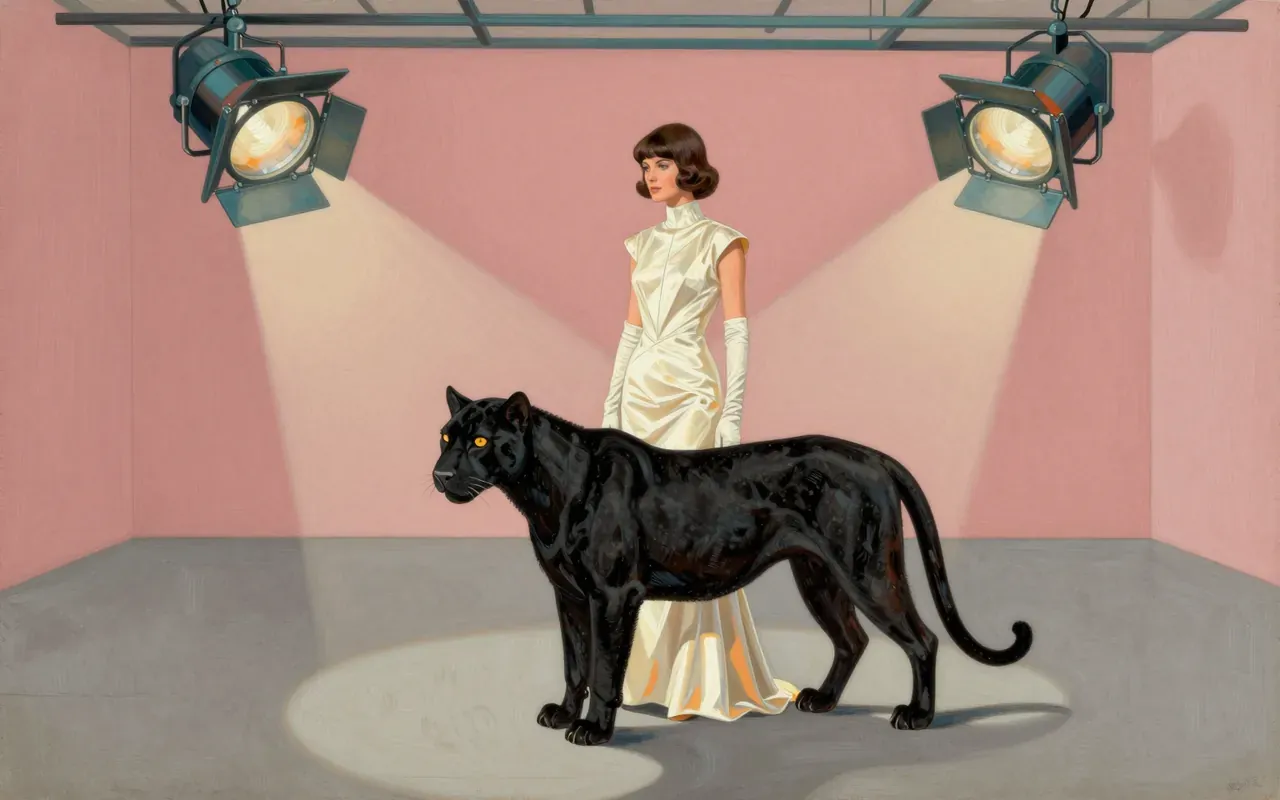
For Your Pleasure is Roxy Music’s second studio album, released in March 1973. It was recorded in February 1973 at AIR Studios in Oxford Circus, London. Roxy Music self-produced it with Chris Thomas; John Middleton and John Punter handled audio engineering. The band spent more studio time on this album than on their debut, integrating Bryan Ferry’s songs with more elaborate production treatments. The title track ends with an elaborate fade-out using tape loop effects. Amanda Lear, Ferry’s girlfriend at the time, was photographed with a black jaguar for the front cover, while Ferry appears on the back cover as a dapper chauffeur standing behind a limousine. It marked the beginning of Roxy Music’s long, successful collaboration with producer Chris Thomas. It was promoted with the non-album single 'Pyjamarama'. It is the final Roxy Music album to feature Brian Eno, who departed soon after the supporting tour ended.

9:43

Rocks

Aerosmith · 1976

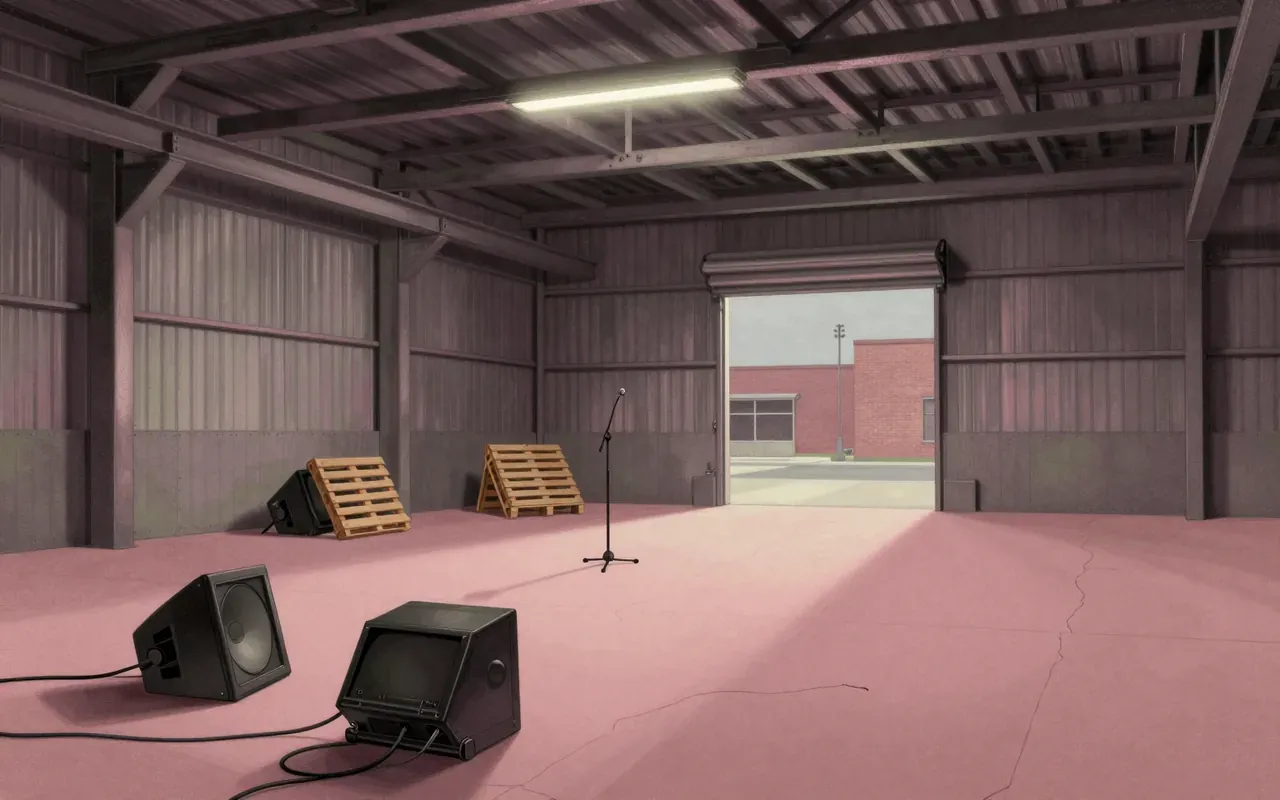
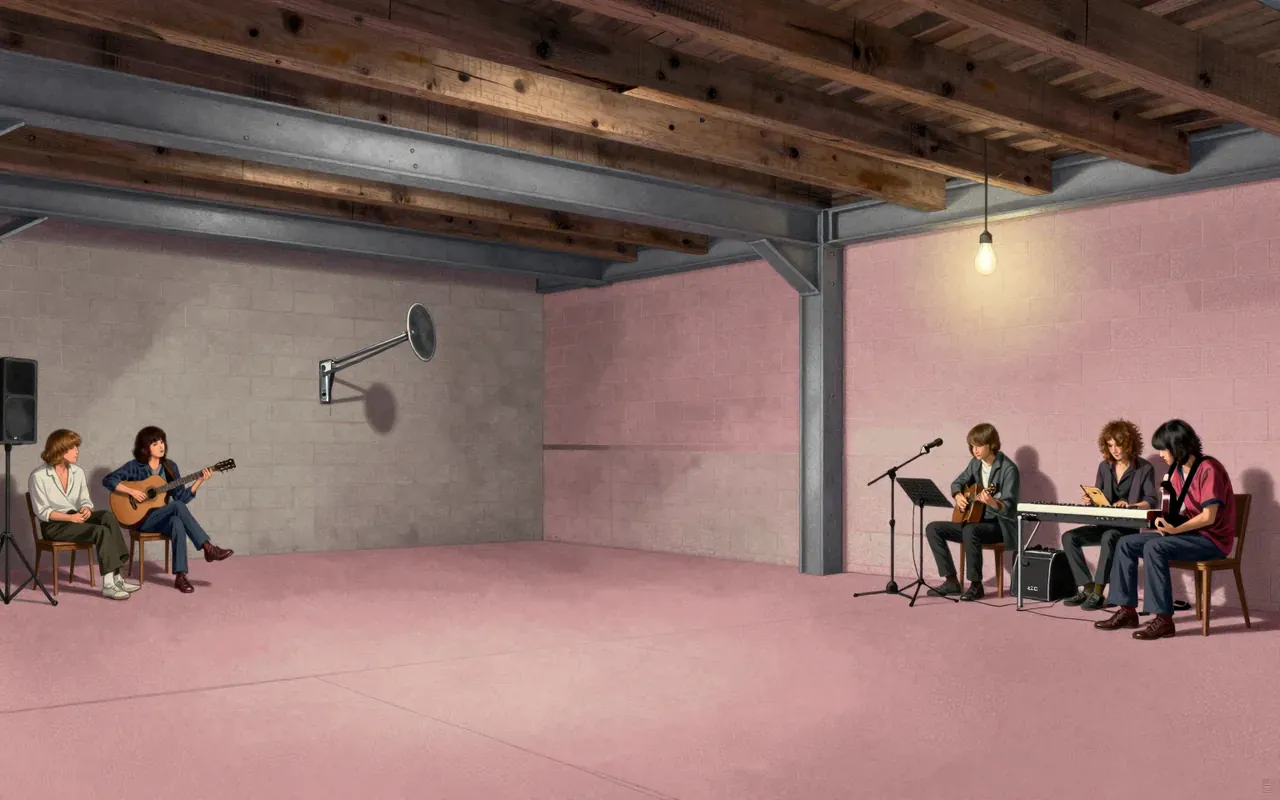
Rocks is Aerosmith’s 1976 fourth studio album, recorded live at the Wherehouse in Waltham, Massachusetts. It is defined by total signal overload, a large metal room, stage monitors feeding sound back to the band, and meticulously constructed sound effects—including a whip made from a whirling cord and cap gun, and galloping hooves made from coconuts. It features two Top 40 hits ('Last Child' and 'Back in the Saddle') and the charting ballad 'Home Tonight'. It sold over four million copies and appears on Rolling Stone's 500 Greatest Albums of All Time. Kurt Cobain listed it as one of the most influential albums to Nirvana's sound.

9:43

SOUR

Olivia Rodrigo · 2021

Sour is Olivia Rodrigo’s debut studio album, released May 21, 2021, to critical acclaim. Rodrigo co-wrote 'Drivers License' with Dan Nigro. She secured ownership of the masters under her 2020 Geffen Records deal. The making of Sour is documented in Olivia Rodrigo: Driving Home 2 U, released March 25, 2022.

9:43

Surfer Rosa

Pixies · 1988

Surfer Rosa is a document of physical space, not sonic idealism. It trades separation for presence, control for consequence, and polish for pulse.

9:44

Full House

Wes Montgomery · 1962

Full House is Wes Montgomery’s final unvarnished jazz statement — live, lean, and frontline-focused.

9:44

Jerry Lee Lewis

Jerry Lee Lewis · 1958

The record 'Jerry Lee Lewis' is not a 1958 album. It is the documented body of his earliest Sun Records sessions — beginning with an audition in November 1956 and expanding through December 1956 and early 1957 — captured live in the Union Avenue studio with Jack Clement engineering. His piano dominates those recordings, appearing both on his own sides and on tracks by Carl Perkins and Billy Lee Riley. It is defined by immediacy, ensemble interplay, and physical presence — not by polish, concept, or commercial framing.

9:45

Down and Out Blues

Sonny Boy Williamson · 1959

Down and Out Blues is Sonny Boy Williamson’s debut LP, compiling his first six Checker singles — recorded between August 1955 and September 1957 — into a single, unvarnished sequence. It is dry, direct, and documentary in intent: no overdubs, no reverb, no narrative framing. Its power lies in its refusal to soften or explain.

9:45

Aja

Steely Dan · 1977

Aja is a studio-built jazz-pop record defined by precision, segmentation, and elite execution — not feel, not band identity, not room sound.

9:46

AmeriKKKa’s Most Wanted

Ice Cube · 1990

AmeriKKKa's Most Wanted is Ice Cube's 1990 debut solo album, recorded in New York with Public Enemy's production team the Bomb Squad. It was released in May 1990 and became an instant hit that advanced rap's mainstream integration. The album was controversial, drawing accusations of misogyny and racism, while introducing Cube's affirmation of black nationalism and ideology of black struggle.

9:46

Sail Away

Randy Newman · 1972

Sail Away is Randy Newman’s third studio album, released May 23, 1972, on Reprise Records, produced by Lenny Waronker and Russ Titelman. All songs were written by Newman, though several had been recorded earlier by others. The version of 'Last Night I Had a Dream' is a re-recording with a notably different arrangement. 'He Gives Us All His Love' first appeared in sparser, slower form for the 1971 film Cold Turkey. The album reached No. 163 on Billboard. The title track was later covered by Ray Charles and Linda Ronstadt.

9:47

A Sailor’s Guide to Earth

Sturgill Simpson · 2016

A Sailor’s Guide to Earth is a live-recorded, self-produced orchestral-soul detour from country orthodoxy — anchored by real strings, real horns, real steel guitar, and real ensemble interplay.

9:47

Raising Sand

Robert Plant | Alison Krauss · 2007

Raising Sand is a 2007 collaborative album by Robert Plant and Alison Krauss, produced by T Bone Burnett and released on Rounder Records. It won the 2009 Grammy Award for Album of the Year, 'Please Read the Letter' won Record of the Year, and 'Gone Gone Gone (Done Moved On)' won Best Pop Collaboration with Vocals. No detail about its sound, arrangements, performances, or production methods appears in the source.

9:47

The Grey Album

Danger Mouse · 2004

A 2004 experimental mashup by Danger Mouse, made from Jay-Z’s The Black Album a cappellas and samples solely from the Beatles’ 'White Album'. Released in a limited 3,000-copy run without Beatles permission. Framed as deconstructive labour — not remixing, but rebuilding using only those two sources.

9:47

My Life

Mary J. Blige · 1994

My Life is a record built from the inside out: fourteen lyrics written by Blige during clinical depression, addiction, and an abusive relationship with K-Ci Hailey; Chucky Thompson hired last-minute after prior producers raised fees; Sean Combs shifting direction after hearing Thompson’s first track; Prince Charles Alexander joining late to engineer the cover of 'I'm Going Down'; The Notorious B.I.G.’s verse cut from 'K. Murray Interlude' over parental advisory concerns and replaced by Keith Murray. Its sound is rooted in soul sampling—Curtis Mayfield, Al Green, Marvin Gaye—and its structure reflects real-time negotiation over voice, visibility, and authorship. It is not a cultural artifact frozen in time. It is a living document of process.

9:48

Freedom Suite

Sonny Rollins · 1958

A 1958 sax-bass-drums trio record by Sonny Rollins. Recorded with Oscar Pettiford and Max Roach. Originally released briefly before being repackaged as part of Shadow Waltz.

9:48

Blondie

Blondie · 1976

Blondie (1976) is a tightly wound debut that uses girl group tropes as weapons — not winks. Gottehrer’s production is clean, dry, and unflinching. The band’s rejection of retro and pop labels is audible in every detached vocal, every abrupt cut, every organ stab that refuses to soothe. It is not warm. It is not deep. It is precise.

9:48

Francis Albert Sinatra & Antônio Carlos Jobim

Francis Albert Sinatra · 1967

A 1967 studio collaboration between Sinatra and Jobim, recorded over two days in Hollywood with Claus Ogerman arranging and conducting a studio orchestra. Features bossa nova treatments of Jobim originals and three Great American Songbook standards. Sinatra sings unusually softly — likened to his 1950 vocal hemorrhage — and the mood is consistently romantic and regretful. Al Viola substituted on guitar for 'Change Partners'. Lyricists attended. Grammy-nominated. One of 1967’s best-selling albums.

9:48

Blood on the Tracks

Bob Dylan · 1975

Blood on the Tracks is a 1975 folk-singer-songwriter album by Bob Dylan, recorded across two studios—five tracks in New York in September 1974, five in Minneapolis in December 1974—following his estrangement from his wife. It features spontaneous structural shifts, reactive musicianship, and unvarnished accompaniment. Critics called it 'trashy' and 'shoddy'. It is essential listening for songwriters, optional for everyone else.

9:48

I Am Sitting in a Room

Alvin Lucier · 1981

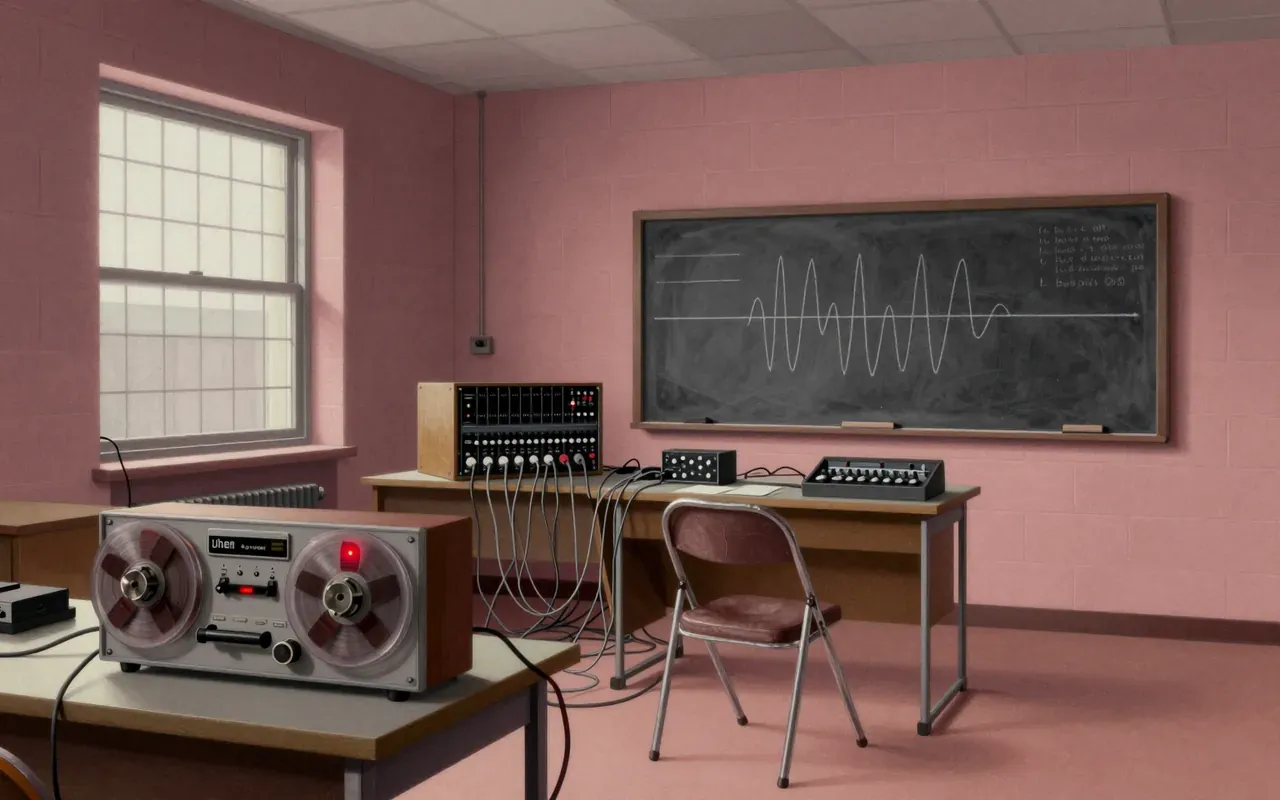
A 1969 acoustic experiment in which Alvin Lucier records himself speaking, then plays that recording back into a room and re-records it — repeatedly — until speech dissolves into the room’s resonant frequencies.

9:48

Like Water for Chocolate

Common · 2000

Like Water for Chocolate is a 2000 hip-hop album shaped by studio collaboration across Detroit and New York. Its sound is defined by space, incense-saturated atmosphere, and vocal interplay — not flash or density. It establishes Common as a thinker who works best in dialogue: with Jay Dee, with Slum Village, with Questlove, with DJ Premier. It falls short only in its length — the final third drifts without resetting the terms of engagement.

9:49

Fred Neil

Fred Neil · 1967

Fred Neil (1967) is a folk record defined by geography, not genre — recorded across Greenwich Village, Coconut Grove, and Los Angeles. Its sound is undocumented. Its legacy rests on Nilsson’s cover of ‘Everybody’s Talkin’’, not its own arrangements. It is a record of transit, not technique.

9:49

Faith

George Michael · 1987

Faith is a studio-built pop record that replaces live-band dynamics with drum-machine precision, overdubbed textures, and total authorial control. It landed as a commercial and critical phenomenon — but its sound is deliberate, isolated, and repeatable, not spontaneous or communal.

9:49

In the Wee Small Hours

Frank Sinatra · 1955

A monophonic 12-inch LP recorded in five late-night sessions in a small Hollywood studio. Sparse arrangements. No brass or strings on early tracks. Sinatra’s voice — maturing, controlled, rhythmically agile — carries the weight. Sequenced as 'the Ava album'. Melancholy is structural, not decorative.

9:49

The Shape of Jazz to Come

Ornette Coleman · 1959

The Shape of Jazz to Come is Ornette Coleman’s third studio album and Atlantic Records debut, recorded on May 22, 1959, at Radio Recorders in Hollywood. It features Coleman (plastic Grafton saxophone), Don Cherry (cornet or pocket trumpet), Charlie Haden (bass), and Billy Higgins (drums). There is no chordal instrument. Each composition follows a structure of brief thematic statement, free improvisation, then repetition of the main theme—resembling bebop’s head-solo-head form but abandoning chord structures entirely. The album dispenses with harmonic accompaniment and focuses solely on improvised melodies and variations on themes and motifs. Its sound is defined by Coleman’s harsh Grafton timbre and the quartet’s collective, non-hierarchical interplay.

9:50

Close to You

Carpenters · 1970

Close to You is a studio-crafted pop record defined by Karen Carpenter’s voice, Richard Carpenter’s arrangements, and familial oversight — not myth, not rebellion, not accident.

9:50

Portrait in Jazz

Bill Evans Trio · 1960

Portrait in Jazz is the first studio album by the Bill Evans Trio with Scott LaFaro and Paul Motian, recorded in December 1959 for Riverside Records. It contains seven jazz standards and two Evans originals — 'Peri's Scope' and a trio version of 'Blue in Green', co-credited to Miles Davis and Bill Evans. It is the first of only two studio albums recorded by this trio. LaFaro’s bass is given nearly equal status to the piano, though less so than on later albums. Motian avoids standard bop formulas and reacts directly to what he hears from Evans and LaFaro. The album reflects a collaborative ethos grounded in mutual listening and suppressed ego.

9:50

Brilliant Corners

Thelonious Monk · 1957

Brilliant Corners is a 1957 studio album by Thelonious Monk, recorded across three sessions in October and December 1956 with two different quintets; its title track posed such technical difficulty that the final version was assembled by producer Orrin Keepnews from multiple incomplete takes, and the album features distinctive compositional structures, instrumentation choices (including celesta on "Pannonica"), and personnel changes across sessions — all reflecting Monk’s rigorous artistic vision and collaborative challenges in the studio. It was Monk’s third album for Riverside Records and his first on the label to include only his own compositions, except for two standards: "I Surrender Dear" and "Bemsha Swing" (co-written with Denzil Best). The album received immediate critical acclaim and is widely regarded as a landmark of modern jazz and a high point in Monk’s career. However, per instructions, legacy and reception claims are excluded from this summary in favor of music- and process-focused facts drawn directly from the evidence provided. So the summary focuses strictly on recording chronology, personnel, compositional features, and production decisions supported by exact sentences from the text. Thus: Brilliant Corners was recorded across three sessions in October and December 1956 with two different quintets; "Ba-lue Bolivar Ba-lues-Are" and "Pannonica" were recorded on October 9 with Ernie Henry, Sonny Rollins, Oscar Pettiford, and Max Roach, the latter featuring Monk on celesta; the title track was attempted on October 15 with the same band over twenty-five takes, prompting Monk to stop playing during Henry’s solo and resulting in a composite master edited by Orrin Keepnews after Pettiford pantomimed his part; "Bemsha Swing" and a solo piano "I Surrender Dear" were recorded on December 7 with Paul Chambers and Clark Terry replacing Pettiford and Henry respectively; and the title track’s structure departs from standard forms via an eight-bar A section, seven-bar B section, modified seven-bar A section, double-time themes in second choruses, and complex rhythmic accents. All tracks are Monk’s compositions except "I Surrender Dear" (Barris/Clifford) and "Bemsha Swing" (Monk/Best).
9:50

Fragile

Yes · 1971

Fragile is Yes’s fourth studio album, released in late 1971. It marks Rick Wakeman’s debut and Tony Kaye’s departure over resistance to electronic keyboards. Recorded in August–September 1971 at Advision Studios on a 16-track machine, it features four group compositions and five individual member pieces — a structural choice driven by budget and time constraints. Eddy Offord co-produced with the band. The album introduced Wakeman’s expansive keyboard palette and established the band’s signature progressive sound.

9:50

Pretenders

Pretenders · 1979

Pretenders (1980) is a debut defined by refusal: no filler, no compromise, no producer loyalty beyond what served the music. It sounds like four musicians playing in real time, captured with clarity but no indulgence. Its power lies in precision, not poetry — in what is played, not what is implied.

9:50

Deltron 3030

Deltron 3030 · 2000

Deltron 3030 is a 2000 hip-hop concept album set in the year 3030. It tells of Deltron-Zero and the Automator battling megalithic corporations in a thermodynamic universe. Its lyrics were written in under two weeks. Its samples come exclusively from William Sheller’s French classical compositions. It draws explicit lineage from Sun Ra and George Clinton’s Afrofuturism. It frames fatalism as a battle between 'righteousness' and 'malevolence'.

9:50

Rhythm & Sound

Rhythm & Sound · 2001

Rhythm & Sound’s 2001 self-titled album is a focused, collaborative re-engagement with Jamaican dub — defined by vocal partnerships, spatial production, and structural restraint.

9:51

Way Out West

Sonny Rollins · 1957

A pianoless trio record that treats silence like terrain — and proves you don’t need chords to build a world.

9:52

Siembra

Willie Colón · 1978

Siembra is the best-selling salsa album ever. Its documentation is unusually precise: who played, who engineered, who wrote, who produced — all named, all verified. Nothing about its sound beyond that is confirmed. Its legacy is commercial, not stylistic — and that is enough.

9:52

Close to the Edge

Yes · 1972

Close to the Edge is Yes’s 1972 studio album, recorded at Advision Studios in London. It contains three tracks: an 18-minute four-movement title suite inspired by Hermann Hesse’s Siddhartha; the pastoral 'And You and I'; and the hard-driving 'Siberian Khatru'. Rick Wakeman’s Mellotron and church organ expand the band’s sonic palette. The album was assembled section-by-section from musical sketches written on tour by Jon Anderson and Steve Howe. Eddie Offord co-produced and engineered. It represents a peak in Yes’s 1970s progressive era.

9:52

Os Mutantes

Os Mutantes · 1968

Os Mutantes’ 1968 debut is a studio-built act of translation: Brazilian song forms, international pop, political critique, and musique concrète fused by Rogério Duprat’s arrangements and the trio’s instrumental resourcefulness. It is not seamless. It is not polished. It is specific, inventive, and sonically legible — right down to the hiss of bug spray.

9:52

Uprising

Bob Marley & The Wailers · 1980

Uprising is the final Bob Marley & The Wailers album released in Marley's lifetime — June 1980. It affirms Marley's Rastafarian beliefs. It contains 'Forever Loving Jah', 'Redemption Song' (described as solo acoustic and folk-based), and 'Could You Be Loved' (a successful single). 'Redemption Song' is the only track with verified sonic description: solo, acoustic, folk-based. The record is framed externally by the concept of rebellion as organized resistance against government — but no source verifies how the music itself enacts that idea.

9:53

How to Dismantle an Atomic Bomb

U2 · 2004

U2’s How to Dismantle an Atomic Bomb is a record defined by contradiction: a self-proclaimed 'first rock album' made with too many producers, recorded twice, and built around instrumental limitation yet undermined by sonic fragmentation.

9:53

Natty Dread

Bob Marley & The Wailers · 1974

Natty Dread is Bob Marley & The Wailers' seventh album, released in October 1974. It is their first without Peter Tosh and Bunny Wailer, and their first with the I-Threes. All songs were written by Marley. Jean Roussel arranged 'No Woman No Cry', 'Natty Dread', and 'Lively Up Yourself'. Personnel included Aston and Carlton Barrett, Al Anderson, Bernard 'Touter' Harvey, Lee Jaffe, and the I-Threes. Engineers were Sylvan Morris and Phil Ault; Sid Bucknor mixed it; Chris Blackwell and The Wailers produced it. The original demo of 'Lively Up Yourself' was recorded in 1973. The original version of 'No Woman, No Cry' was in gospel style, featuring Peter Tosh and unknown female backing vocals, cut for Island in 1973. The album contains 'No Woman, No Cry', 'Lively Up Yourself', and the politically charged 'Them Belly Full (But We Hungry)'.

9:53

Tragic Songs of Life

The Louvin Brothers · 1956

Tragic Songs of Life is the Louvin Brothers’ 1956 Capitol debut—a concept album of tragic heartbreak, misfortune, and murder ballads, performed by Charlie (vocals, guitar) and Ira (vocals, mandolin), with Paul Yandell on guitar and Ken Nelson producing. It is rooted in country music, with no verified use of bluegrass or gospel instrumentation beyond the stated roles.

9:53

Jazz Samba

Stan Getz · 1962

Jazz Samba is a 1962 bossa nova album by Stan Getz and Charlie Byrd, recorded at All Souls Unitarian Church in Washington, D.C., on February 13, 1962, and released by Verve in April. It features Getz on saxophone, Byrd on guitar, two bassists (Keter Betts and Joe Byrd), and two drummers (Buddy Deppenschmidt and Bill Reichenbach). Arrangements are by Byrd. Two tracks—'Desafinado' and 'Samba de Uma Nota Só'—are by Antônio Carlos Jobim and were released as singles. The album won Getz the 1963 Grammy for Best Jazz Performance and sold over one million copies. It was part of Getz’s effort to introduce bossa nova to the U.S. after Byrd’s 1961 State Department tour of Brazil.

9:53

Ritual de lo habitual

Jane’s Addiction · 1990

Ritual de lo Habitual is a fractured, urgent document — not a polished statement. Its power lies in its unresolved tensions: between memory and erasure, command and collapse, mourning and performance.

9:53

Late Registration

Kanye West · 2005

Late Registration is Kanye West’s second studio album, released in 2005. It marks a deliberate departure from the chipmunk soul of his debut, embracing orchestral arrangements, genre-blending instrumentation, and collaborative experimentation with Jon Brion. Recorded over slightly more than a year across multiple studios in New York and Hollywood, it cost $2 million — enabling West to hire a 20-piece string ensemble and experiment with unconventional instruments like celesta, harpsichord, and Chinese bells. Jon Brion joined in March 2005 after West scrapped 75% of the near-finished album, radically altering its direction. The record is defined less by lyrical cohesion or narrative arc than by its architectural approach to sound: building, dismantling, and rebuilding hip-hop with live instrumentation as structural material.

9:53

Purple Haze

Cam’ron · 2004

Purple Haze is Cam’ron’s fourth studio album, released December 7, 2004, via Diplomat Records and Roc-A-Fella Records, distributed by The Island Def Jam Music Group. It features bombastic production and surreal lyricism, with Cam’ron delivering a unique brand of idiosyncratic gangsta rap through an absurd, poker-faced delivery. The production shifts between aggressively insane and pop-oriented, and Cam’ron matches it with wordplay described as 'Missy gibberish swathed in 50 Cent menace', writing pop hooks and avant-garde rhymes while staying street-rooted. Cam’ron tightened his signature flow, chose quality and risk-worthy beats, and delivered Harlem symbolism and non-sensical muttering throughout the album. Kanye West produced 'Down and Out', Pop & Versatile produced 'Soap Opera', and the Heatmakerz produced 'More Gangsta Music'. 'More Gangsta Music' samples 'Woman I Need You' by Sizzla. 'Get Down' samples 'Life's Opera' by Marvin Gaye. 'Girls' and 'Harlem Streets' are weak inclusions. The album features collaborations with Kanye West, Jaheim, Twista, Juelz Santana, and various other artists. It reached gold status and was critically acclaimed, appearing on two major decade-end lists.

9:54

Dust Bowl Ballads

Woody Guthrie · 1940

Dust Bowl Ballads is Woody Guthrie’s first commercial recording, made in two sessions at Victor Studios in Camden, New Jersey — primarily on April 26, 1940, with two additional tracks recorded on May 3 — and originally issued in 1940 as eleven songs across two three-disc 78 rpm sets. Twelve sides were pressed, with 'Tom Joad' split across both sides of one disc due to its length; two other recorded songs were excluded from the original release for the same reason.

9:54

Lightnin' Hopkins

Lightnin’ Hopkins · 1959

Lightnin' Hopkins (1959) is a solo acoustic blues album recorded in a rented one-room apartment in Houston using one microphone. Lightnin' Hopkins performs guitar and vocals; Samuel Charters supervises and engineers. The session yielded ten unvarnished, first-take tracks—skeletal, naked in its loneliness, haunting in its despair. No band, no overdubs, no electric instruments. Its power lies in proximity, silence, and decay—the acoustics of the room itself becoming part of the performance.

9:54

Come On Over

Shania Twain · 1997

Come On Over is a 1997 studio album by Shania Twain, co-written and produced entirely with Robert John 'Mutt' Lange. All sixteen tracks were recorded over three weeks at Masterfonics Tracking Room in Nashville. Drums for most songs were tracked in a stone-floored room with reflective rock-face walls; ballads were recorded in small 'dead booths'. Joe Chemay played electric and fretless bass. Biff Watson played acoustic and nylon-string guitar. Twain sang scratch vocals. Lange performed every song for session drummer Paul Leim before recording and discussed a 'real fun Motown feel' with engineer Jeff Balding. Twelve of the sixteen tracks were released as singles. Commercial momentum began after the lead singles 'Love Gets Me Every Time' and 'Don't Be Stupid (You Know I Love You)', then surged with the third single, 'You're Still the One'. In 1998, the album was remixed for the European market as a pop album with less country instrumentation.

9:54

Curtis

Curtis Mayfield · 1970

Curtis is Curtis Mayfield’s 1970 solo debut, produced by Mayfield and released on Curtom Records. It departs from The Impressions’ pop-soul sound toward funk and psychedelic-influenced arrangements, with a harder-edged sonic character. It features politically charged lyrics and stylistic duality — hard funk versus soft soul — realised through Mayfield’s self-directed vision and collaborative studio execution with a large ensemble. It was a top-20 commercial and critical success, won the 1972 Prix Otis Redding, and ranks No. 275 on Rolling Stone’s 500 Greatest Albums. It precedes and is compared to Marvin Gaye’s What’s Going On for its engagement with social change. No source provides details about instruments, tempos, rooms, mics, or specific production techniques.

9:54

Freak Out!

The Mothers of Invention · 1966

Freak Out! is a satirical, structurally ambitious double album that uses studio craft, quotation, and genre collision to dissect American pop culture. Its power lies in how deliberately every decision — from personnel to sequencing to censorship — serves that critique.

9:54

Nilsson Schmilsson

Nilsson · 1971

Nilsson Schmilsson is Harry Nilsson’s seventh studio album, released by RCA Records on November 11, 1971. It was recorded in London studios — Trident, RCA, and Island — and produced by Richard Perry. It is his most commercially successful album and contains three of his best-known songs: 'Without You', 'Jump into the Fire', and 'Coconut'. Nilsson performed piano, Mellotron, organ, electric piano, and harmonica across the record; Gary Wright played piano and organ; Henry Krein played accordion on 'Gotta Get Up'; and Richard Perry contributed Mellotron and percussion. Engineering credits go to Robin Geoffrey Cable, Richie Schmitt, and Phill Brown. The album won the Grammy for Best Male Pop Vocal Performance for 'Without You'.

9:55

Pure Heroine

Lorde · 2013

Pure Heroine is a tightly controlled, ten-track electropop record made in under a year at Golden Age Studios in Auckland. It uses deep bass, programmed beats, and Lorde’s voice as its only melodic and rhythmic anchors. Its themes—suburban teenage disillusionment, consumer culture, social status—are delivered without resolution or ornament. It landed four singles, won the 2014 Taite Music Prize, and helped define ‘whisperpop’ as a production ethos. It is not experimental in form, nor indulgent in texture—it is precise, economical, and unsentimental.

9:55

Band on the Run

Paul McCartney & Wings · 1973

Band on the Run is a 1973 Wings album recorded mostly at EMI’s eight-track studio in Lagos, Nigeria, after drummer Denny Seiwell and guitarist Henry McCullough departed shortly before departure. With no time to recruit replacements, Paul and Linda McCartney and Denny Laine made it — McCartney playing bass, drums, percussion and most lead guitar. The studio was ramshackle and under-equipped. Conditions were tense and difficult; the McCartneys were robbed at knifepoint, losing song lyrics and demo tapes. After returning to England, final overdubs and additional recording took place at AIR Studios in London, where orchestral arrangements and saxophone solos were added. The album reflects themes of escape and freedom and features a structure recalling Abbey Road’s side two. It reached number 1 in both the US and UK and restored McCartney’s post-Beatles reputation.

9:55

Boxer

The National · 2007

Boxer is The National’s fourth studio album, released in 2007. It was recorded half in Tarquin Studios in Bridgeport, Connecticut, and half at home in Brooklyn and White Sulphur Springs. Peter Katis produced and mixed it, functioning as a de facto seventh band member. Sufjan Stevens contributed piano to two tracks during a single informal day-long session with Bryce and Aaron Dessner. Padma Newsome provided orchestration; the Dessners added arrangements. Lyrics from the band’s earlier song ‘29 Years’ appear in ‘Slow Show’. The album avoids catharsis, distortion, and instrumental showmanship. Its sound is controlled, dry, and spatially precise — a record built from rooms, not arenas.

9:55

Bringing It All Back Home

Bob Dylan · 1965

Bringing It All Back Home is Bob Dylan’s 1965 album, recorded across three sessions at Columbia’s Studio A in New York. Side one features electric instrumentation performed live by a band including Al Gorgoni, Kenny Rankin, Bruce Langhorne, Paul Griffin, Joseph Macho Jr., William E. Lee, and Bobby Gregg — with no rehearsal on January 14 yielding master takes of five songs in three-and-a-half hours. Side two is solo acoustic: Dylan, guitar, harmonica. The January 15 session reused most of that band (Frank Owens replacing Griffin), with Dylan directing arrangements on piano. It was Dylan’s first studio use of electric instruments. The album ends with two of his most important compositions: 'It's All Over Now, Baby Blue' and 'It's Alright, Ma (I'm Only Bleeding)'.

9:55

Out to Lunch!

Eric Dolphy · 1964

Out to Lunch! is Eric Dolphy’s only Blue Note album, recorded in 1964 with Freddie Hubbard, Bobby Hutcherson, Richard Davis, and Tony Williams. It is often considered his magnum opus. Dolphy declared 'Everyone’s a leader in this session'. He praised Hutcherson’s vibes as 'freer' and 'more open' than piano, Davis’s bass for leading 'somewhere else', and Williams for playing 'pulse' not 'time'. The music holds to construction for thirteen bars, then releases into freedom. A unison duet between Dolphy and Davis delivers lyrical weight. The album showcases Dolphy’s fully developed avant-garde yet structured compositional style rooted in tradition.

9:56

Arepa 3000: A Venezuelan Journey Into Space

Los Amigos Invisibles · 2000

Los Amigos Invisibles’ Arepa 3000: A Venezuelan Journey Into Space is a 2000 studio album produced by Philip Steir. It won a Latin Grammy for Best Rock Album and received a Grammy nomination for Best Latin Alternative Album. Its sound is tightly arranged, groove-first, and sonically frictionless — built for repeat listening and film placement, not deep excavation.

9:56

Gris-Gris

Dr. John, the Night Tripper · 1968

Gris-Gris is Dr. John’s 1968 debut album, produced by Harold Battiste at Gold Star Studios in Los Angeles. It introduced his Dr. John persona—a voodoo-inspired frontman—and fused traditional New Orleans R&B with psychedelia. Though recorded in California, it featured numerous native New Orleans musicians. The sessions occurred under unusual circumstances: Dr. John secured studio time originally booked for Sonny & Cher due to an impending deadline and lack of a prepared lead singer. The album’s personnel included a cast of New Orleans players credited with elaborate, ritualistic titles, and its sound was described in original liner notes as steeped in bayou mysticism, voodoo chants, and studio experimentation rooted in post-Spector LA techniques. Initial commercial reception was poor—failing to chart in the US and UK—but later critical reassessment hailed it as a psychedelic landmark and one of the most enduring recordings of its era.

9:56

Singin’ the Blues

B.B. King · 1957

A functional, focused document of early electric blues — technically unadorned, emotionally direct, structurally repetitive. Its power lies in what it omits: no embellishment, no explanation, no departure from the form.

9:56

The Bridge

Sonny Rollins · 1962

The Bridge is Sonny Rollins’s 1962 studio album, recorded in January and February 1962 and released in April 1962. It marks his return after a three-year sabbatical and his debut for RCA Victor. The core quartet features Sonny Rollins on tenor saxophone, Jim Hall on electric guitar, Bob Cranshaw on double bass, and Ben Riley on drums — with Harry "H.T." Saunders substituting on drums for one track. The sessions were held across three dates: January 30 ("God Bless the Child"), February 13 ("Where Are You", "John S.", "You Do Something to Me"), and February 14 ("Without a Song", "The Bridge"). Produced by George Avakian and engineered by Ray Hall, the album was critically lauded and later inducted into the Grammy Hall of Fame in 2015.

9:56

Blue Train

John Coltrane · 1958

Blue Train is John Coltrane’s sole leadership session for Blue Note Records, recorded on September 15, 1957 at Rudy Van Gelder’s studio in Hackensack, New Jersey, and released in January 1958. Coltrane wrote four of its five tracks. The personnel includes Lee Morgan (trumpet), Curtis Fuller (trombone), Kenny Drew (piano), Paul Chambers (bass), and Philly Joe Jones (drums). His playing exhibits early elements of the signature style for which he later became known. The album was recorded during Coltrane’s residency at the Five Spot as a member of the Thelonious Monk quartet. It is often considered his best album from the 1955–1957 period. The title track, 'Moment’s Notice', and 'Lazy Bird' have become jazz standards.

9:56

Crooked Rain, Crooked Rain

Pavement · 1994

Crooked Rain, Crooked Rain is Pavement’s second studio album, released February 14, 1994. It moves toward a more accessible rock sound than their lo-fi debut Slanted and Enchanted. Steve West replaces original drummer Gary Young. The music grafts 1960s–70s California folk-rock and psychedelia onto the abrasive, Fall-inspired noise of their earlier work. It uses guitar feedback, fuzz, and wah effects. It incorporates country rock—including cowbells—and pop elements. Production strips away hiss and fog but retains the band’s fractured sound and spirit. Vocal harmonies and mood-setting are emphasised over lyrical primacy. Critical reception highlights its dynamic shifts, inventive arrangements, and status as a defining underground rock album of the 1990s.

9:56

Here Are The Sonics!!!

The Sonics · 1965

Here Are The Sonics!!! is a foundational garage rock document — not because it is ‘raw’, but because its constraints (one drum mic, two-track tape, Seattle studio) produce a sound that refuses separation, polish or delay. It is loud, direct and unrelenting. It makes no argument for subtlety. It assumes the listener is already in the room.

9:56

Is This It

The Strokes · 2001

Is This It is a document of live-take discipline, recorded fast and lean in a basement studio with no embellishment. Its sound comes from where it was made, how many tracks were used, and who was in the room — not from myth, influence, or ambition beyond that room.

9:56

Just As I Am

Bill Withers · 1971

Just As I Am is a 1971 soul debut defined by acoustic guitar, vocal clarity, and disciplined arrangement. It was recorded in three sessions due to funding constraints, produced by Booker T. Jones, and features Stephen Stills on lead guitar, Al Jackson Jr. and Jim Keltner on drums, and Bobbye Hall on percussion. Its sound is dry, warm, and immediate — no reverb, no overdubs beyond live takes, no embellishment. It establishes Withers as a writer of quiet emotional precision, not grand gesture. It falls short only if you expect fireworks — there are none. This is music built to last because it refuses to shout.

9:57

Five Leaves Left

Nick Drake · 1969

Five Leaves Left is Nick Drake’s 1968 debut, recorded live at Sound Techniques in London between May 1968 and April 1969. Drake sang and played acoustic guitar simultaneously with a string section—no overdubbing. Producer Joe Boyd pursued an intimate vocal sound with no shiny pop reverb, inspired by John Simon’s work on Leonard Cohen’s Songs of Leonard Cohen. String arrangements were by Robert Kirby (most tracks) and Harry Robinson ('River Man'). Backing musicians included Richard Thompson and Danny Thompson. Sessions were irregular and rushed, occurring during downtime from Fairport Convention’s Unhalfbricking production. Tension emerged between Boyd’s studio-centric methodology and Drake’s preference for organic sound. Bootleg recordings reveal Drake’s anxiety and Boyd’s unsuccessful instrumentation attempts.

9:57

Here, My Dear

Marvin Gaye · 1978

Here, My Dear is a 1978 double album recorded at Marvin Gaye Studios in Los Angeles between 1977 and 1978. It was inspired by the fallout from Gaye’s marriage to Anna Gordy. It was recorded with the intention of remitting a portion of its royalties to her as alimony payments. It performed poorly on the charts and was poorly received. Gaye played all keyboard parts himself. He composed lyrics spontaneously during sessions with only engineer Art Stewart present, developing embryonic melodies into finished lyrics over multiple takes. The album's music is largely midtempo funk, incorporating traditional soul, gospel, doo-wop, and a slight hint of disco. The title track opens the album, and Gaye's tone in the song is described as self-serving, self-justifying, and self-pitying. 'I Met a Little Girl' includes doo-wop-drenched harmonies with its lyrics and music producing a thick mixture of sincerity and sarcasm. 'When Did You Stop Loving Me, When Did I Stop Loving You' abandoned traditional song structure with a discursive mode, without a chorus, with its lyrics expressing different feelings—tenderness, fear, anger, regret.

9:57

Blood Sugar Sex Magik

Red Hot Chili Peppers · 1991

Blood Sugar Sex Magik was recorded over 30 days in seclusion at Houdini’s former Los Angeles mansion, where the band installed a full studio; Frusciante, Kiedis, and Flea each occupied private rooms and pursued individual creative work between sessions; Kiedis recorded all vocals in his room; the album was written more rapidly than its predecessor and marked a stylistic shift—reducing heavy metal guitar riffs and foregrounding Frusciante’s melodic songwriting—under Rick Rubin’s production guidance, which included collaborative input on drum beats, guitar melodies, and lyrics; the setting and process fostered lyrical completion and structural refinement, moving away from pure jam-based composition toward more deliberate song forms while retaining funk-punk roots and integrating new textures and emotional range.

9:57

Music of My Mind

Stevie Wonder · 1972

Music of My Mind is the pivot point: the moment Stevie Wonder swapped Motown’s assembly line for a one-man synth lab. It is not warm. It is not nostalgic. It is precise, integrated, and politically aware — and it changed how soul records could be made.

9:57

In C

Terry Riley · 1968

Terry Riley’s 1968 recording of In C is a landmark of process-based composition. Its sound is defined by collective repetition, room acoustics, and the physical limits of piano strings and vinyl grooves. It does not seek expression — it sets conditions and listens.

9:58

The Incredible Jazz Guitar of Wes Montgomery

Wes Montgomery · 1960

A landmark 1960 studio album featuring Montgomery's signature thumb picking and octave techniques, recorded over two sessions at Reeves Sound Studios in New York City with pianist Tommy Flanagan, bassist Percy Heath, and drummer Albert Heath, and produced by Orrin Keepnews with Jack Higgins as engineer.

9:58

Green River

Creedence Clearwater Revival · 1969

Green River is Creedence Clearwater Revival’s third studio album, released August 1969. It was recorded March–June 1969 at Wally Heider Studios, with all four members playing live in the same room. John Fogerty wrote, produced, and arranged every track. The album topped the Billboard 200 and went Gold, spawning two major hits — ‘Green River’ and ‘Bad Moon Rising’, both reaching No. 2. Its sound is direct, dry, and disciplined — a rejection of psychedelic sprawl in favour of concise, narrative-driven roots-rock.

9:58

Sex Machine Today

James Brown · 1975

Sex Machine Today is James Brown’s first conscious engagement with disco — a functional, dry, rhythm-locked record made as his chart presence collapsed. It lands where repetition meets precision. It fails where spontaneity and space once ruled.

9:58

My Beautiful Dark Twisted Fantasy

Kanye West · 2010

My Beautiful Dark Twisted Fantasy is a maximalist hip-hop record made in three simultaneous rooms at Avex Recording Studio in Honolulu, following Kanye West’s 2009 MTV VMA incident. It features contributions from Jay-Z, Kid Cudi, Pusha T, Justin Vernon of Bon Iver, and Gil Scott Heron. Released in November 2010, it received widespread critical acclaim and was accompanied by a 35-minute film. Its sound is dense, layered, and rigorously collaborative — built on discipline, not spontaneity.

9:59

After School Session

Chuck Berry · 1957

After School Session is Chuck Berry’s debut studio album, released in May 1957 by Chess Records. It compiles twelve tracks recorded across five sessions at Universal Recording Corporation in Chicago between May 1955 and January 1957. Most songs had previously appeared as singles. The album features Chuck Berry on vocals and guitar, Johnnie Johnson on piano, and contributions from Willie Dixon, Fred Below, L. C. Davis, Jasper Thomas, Ebby Hardy, Otis Spann, Jimmy Rogers, and Jerome Green. Steel guitar appears on 'Deep Feeling'. The sequencing reflects single release order, not recording chronology. It arrived during Berry’s peak commercial and creative period, when he was already an established star with hit records, film appearances, and a touring career.

9:59

Sheryl Crow

Sheryl Crow · 1996

Sheryl Crow’s 1996 self-titled album is a self-produced, self-performed pivot — rich in texture, rooted in New Orleans, and unflinching in its lyrics. It trades collaboration for control, ambiguity for consequence, and polish for presence.

9:59

Achtung Baby

U2 · 1991

Achtung Baby is U2’s seventh studio album, produced by Daniel Lanois and Brian Eno, recorded in Berlin and Dublin between late 1990 and mid-1991. It marked a deliberate departure from their earlier sound—incorporating alternative, industrial, and electronic dance influences—and reflected personal, introspective lyrical themes inspired by marital breakdowns, German reunification, and spiritual questioning. The Berlin sessions at Hansa Studios were fraught with tension and creative uncertainty, nearly leading to the band’s dissolution, until the improvised creation of 'One' provided a breakthrough. Subsequent Dublin sessions at Elsinore and Windmill Lane Studios yielded the completed album, characterised by distorted guitar textures, pronounced rhythm section, electronic beats, altered vocal techniques, and a self-conscious embrace of irony and artifice in both music and presentation. The album’s title and packaging were conceived to confound expectations and erect a 'mask' over its emotional weight. Its release inaugurated U2’s 1990s reinvention, culminating in the Zoo TV Tour and sustained musical experimentation throughout the decade.

9:59

American Idiot

Green Day · 2004

American Idiot is a punk rock opera built from 30-second musical fragments, recorded in album sequence across two California studios, using analog tape compression on drums to anchor its urgency. It functions as direct protest art, centred on the character 'Jesus of Suburbia', and landed at number one on the Billboard 200 in September 2004 — two months before George W. Bush’s reelection.

9:59

Document

R.E.M. · 1987

Document is R.E.M.'s fifth studio album, released on August 31, 1987, by I.R.S. Records. It marks their first collaboration with producer Scott Litt, featuring clearer production, muscular rock riffs, and expanded instrumentation — including dulcimer on 'King of Birds' and saxophone on 'Fireplace', played by Steve Berlin due to his prior relationship with Litt. The band began swapping instruments in the studio to generate new sounds. 'Strange' is a cover of Wire’s song from Pink Flag. The album contains overtly political lyrics responding to the Reagan-era conservative political environment, especially on 'Welcome to the Occupation' and 'Exhuming McCarthy'. All songs were written by Bill Berry, Peter Buck, Mike Mills and Michael Stipe, except 'Strange' by Bruce Gilbert, Graham Lewis, Colin Newman, Robert Grey.

9:59

Get Rich or Die Tryin’

50 Cent · 2003

Get Rich or Die Tryin’ is 50 Cent’s 2003 debut studio album, executive-produced by Eminem and Dr. Dre to fuse gangsta rap and R&B. It features production by Mike Elizondo, Sha Money XL, Mr. Porter, Rockwilder, Dirty Swift, and Megahertz. Guest appearances include Eminem, Young Buck, Nate Dogg, Lloyd Banks, and Tony Yayo. 'In da Club' was one of seven tracks recorded with Dr. Dre in five days. 'Back Down' repurposed an unused instrumental from Rakim’s unreleased Oh My God. The album debuted at #1 on the Billboard 200 with 872,000 copies sold in four days. It spawned two Billboard Hot 100 number-one singles: 'In da Club' and '21 Questions' (featuring Nate Dogg). Rolling Stone noted its 'dark synth grooves, buzzy keyboards and a persistently funky bounce'. The Source highlighted 'In da Club’s' 'blaring horns, funky organs, guitar riffs and sparse hand claps'. It received Multiple Platinum certification by the RIAA.

9:59

Back in Black

AC/DC · 1980

Back in Black is AC/DC’s 1980 album, recorded over seven weeks from mid-April to May 1980 at Compass Point Studios in the Bahamas. It followed Bon Scott’s death. Brian Johnson replaced him as vocalist. The songwriting began with Scott and concluded with Johnson.

10:00

Art Pepper Meets the Rhythm Section

Art Pepper · 1957

Art Pepper Meets the Rhythm Section is a 1957 jazz album recorded in one day at Contemporary’s Studios in Los Angeles, featuring Art Pepper on alto saxophone and the Miles Davis rhythm section — Red Garland, Paul Chambers, and Philly Joe Jones — musicians Pepper had never met before and learned he would play with only that morning. He played on a malfunctioning instrument while struggling with addiction. Accounts differ on how long he’d gone without playing — two weeks or six months — but the pressure was real, and the sound bears it. It is one of Pepper’s best-known 1950s albums, released on Contemporary in 1957 — not a comeback, not a debut, but a sudden, singular convergence.

10:00

By All Means Necessary

Boogie Down Productions · 1988

By All Means Necessary is Boogie Down Productions’ 1988 second studio album, released April 12, 1988. KRS-One wrote, produced, and performed every track alone. It features minimalist production and hard-hitting drum beats. Sampling is central: 'My Philosophy' uses Stanley Turrentine’s 'Sister Sanctified'; 'Ya Slippin’' interpolates Deep Purple’s 'Smoke on the Water' and reuses the 'Poetry' beat; 'Stop the Violence' uses Courtney Melody’s 'This Sound a Dem Trouble' riddim; 'Illegal Business' samples Fat Albert’s 'Creativity' and Jefferson Starship’s 'Rock Music'; 'Nervous' samples Rhythm Heritage’s 'Sky’s the Limit' and War’s 'Galaxy'; 'I’m Still #1' samples All the People’s 'Cramp Your Style'. Themes include government and police corruption, safe sex, government involvement in the drug trade, and intra-community violence. It marks KRS-One’s adoption of the 'Teacha' identity and follows DJ Scott La Rock’s murder.

10:00

Person Pitch

Panda Bear · 2007

Person Pitch is a landmark of sample-based composition — not as collage art, but as lived practice. It trades authorship for absorption, structure for suspension, and clarity for glow.

10:00

Tha Carter II

Lil Wayne · 2005

Tha Carter II is a pivot: Wayne sheds Mannie Fresh’s bounce and builds a lean, sample-chopped Southern rap record. It trades groove for grip — every bar snaps, every sample serves rhythm, every guest appearance tightens the frame. It is precise, impatient, and technically assertive. It is not warm. It is not expansive. It is not nostalgic. It is a workshop, not a monument.

10:00

The Sermon!

Jimmy Smith · 1959

The Sermon! is a document of engineering choices — not inspiration, not myth. Every sonic trait is traceable to a setting, a room, a mic, a preamp. It rewards attention to how things were made, not what they mean.

10:00

Wasting Light

Foo Fighters · 2011

Wasting Light is the Foo Fighters’ seventh studio album, recorded analog-to-tape in Dave Grohl’s Encino garage in 2011. Produced by Butch Vig, it marks Pat Smear’s full-time return after fourteen years and the band’s first five-piece record since 1997. Its sound is heavy, raw, and tightly performed—built on rehearsal discipline, analog limitation, and collective presence. It rejects digital convenience to affirm rock as physical, communal, and immediate.

10:00

With His Hot And Blue Guitar

Johnny Cash · 1957

A functional, unadorned document of Cash’s early sound—recorded fast, mixed dry, released before the hits took hold.

10:00

Chelsea Girl

Nico · 1967

A record made for Nico, not by her — and its flute still haunts every note.

10:00

Definitely Maybe

Oasis · 1994

Definitely Maybe is a foundational Britpop record whose sonic identity comes from deliberate studio choices—not performance revision. Its power lies in compression, tape delay, bass filtering, and selective guitar layering. It was made across three studios, with Owen Morris finalising the mix on a Neve console in London. It features all five original members, with Tony McCarroll on drums—the only Oasis album to do so. It rejects grunge’s nihilism, favouring anthemic melodies and unpolished charisma. Its abrasion is intentional, its urgency palpable.

10:00

“Love and Theft”

Bob Dylan · 2001

Bob Dylan’s 2001 album “Love and Theft” was recorded with his touring band and produced by Dylan under the alias Jack Frost; critics noted its expanded musical palette—including rockabilly, Western swing, jazz, and lounge music; it won the Grammy Award for Best Contemporary Folk Album; and it was released on September 11, 2001.

10:00

Mothership Connection

Parliament · 1975

Mothership Connection is a 1975 Parliament concept album unified by an outer-space theme. It is the first Parliament album to feature Maceo Parker and Fred Wesley. It was conceived by George Clinton.

10:00

Larry Levan

Larry Levan didn’t spin records—he conducted space, time, and feeling.