musicbriefs
Shortest first

All briefs

1188 briefs · 11103 min · 673–768 on page 8 of 13
10:18

John Wesley Harding

Bob Dylan · 1967

John Wesley Harding is a folk record made with folk means: voice, bass, drums, harmonica, piano, guitar, and two pedal steel parts. It was recorded fast, dry, and direct in Nashville in autumn 1967. Its power lies in what it leaves out.

10:19

Damn the Torpedoes

Tom Petty and the Heartbreakers · 1979

A 1979 rock record built by known hands in two LA studios — not a revolution, but a documented step forward in production credit.

10:19

Harlem Street Singer

Blind Gary Davis · 1961

A solo gospel session. Twenty songs. Three hours. One guitar. No compromise.

10:19

Morning Phase

Beck · 2014

Morning Phase is a companion piece to Sea Change. It uses nearly all the same musicians. It was recorded across three phases: Nashville (2005), Third Man Records (2012), and Los Angeles (early 2013). It features orchestral arrangements by Beck’s father. It is folk-infused. It shares mood and genre with Sea Change.

10:19

Saxophone Colossus

Sonny Rollins · 1957

Saxophone Colossus is Sonny Rollins’s sixth studio album, recorded monophonically on June 22, 1956, at Rudy Van Gelder’s studio in Hackensack, New Jersey, with Tommy Flanagan, Doug Watkins, and Max Roach. It contains 'St. Thomas', his best-known composition — a Caribbean calypso based on a childhood tune — alongside 'Strode Rode' and 'Moritat'. It is widely acclaimed and often considered his breakthrough record.

10:20

American Pie

Don McLean · 1971

A folk record that treats the studio like a rehearsal hall—and grief like a rhythm section that won’t lock in.

10:20

Coltrane Plays the Blues

John Coltrane · 1962

Coltrane Plays the Blues is a label-assembled 1962 compilation drawn from unissued October 1960 sessions at Atlantic Studios. Coltrane played tenor saxophone on five tracks and soprano on three. McCoy Tyner played piano on four of the six tracks — his absence from two marks the first pianoless trio since Coltrane’s Prestige years. Atlantic released it without Coltrane’s input or approval, after he had moved to Impulse Records. It is excluded from his official discography because he did not conceive or approve it as a leader during his lifetime.

10:20

Fine Line

Harry Styles · 2019

Fine Line is a studio-recorded, emotionally direct pop record shaped by personal rupture and musical lineage. Its power lies in tactile choices — the dulcimer’s resonance, the room’s air, the decision to let a piano note decay instead of cutting it. It refuses to resolve its contradictions. That is its line — fine, deliberate, and held.

10:20

You Got My Mind Messed Up

James Carr · 1967

A 1967 soul record defined by vocal immediacy, structural economy, and emotional precision — not myth, not legacy, but sound made in a specific room, with specific tools, at a specific time.

10:20

África Brasil

Jorge Ben · 1976

África Brasil is a 1976 album by Jorge Ben, recorded over ten days at Phonogram Studios in Rio de Janeiro with a large ensemble including Admiral Jorge V, fourteen additional instrumentalists and five backing vocalists. Ben replaced his acoustic guitar with an electric guitar during these sessions, influenced by Dadi Carvalho, after swapping instruments following Carvalho’s acquisition of an Ibanez guitar in London. José Roberto Bertrami arranged orchestral parts; Marco Mazzola mixed the album before Philips withdrew him mid-session. The album is described as one of Ben’s most popular, a fusion of funk and samba relying more on electric guitar than previous efforts, and features a remake of 'Taj Mahal'.

10:20

Going to a Go‐Go

Smokey Robinson and The Miracles · 1965

A 1965 Tamla album assembled across 1963–1965 at Hitsville USA in Detroit. Six tracks predate the album’s release. Smokey Robinson produced and sang lead; Pete Moore arranged vocals and co-wrote seven songs; Marv Tarplin played guitar on three tracks; The Funk Brothers and Detroit Symphony Orchestra provided instrumentation. Four singles charted Top 20 on Billboard Hot 100 and Top 10 on R&B. Released under the name Smokey Robinson and the Miracles. Listed in Rolling Stone’s 500 Greatest Albums.

10:20

Nevermind

Nirvana · 1991

Nevermind is a 1991 rock record recorded at Sound City Studios in Van Nuys and Smart Studios in Madison in May and June, mastered in Hollywood in August. It is the product of daily eight- to ten-hour sessions, divided labour among band members, and a late pivot to a cleaner mix.

10:20

Selling England by the Pound

Genesis · 1973

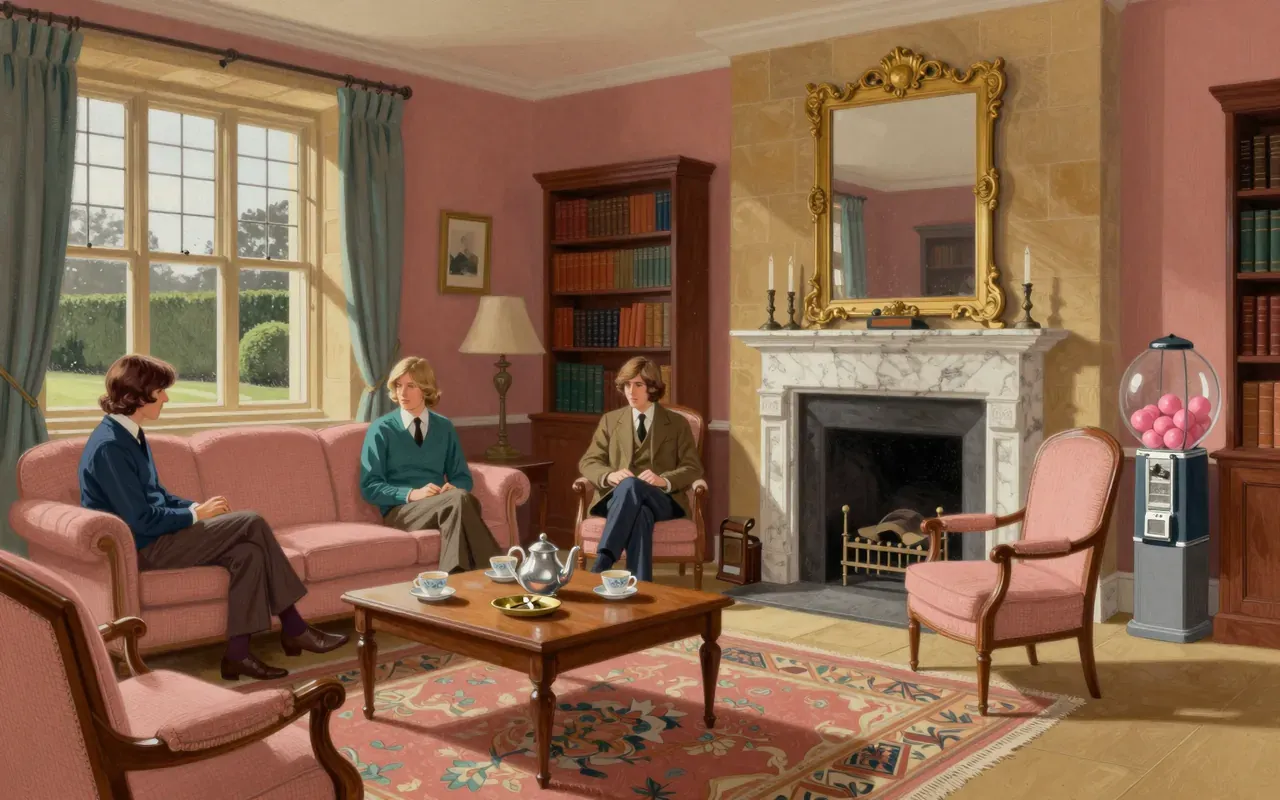
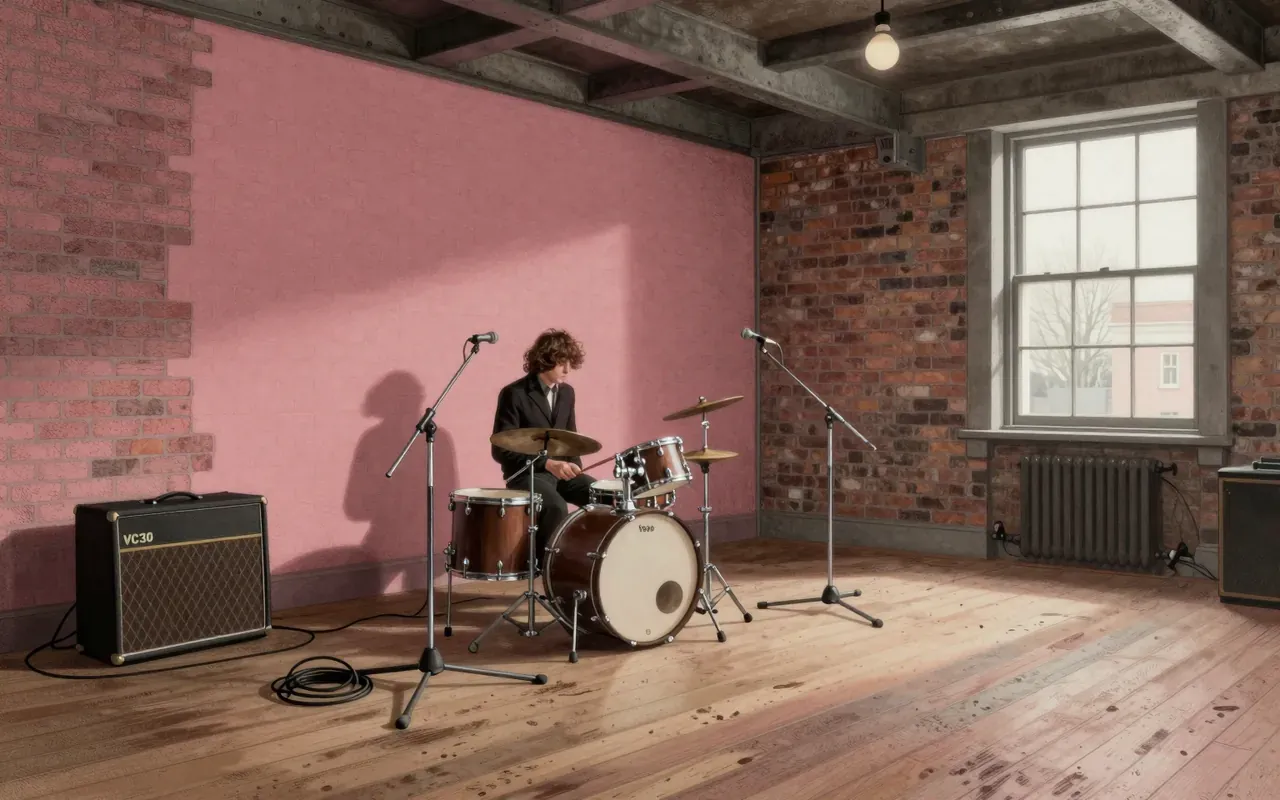
Selling England by the Pound is a 1973 Genesis record written in domestic rehearsal spaces — a rambling old stately home in Chessington and a basement beneath the Una Billings School of Dance. Its sound reflects those conditions: Phil Collins’ drumming uses complicated time signatures influenced by Mahavishnu Orchestra; Steve Hackett contributes guitar licks rather than full songs, lending a jazz fusion feel; and Gabriel writes all lyrics in two days. Recording at Island Studios uses an Echoplex and ARP Pro Soloist, prioritising sonic clarity and arrangement complexity. The album’s English identity is not mythic but material — curfews, bubble gum machines, living rooms, and firths. It lands strongest on ‘I Know What I Like’, ‘Dancing With the Moonlit Knight’, and ‘Firth of Fifth’. It does not sustain cohesion across its full runtime. It is worth your time if you listen for where music is made — not just what it says.

10:20

Speak & Spell

Depeche Mode · 1981

Speak & Spell is Depeche Mode’s 1981 debut: ten tracks recorded live on 8-track with an ARP 2600, built from songs played live for a year, written mostly by Vince Clarke, co-produced by Daniel Miller. It reached UK #10. Critics split: Melody Maker praised it; Rolling Stone dismissed it as ‘PG-rated fluff’. It established synth-pop as functional pop—not experimental, not atmospheric, not ironic—just direct, repeatable, and built for broadcast.

10:21

Live at the Witch Trials

The Fall · 1979

Live at the Witch Trials is The Fall’s debut studio album — recorded in one day, mixed the next, and built on refusal: of polish, of explanation, of compromise.

10:21

Extraordinary Machine

Fiona Apple · 2005

Extraordinary Machine is Fiona Apple’s third studio album, released in October 2005 after she rejected Jon Brion’s completed 2003 version and rebuilt it from scratch with Mike Elizondo and Brian Kehew. It was recorded across multiple spaces — Ocean Way Recording, the Paramour Mansion (a 1923 building), Cello Studios, Abbey Road Studios, and finally Phantom Studio — but only the latter’s piano-and-drum foundation appears on the final record. Two tracks from the Brion sessions remain unchanged; one new song was added. The album is stylistically eclectic but grounded in live instrumentation: piano, vocals, and drums by Abe Laboriel Jr. and Questlove. It reflects Apple’s insistence on authorship over accommodation — not a refinement, but a replacement.

10:21

Lucinda Williams

Lucinda Williams · 1988

Lucinda Williams (1988) is a self-titled third album, co-produced by Williams, Gurf Morlix, and Dusty Wakeman, released on Rough Trade Records. It features acoustic guitar, pedal steel, fiddle, washboard, harmonica, and drums — no synths, no drum machines. Critics called it alternative country and roots rock; Robert Christgau called it joyously uncountrypolitan blues. It was rejected by L.A. and Nashville for genre-blending. Songs like ‘Changed the Locks’ and ‘Passionate Kisses’ later inspired major covers. It is regarded as foundational to the Americana movement.

10:21

Twelve Dreams of Dr. Sardonicus

Spirit · 1970

Twelve Dreams of Dr. Sardonicus is Spirit’s fourth studio album, produced by David Briggs in 1970. It features Jay Ferguson (vocals, percussion, keyboards), Randy California (guitars, vocals, bass), John Locke (keyboards, art direction), Mark Andes (bass, vocals), Ed Cassidy (drums, percussion), and Matt Andes (Dobro on 'Nothin’ to Hide'). The record avoids psychedelia-as-noise and prog-as-epic. Instead, it delivers concise, well-arranged songs built on piano, organ, Dobro, and tight rhythm-section interplay. 'Nature’s Way', 'Space Child', 'When I Touch You', and 'Life Has Just Begun' stand out for their clarity and craft. 'Why Can’t I Be Free?' feels abrupt. 'Soldier' is not about war. No synthesizers. No strings. No concept beyond the title's dream motif. It rewards listeners who value arrangement over abstraction.

10:22

Elvis

Elvis Presley · 1956

Elvis Presley’s 1956 debut album is a pivot point made audible: five Sun recordings and seven RCA tracks, with guitar replacing piano on R&B covers, vocals prioritised over polish, and zero studio artifice. It topped Billboard for ten weeks — not as novelty, but as necessity.

10:22

SMiLE

Brian Wilson · 2004

SMiLE is not an album you listen to—it’s a forensic archive of ambition collapsing under its own weight.

10:22

Einstein on the Beach

Philip Glass · 1979

Einstein on the Beach is a 1979 recording of Philip Glass’s 1976 opera—the first of his portrait trilogy—composed in 1975 in Cape Breton, Nova Scotia, in close collaboration with Robert Wilson. It incorporates Parts 1 and 2 of Another Look at Harmony. The 1979 recording features Paul Zukofsky on solo violin.

10:22

Interstellar Space

John Coltrane · 1974

Interstellar Space is a 1967 duo album by John Coltrane and Rashied Ali, recorded at Van Gelder Studio on February 22, 1967, and released in September 1974. It consists of four tracks — 'Mars', 'Venus', 'Jupiter', and 'Saturn' — each bearing alternate titles in the session sheets. Two further tracks from the same session, 'Leo' and 'Jupiter Variation', appeared on the 1978 compilation Jupiter Variation. The session was minimally planned, cut in one take, and built around Coltrane’s desire for 'more time, more rhythm all around me'.

10:22

The Eminem Show

Eminem · 2002

The Eminem Show is a 2002 hip-hop album released in May 2002. It was Eminem’s fourth studio album and his first self-produced major release, made while filming 8 Mile and certified Diamond by the RIAA.

10:23

Car Wheels on a Gravel Road

Lucinda Williams · 1998

A 1998 album that fused country, blues, folk, and pop through deliberate production choices—including hip hop–influenced grooves—and lyrics rooted in Southern geography and realism.

10:23

Here’s Little Richard

Little Richard · 1957

Here’s Little Richard is not a retrospective — it is the moment rock and roll became audible. Twelve tracks. No fat. No delay. Just piano, voice, horns, bass, and drums — locked in, loud, and unrepentant.

10:23

Raw Power

Iggy and The Stooges · 1973

Raw Power is the Stooges’ third studio album, reformed as 'Iggy and the Stooges', recorded in London in late 1972 with James Williamson’s songwriting and guitar shaping its anthemic hard rock direction. Iggy Pop produced the sessions and attempted an initial mix that collapsed instrumentation into mono-like channels; David Bowie then remixed seven tracks in a single day under tight budget constraints, using minimal resources and rudimentary effects like the Time Cube. Though Bowie claimed only three tracks were usable, archival evidence shows full multi-track separation existed. Columbia required two ballads, and the final mix suffered from poor fidelity — later addressed in multiple reissues, especially Pop’s controversial 1997 remix, which prioritised volume and distortion over fidelity. The album’s raw production choices, instrumental roles (including celesta, piano, and tambourine), and stylistic pivot define its enduring significance as a proto-punk landmark.

10:23

Tarkus

Emerson, Lake & Palmer · 1971

Tarkus is a studio document of creative fracture—not a concept album, but a contract renegotiation set to Moog and Hammond.

10:23

The Genius of Ray Charles

Ray Charles · 1959

A 1959 Atlantic big band album. First Top 40 for Ray Charles. Two sides: big band swing (Side one) and string ballads (Side two). Arranged by Quincy Jones, Ernie Wilkins, Ralph Burns and others. Features tributes to Louis Jordan. Vocal focus — especially on 'Come Rain or Come Shine'. Peaked at No. 17 on Billboard.

10:23

Arrival

ABBA · 1976

Arrival is ABBA’s fourth studio album, recorded between August 1975 and September 1976 at Metronome and Glen studios in Stockholm. It produced three major international singles — 'Dancing Queen', 'Money, Money, Money', and 'Knowing Me, Knowing You' — each defined by precise studio execution and clear emotional framing. The album reached number one in the UK, Australia, and parts of Europe, and number three in Canada and Japan.

10:23

Easter

Patti Smith Group · 1978

Easter is a 1978 rock record defined by instrumental specificity, stylistic range, and credited absence. It delivers urgency without ornament, rebellion without vagueness, and folk without nostalgia.

10:23

Funkentelechy vs. the Placebo Syndrome

Parliament · 1977

Funkentelechy vs. the Placebo Syndrome is Parliament’s sixth studio album, released November 28, 1977, on Casablanca Records. It is a loose concept album set within the P-Funk mythology warning of the 'Placebo Syndrome' — consumerism and disco music, which George Clinton viewed as a crass commercialized variant of funk. The album features layered vocal performances, synthesizer-heavy arrangements (especially on 'Flash Light'), and collaborative guitar work across multiple tracks. 'Flash Light' became an R&B number one single, built around a prominent Minimoog bass line played by Bernie Worrell. The original vinyl release included a 22″×33″ poster of Sir Nose D'Voidoffunk and an 8-page comic book explaining the concept — both illustrated by Overton Loyd. Vocalists include George Clinton, Ray Davis, Glenn Goins, Garry Shider, Debbie Wright, Jeanette Washington, Lynn Mabry, Dawn Silva, Cordell Mosson, and Mallia Franklin (though Franklin is not listed on the liner notes). Guitarists include Michael Hampton, Glenn Goins, Garry Shider, and Phelps Collins (on 'Flash Light'). 'Sir Nose d'Voidoffunk (Pay Attention – B3M)' quotes 'Baa, Baa, Black Sheep' and 'Three Blind Mice', with altered lyrics referring to drug use.

10:23

Frankie Knuckles

He didn’t invent house music—he reverse-engineered disco into something new, using tape, time, and a borrowed drum machine.
10:24

Old No. 1

Guy Clark · 1975

A debut defined by absence: no band, no studio detail, no production flourishes—only the force of Clark’s writing and the dry intimacy of voice and guitar. Its power lies in what it leaves out.

10:24

Return to Cookie Mountain

TV on the Radio · 2006

Return to Cookie Mountain is TV on the Radio's second studio album, released in 2006. It leaked in early 2006. Its official release was in July. It was released in the US and Canada in September by Interscope. Spin magazine named it its Album of the Year for 2006. It features guest appearances by David Bowie, Omega Moon, Celebration, Dragons of Zynth, Martin Perna and Stuart D. Bogie of Antibalas, Blonde Redhead, and Yeah Yeah Yeahs' Nick Zinner. David Bowie contributed back-up vocals on the song "Province". The album features layered, genre-blending arrangements with extensive multi-instrumental work by core members and guests across all tracks, including unconventional elements like 'magic' on track 10 and untitled silent tracks from 12 to 25, followed by ambient audio on track 26. Critical reception was overwhelmingly positive, with widespread year-end and decade-end accolades. The personnel credits reveal dense, track-specific instrumental and vocal roles, underscoring a highly orchestrated and collaborative recording process.

10:24

Bayou Country

Creedence Clearwater Revival · 1969

Bayou Country is Creedence Clearwater Revival’s second studio album, recorded in October 1968 at RCA Studios in Hollywood, Studio A, and released in January 1969. It is their first commercial breakthrough: a number-seven platinum hit that launched 'Proud Mary' — backed with 'Born on the Bayou' — to number two on the Billboard chart.

10:24

Billion Dollar Babies

Alice Cooper · 1973

Billion Dollar Babies is Alice Cooper’s most commercially successful studio album, reaching No. 1 in both the US and UK in February 1973. It was recorded across multiple locations—including the Galesi Estate in Greenwich, Connecticut, and Morgan Studios in London—with distinctive production techniques such as routing microphones through rooms and a greenhouse to shape vocal sound; it involved Bob Ezrin as producer and Gerry Lyon as assistant across three locations; featured Gibson SG guitars by Buxton and Bruce; employed three additional guitarists due to Buxton’s health issues; and included a quadraphonic mix with materially different arrangements, edits, and vocal placements compared to the stereo version. Lyrical themes include necrophilia, dental fear, horror, and sexual harassment, and the album’s title reflects the band’s ironic response to their sudden commercial success.

10:24

Californication

Red Hot Chili Peppers · 1999

Californication is a dry, mono, live-in-one-room rock record made with Neve and Ampex hardware, built on melodic guitar textures and disciplined interplay — not myth, not volume, not legacy.

10:24

Murmur

R.E.M. · 1983

Murmur is R.E.M.'s 1983 debut, recorded at Reflection Sound Studios in Charlotte, North Carolina, with producers Mitch Easter and Don Dixon after rejecting Stephen Hague’s technically precise approach. The band adopted a 'process of negation', omitting guitar solos and synthesizers to avoid datedness. Bill Berry insisted on recording drums in an antiquated isolation booth. Peter Buck used Easter’s Ampeg Gemini II amplifier on all tracks except 'Pilgrimage'. Mike Mills played a borrowed Rickenbacker 4001. The production prioritised live feel over polish — vocals were re-recorded only when 'very substandard'. Rolling Stone named it record of the year, though sales remained modest.

10:24

OK Computer

Radiohead · 1997

OK Computer is Radiohead’s third studio album, released in May 1997. Most of it was recorded in 1996–1997 at two locations: Canned Applause, a converted apple shed near Didcot, Oxfordshire, and St Catherine’s Court, a 15th-century mansion near Bath owned by Jane Seymour. The band abandoned Canned Applause due to its proximity to home and lack of basic facilities. At St Catherine’s Court, they recorded 80% of the album live, exploiting room acoustics—vocals for 'Exit Music (for a Film)' were captured on a stone staircase; 'Let Down' was tracked in a ballroom at 3 am. Strings were recorded separately at Abbey Road Studios in London. Production avoided artificial reverb and minimised overdubbing. Nigel Godrich co-produced. The album marks a departure from the guitar-centred introspection of The Bends, favouring atmospheric density, thematic abstraction, and collective, room-responsive experimentation. Lyrics shift from personal confession to fragmented, character-based narratives reflecting 'end-of-the-millennium blues'.

10:24

Sound of Silver

LCD Soundsystem · 2007

Sound of Silver is LCD Soundsystem’s third studio album, released on March 20, 2007. It was produced by the DFA and recorded in 2006 at Long View Farm in North Brookfield, Massachusetts and DFA Studios in New York City. James Murphy covered the entire studio in silver fabric and tin foil during recording. He found recording his own vocals uncomfortable, describing it as 'horrifying'. Several songs incorporate elements from the band's 2006 composition '45:33', especially 'Someone Great', which appears there as an instrumental. The album was dedicated to the memory of Dr. George Kamen (1942–2006). It was preceded by the single 'North American Scum' (February 2007), followed by 'All My Friends' — which spawned an EP featuring covers by Franz Ferdinand, John Cale, and Joy Division — and later 'Someone Great' (late 2007). In September 2007, the band released the A Bunch of Stuff EP and toured with Arcade Fire. In December 2007, Sound of Silver received a Grammy nomination for Best Electronic/Dance Album.

10:24

Whatever People Say I Am, That’s What I’m Not

Arctic Monkeys · 2005

A first-person document of Sheffield nightlife, recorded at Chapel Studios in Lincolnshire in January 2006 with Jim Abbiss producing. Every track uses observational, first-person narrative. Four tracks examine nightclub behaviour. Three draw from real Sheffield locations and figures: bouncers, taxi queues, and sex workers near the band’s Neepsend practice space. Genre blend includes indie rock, garage rock, post-punk revival, punk rock, alternative rock, and post-Britpop. Title quotes Alan Sillitoe’s Saturday Night and Sunday Morning and reflects loss of control over public perception.

10:24

In the Court of the Crimson King

King Crimson · 1969

In the Court of the Crimson King is the 1969 debut album by King Crimson — self-produced after initial sessions with Tony Clarke failed. Recorded on a 1" 8-channel recorder at Wessex Sound Studios in London, engineered by Robin Thompson with Tony Page assisting. Ian McDonald overdubbed Mellotron and woodwind layers across up to five tape generations; his Mellotron is dominant, fierce and overpowering. On 'Epitaph', he used two Mellotron parts with dynamic volume-shifting to create motion in sustained chords. Robert Fripp’s guitar fuses classical, Hendrix-like rock explosions, and jazz noodling. Greg Lake’s voice is plaintive. The band deliberately avoided simplicity, using unconventional time signatures like 7/8 or 5/8, expansive chords, and strange influences. Peter Sinfield wrote all lyrics — gothic, with 'dark and doom-laden visions'. The opening track '21st Century Schizoid Man' is proto-metal and criticises the Vietnam War. The record presents a Europeanised approach blending antiquity and modernity, distinct from blues-based hard rock.

10:24

Muddy Waters at Newport 1960

Muddy Waters · 1960

Muddy Waters at Newport 1960 is Muddy Waters’ first live album and one of the first live blues albums. It includes a Grammy-nominated performance of ‘I’ve Got My Mojo Working’. It was recorded live at the Newport Jazz Festival in 1960.

10:25

If You’re Reading This It’s Too Late

Drake · 2015

If You're Reading This It's Too Late is a production document disguised as a mixtape. Its strength is not mood, melody, or message — it is the granular, track-by-track assignment of bass, drums, and keys to specific Toronto-based musicians. Nothing here is left to chance, improvisation, or room acoustics. It is built to be parsed, not felt.

10:25

Avalon

Roxy Music · 1982

Avalon is Roxy Music’s final studio album, recorded between 1981 and 1982 across three studios. It marks a decisive turn toward atmospheric, synth-laden minimalism—built on Linn LM-1 drum machine foundations, shaped at Compass Point, and polished at Power Station. Its success was commercial and critical: UK No. 1, Platinum in the US and Canada, and widely praised for its production. Yanick Étienne’s improvised vocal coda on the title track remains its most haunting sonic signature.

10:25

In Utero

Nirvana · 1993

In Utero is a rock record defined by refusal: to please, to clarify, to separate, to emerge. Its sound comes from physical space — a kitchen, a console, a six-day window — not from processing or arrangement. Its title and band name both point to endings, not beginnings. It lands where others retreat: in dryness, in bleed, in unvarnished presence.

10:25

Odelay

Beck · 1996

Odelay is a 1995 album recorded primarily in the Dust Brothers’ home studio in Silver Lake, Los Angeles, after Beck abandoned an earlier acoustic album of somber, orchestrated folk tunes made with Tom Rothrock and Rob Schnapf in 1994. Only 'Ramshackle' survived that session. The Dust Brothers’ hip-hop–influenced, layered production — informed by their work with Beastie Boys, Tone Lōc and Young MC — shaped the album’s sound. Their record-filled studio supplied many of the album’s samples. Musicians worked 16-hour days, starting from scratch each day. The album blends country, blues, rap, jazz and rock using cut-and-paste, sample-heavy techniques.

10:25

South of Heaven

Slayer · 1988

South of Heaven is Slayer’s 1988 fourth studio album, recorded in Los Angeles with Rick Rubin. It was the only Slayer album the band discussed before writing. They slowed tempos, dropped distortion, and softened vocals—not to soften the music, but to reframe it.

10:26

Howlin’ Wolf

Howlin’ Wolf · 1962

Howlin’ Wolf (1962) is a compilation of twelve Chess singles from 1957–1961 — no new material, no unified production, no session details. Willie Dixon wrote all but six tracks. Howlin’ Wolf sings lead and plays guitar and harmonica. Six guitarists, five pianists, two bassists rotate across the tracks. Its nickname comes solely from Don S. Bronstein’s sleeve illustration. It lands because the songs landed elsewhere — not because the album makes them land anew.

10:26

Triangle

The Beau Brummels · 1967

Triangle is the Beau Brummels’ fourth studio album, released in July 1967 and produced by Lenny Waronker. It marks their first collaboration between vocalist Sal Valentino and guitarist Ron Elliott as co-writers. Recorded by a trio—Valentino, Elliott, and Ron Meagher—after the departure of Don Irving and John Petersen, and during Meagher’s exit to Army Reserves, the album embraces psychedelic musical style, fantasy-themed lyrics, and surreal characters. Session musicians including James Burton, Jim Gordon, Carol Kaye, and Van Dyke Parks (on harpsichord for 'Magic Hollow') contributed. Arrangements feature strings, brass, woodwinds, harpsichord, and unique percussion. Ron Elliott described the album as 'ethereal, mystic, and mysterious', reflecting the drug culture of 1967. Though commercially modest, it received critical acclaim and later gained recognition as a cult classic.

10:26

Only Built 4 Cuban Linx…

Raekwon · 1995

Only Built 4 Cuban Linx… is a tightly wound, cinematic hip-hop record built in a basement, not a boardroom. It trades Wu-Tang’s raw immediacy for layered tension — strings, piano, film samples, and deliberate pacing. Its story is narrow: cocaine, code, and climb. Its appeal is specific: if you lean into its rhythm and language, it pulls you in. If you wait for explanation, it leaves you outside.

10:27

In the Flat Field

Bauhaus · 1980

In the Flat Field is Bauhaus’s 1980 debut — self-produced, post-punk and glam-influenced, lyrically confrontational, recorded at Southern Studios in Wood Green, London. It established gothic rock’s sonic and thematic grammar through austerity, not ornament.

10:27

Smiley Smile

The Beach Boys · 1967

Smiley Smile is the Beach Boys’ 1967 retreat into domesticity — recorded in six weeks at Brian Wilson’s home studio using radio gear, a detuned piano, Baldwin organ, electronic bass, and found percussion. It abandons Smile’s scale for fragmentation, replaces session players with the band themselves, and credits production to the full group for the first time. Its sound is lo-fi, stoned, and intimate — vocals captured in a pool and shower, tape spliced and pitch-shifted, arrangements stripped to organ chords and bass grooves. It landed at number 41 in the US and baffled fans and critics alike. It is essential for anyone studying how pop adapts when ambition outpaces execution.

10:27

John Barleycorn Must Die

Traffic · 1970

John Barleycorn Must Die is Traffic’s 1970 fourth studio album, emerging from sessions initially intended as Steve Winwood’s solo project Mad Shadows. It marks the band’s reunion without Dave Mason and a decisive turn toward jazz fusion, blues, and modernized traditional folk. The album features extensive multi-instrumental contributions from Winwood, Capaldi, and Wood, and was co-produced by Chris Blackwell and Winwood on most tracks, with Guy Stevens producing two. Its stylistic looseness and jam orientation distinguish it from prior Traffic work and set the course for their 1970s output.

10:27

The Idiot

Iggy Pop · 1977

The Idiot is Iggy Pop’s 1977 debut solo album, produced by David Bowie and recorded at Château d'Hérouville in France and Musicland Studios in Munich. Bowie composed most music and played keyboards, guitar, saxophone and drum machine; Pop wrote lyrics in real time and recorded vocals in Munich. French session musicians Laurent Thibault and Michel Santangeli contributed bass and drums, with Santangeli’s parts retained despite his early dismissal. The album’s sound is mechanical, sparse and emotionally detached—a fusion of James Brown’s funk and Kraftwerk’s electronics. It has influenced post-punk, electronic and industrial artists.

10:28

Honky Tonk Masquerade

Joe Ely · 1978

A factual anchor: 1978, Murfreesboro, steel guitar, acoustic guitar, Moog, accordion, Chip Young, Lloyd Maines, Butch Hancock, Hank Williams — nothing more, nothing less.

10:28

Presents Charles Mingus

Charles Mingus · 1960

A studio album that behaves like a live set — bass-led, spoken into being, politically direct, and structurally open.

10:28

Automatic for the People

R.E.M. · 1992

Automatic for the People is a record built on absence: no drums driving, no Stipe present for demos, no fast songs, no tour, no resolution. It is defined by what it leaves out—and what remains is precise, sombre, and unrelenting.

10:28

Let It Bleed

The Rolling Stones · 1969

Let It Bleed is the Rolling Stones’ final album of the 1960s, recorded between February and early November 1969 amid Brian Jones’s firing and Mick Taylor’s hiring. It reached No. 1 in the UK and No. 3 in the US. It features 'Gimme Shelter' with Merry Clayton, 'You Can’t Always Get What You Want' with the London Bach Choir, 'Midnight Rambler', and a cover of Robert Johnson’s 'Love in Vain'. Keith Richards played nearly all guitar parts; Jones contributed to only two tracks; Taylor added overdubs to two. Recording took place primarily at Olympic Studios in London and Elektra Sound Recorders in Los Angeles. Jimmy Miller produced. Charlie Watts did not play on 'You Can’t Always Get What You Want'.

10:28

Live and Dangerous

Thin Lizzy · 1978

Live and Dangerous is a live double album by Thin Lizzy, compiled in early 1978 from archive recordings made across multiple concerts — primarily Hammersmith Odeon (14 November 1976), Tower Theater, Philadelphia (20–21 October 1977), and Seneca College Fieldhouse, Toronto (28 October 1977) — with additional material drawn from a Philadelphia soundcheck. Studio overdubs were added in Paris in January 1978. It was Thin Lizzy’s first live album and the last to feature Brian Robertson before his departure.

10:28

Call Me

Al Green · 1973

Call Me is Al Green’s sixth album, released in April 1973 — though one source says July 18 — and produced by Green and Willie Mitchell. It emerged from Green’s long partnership with Mitchell and the Hi Rhythm Section. Charles Hodges plays Hammond organ and piano. Jack Hale Sr. plays trombone. Charles Chalmers arranges horns and sings background vocals. Howard Grimes drums. Leroy Hodges plays bass. The room is tight, dry, and close-miked — no reverb tail, no bleed between instruments. The three top-10 singles land: 'Call Me (Come Back Home)', 'Here I Am (Come and Take Me)', and 'You Ought to Be with Me'. Each uses the same tight rhythm bed, layered background vocals, and Green’s clipped, urgent phrasing — all anchored by Hodges’ Hammond organ stabs and Grimes’ drum pocket. It does not break from the Green-Mitchell template. There are no new textures, no structural risks, no instrumental solos, no lyrical abstraction. The groove stays locked. The vocal delivery stays contained. Devotion as discipline. Longing as ritual. Love as a vow repeated until it sticks. The lyrics circle return, apology, and presence — never confession, never explanation. People who want to hear how a signature sound is maintained, not reinvented. Not for those seeking rupture, expansion, or rawness — this is polished, rehearsed, repeatable. Yes. It holds up as a precise, controlled exercise in Memphis soul craft — not a leap forward, but a refinement of what Green and Mitchell had already built.
10:29

3 Feet High and Rising

De La Soul · 1989

3 Feet High and Rising is De La Soul’s 1989 debut — a sample-heavy, psychedelic-influenced hip-hop record built with the Casio RZ-1 and Eventide Harmonizer. It introduced the 'D.A.I.S.Y. Age' concept ('Da Inner Sound, Y'all'), used quiz show skits to structure its flow, and drew from funk, soul, doo-wop, psychedelic rock, and children’s music. It was certified platinum, added to the Library of Congress National Recording Registry in 2010, and remained unavailable digitally until 2023 due to sample clearance issues.

10:29

One Nation Under a Groove

Funkadelic · 1978

A functional, tightly wound funk record that trades psychedelic sprawl for groove discipline — built on fuzz, banjo, and Junie Morrison’s keys.

10:30

Cool Struttin’

Sonny Clark · 1958

Cool Struttin’ is a 1958 Blue Note album led by Sonny Clark during his time as a house musician. No source describes its sound, personnel, recording location, or creative decisions. It exists solely as a documented leadership date in his discography.

10:30

Dire Straits

Dire Straits · 1978

Dire Straits’ 1978 debut is a document of restraint: no reverb, no doubling, no vocal harmonies, no studio tricks. Its power comes from what is left out—not what is added.

10:30

Dusty in Memphis

Dusty Springfield · 1969

Dusty in Memphis is a 1969 album recorded at American Sound Studio in Memphis and finished in New York. It is Dusty Springfield’s first collaboration with outside producers — Jerry Wexler, Tom Dowd, and Arif Mardin — and her first project built around a rhythm track.

10:30

Tha Carter III

Lil Wayne · 2008

A producer-driven, leak-compromised hip-hop album released in 2008, built on high-impact beats and strategic replacements rather than thematic unity.

10:31

Porgy and Bess

Miles Davis · 1958

Porgy and Bess (1959) is a studio album by Miles Davis featuring orchestral jazz arrangements of George Gershwin’s 1935 opera, co-created with Gil Evans. Recorded in summer 1958 at Columbia’s 30th Street Studio in New York City, it applies modal improvisation — using scales instead of chords — to reframe familiar melodies. Philly Joe Jones drums on most tracks; Jimmy Cobb plays on four. Cannonball Adderley and Paul Chambers perform as part of Davis’s sextet. The album is the second of five Davis–Evans collaborations between 1957 and 1962.
10:31

Green Onions

Booker T. & the M.G.s · 1962

Green Onions is the sound of Memphis in summer 1962: dry, direct, unvarnished. Four players. One room. No safety net.

10:31

Home Video

Lucy Dacus · 2021

A precise, unsentimental reckoning with adolescence — made in Richmond, shaped by collaborators, anchored in what actually happened.

10:31

Made in Japan

Deep Purple · 1972

Made in Japan is a double live album by Deep Purple, recorded during their August 1972 tour of Japan. Though initially reluctant to release a live album, the band agreed under pressure from their Japanese label, insisting on full control over production—including hiring Martin Birch to record the shows on 8-track. The setlist, revamped after Machine Head, opened with 'Highway Star' and closed with 'Lazy' and 'Space Truckin’', featuring extensive improvisation. The final album draws primarily from the 16 August Osaka show, with 'Smoke on the Water' sourced from 15 August—likely the only night Blackmore played the studio riff—and select tracks from the acclaimed 17 August Tokyo concert. No overdubs were used, and the band’s disinterest in the project reportedly preserved the spontaneity and interplay captured on tape. The album was recorded with minimal budget ($3,000) and equipment constraints, yet yielded a definitive live document widely regarded as one of the greatest in rock history.

10:32

First Take

Roberta Flack · 1969

First Take is a piano-and-voice record made in ten hours. It is elegant. It is fused. It is ‘The First Time Ever I Saw Your Face’. Nothing more, nothing less.

10:32

21

Adele · 2011

21 is Adele’s 2011 album, written and recorded in response to her breakup with her first serious partner — a relationship that began in April 2009 and ended shortly after. Early attempts to write an upbeat, contemporary follow-up to '19' failed due to lack of inspiration, leading Adele to cancel sessions. Production resumed immediately after the split, with songs channeling heartbreak and depression. The album’s sound draws on classic and contemporary country and roots music, influenced by Nashville music she heard on her 2008–09 US tour — a sound she found exciting precisely because it was unfamiliar. Its title reflects her age and personal growth over the prior two years.

10:32

Abraxas

Santana · 1970

Abraxas is a live band caught in transition — between blues and salsa, between San Francisco and Latin roots, between cover and composition. Its strength is rhythmic clarity, keyboard contrast, and unselfconscious physicality. Its limits are vocal thinness and structural looseness. It rewards attention to how parts lock, not how they soar.

10:32

Marcus Garvey

Burning Spear · 1975

Marcus Garvey is a 1975 reggae album recorded live in Kingston with Jack Ruby and the Black Disciples. It is politically direct, sonically grounded in studio realism, and defined by its resistance to commercial remixing. It belongs in the reggae-and-dub category. Topics include colonialism, Jamaica, religion, and recording.

10:32

Voodoo

D’Angelo · 2000

Voodoo is D'Angelo’s second studio album, released in 2000 on Virgin Records after EMI’s absorption. Critics called it a 'masterpiece' and his greatest work. It debuted at number one on the Billboard 200 with 320,000 first-week US sales, remained on the chart for thirty-three weeks, and sold over 1.7 million copies in the US by 2005. It won the 2001 Grammy Award for Best R&B Album, shared with engineer Russell Elevado. Executive producer was Dominique Trenier. Singles 'Devil's Pie' and 'Left & Right' peaked at

10:33

Trout Mask Replica

Captain Beefheart & His Magic Band · 1969

Trout Mask Replica is a document of extreme compositional control, not wildness — its difficulty is structural, not performative. It lands because it refuses to comfort. It fails because it refuses to release.

10:33

The Doors

The Doors · 1967

The Doors’ debut is a live-in-studio document made under strict technical limits: four-track tape, no guitar effects, echo only from the chamber, bass reinforced by overdubs. It captures the band’s physical precision and lyrical ambiguity without embellishment. Its power lies in immediacy—not legacy.

10:33

Reasonable Doubt

Jay‐Z · 1996

Reasonable Doubt is a 1996 hip-hop album recorded across multiple studios — D&D, Giant, Progressive Music — with beats formed separately, including at Knobody’s mother’s home and during Ski’s sessions with Camp Lo. Its sound is defined by competitive beat submissions, improvisational lyricism (notably between Jay-Z and Biggie on 'Brooklyn’s Finest'), multi-location tracking over extended periods, and unfulfilled collaborations (e.g., Nas on two tracks).

10:33

Screaming for Vengeance

Judas Priest · 1982

Screaming for Vengeance is a hard, heavy, tightly focused heavy rock record made quickly across two countries. It trades melody and texture for consistency, riff clarity, and radio-ready hooks. Its success rests on one last-minute addition—and one drummer’s third consecutive appearance.

10:34

A Seat at the Table

Solange · 2016

A Seat at the Table is Solange’s third studio album. Writing began in 2008. Recording spanned 2013 to June 2016 across Long Island, New Orleans, New Iberia and Los Angeles. It was released 30 September 2016. Its sound comes from hour-long improvised tracks built around bass and synth lines, later structured in Louisiana and finished in LA with Raphael Saadiq and Troy Johnson. 'Cranes in the Sky' originated from a 2008 Saadiq instrumental — drums, strings and bass only. Master P narrated interludes drawn from real conversations. Themes include identity, empowerment, grief, healing, rage and self-care. All lyrics were paired with images in a digital art book.

10:34

Electric Warrior

T. Rex · 1971

Electric Warrior is a 1971 glam rock album by T. Rex. It marks a decisive shift from acoustic folk to electric pop/rock, driven by Marc Bolan’s newly personal, erotic lyrics and Tony Visconti’s sonic innovations — flanging, reverb, backwards guitars, tape loops, and direct guitar-to-console overload. Recorded across multiple studios including Trident (London), Wally Heider (Hollywood), and Mediasound (New York), it features session players including Rick Wakeman (piano), Burt Collins (flugelhorn), Ian McDonald (sax), strings, and Flo & Eddie (backing vocals). Only three tracks retain primarily acoustic arrangements. The album establishes glam as a studio-crafted, physically immediate form — not mythic, not sprawling, but precise, punchy, and deliberately overloaded.

10:34

Ill Communication

Beastie Boys · 1994

Ill Communication is the Beastie Boys’ fourth studio album, co-produced by the band and Mario Caldato, Jr., recorded between 1993 and 1994 at Tin Pan Alley and G-Son Studios. It expands on their live-instrument approach begun with Check Your Head, incorporating hip-hop, punk rock, jazz, and funk, and reflects influences from Miles Davis’s On the Corner and Agharta. Contributions include live instrumentation from Money Mark, Eric Bobo, and Amery Smith, plus guest vocals from Q-Tip and Biz Markie. The 'Sabotage' backing track—built around MCA’s fuzzed and twangy bass—was laid down at Tin Pan Alley and sat unused for a year under the working title 'Chris Rock' before final vocals were added. The album was released on May 23, 1994, and received widespread critical acclaim for its stylistic range and synthesis of the group’s earlier impulses with matured musicianship and lyrical depth. Its artwork features a 1964 Bruce Davidson photograph and Alex Grey’s 'Gaia'.

10:34

Steve McQueen

Prefab Sprout · 1985

Steve McQueen is a 1985 pop album by Prefab Sprout, produced by Thomas Dolby, recorded across three studios in London and Buckinghamshire, built from Paddy McAloon’s archive of 40–50 songs — some written up to 12 years earlier — and defined by literate, humorous lyrics about love and regret, delivered with lush, jazz-tinged production and structural restraint.

10:35

“Awaken, My Love!”

Childish Gambino · 2016

‘Awaken, My Love!’ is a committed, cohesive plunge into psychedelic soul—no hedging, no genre tourism, no rap. It works because it trusts the weight of groove, the heat of analogue texture, and the authority of Glover’s voice as instrument first, storyteller second.

10:35

Calypso

Harry Belafonte · 1956

Calypso is Harry Belafonte's third studio album, released in 1956 on RCA Victor. It features vocal performances backed by guitarists Millard J. Thomas and Frantz Casseus, Tony Scott and His Orchestra, and The Norman Luboff Choir on select tracks. It includes 'Day-O (The Banana Boat Song)', sung from the perspective of banana dock workers awaiting daylight, alongside 'Star-O' as a lyrical variant reprise, and 'Jamaica Farewell', a mento folk song published here for the first time. Production involved multiple producers, a conductor, a chorus leader, and contributors to visual and textual elements of the release.

10:35

Greatest Hits

Al Green · 1975

A definitive, no-frills distillation of Al Green’s Memphis soul peak — precise, warm, and deeply rhythmic.

10:35

Ege Bamyasi

Can · 1972

Ege Bamyasi is Can’s third studio album, recorded in early 1972 at their newly established Inner Space Studio in Weilerswist — their first album made there — under intense time pressure to meet a June deadline. The band began with 'Spoon', then scrambled to complete material: 'Sing Swan Song', 'One More Night', and 'Pinch' were finished and edited by the day before the deadline, while 'Soup' emerged from an unedited, improvised ten-minute session that same afternoon. Karoli recorded acoustic guitar for 'Sing Swan Song' outdoors to escape drum bleed, and Schmidt and Suzuki’s daily chess games reportedly disrupted workflow. Czukay and Karoli handled editing, and the album incorporated previously released singles to fill out the tracklist. The new studio environment softened the drums and sharpened instrumental separation, and Suzuki’s pidgin English vocals contributed a distinctive textural element. Critics later praised its tight, danceable fusion of experimental music, avant-funk, and electronic sound — calling it one of Can’s most focused and tense records.

10:35

Machine Head

Deep Purple · 1972

Machine Head is a hard rock album recorded in December 1971 in Montreux, Switzerland, after the Montreux Casino burned down during a Frank Zappa concert. Deep Purple used the Rolling Stones Mobile Studio and converted a corridor in the closed Grand Hôtel de Territet into a live recording space. The album was made under logistical pressure — no playback, closed-circuit TV communication with engineer Martin Birch, and a theatre session for 'Smoke on the Water' cut short by police due to noise. Its sound is defined by live-room bleed, corridor acoustics, and performance-first decisions. It includes 'Highway Star', 'Smoke on the Water', 'Pictures of Home', 'Lazy', and 'Space Truckin’'. Released 30 March 1972, it became Deep Purple’s most commercially successful album.

10:35

Ray of Light

Madonna · 1998

Ray of Light is a singer-songwriter record disguised by synths.

10:36

Da Capo

Love · 1966

Da Capo is a pivotal 1966 album that pivots sharply from Love’s debut—expanding instrumentation, embracing jazz and baroque textures, and anchoring studio experimentation in Arthur Lee’s acoustic demos. Its first side remains a benchmark of psychedelic eclecticism. Its second side is a bold, unresolved gesture.

10:36

Dirt

Alice in Chains · 1992

Dirt is Alice in Chains’ second studio album, released on September 29, 1992. It was recorded from April to July 1992 across three studios — Eldorado in Burbank, London Bridge in Seattle, and One on One in Los Angeles — during the 1992 Los Angeles riots. The band evacuated to Joshua Tree with Tom Araya for four or five days before resuming work. Producer Dave Jerden returned from Facelift and crafted the album’s signature guitar tone using three distinct amps: a Bogner Fish preamp for low end, a Bogner Ecstacy for mids, and a Rockman Headphone amp for highs. "Would?" was recorded earlier by Rick Parashar for the Singles soundtrack. Jerry Cantrell wrote most songs; Layne Staley wrote "Hate to Feel" and "Angry Chair" solo and played guitar on both. Six of the thirteen songs address addiction. Cantrell described the process as soul searching and cleansing accumulated emotional poison. The album yielded five Mainstream Rock charting singles and remained on the charts for nearly two years.