musicbriefs
Shortest first

All briefs

1188 briefs · 11103 min · 97–192 on page 2 of 13
2:04

The Wild, the Innocent & the E Street Shuffle

Bruce Springsteen · 1973

Springsteen's second album was released in 1973, the same year as his debut. Recorded with the E Street Band in New York state, it moves further toward full-band rock and R&B. The songs give their characters an environment large enough to suggest more life beyond the immediate scene.
2:05

808s & Heartbreak

Kanye West · 2008

Released in 2008, 808s & Heartbreak followed the death of Kanye West's mother and the end of his engagement. His fourth studio album shifts much of its emphasis from rapping to singing. That change makes the handling of the voice the central question of the record.

2:05

Burnin'

The Wailers · 1973

Burnin' appeared in October 1973, following Catch a Fire. Bob Marley, Peter Tosh and Bunny Wailer all contributed to the writing before pursuing separate solo careers. Recorded in Jamaica with further work in London, it captures a group whose members still share the record's creative identity.

2:05

Dry

PJ Harvey · 1992

Dry was recorded in Yeovil and released in 1992 by Too Pure. PJ Harvey worked with her original trio and approached the opportunity as though it might be her only album. That urgency helps explain the concentration of the presentation without turning the record into a mere statement of ambition.

2:05

Here Come the Warm Jets

Brian Eno · 1974

Brian Eno's first solo album followed his departure from Roxy Music and appeared in 1974. It combines glam and pop forms with experimental working methods. A large cast of guests supplied performances that Eno could direct, combine and transform.

2:05

I Want to See the Bright Lights Tonight

Richard Thompson, Linda Thompson · 1974

Recorded in London in 1973 and released the following year, I Want to See the Bright Lights Tonight was Richard and Linda Thompson's first credited album together. Richard co-produced with John Wood. Its songs move through a world where pleasure is attractive partly because ordinary life can be hard.

2:05

The Scream

Siouxsie and the Banshees · 1978

The Scream is Siouxsie and the Banshees' 1978 debut, produced with Steve Lillywhite. Recording at RAK took a week, followed by three weeks of mixing. The distinction matters: this is a band establishing a carefully shaped recorded identity, rather than merely documenting its arrival.

2:06

All Eyez on Me

2Pac · 1996

Released in February 1996, All Eyez on Me was 2Pac's fourth studio album and his last released during his lifetime. The Death Row double album assembles numerous producers and guests around a performer concerned with both hard-won luxury and the threats surrounding it.

2:06

Blues Breakers with Eric Clapton

John Mayall, Eric Clapton · 1966

Released in 1966, Blues Breakers with Eric Clapton followed an abandoned plan to make another live John Mayall album. Mike Vernon produced the studio recording. Its alternate nickname, the Beano album, comes from the cover rather than a separate musical identity.

2:06

Catch a Fire

The Wailers · 1973

Catch a Fire introduced the Wailers to Island Records in 1973. Bob Marley, Peter Tosh and Bunny Wailer worked with a Jamaican rhythm section before Marley brought the tapes to London. Chris Blackwell then oversaw further work, making the released album the product of more than one setting.

2:06

Janet Jackson's Rhythm Nation 1814

Janet Jackson · 1989

Rhythm Nation 1814 was released in 1989 after Janet Jackson chose a socially concerned concept over simply repeating Control. Working again with Jimmy Jam and Terry Lewis, she placed racism, poverty and substance abuse alongside romantic material. The album imagines pop as a place to assemble a public.

2:06

Ram

Paul McCartney, Linda McCartney · 1971

Ram was released in 1971 under Paul and Linda McCartney's joint credit. Recorded in New York with guitarists David Spinozza and Hugh McCracken and drummer Denny Seiwell, it uses a more developed studio approach than McCartney's preceding solo record. Its domestic identity does not mean it was made without collaborators.

2:06

Rid of Me

PJ Harvey · 1993

Rid of Me, released in 1993, was the final album by PJ Harvey's original trio with bassist Steve Vaughan and drummer Rob Ellis. Most of it was recorded by Steve Albini at Pachyderm in Minnesota. Harvey wanted the recording to convey the group playing together in a room.

2:06

Space Ritual

Hawkwind · 1973

Space Ritual was released in 1973 from Hawkwind concerts recorded in Liverpool and London in December 1972. The tour joined music with dancers, lighting and a science-fiction scenario. The album carries the audio portion of that larger construction, drawing heavily on Doremi Fasol Latido.

2:07

Doggystyle

Snoop Dogg · 1993

Snoop Doggy Dogg's 1993 debut followed his prominent contributions to Dr. Dre's The Chronic. Released by Death Row, it develops that partnership into an album built around Snoop's own vocal character. The setting is collective, with Tha Dogg Pound and other associates contributing to its social atmosphere.

2:07

Joy as an Act of Resistance

Idles · 2018

Joy as an Act of Resistance is Idles' second album, released in 2018. After scrapping material that felt too dependent on repeating Brutalism, the band made vulnerability a central purpose. Joe Talbot's personal experiences sit beside songs addressing masculinity, immigration and class.

2:07

Licensed to Ill

Beastie Boys · 1986

Licensed to Ill introduced the Beastie Boys on album in 1986, with Rick Rubin producing for Def Jam. Their debut brings rock's confrontational scale into a rap setting and makes the group itself the central attraction. It belongs to a different stage of their work than the denser sampling of Paul's Boutique.

2:07

(Pronounced 'Lĕh-'nérd 'Skin-'nérd)

Lynyrd Skynyrd · 1973

Lynyrd Skynyrd's 1973 debut was recorded with producer Al Kooper after extensive rehearsal. Much of the material already belonged to the live repertoire. The record's apparent assurance therefore has a practical source: a band arriving with songs it had worked through repeatedly.

2:07

Stories from the City, Stories from the Sea

PJ Harvey · 2000

Released in 2000, Stories from the City, Stories from the Sea draws partly on PJ Harvey's time in New York, alongside writing done elsewhere. Harvey resisted the idea that it was simply a New York album. The city is a source of possibilities rather than a complete explanation of the songs.

2:07

Rattus Norvegicus

The Stranglers · 1977

Rattus Norvegicus is the Stranglers' 1977 debut, despite the deliberately confusing Stranglers IV designation. Martin Rushent produced it in a week from the band's existing live repertoire. That background helps explain why an early album can already contain several kinds of arrangement.

2:08

Dance Mania

Tito Puente and His Orchestra · 1958

Dance Mania, released in 1958, places Tito Puente at the head of an orchestra built for dancing. His roles as leader, arranger and percussionist are inseparable from the result. The album offers a useful way into a band whose rhythmic identity involves many coordinated players.

2:08

East-West

The Butterfield Blues Band · 1966

East-West, the Butterfield Blues Band's second album, was recorded at Chess Studios in Chicago and released in 1966. Mike Bloomfield and Elvin Bishop share the guitar work, while Billy Davenport replaces Sam Lay on drums. The repertoire broadens the group's blues foundation rather than discarding it.

2:08

Look-Ka Py Py

The Meters · 1969

Look-Ka Py Py is the Meters' second studio album, released in 1969 and produced by Allen Toussaint. The instrumental quartet offers a particularly clear view of its working parts. With no lead singer to organise attention, the relationships inside the band become the main event.

2:08

Opposite People

Fela Kuti, Africa 70 · 1977

Opposite People is a 1977 Fela Kuti and Africa 70 album, originally released by Decca Afrodisia. Its two tracks approach social behaviour through apparently ordinary examples. Later paired reissues with Sorrow Tears and Blood can obscure the identity of this original programme.

2:08

Complete & Unbelievable: The Otis Redding Dictionary of Soul

Otis Redding · 1966

Dictionary of Soul appeared in 1966 as Otis Redding's fifth solo studio album and the last released during his lifetime. The original first side draws largely on covers, while the second concentrates on Redding's writing. The arrangement of the programme makes interpretation and authorship neighbouring activities.

2:09

Bad Company

Bad Company · 1974

Bad Company's self-titled debut appeared in 1974 after sessions at Headley Grange with Ronnie Lane's mobile studio. Paul Rodgers, Mick Ralphs, Boz Burrell and Simon Kirke brought experience from earlier bands. The record's purpose is to establish how naturally that experience can fit a new working group.

2:09

Metallica

Metallica · 1991

Metallica's 1991 self-titled fifth album is widely known as The Black Album. Working with producer Bob Rock, the group moved toward a slower, more refined presentation than on its earlier thrash records. The change concerns the shape and scale of the songs as much as their commercial reach.

2:09

The Blues and the Abstract Truth

Oliver Nelson · 1961

Oliver Nelson's The Blues and the Abstract Truth was released by Impulse! in 1961. Freddie Hubbard, Eric Dolphy, Bill Evans, Paul Chambers, Roy Haynes and George Barrow join Nelson. The personnel are striking, but the record's organising intelligence lies in the compositions and the relationships they create.

2:09

Daydream Nation

Sonic Youth · 1988

Sonic Youth recorded Daydream Nation in New York in 1988 and released it as a double album. Longer pieces reflected the group's live improvisations, while a prolific period of writing supplied material for the enlarged format. The result expands the space available to both songs and noise.

2:09

Lady Soul

Aretha Franklin · 1968

Lady Soul was released by Atlantic in January 1968, during a prolific period in Aretha Franklin's recording career. Jerry Wexler produced, with Tom Dowd engineering. Its best-known songs belong to a programme in which lead singing, accompaniment and backing voices continually define one another.

2:10

A Nod Is As Good As a Wink... to a Blind Horse

Faces · 1971

Faces' third album was their second release of 1971. Glyn Johns shared production duties, helping shape a programme shorter and more concentrated than its predecessors. Rod Stewart's growing solo profile is part of the context, but Ronnie Lane's three lead vocals make the group's broader identity essential.

2:10

Beyoncé

Beyoncé · 2013

Beyoncé's self-titled fifth album arrived without a conventional advance campaign in December 2013. Conceived as a visual album, it joined songs and videos in a single release. The surprise matters historically, but its lasting musical question is how much room a major pop performer can claim for a more personal presentation.

2:10

Turn On the Bright Lights

Interpol · 2002

Interpol's debut was released in 2002 after recording at Tarquin Studios in Connecticut with Peter Katis. Gareth Jones assisted with mixing. Although closely associated with its New York moment, the songs were written before the September 11 attacks; later resonance should not be confused with their original subject matter.

2:10

Waltz for Debby

Bill Evans Trio · 1962

Waltz for Debby was released in 1962 from the Bill Evans Trio's June 1961 Village Vanguard recordings. Evans, bassist Scott LaFaro and drummer Paul Motian also appear on Sunday at the Village Vanguard from the same date. LaFaro died ten days later, making these performances the trio's final recorded chapter.

2:10

Zombie

Fela Kuti, Africa 70 · 1976

Zombie was released in Nigeria in 1976 and in Britain in 1977. Fela Kuti's attack on unthinking military obedience made its title a politically charged metaphor. The record belongs to a period in which his performances and his community faced violent state hostility.

2:11

Bo Diddley

Bo Diddley · 1958

Bo Diddley's 1958 debut album gathers singles recorded between 1955 and 1958. It is therefore a collection of an already developing identity, rather than a single sustained studio project. That origin helps explain both the compactness of the songs and the changing supporting personnel.

2:11

Diana

Diana Ross · 1980

Diana was released in 1980 after Ross approached Nile Rodgers and Bernard Edwards for a new musical direction. Conversations with her informed much of their songwriting. The finished album also reflects Ross' own intervention: she worked with engineer Russ Terrana on a remix that the producers initially opposed.

2:11

Sunshine Superman

Donovan · 1966

This is the 1966 American Sunshine Superman album. The British release with the same name arrived in 1967 and combined material from this record and Mellow Yellow. With producer Mickie Most, Donovan used the original sessions to move beyond the folk identity established by his early hits.

2:12

Celia & Johnny

Celia Cruz, Johnny Pacheco · 1974

Celia & Johnny pairs Celia Cruz with Johnny Pacheco on a 1974 Vaya album. The combination joined an established singer to a bandleader closely associated with New York salsa. The important issue is musical fit: how an ensemble can give a powerful voice the space and support it needs.

2:12

OXO

Oxo · 1983

OXO's self-titled 1983 debut was also the band's only album. Led by Ish Ledesma, previously of Foxy, the group reached the American Top 40 with “Whirly Girl.” The record offers a small, specific view of the early-eighties crossover between dance music, pop and rock.

2:12

Return to the 36 Chambers: The Dirty Version

Ol' Dirty Bastard · 1995

Ol' Dirty Bastard's 1995 solo debut arrived after Wu-Tang Clan's first album and Method Man's Tical. RZA handles much of the production, with contributions from ODB, True Master and 4th Disciple. The wider Clan remains present through guest appearances, even as the lead performer claims his own unruly space.

2:13

To Bring You My Love

PJ Harvey · 1995

To Bring You My Love was released in 1995 after the breakup of the original PJ Harvey trio. Harvey co-produced it with Flood and John Parish, using a new group of collaborators. The change allows the record to develop a more elaborately arranged setting for its accounts of longing.

2:13

XO

Elliott Smith · 1998

XO is Elliott Smith's fourth solo album and his first for DreamWorks, released in 1998. Early work began with Larry Crane in Portland before sessions in Los Angeles with Rob Schnapf and Tom Rothrock. The new label context gave his songwriting a larger recorded setting.

2:14

Back at the Chicken Shack

Jimmy Smith · 1963

Back at the Chicken Shack was recorded in 1960 and released by Blue Note in 1963. The same session also produced Midnight Special. Alfred Lion produced and Rudy Van Gelder engineered, with Jimmy Smith joined by Stanley Turrentine, Kenny Burrell and Donald Bailey.

2:14

Blood, Sweat & Tears

Blood, Sweat & Tears · 1968

Blood, Sweat & Tears' self-titled second album arrived in December 1968 after Al Kooper and two other members had left. David Clayton-Thomas became the lead singer of a nine-piece band. Producer James William Guercio helped the new lineup make a more pop-oriented record with substantial outside repertoire.

2:17

Lonesome, On'ry and Mean

Waylon Jennings · 1973

Released in 1973, Lonesome, On'ry and Mean followed Waylon Jennings's struggle for greater artistic freedom at RCA. The album belongs to the period in which that control became central to his identity. The useful question is what a singer can do differently when decisions about recording move closer to him.

2:18

Palo Congo

Sabú Martínez · 1957

Palo Congo is the 1957 debut led by conga player Sabú Martínez, credited on the record as Sabu. Recorded in April and released by Blue Note, it brings together an eight-person ensemble with several percussionists and singers. Its instrumentation gives a clear reason to hear it on its own terms.

2:20

The Jimmy Giuffre 3

The Jimmy Giuffre 3 · 1957

This 1957 album introduces the Jimmy Giuffre 3 with Jim Hall on guitar and Ralph Peña on bass. Giuffre plays clarinet, tenor saxophone and baritone saxophone. The trio's unusual distribution of instruments gives it an immediate point of distinction: there is no drummer.

2:22

Smack Up

Art Pepper · 1960

Recorded in October 1960, Smack Up places Art Pepper with trumpeter Jack Sheldon, pianist Pete Jolly, bassist Jimmy Bond and drummer Frank Butler. Its organising decision is unusually clear: every composition on the original album was written by a saxophonist. The programme turns musical kinship into a useful constraint.

2:23

At Mister Kelly's

Sarah Vaughan and Her Trio · 1957

At Mister Kelly's records Sarah Vaughan in a Chicago jazz club in 1957, accompanied by pianist Jimmy Jones, bassist Richard Davis and drummer Roy Haynes. The setting is a useful alternative to hearing a major singer surrounded by a large arrangement: four musicians carry the performance.
2:24

Ezz-thetics

George Russell Sextet · 1961

George Russell recorded Ezz-thetics in May 1961 for Riverside. His sextet brings together Don Ellis, Dave Baker, Eric Dolphy, Steve Swallow and Joe Hunt, with Russell at the piano. Three original compositions sit alongside material by Miles Davis, Baker and Thelonious Monk. The programme places the leader's writing within a broader set of musical problems.

2:25

Blowin' the Blues Away

The Horace Silver Quintet & Trio · 1959

Recorded at Rudy Van Gelder's Englewood Cliffs studio in 1959, this Blue Note album presents Horace Silver in quintet and trio settings. Blue Mitchell and Junior Cook supply trumpet and tenor saxophone; Eugene Taylor and Louis Hayes join Silver in the rhythm section. The title's two ensemble sizes describe a meaningful change in perspective.

2:28

The Boss of the Blues

Joe Turner · 1956

This 1956 Atlantic album reunites Big Joe Turner with pianist Pete Johnson. Their partnership reached back to the Kansas City years and helped bring boogie-woogie to a wider public. By the time of this recording, Turner also had major rhythm-and-blues and rock-and-roll successes. The album gives the older repertoire a substantial new setting.

2:28

King Tubbys Meets Rockers Uptown

Augustus Pablo, King Tubby · 1976

This 1976 album brings Augustus Pablo's production and instrumental work together with King Tubby's mixing. Musicians recorded at Randy's in Kingston; the tapes then became material for another creative stage. The record belongs to a culture in which a recorded performance could generate further versions rather than settle into one definitive form.

2:28

Super Fly

Curtis Mayfield · 1972

Curtis Mayfield's 1972 soundtrack accompanies Gordon Parks Jr.'s film about a cocaine dealer attempting to leave the business. It was also Mayfield's third solo studio album. The songs have their own moral perspective, allowing the music to stand independently while complicating the film's attraction to its protagonist's world.

2:30

Basket of Light

The Pentangle · 1969

Pentangle's 1969 album brought an unusually flexible acoustic group to a broad audience. “Light Flight” served as the theme for the television drama Take Three Girls, and the album reached number five in Britain. Its appeal rests on the resources of the ensemble: several distinct players contributing to a shared musical space.

2:30

Nighthawks at the Diner

Tom Waits · 1975

Released in 1975, Tom Waits's third album was recorded at the Record Plant in Los Angeles before an invited audience. Tables, a bar and a small crowd helped turn a studio into a club for four shows over two nights. That arrangement is central to the record: its atmosphere was deliberately made.

2:30

This Is Our Music

The Ornette Coleman Quartet · 1961

Recorded in 1960 and released by Atlantic in 1961, This Is Our Music features Ornette Coleman, Don Cherry, Charlie Haden and Ed Blackwell. Blackwell had replaced Billy Higgins on drums. The title identifies a collective, and Coleman's liner notes describe improvisation as something through which each player helps create the form.

2:31

Computer World

Kraftwerk · 1981

Kraftwerk's 1981 album puts computers into ordinary life: work, calculation, surveillance and the search for company. Its German counterpart is Computerwelt. The concept feels prescient because it connects technology to familiar human activities rather than treating it only as futuristic machinery.

2:32

Cross

Justice · 2007

Justice's 2007 debut is commonly called Cross after its sleeve symbol, although the duo regard it as untitled. Recorded in Paris, it was conceived around a combination of disco and theatrical scale. The record's force comes from treating sound design as something that can transform familiar musical structures.

2:32

At Folsom Prison

Johnny Cash · 1968

At Folsom Prison was recorded at California's Folsom State Prison on January 13, 1968, and released that year. Producer Bob Johnston supported Cash's plan to record a prison concert. The resulting album draws on two performances rather than presenting one show from beginning to end.

2:33

West Meets East

Ravi Shankar, Yehudi Menuhin · 1967

Issued in the United Kingdom in 1967, West Meets East grew from the relationship between Ravi Shankar and Yehudi Menuhin and their 1966 Bath Festival appearance. Its broad title can obscure the particular people involved. Tabla player Alla Rakha, pianist Hephzibah Menuhin and tambura player Prodyot Sen also contribute to the programme.

2:34

For You

Tatsuro Yamashita · 1982

For You, released in January 1982, is Tatsuro Yamashita's sixth solo studio album. It followed the success of Ride on Time and a period of touring that helped develop his working band. Eizin Suzuki's cover and the record's summer associations have become part of its identity, but the arrangements deserve attention beyond that imagery.

2:34

Shakara

Fela Kuti · 1972

Released in 1972 and recorded in Lagos the previous year, Shakara contains two substantial pieces: “Lady” and “Shakara (Oloje).” Fela Kuti fronts Africa 70, with Tony Allen on drums. The short track list gives each argument a large share of the album's space.

2:36

Army Arrangement

Fela Kuti · 1985

Army Arrangement belongs to Fela Kuti's mid-1980s work with Egypt 80. Its title song examines Nigeria's transition from military to civilian government, while “Government Chicken Boy,” included on editions of the album, attacks obedient service to authority. Political institutions change their presentation; Fela asks who continues to benefit.

2:36

Getz/Gilberto

Stan Getz, João Gilberto · 1964

Getz/Gilberto pairs American saxophonist Stan Getz with Brazilian singer and guitarist João Gilberto, with Antônio Carlos Jobim contributing piano and much of the repertoire. Recorded in New York in March 1963, it appeared on Verve in 1964. Astrud Gilberto sings on “The Girl from Ipanema” and “Corcovado.”

2:36

Piñata

Freddie Gibbs, Madlib · 2014

Piñata is Freddie Gibbs and Madlib's 2014 collaborative album, released through Madlib Invazion after the Thuggin’, Shame and Deeper EPs. Its seventeen tracks developed over several years. Gibbs brings the perspective of a rapper from Gary, Indiana, into a project produced throughout by Madlib.

2:37

Hosono House

Haruomi Hosono · 1973

Haruomi Hosono's 1973 solo debut followed Happy End and was recorded at his home in Sayama. The title is literal. A bedroom held the players, with recording equipment elsewhere in the house, and the sessions took place during the afternoons. Domestic space supplied the practical conditions for a full group record.

2:37

Joan Baez

Joan Baez · 1960

Joan Baez recorded her first solo album for Vanguard in 1960, when she was nineteen. The original release contains thirteen traditional songs. Her appearance at Newport the previous year had brought attention, but the record's task was more intimate: to make inherited material persuasive through an individual performance.

2:37

Talking Timbuktu

Ali Farka Touré, Ry Cooder · 1994

Talking Timbuktu is the 1994 collaboration between Malian guitarist Ali Farka Touré and American guitarist and producer Ry Cooder. Its ten tracks provide a meeting place for two musicians whose histories should remain visible even when their instruments suggest a connection. The album's identity begins with both names.

2:38

Sign o' the Times

Prince · 1987

Released in 1987 after the Revolution's breakup, Sign o' the Times gathers material from several abandoned or reshaped projects. The double album's sixteen tracks retain that sense of abundant possibilities. Its unity comes from a musician moving confidently among them, rather than from a single band sound or subject.

2:38

Substance

New Order · 1987

Substance is New Order's 1987 singles compilation, originally issued by Factory Records. It gathers music that often lived outside the studio albums, including “Blue Monday,” and adds the then-new “True Faith.” It is a deliberate route through the band's work, with its own choices about which versions belong.

2:39

D Train

D Train · 1982

D Train's 1982 debut, also known as You're the One for Me, pairs singer James Williams with producer and keyboardist Hubert Eaves III. Released by Prelude in the United States, it is an original album rather than a later hits collection. Its programme gives the duo's best-known song a surrounding musical world.

2:40

Highway to Hell

AC/DC · 1979

Released in 1979, Highway to Hell was AC/DC's first album with producer Robert John “Mutt” Lange and their last with singer Bon Scott. Its place before Scott's death can make it seem like a farewell, but the working project was a band refining its approach for a wider audience.

2:40

Madvillainy

Madvillain · 2004

Released by Stones Throw in 2004, Madvillainy joins rapper MF DOOM and producer Madlib under the name Madvillain. Much of their collaboration took place at the Los Angeles house that also housed the label. DOOM could concentrate on writing and performing while Madlib supplied a shifting musical environment.

2:48

When the Pawn…

Fiona Apple · 1999

Fiona Apple's second album arrived in 1999 with a title long enough to distract from almost anything. The poem behind it answered hostile reactions to a magazine profile. The songs deserve to be heard beyond that defensive gesture: they examine the difficulty of recognising your behaviour while remaining caught inside it. Jon Brion produced the record, expanding the settings around Apple's voice and piano.

2:50

Frampton Comes Alive!

Peter Frampton · 1976

Peter Frampton had released four solo studio albums before this 1976 double album made him a major commercial presence. The material was not entirely new; the setting changed its reach. Performances recorded at several venues in 1975 were assembled into an album that gave the songs the scale of an event.

3:15

Check Your Head

Beastie Boys · 1992

On their 1992 third album, the Beastie Boys put live bass, drums, guitar and Money Mark's keyboards alongside sampling and rap. Its musical detours can interrupt the momentum, but they also give the group a way to keep changing without leaving its earlier selves behind.

7:31

Doolittle

Pixies · 1989

Doolittle is a studio-constructed pivot: tighter, denser, more deliberate than Surfer Rosa. Its power lies in how it uses compression, layering, and tempo shifts—not in what it captures, but in what it chooses to build.

7:46

Further Definitions

Benny Carter and His Orchestra · 1962

Further Definitions is a tightly focused 1962 octet session that revisits Benny Carter’s 1937 Paris format with full documentation of solo order and personnel. It offers no studio experimentation — just eight standards played with clarity, balance, and purpose.

7:46

Yardbirds

The Yardbirds · 1966

Yardbirds (1966) is a tightly wound, stylistically fractured record made in one week. It abandons covers. It introduces Gregorian chant and African rhythms into British rock. Jeff Beck’s guitar binds it. It is not polished. It is not consistent. It is urgent.

7:52

Liquid Swords

Genius/GZA · 1995

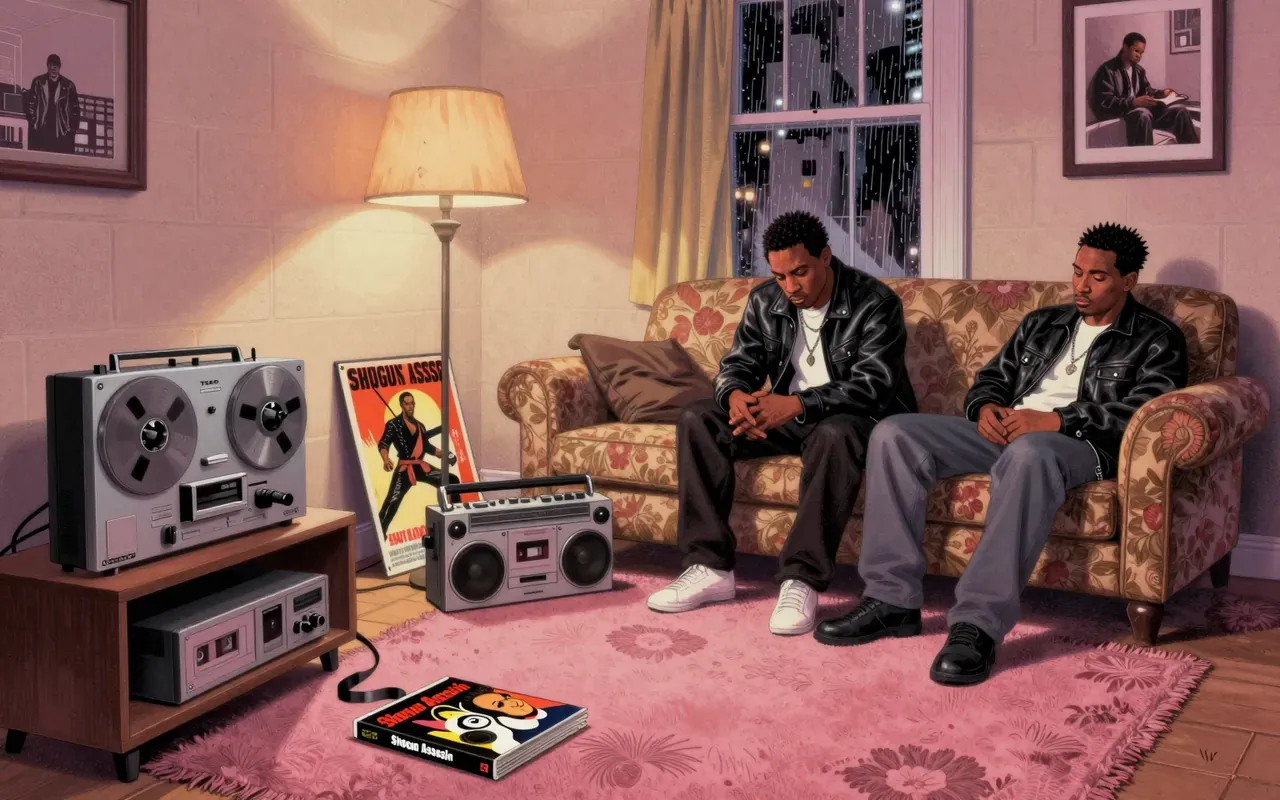
Liquid Swords is a 1995 hip-hop album made in RZA’s Staten Island basement. It uses Shogun Assassin dialogue samples, grimy rock-like beats, and GZA’s slow, assembled lyricism. All eight Wu-Tang members and Killah Priest appear. GZA considers it his best album for its chemistry and atmosphere — not lyrical prowess.

7:57

Silent Shout

The Knife · 2006

Silent Shout is The Knife’s third studio album, released 17 February 2006. It is darker than Deep Cuts. It is synth-pop and techno. Karin Dreijer’s vocals are pitch-shifted and multi-tracked. The Knife handled recording, programming, production, vocals, and mixing. Christoffer Berg mixed tracks 1–7, 9, and 11. Pelle Gunnerfeldt mixed tracks 8 and 10. Henrik Jonsson mastered the album. Pitchfork named it the best album of 2006. A companion DVD, Silent Shout: An Audio Visual Experience, was released 8 November 2006. 'We Share Our Mothers’ Health' was iTunes’ Single of the Week in late 2006.

7:58

Pink Flag

Wire · 1977

Pink Flag is Wire’s debut album. Released 25 November 1977 via Harvest Records. Recorded September–October 1977 at Advision Studios, London. Produced by Mike Thorne. 21 tracks. Not songs. No easy structure or meter. Minimalism pushed to new heights. Manipulates classic rock forms into brief, intense explosions of attitude and energy.

8:02

The World Is a Ghetto

War · 1972

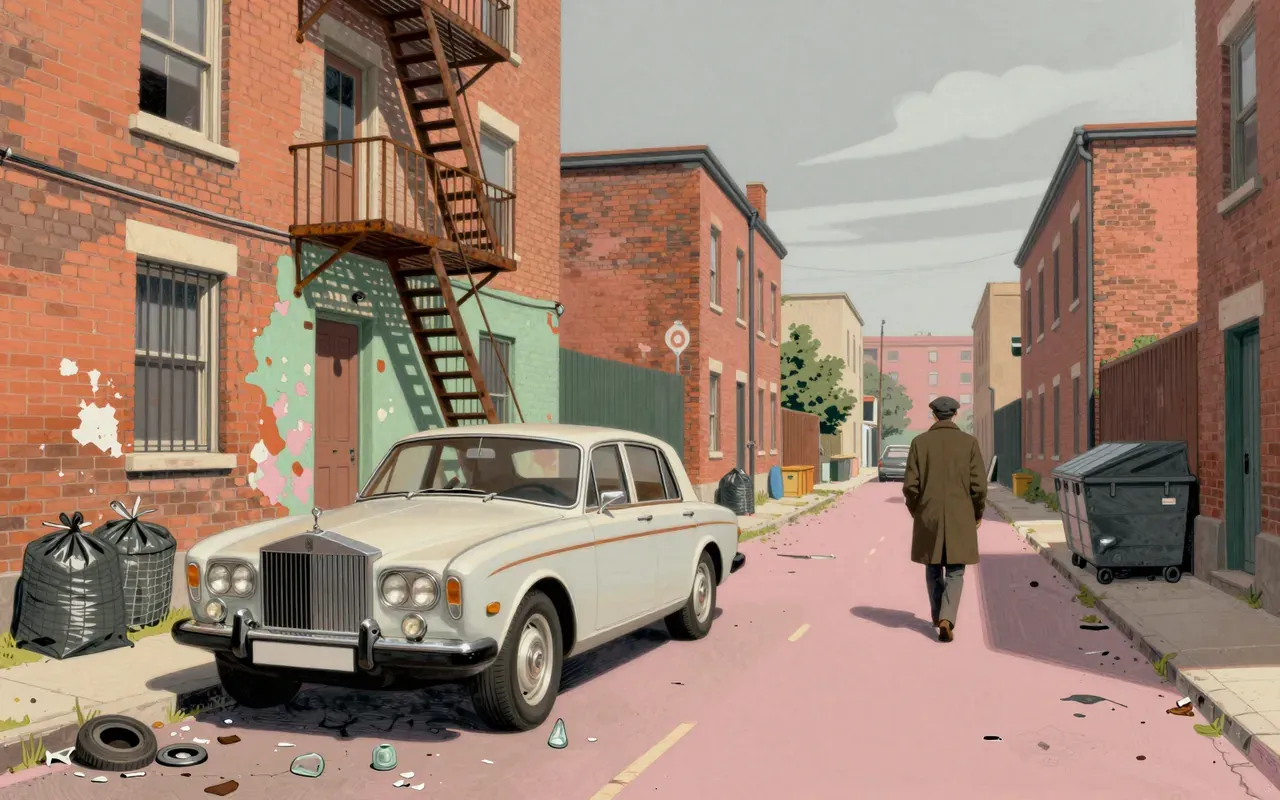
The World Is a Ghetto is War’s fifth studio album, released in late 1972 on United Artists Records. It synthesises soul, funk, blues, and psychedelia with production likened to Curtis Mayfield’s Curtis and Marvin Gaye’s What’s Going On. Its cover—a flat-tyred Rolls-Royce in a ghetto—uses a blue-and-black palette to reflect its melancholy character. Critics noted its conceptual ambition but divided on pacing: Gordon Fletcher praised its mastery in communicating ghetto life; Robert Christgau dismissed it as 'blackstrap-rock'. It was originally issued in quadraphonic 8-track and reissued in Dolby Atmos for its 50th anniversary.

8:04

The Times They Are A‐Changin’

Bob Dylan · 1964

The Times They Are A‐Changin’ is Bob Dylan’s third album (1964). It reflects a more politicized phase. Songs address the murders of Medgar Evers and Hattie Carroll, the despair of rural economic collapse, and Dylan’s angry response to a hostile Newsweek profile.

8:06

A Date With The Everly Brothers

The Everly Brothers · 1960

A Date With The Everly Brothers is a 2013 tribute album by the Chapin Sisters. It is not the 1960 Everly Brothers record. No sonic, technical, or interpretive detail is provided in the source material.

8:10

good kid, m.A.A.d city

Kendrick Lamar · 2012

Good Kid, M.A.A.D City is a tightly wound, atmospheric West Coast hip-hop record built on restraint: low-key production, nonlinear storytelling, and vocal multiplicity. It subverts gangsta tropes by embedding moral ambiguity inside lived detail — skits, basslines, and pauses all serve the narrative. Its power lies in what it leaves out: no easy answers, no sonic spectacle, no mythmaking. Just Compton, rendered in real time and real consequence.

8:10

Red Headed Stranger

Willie Nelson · 1975

Red Headed Stranger is a 1975 concept album by Willie Nelson, recorded at low cost in a quiet cypress-panelled room at Autumn Sound Studios in Garland, Texas. It features sparse arrangements limited to Nelson's guitar, piano, and drums, with no equalisation and no additional production — a direct rejection of Nashville conventions. Columbia executives initially mistook it for a demo, but Nelson's creative control and Waylon Jennings' insistence secured its release. The album includes a cover of Fred Rose's 1945 'Blue Eyes Crying in the Rain', which became Nelson's first number one hit. Its power lies in restraint: the Bosendorfer piano's deep bass, the dry drum hits, the absence of reverb or ornamentation. It is a record about silence as moral weight.

8:12

Rock ’n Soul

Solomon Burke · 1964

A foundational soul record defined by vocal command, rhythmic tension, and theological gravity — not studio craft.

8:12

The Fat of the Land

Prodigy · 1997

The Fat of the Land is Prodigy’s 1997 third album — their first with Keith Flint’s vocals, titled from an old English phrase, and defined by its Costa Rican crab cover and ant logo.

8:14

Portrait of a Legend 1951–1964

Sam Cooke · 2003

The source material contains no verifiable information about the record 'Portrait of a Legend 1951–1964'. It is not listed, described, contextualised, or referenced in any form. Therefore, no factual statement about it can be made.

8:15

Bert Jansch

Bert Jansch · 1965

A home-recorded folk album that rewrote guitar grammar before anyone noticed.

8:15

Forever Changes

Love · 1967

Forever Changes is a 1967 studio album by Love, recorded at Sunset Sound Recorders. It features acoustic guitars, orchestral arrangements, and dark lyrical themes. It was co-produced by Arthur Lee and Bruce Botnick.

8:20

My Aim Is True

Elvis Costello · 1977

My Aim Is True is Elvis Costello’s 1977 debut — raw, urgent, and deliberately unpolished. It captures a moment where punk attitude met country-rock instrumentation in a cramped London studio, with no second chances and no safety net.

8:20

Wave

Antônio Carlos Jobim · 1967

Wave is Antônio Carlos Jobim’s fifth studio album, released in 1967 on A&M Records. It was recorded in the US with mostly American musicians. Claus Ogerman arranged and conducted. The album features trombonists Urbie Green and Jimmy Cleveland, flautist Jerome Richardson, bassist Ron Carter, and a string section. Jobim performed piano, guitar, harpsichord, and vocals.