musicbriefs
Newest

All briefs

1188 briefs · 11103 min · 961–1056 on page 11 of 13
9:04

Free Jazz

The Ornette Coleman Double Quartet · 1961

Free Jazz is the first full-length document of collective, non-idiomatic improvisation as compositional method. It uses stereo separation not for effect but for argument: two autonomous groups coexisting without hierarchy, negotiation, or synthesis.

9:42

Fresh

Sly & the Family Stone · 1973

Fresh is Sly & the Family Stone’s 1973 album, made amid personnel losses and Sly’s escalating cocaine use. It follows There’s a Riot Goin’ On. It contains a track purportedly sourced from a 1968 outtake.

10:23

Funkentelechy vs. the Placebo Syndrome

Parliament · 1977

Funkentelechy vs. the Placebo Syndrome is Parliament’s sixth studio album, released November 28, 1977, on Casablanca Records. It is a loose concept album set within the P-Funk mythology warning of the 'Placebo Syndrome' — consumerism and disco music, which George Clinton viewed as a crass commercialized variant of funk. The album features layered vocal performances, synthesizer-heavy arrangements (especially on 'Flash Light'), and collaborative guitar work across multiple tracks. 'Flash Light' became an R&B number one single, built around a prominent Minimoog bass line played by Bernie Worrell. The original vinyl release included a 22″×33″ poster of Sir Nose D'Voidoffunk and an 8-page comic book explaining the concept — both illustrated by Overton Loyd. Vocalists include George Clinton, Ray Davis, Glenn Goins, Garry Shider, Debbie Wright, Jeanette Washington, Lynn Mabry, Dawn Silva, Cordell Mosson, and Mallia Franklin (though Franklin is not listed on the liner notes). Guitarists include Michael Hampton, Glenn Goins, Garry Shider, and Phelps Collins (on 'Flash Light'). 'Sir Nose d'Voidoffunk (Pay Attention – B3M)' quotes 'Baa, Baa, Black Sheep' and 'Three Blind Mice', with altered lyrics referring to drug use.

8:49

Gabber

Gabber didn’t rebel against rave—it replaced it with something faster, louder, and less negotiable.
9:00

Get Up Offa That Thing

James Brown · 1976

A live-in-studio funk single that lands like a command. Recorded in two takes. No overdubs. No pause. No mercy. It is urgent, lean, and tax-avoidant.

8:48

Goldberg Variations

Johann Sebastian Bach · 1986

The Goldberg Variations is a 1741 harpsichord work by J.S. Bach. It contains an aria and thirty variations built on the aria’s bass line and chord progression — not its melody. Bach specified a two-manual instrument and marked eleven variations for two manuals, three for either. It was published during his lifetime by Balthasar Schmid of Nuremberg using engraved copper plates. It is the fourth and final volume of the Clavier-Übung series and contains nine canons.

8:10

good kid, m.A.A.d city

Kendrick Lamar · 2012

Good Kid, M.A.A.D City is a tightly wound, atmospheric West Coast hip-hop record built on restraint: low-key production, nonlinear storytelling, and vocal multiplicity. It subverts gangsta tropes by embedding moral ambiguity inside lived detail — skits, basslines, and pauses all serve the narrative. Its power lies in what it leaves out: no easy answers, no sonic spectacle, no mythmaking. Just Compton, rendered in real time and real consequence.

9:38

Graduation

Kanye West · 2007

Graduation is Kanye West’s third studio album, released in September 2007. It was recorded between 2005 and 2007 across studios in New York and Los Angeles, beginning immediately after Late Registration. West intended a twelve-track album by late September 2005; the final version contains 13 tracks (14 digitally), omitting two African-influenced interludes.

10:09

Grievous Angel

Gram Parsons · 1974

Grievous Angel is Gram Parsons’s final album, recorded in summer 1973 at Wally Heider Studio 4 in Hollywood and mixed at Capitol Studios before his death in Joshua Tree. It features Emmylou Harris and members of Elvis Presley’s TCB Band. Only two new songs appear — 'Return of the Grievous Angel' and 'In My Hour of Darkness'. The rest draws from Parsons’s Harvard folk period, The Byrds, the Flying Burrito Brothers, and rejected material from GP. The 'live' medley is fabricated with canned applause. Critical attention focuses on Harris’s vocal role, especially on 'Love Hurts', and on the album’s paradox: disciplined energy amid personal collapse. It peaked at number 195 on the Billboard chart.

11:27

Hejira

Joni Mitchell · 1976

Hejira is Joni Mitchell’s 1976 album of road-written songs, defined by her guitar and Jaco Pastorius’s fretless bass. It contains no piano. It was made after Mitchell abandoned rock session players for jazz instrumentalists — a shift she initiated on their own recommendation. Pastorius’s bass appears on four tracks, overdubbed after basic tracking. The album is more cohesive and accessible than her later jazz work, yet was considered her most experimental to date at release. It underperformed commercially versus her earlier radio-friendly records. Mitchell regarded its songs as uniquely hers — unrepeatable by anyone else.

11:37

Honky Tonk Heroes

Waylon Jennings · 1973

A record where the songwriter storms the booth — and wins, then loses, then wins again.

9:39

Horses

Patti Smith · 1975

Horses is a document of negotiation — between poetry and rock, spontaneity and structure, live force and studio craft. It lands where it commits: in voice, rhythm, and refusal. It falters where it sprawls.

9:48

I Am Sitting in a Room

Alvin Lucier · 1981

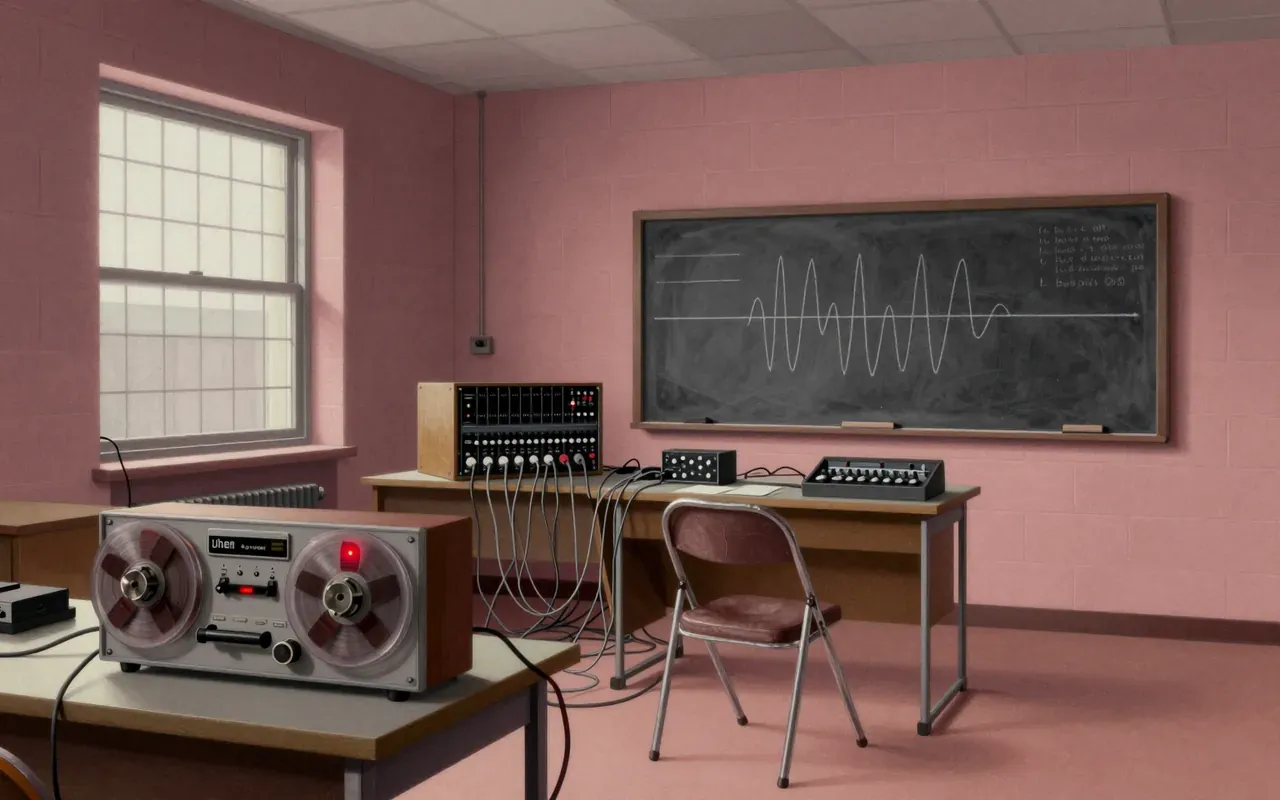
A 1969 acoustic experiment in which Alvin Lucier records himself speaking, then plays that recording back into a room and re-records it — repeatedly — until speech dissolves into the room’s resonant frequencies.

10:37

Il trovatore

Giuseppe Verdi · 1988

A 1988 studio recording of Verdi’s Il trovatore, presenting 24 aria excerpts in strict sequence. No production context is provided. Its value lies only in its alignment with long-standing reception patterns — particularly around ‘Miserere’ and ‘Di quella pira’ — not in interpretive originality or sonic distinction.

12:14

Illadelph Halflife

The Roots · 1996

Illadelph Halflife is the Roots’ third studio album, released 24 September 1996 on DGC and Geffen Records. It features a tougher and broader sound than Do You Want More?!!!??! (1995), integrating programmed drums and guest contributions from R&B musicians including Amel Larrieux and D'Angelo, and jazz musicians including David Murray, Steve Coleman, Cassandra Wilson, and Graham Haynes. Its production is grimy and haunting, shaped by Wu-Tang Clan and RZA’s influence, and replete with samples from old jazz and classical music. The multi-track tapes used to mix the album were destroyed in a 2008 fire at the Universal Studios back lot, though the original 1996 master tape remains unaffected. It was the group’s first album to break the Top 40 on the Billboard 200 chart. ‘What They Do’ was their first single to reach the Top 40 (No. 34); ‘Clones’ was their first to reach the top five on the rap charts. Scott Storch left the band and was replaced by Kamal Gray. Collaborators included Common, D'Angelo, and Q-Tip — foundational to the Soulquarians and the neo-soul association.

9:57

In C

Terry Riley · 1968

Terry Riley’s 1968 recording of In C is a landmark of process-based composition. Its sound is defined by collective repetition, room acoustics, and the physical limits of piano strings and vinyl grooves. It does not seek expression — it sets conditions and listens.

8:56

In Concert 1972

Ravi Shankar · 1973

A live document of mourning made structural. Three ragas, three times of day, two voices in dialogue, one drone holding them all.

13:22

In My Lifetime, Vol. 1

Jay‐Z · 1997

In My Lifetime, Vol. 1 is Jay-Z’s 1997 sophomore album. It follows Reasonable Doubt. It was shaped by The Notorious B.I.G.’s death. It marks a stylistic shift toward the 'jiggy' era.

10:24

In the Court of the Crimson King

King Crimson · 1969

In the Court of the Crimson King is the 1969 debut album by King Crimson — self-produced after initial sessions with Tony Clarke failed. Recorded on a 1" 8-channel recorder at Wessex Sound Studios in London, engineered by Robin Thompson with Tony Page assisting. Ian McDonald overdubbed Mellotron and woodwind layers across up to five tape generations; his Mellotron is dominant, fierce and overpowering. On 'Epitaph', he used two Mellotron parts with dynamic volume-shifting to create motion in sustained chords. Robert Fripp’s guitar fuses classical, Hendrix-like rock explosions, and jazz noodling. Greg Lake’s voice is plaintive. The band deliberately avoided simplicity, using unconventional time signatures like 7/8 or 5/8, expansive chords, and strange influences. Peter Sinfield wrote all lyrics — gothic, with 'dark and doom-laden visions'. The opening track '21st Century Schizoid Man' is proto-metal and criticises the Vietnam War. The record presents a Europeanised approach blending antiquity and modernity, distinct from blues-based hard rock.

8:42

Inception

Hans Zimmer · 2010

Inception is not ambient. It is architectural. It is not nostalgic—it weaponises nostalgia. It does not breathe—it pulses.

9:24

Interstellar

Hans Zimmer · 2014

A functional, architecturally driven score that treats the cathedral as its primary instrument. It lands where space and gravity meet sound — and fails where melody or motion is expected.

10:22

Interstellar Space

John Coltrane · 1974

Interstellar Space is a 1967 duo album by John Coltrane and Rashied Ali, recorded at Van Gelder Studio on February 22, 1967, and released in September 1974. It consists of four tracks — 'Mars', 'Venus', 'Jupiter', and 'Saturn' — each bearing alternate titles in the session sheets. Two further tracks from the same session, 'Leo' and 'Jupiter Variation', appeared on the 1978 compilation Jupiter Variation. The session was minimally planned, cut in one take, and built around Coltrane’s desire for 'more time, more rhythm all around me'.

9:28

Ironman

Ghostface Killah · 1996

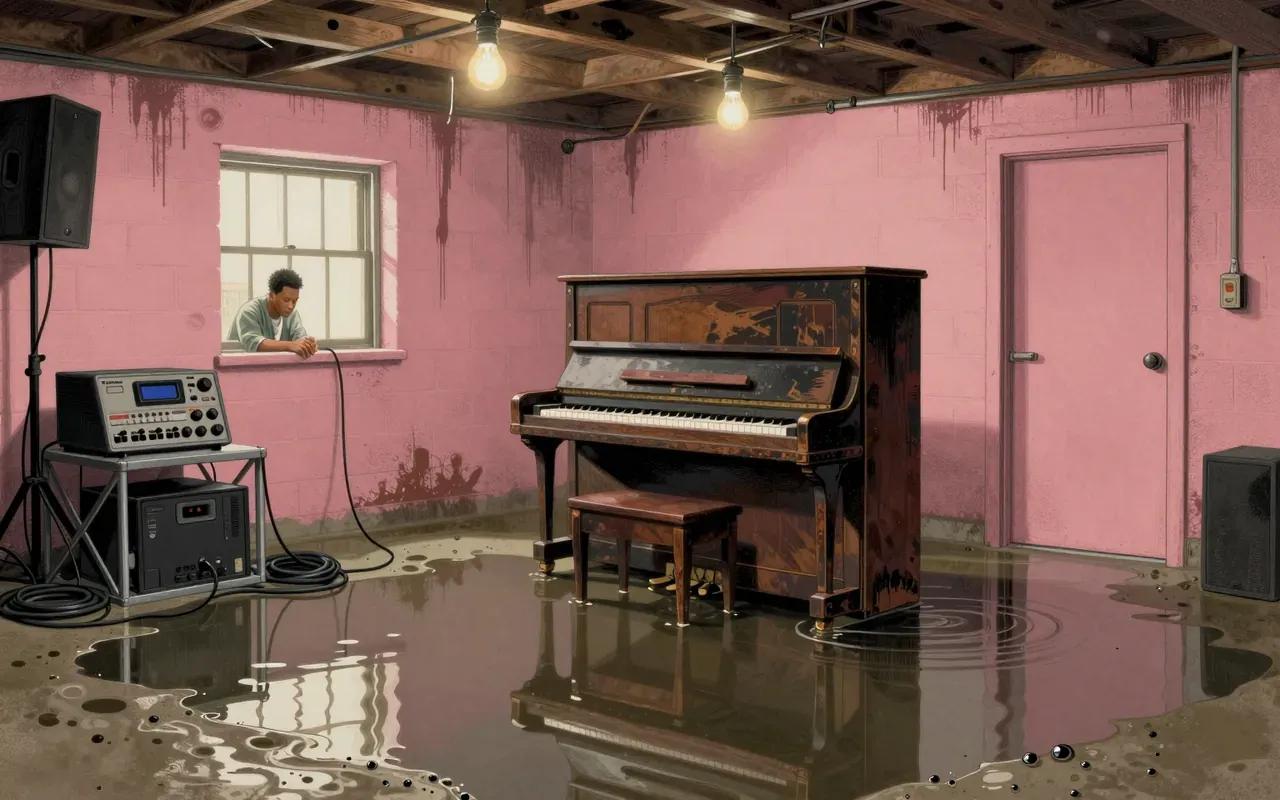
Ironman is Ghostface Killah’s 1996 solo debut, produced almost entirely by RZA using dark keyboard tones and early-1970s soul samples drawn from blaxploitation films. A flood destroyed the original studio, forcing vocals to be recorded elsewhere with different equipment — altering Ghostface’s voice and deepening his vulnerability. The album features substantial storytelling rap and Ghostface’s signature uptempo, stream-of-consciousness rhyming. Though billed as a solo record, Ghostface appears alone on only four tracks; Raekwon and Cappadonna feature heavily. Two songs originated in film soundtracks. Critics received it well.

11:10

It Takes a Nation of Millions to Hold Us Back

Public Enemy · 1988

It Takes a Nation of Millions to Hold Us Back (1988) is Public Enemy’s second studio album. It was recorded across three New York studios—Chung King Studios, Greene St. Recording, and Sabella Studios—between 1987 and 1988. The group began at Chung King but moved to Greene St. after engineer resistance to hip hop. Engineers there eventually respected their work ethic. The album was originally titled Countdown to Armageddon. It was recorded in 30 days for $25,000, thanks to extensive preproduction at the group’s Long Island studio. It was completed in six weeks. Chuck D described the process as aggressive, time-pressured teamwork involving sonic risk-taking. Eric Sadler and Hank Shocklee stayed behind in the studio during touring to develop material ahead of Chuck D and Flavor Flav’s return. The album performed better in the charts than their debut and included the hit singles 'Don’t Believe the Hype' and 'Bring the Noise'. It was the first hip-hop album to top The Village Voice’s Pazz & Jop critics’ poll. Its sonic architecture—crafted by the Bomb Squad—included free jazz, hard funk, and musique concrète. It formed part of Public Enemy’s revolutionary, politically charged output grounded in a pro-black stance.
10:18

John Wesley Harding

Bob Dylan · 1967

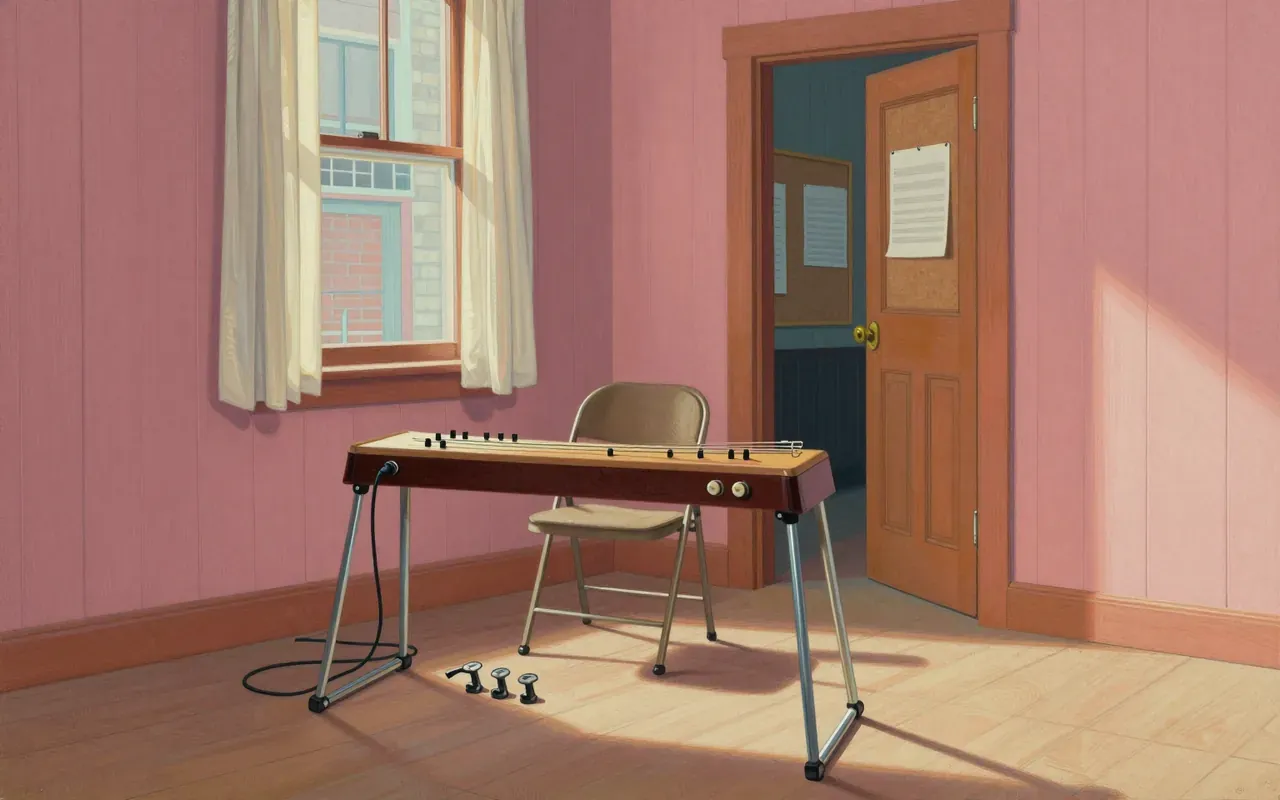
John Wesley Harding is a folk record made with folk means: voice, bass, drums, harmonica, piano, guitar, and two pedal steel parts. It was recorded fast, dry, and direct in Nashville in autumn 1967. Its power lies in what it leaves out.

11:03

Journey in Satchidananda

Alice Coltrane · 1971

Journey in Satchidananda is a 1971 Impulse! release that reorients jazz around sustained tone, spiritual reference, and domestic acoustics — not performance convention.

8:59

Karma

Kamelot · 2001

Karma is Kamelot’s fifth studio album, released a few months after their mid-2000 New Allegiance Tour. It is one of fourteen studio albums the band released as of 2026. The album uses the Sanskrit concept of karma—action and its consequences—as a structural device, particularly in the three-part 'Elizabeth' suite. It features layered guitar harmonies, orchestral synth pads, and clean, high-register vocals. Drums are both programmed and live, with gated reverb on snares. Bass is present but recessed. Vocals are double-tracked and treated with plate reverb. The album does not incorporate Indian musical elements. It is worth hearing for fans of early-2000s European power metal who value narrative continuity over instrumental complexity.

8:39

Kaya

Bob Marley & The Wailers · 1978

Kaya is a compact, mid-tempo reggae album built for warmth, not weight. Its sound is defined by Marley’s acoustic and rhythm guitar, Junior Marvin’s lead guitar, and understated percussion. Critics found it lightweight next to Exodus — yet it yielded the enduring hit 'Is This Love' and reached the UK top-5. It contains three re-recordings from Soul Revolution Part II and was mastered by Ted Jensen at Sterling Sound. The album offers intimacy over ideology, ease over insistence.
8:41

Ko Sira

Oumou Sangaré · 1993

Ko Sira is Oumou Sangaré’s 1993 album, recorded in Bamako and released internationally as Ko Sira and domestically in Mali as Bi Furu. It uses traditional Wassoulou instrumentation — kora, balafon, ngoni, calabash — with Sangaré’s voice leading tightly arranged, rhythmically insistent songs. Its themes are local and urgent: marriage, village loyalty, female agency. It makes no concessions to global pop form or production. It is cohesive, unwavering, and rooted.

9:04

Koyaanisqatsi

Philip Glass · 1983

The 1983 album of Philip Glass’s score for Koyaanisqatsi is a landmark application of minimalism to film: nine movements built from repetition, brass sustain, choral tonality, and synth-driven ostinatos—performed by the Philip Glass Ensemble and the Western Wind Vocal Ensemble under Michael Riesman. It does not develop themes, resolve harmonically, or prioritise individual expression. It treats musical time as malleable, like the film’s time-lapse and slow motion. It is essential for listeners who treat sound as architecture—not atmosphere.

9:53

Late Registration

Kanye West · 2005

Late Registration is Kanye West’s second studio album, released in 2005. It marks a deliberate departure from the chipmunk soul of his debut, embracing orchestral arrangements, genre-blending instrumentation, and collaborative experimentation with Jon Brion. Recorded over slightly more than a year across multiple studios in New York and Hollywood, it cost $2 million — enabling West to hire a 20-piece string ensemble and experiment with unconventional instruments like celesta, harpsichord, and Chinese bells. Jon Brion joined in March 2005 after West scrapped 75% of the near-finished album, radically altering its direction. The record is defined less by lyrical cohesion or narrative arc than by its architectural approach to sound: building, dismantling, and rebuilding hip-hop with live instrumentation as structural material.

11:36

Legalize It

Peter Tosh · 1976

Legalize It is Peter Tosh’s debut studio album. It was recorded at Treasure Isle and Randy's in Kingston between 1975 and 1976. It was released in June 1976 on CBS Records. All tracks were composed by Tosh except where indicated. The title track became popular among cannabis legalization advocates, reggae fans, and Rastafari worldwide, and was a concert favourite.

10:13

Let’s Take It to the Stage

Funkadelic · 1975

Funkadelic’s 1975 album Let’s Take It to the Stage is a funk rock record defined by its porous studio ethos, uncredited guitar fire, and deliberate tonal whiplash — from blunt sexual monologue to baroque organ quotation. It landed commercially like no prior Funkadelic release, but its power lies in instability, not polish.

8:51

Libertango

Astor Piazzolla · 1974

Libertango is a 1974 studio recording made in Milan. It declares tango nuevo through subtraction — no vocals, no ornament, no deference. Its sound is dry, linear, and precisely layered: bandoneón, Hammond organ C3, marimba, bass guitar, drums, guitar, timpani, strings, and flutes. It lands because every instrument has space and purpose. It does not land if you expect warmth, swing, or spectacle. It is worth your time if you value compositional rigour over emotional indulgence.
9:48

Like Water for Chocolate

Common · 2000

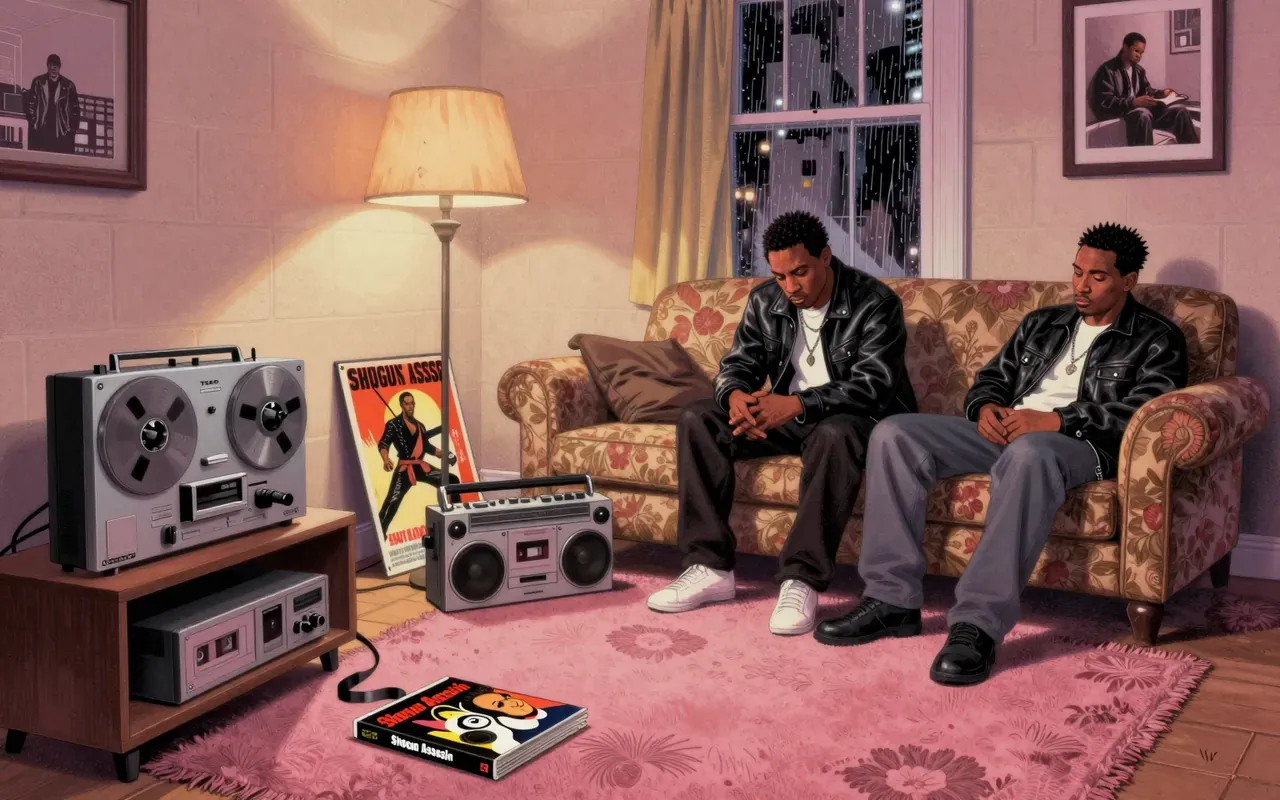
Like Water for Chocolate is a 2000 hip-hop album shaped by studio collaboration across Detroit and New York. Its sound is defined by space, incense-saturated atmosphere, and vocal interplay — not flash or density. It establishes Common as a thinker who works best in dialogue: with Jay Dee, with Slum Village, with Questlove, with DJ Premier. It falls short only in its length — the final third drifts without resetting the terms of engagement.

7:52

Liquid Swords

Genius/GZA · 1995

Liquid Swords is a 1995 hip-hop album made in RZA’s Staten Island basement. It uses Shogun Assassin dialogue samples, grimy rock-like beats, and GZA’s slow, assembled lyricism. All eight Wu-Tang members and Killah Priest appear. GZA considers it his best album for its chemistry and atmosphere — not lyrical prowess.

9:08

Love to Love You Baby

Donna Summer · 1975

A foundational disco record built on repetition, restraint, and vocal embodiment — not songwriting.

9:35

Lupe Fiasco’s Food & Liquor

Lupe Fiasco · 2006

Lupe Fiasco’s Food & Liquor is a thematically dense, string-saturated hip-hop debut rooted in Chicago storefront logic—not abstract ambition. It lands where sound and subject align: 'Kick, Push', 'Daydreamin'', and 'American Terrorist'. It falters where runtime swells without function—especially the 'Outro'. No filler. No myth. Just food, liquor, strings, and scrutiny.

11:42

Made in Lagos

Wizkid · 2020

Made in Lagos is Wizkid’s fourth studio album, released 30 October 2020 after postponement from 15 October due to the End SARS protests. It fuses Afrobeats and R&B with mid-tempo production, rich local African percussions as its core, casually Auto-Tuned melodies, and meticulously complex beats. Themes include love, focus, goodwill, gratitude, and grace. It achieved commercial success and critical acclaim, reaching number-one on the Billboard World Albums chart. Its single 'Essence' featuring Tems became the first Nigerian song to chart on the Billboard Hot 100.

10:07

Master of Puppets

Metallica · 1986

A dry, precise, sober metal record made in Copenhagen to escape American studio acoustics. No synths. No gloss. No myth-making during recording. Themes: drugs, militaries, religion, rage, insanity, monsters.

10:16

Master of Reality

Black Sabbath · 1971

Master of Reality is Black Sabbath’s third album, recorded February–April 1971 at Island Studios in London under producer Rodger Bain—his final collaboration with the band. It was made without touring commitments, using expanded studio time and financial resources, including money for drugs. Iommi and Butler downtuned their instruments 1½ steps on key tracks to ease physical strain, directly shaping the album’s heavier sound. The band experimented with classical guitar, flute, piano, overdubs, bigger bass drums, and amplified bass presence. Osbourne struggled with rapid lyrics on 'Into the Void', requiring written cues; his vocals on 'Solitude' were doubled via delay. Drug use during sessions impaired idea retention. The album contains their first acoustic songs and key tracks like 'Sweet Leaf' and 'Children of the Grave'. Released July 1971, it marked a pivot toward studio-driven heaviness—not myth, but mechanics.

8:56

Midnight Star

Midnight Star · 1988

Midnight Star (1988) is a post-breakout album with no documented commercial performance, stylistic departure, or critical repositioning. It relies on the same R&B/funk/vocoder foundation established by No Parking on the Dance Floor (1983), but none of its tracks charted, none received significant airplay, and none are cited as defining the band’s identity.

10:00

Mothership Connection

Parliament · 1975

Mothership Connection is a 1975 Parliament concept album unified by an outer-space theme. It is the first Parliament album to feature Maceo Parker and Fred Wesley. It was conceived by George Clinton.

10:24

Muddy Waters at Newport 1960

Muddy Waters · 1960

Muddy Waters at Newport 1960 is Muddy Waters’ first live album and one of the first live blues albums. It includes a Grammy-nominated performance of ‘I’ve Got My Mojo Working’. It was recorded live at the Newport Jazz Festival in 1960.

9:58

My Beautiful Dark Twisted Fantasy

Kanye West · 2010

My Beautiful Dark Twisted Fantasy is a maximalist hip-hop record made in three simultaneous rooms at Avex Recording Studio in Honolulu, following Kanye West’s 2009 MTV VMA incident. It features contributions from Jay-Z, Kid Cudi, Pusha T, Justin Vernon of Bon Iver, and Gil Scott Heron. Released in November 2010, it received widespread critical acclaim and was accompanied by a 35-minute film. Its sound is dense, layered, and rigorously collaborative — built on discipline, not spontaneity.

11:10

Nebraska

Bruce Springsteen · 1982

Nebraska is a solitary, unadorned document — recorded alone in a bedroom, mixed through damaged equipment, released because nothing else held the weight of its stories.

9:05

Northern soul

Northern soul wasn’t about soul music—it was about building a world from what the market discarded.
10:29

One Nation Under a Groove

Funkadelic · 1978

A functional, tightly wound funk record that trades psychedelic sprawl for groove discipline — built on fuzz, banjo, and Junie Morrison’s keys.

10:26

Only Built 4 Cuban Linx…

Raekwon · 1995

Only Built 4 Cuban Linx… is a tightly wound, cinematic hip-hop record built in a basement, not a boardroom. It trades Wu-Tang’s raw immediacy for layered tension — strings, piano, film samples, and deliberate pacing. Its story is narrow: cocaine, code, and climb. Its appeal is specific: if you lean into its rhythm and language, it pulls you in. If you wait for explanation, it leaves you outside.

9:52

Os Mutantes

Os Mutantes · 1968

Os Mutantes’ 1968 debut is a studio-built act of translation: Brazilian song forms, international pop, political critique, and musique concrète fused by Rogério Duprat’s arrangements and the trio’s instrumental resourcefulness. It is not seamless. It is not polished. It is specific, inventive, and sonically legible — right down to the hiss of bug spray.

10:02

Paid in Full

Eric B. & Rakim · 1987

Paid in Full is not a statement—it is a switch flipped. It replaced schoolyard cadence with internal metronomes. It replaced shout-and-response with quiet command. It replaced sampling-as-tribute with sampling-as-rewriting. It is lean. It is dry. It is complete.

11:42

Paranoid

Black Sabbath · 1970

Paranoid is a foundational rock record because it was made fast, live, and without pretence — not because it is ‘timeless’ or ‘iconic’, but because its sound is physically legible: the room, the strings, the drums, the decisions made in under half an hour.

12:04

Pata Pata

Miriam Makeba · 1967

A commercially successful but artistically marginal record — shaped by US production, English narration, and Makeba’s own ambivalence.

11:17

Petrushka

Igor Stravinsky · 2018

This is a 2018 recording of Stravinsky’s 1911 ballet Petrushka — a work rooted in Russian puppet tradition, set during Maslenitsa in 1830 Saint Petersburg, and built from folk tunes, Lanner waltzes, a French music hall melody, and Rimsky-Korsakov. Its defining feature is the 'Petrushka chord', an early use of bitonality. The record also includes Concertino, Agon, and Scherzo à La Russe — but the sources say nothing about how this 2018 version interprets them.

10:48

Port of Miami

Rick Ross · 2006

Port of Miami is a debut album that treats Miami as infrastructure — not atmosphere, not character, but a node in a supply chain. Its sound is monolithic: engineered for repetition, built on one unvarnished sample, and delivered with zero tonal deviation. It landed because it refused ambiguity.

9:04

Post-punk

Post-punk wasn’t a sound—it was a refusal to inherit.
9:40

Power, Corruption & Lies

New Order · 1983

New Order’s Power, Corruption & Lies is their second studio album, released 2 May 1983 by Factory Records. It features more electronic tracks and heavier synthesiser use than Movement. It combines post-punk roots with electronic influences into synth-pop, electropop, new wave, synth-rock, dance-rock, post-punk and dance-punk. At the time, it was the heaviest the band had ever flirted with electronica. Its sound has been characterised as a gentle portrait of ambient, post-industrial tenderness. '5-8-6' has been called a literal interpretation of early house music, with noted influences from Kraftwerk and Giorgio Moroder. Darker songs such as 'We All Stand' and 'Your Silent Face' are contrasted with brighter, more optimistic songs such as 'The Village'. 'Blue Monday' was recorded in the same sessions and released separately as a non-album twelve-inch single.

9:21

Psychobilly

Psychobilly isn’t rebellion—it’s a costume made of rockabilly riffs and horror posters.
9:53

Purple Haze

Cam’ron · 2004

Purple Haze is Cam’ron’s fourth studio album, released December 7, 2004, via Diplomat Records and Roc-A-Fella Records, distributed by The Island Def Jam Music Group. It features bombastic production and surreal lyricism, with Cam’ron delivering a unique brand of idiosyncratic gangsta rap through an absurd, poker-faced delivery. The production shifts between aggressively insane and pop-oriented, and Cam’ron matches it with wordplay described as 'Missy gibberish swathed in 50 Cent menace', writing pop hooks and avant-garde rhymes while staying street-rooted. Cam’ron tightened his signature flow, chose quality and risk-worthy beats, and delivered Harlem symbolism and non-sensical muttering throughout the album. Kanye West produced 'Down and Out', Pop & Versatile produced 'Soap Opera', and the Heatmakerz produced 'More Gangsta Music'. 'More Gangsta Music' samples 'Woman I Need You' by Sizzla. 'Get Down' samples 'Life's Opera' by Marvin Gaye. 'Girls' and 'Harlem Streets' are weak inclusions. The album features collaborations with Kanye West, Jaheim, Twista, Juelz Santana, and various other artists. It reached gold status and was critically acclaimed, appearing on two major decade-end lists.

12:19

Raising Hell

Run‐D.M.C. · 1986

Raising Hell is hip-hop’s first platinum album—and its first declaration of creative sovereignty. It sounds like command, not compromise.

8:56

Ramones

Ramones · 1976

Ramones is the band’s debut album, recorded in January 1976 at Plaza Sound studio. Fourteen songs. All under two and a half minutes. Produced by Craig Leon with Tommy Ramone as associate producer. Budget: $6,400. Front cover photograph by Roberta Bayley.

10:33

Reasonable Doubt

Jay‐Z · 1996

Reasonable Doubt is a 1996 hip-hop album recorded across multiple studios — D&D, Giant, Progressive Music — with beats formed separately, including at Knobody’s mother’s home and during Ski’s sessions with Camp Lo. Its sound is defined by competitive beat submissions, improvisational lyricism (notably between Jay-Z and Biggie on 'Brooklyn’s Finest'), multi-location tracking over extended periods, and unfulfilled collaborations (e.g., Nas on two tracks).

10:03

Recovery

Eminem · 2010

Recovery is a 2010 hip-hop album recorded from 2009 to 2010. It replaced the abandoned Relapse 2 project after Eminem scrapped most of its material and started over with new producers. It was announced via Twitter on April 14, 2010, and released on June 18.

8:10

Red Headed Stranger

Willie Nelson · 1975

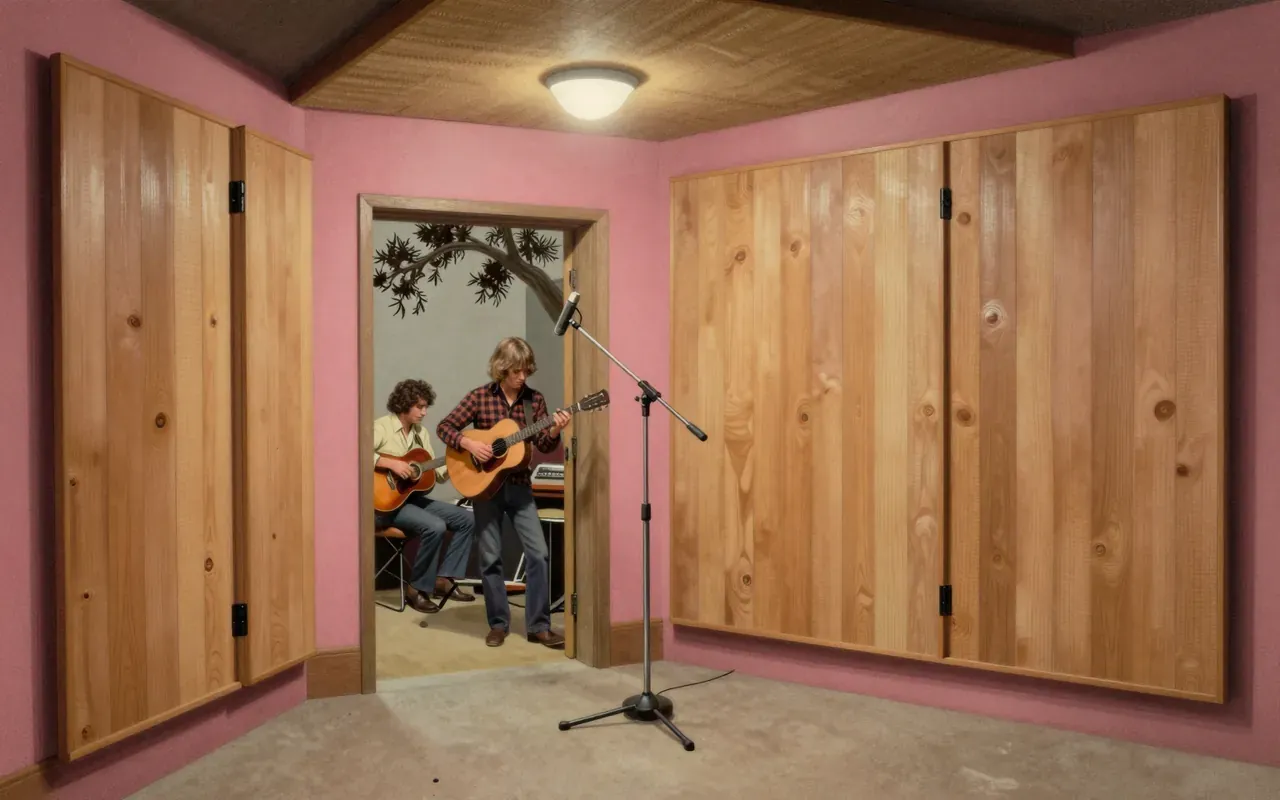
Red Headed Stranger is a 1975 concept album by Willie Nelson, recorded at low cost in a quiet cypress-panelled room at Autumn Sound Studios in Garland, Texas. It features sparse arrangements limited to Nelson's guitar, piano, and drums, with no equalisation and no additional production — a direct rejection of Nashville conventions. Columbia executives initially mistook it for a demo, but Nelson's creative control and Waylon Jennings' insistence secured its release. The album includes a cover of Fred Rose's 1945 'Blue Eyes Crying in the Rain', which became Nelson's first number one hit. Its power lies in restraint: the Bosendorfer piano's deep bass, the dry drum hits, the absence of reverb or ornamentation. It is a record about silence as moral weight.

10:45

Refavela

Gilberto Gil · 1977

Refavela is not a fusion record. It is a declaration of continuity — Afro-Brazilian culture as unbroken line, not borrowed motif.

9:22

Reign in Blood

Slayer · 1986

Reign in Blood is a surgical strike on metal production conventions. It replaces reverb with proximity. It replaces sprawl with velocity. It replaces myth with documentation. Its power comes from what it leaves out—not what it adds.

9:27

Requiem

Wolfgang Amadeus Mozart · 1987

Mozart’s Requiem K. 626 is an uncompleted liturgical setting composed in his final year. It divides the Dies irae into multiple movements and belongs to a tradition that evolved from sacred service to concert hall. It is among his best-known works from that period, but remains structurally and textually incomplete.

9:50

Rhythm & Sound

Rhythm & Sound · 2001

Rhythm & Sound’s 2001 self-titled album is a focused, collaborative re-engagement with Jamaican dub — defined by vocal partnerships, spatial production, and structural restraint.

10:38

Ride the Lightning

Metallica · 1984

Ride the Lightning is Metallica’s second studio album, recorded in three weeks at Sweet Silence Studios in Copenhagen with co-producer Flemming Rasmussen. Drums were tracked in an unsoundproofed warehouse, creating a long, uncontrollable reverb. Rhythm guitar and drums were recorded live; bass and lead guitar were overdubbed. Songs were assembled from pre-studio 'riff tape' jam sessions. Dave Mustaine co-wrote two tracks. Released July 27, 1984, it reached No. 100 on the Billboard 200.

10:36

Rigoletto

Giuseppe Verdi · 1989

Rigoletto (1989) is a recording of Verdi’s 1851 opera, premiered at La Fenice in Venice. It uses offstage band, onstage chamber strings, and pit orchestra as distinct dramatic agents. Its innovations include melody assigned to low woodwinds and strings—not voices—in key duets; humming chorus as diegetic wind; and continuous pacing that replaces sectional numbers. Censorship shaped its structure: the Duke substitutes for royalty, and 'La donna è mobile' was rehearsed in isolation to control its impact. It contains only one conventional double aria and no concerted act finales. Julian Budden calls it revolutionary—comparable to Beethoven’s Eroica—for dissolving barriers between recitative and melody.

11:08

Risqué

Chic · 1979

Risqué is a studio-built rhythm document — not a song cycle, not a concept, not a statement. It is a demonstration of how much can be done with three instruments, four microphones, and one room.

11:01

Rockabilly

Rockabilly didn’t invent rock and roll—it claimed it first.
11:50

Rust in Peace

Megadeth · 1990

Rust in Peace is Megadeth’s 1990 studio album, recorded at Rumbo Recorders in March 1990. It is the first Megadeth album completed with a producer who wasn’t fired — Mike Clink — though Mustaine later said most of the work was done by himself, Max Norman, and engineer Micajah Ryan.

9:42

Saturnz Return

Goldie · 1998

Saturnz Return is Goldie’s 1998 follow-up to Timeless. Its opening track 'Mother' is an hour-long orchestral drum and bass piece featuring a 30-piece string section and classically trained child singers. It was conceived as a sonic representation of Goldie’s adoption at age three, foster care, fame, and addiction. He described its arc as beginning with an unborn-child voice before descending into abandonment and rhythmic ferocity. He made it for one private moment: listening on headphones while seeing his mother’s body before her funeral. The album features David Bowie, Noel Gallagher and KRS-One, and received mixed reviews—including 'ambitious but monotonous and overlong—Pink Floyd with a gold tooth'.

9:39

Satyagraha

Philip Glass · 1985

Satyagraha is Philip Glass’s 1979 opera, recorded in 1985, based on Gandhi’s early South African years. It uses Sanskrit text, symphony orchestra, chorus, and solo voices to embody the concept of satyagraha — not narrate it. Repetition is its grammar. Resistance is its rhythm. It does not explain. It insists.

11:12

Science Fiction

Ornette Coleman · 1972

Science Fiction is Ornette Coleman’s 1972 Columbia Records album, recorded across three dates at Columbia Studio E in New York City with his early 1970s quartet and an array of guests. It is dense, conversational, and structurally restless — a record built on presence, not polish.

10:33

Screaming for Vengeance

Judas Priest · 1982

Screaming for Vengeance is a hard, heavy, tightly focused heavy rock record made quickly across two countries. It trades melody and texture for consistency, riff clarity, and radio-ready hooks. Its success rests on one last-minute addition—and one drummer’s third consecutive appearance.
11:06

Seasons in the Abyss

Slayer · 1990

Seasons in the Abyss is Slayer’s fifth studio album, recorded across three Los Angeles studios between March and June 1990. Produced by Rick Rubin and co-produced by Andy Wallace, it was the band’s first release on Def American. It combines the speed of Reign in Blood with the melodic development of South of Heaven. The album features grim vocals, frenetic guitars, sonic distortion, tremolo strumming, and chromatic extensions. Its dual-vocal arrangement on 'Temptation' resulted from an accidental playback of two Tom Araya takes. It peaked at No. 40 on the Billboard 200 and was certified gold in 1992. The title track’s music video — filmed at the Giza pyramids — was the band’s first.

11:02

Shaft

Isaac Hayes · 1971

A double-album soundtrack composed by Isaac Hayes for the 1971 film Shaft. Mostly instrumental, written in early 1971 in response to raw footage, recorded over three days, then re-recorded at Stax Studios for richer sound.

8:25

Shahen-shah

Nusrat Fateh Ali Khan · 1989

No verified information exists about the sound, structure, lyrics, reception, or artistic intent of 'Shahen-shah'. All claims must be limited to the three verified facts: it was recorded in 1989 at Zella Recording Studios in Birmingham, UK; commissioned by Oriental Star Agencies Ltd; and involved Andrew Kristy and Johnny Haynes.

8:54

Slum Village

Slum Village · 2005

The editorial brief cannot be written for a record that does not exist in the source material. All claims point to documented Slum Village releases — none to a 2005 self-titled album.

10:25

South of Heaven

Slayer · 1988

South of Heaven is Slayer’s 1988 fourth studio album, recorded in Los Angeles with Rick Rubin. It was the only Slayer album the band discussed before writing. They slowed tempos, dropped distortion, and softened vocals—not to soften the music, but to reframe it.

10:20

Speak & Spell

Depeche Mode · 1981

Speak & Spell is Depeche Mode’s 1981 debut: ten tracks recorded live on 8-track with an ARP 2600, built from songs played live for a year, written mostly by Vince Clarke, co-produced by Daniel Miller. It reached UK #10. Critics split: Melody Maker praised it; Rolling Stone dismissed it as ‘PG-rated fluff’. It established synth-pop as functional pop—not experimental, not atmospheric, not ironic—just direct, repeatable, and built for broadcast.

10:06

Standards, Vol. 1

Keith Jarrett, Gary Peacock, Jack DeJohnette · 1983

Standards, Vol. 1 is the first album by the Keith Jarrett–Gary Peacock–Jack DeJohnette trio. Recorded over 2½ days in January 1983 in a Manhattan studio. No rehearsal. No pre-planned repertoire. Produced by Manfred Eicher. A deliberate turn toward jazz standards in contrast to early-1980s conventions.

11:06

Standing on the Verge of Getting It On

Funkadelic · 1974

Standing on the Verge of Getting It On is Funkadelic’s sixth studio album, released on Westbound Records in July 1974. It features the return of guitarist Eddie Hazel after a year in jail. Hazel co-wrote all songs, but most credits went to his mother, Grace Cook, to avoid publishing contract issues. Lyrics take a backseat to jamming. Hazel and Ron Bykowski trade lead guitars on 'Red Hot Mama', where Hazel also shares lead vocals with George Clinton. Their jam was extended in the studio into the B-side 'Vital Juices'. This was among Hazel’s last major contributions to P-Funk.

11:44

Stankonia

OutKast · 2000

Stankonia is OutKast’s fourth album, recorded spring 1999–spring 2000 at their newly owned Stankonia Studios in Atlanta, released October 2000. It began life as Sandbox. It is a hip-hop record built on studio autonomy, guitar-led composition, and deliberate stylistic pivot from their earlier, darker work.

12:03

Straight Outta Compton

N.W.A · 1988

N.W.A’s Straight Outta Compton (1988) is a low-budget, high-impact declaration of intent — recorded in six weeks at Audio Achievements Studio in Torrance, California, for $12,000, using TR-808 beats, sampled horns and vocals, and razor-sharp writing by Ice Cube, MC Ren, and The D.O.C. Its sound is sparse, confrontational, and unvarnished. Its ideas are local, immediate, and uncompromising. Its legacy begins not with acclaim, but with backlash — and a warning label.

9:11

Supernatural

Santana · 1999

Supernatural is a pop-oriented 1999 album produced under Clive Davis’s guidance at Arista, built around radio-friendly melodies and structured collaborations with contemporary artists. It marks a deliberate departure from Santana’s earlier instrumental focus.

11:55

Sweetheart of the Rodeo

The Byrds · 1968

A deliberate, unadorned country record — recorded fast in Nashville and Hollywood, using documented session players and documented repertoire. It establishes country rock as a category, not a mood. It sounds like what it is: a studio document of genre allegiance.
9:35

Tha Carter

Lil Wayne · 2004

Tha Carter is a hip-hop record built on Mannie Fresh’s New Orleans bounce production and Lil Wayne’s freestyled, instinctive delivery. It marks a stylistic pivot — not a debut, not a culmination, but a decisive turn toward voice-first, groove-led rap.

10:30

Tha Carter III

Lil Wayne · 2008

A producer-driven, leak-compromised hip-hop album released in 2008, built on high-impact beats and strategic replacements rather than thematic unity.

9:11

The Art of Fugue

Johann Sebastian Bach · 1995

The Art of Fugue is not a piece to be performed. It is a set of problems posed in musical notation. Its 1995 recording makes no claim to solve them — only to present the lines as clearly as possible. It is austere. It is complete in its incompleteness. It asks only that you follow the voices.

11:18

The Blueprint

Jay‐Z · 2001

The Blueprint is a 2001 New York hip-hop album built on soul samples, recorded in two weeks, anchored by four producers — Kanye West, Just Blaze, Bink, and Eminem — and defined by its refusal to waste a second.

9:27

The Chronic

Dr. Dre · 1992

The Chronic is Dr. Dre’s 1992 debut solo album, released under Death Row Records with Suge Knight as executive producer. Recorded at Death Row Studios in Los Angeles and Bernie Grundman Mastering in Hollywood, it established G-funk through fat, blunted Parliament-Funkadelic beats, live rolling basslines, whiny synths, and soulful backing vocals — using only one or few samples per song. Jon Pareles described its production as swampy synth bass, lone whistling or blipping keyboard lines, and wide-open spaces filled sparsely with rhythm guitar or keyboard chords. The Death Row Inmates — including Snoop Dogg, The D.O.C., Daz Dillinger, RBX, Kurupt, Lady of Rage, Warren G, Nate Dogg, Jewell, Colin Wolfe, and Chris 'The Glove' Taylor — convened at Dre’s Calabasas mansion and Solar Studios to write and record. Snoop contributed lyrics grounded in lived street experience and performed on nearly every track, often writing and developing melodies over partial beats during all-night sessions. Singles 'Nuthin' but a "G" Thang', 'Let Me Ride', and 'Fuck wit Dre Day' featured Snoop and defined the album’s cultural impact. 'Let Me Ride' won Best Rap Solo Performance at the 36th Annual Grammy Awards. The Chronic was certified triple platinum in 1993 and credited with launching G-funk into mainstream dominance.